Owners have filed 448 complaints
about the 2013 Chevrolet Volt with NHTSA between 2012 and 2026.
The largest single group is the airbags.
Across this model's run it ranks 2 of 9 worst.
The letter says how bad. This says what kind — whether this year drew
an unusual number of complaints, unusually dangerous
ones, or failures that arrived unusually early.
The dashed ring is 50 — the national norm. Further out is worse.
Complaint volume — 68
Against the median year of the Chevrolet Volt. 50 means typical for this
model; 100 means roughly double.
Severity — 38
7.4% of these complaints
involved a crash, fire, injury or death, against a national rate of
9.7%.
Early failure — 44
26% of failures with a mileage on record happened under
36,000 miles, against a national rate of
29%.
Odometer readings owners gave when they filed. About half of all
complaints include one.
Under 1,000 miles
196.1%
1,000 – 9,999 miles
227.1%
10,000 – 24,999 miles
258.1%
25,000 – 49,999 miles
4213.6%
50,000 – 74,999 miles
9029.1%
75,000 – 99,999 miles
6521.0%
100,000 – 149,999 miles
4012.9%
150,000+ miles
61.9%
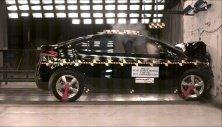
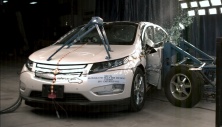
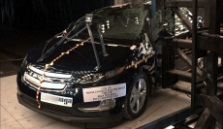
NHTSA crash tests
The agency crash-tested this model year itself. These are its own
photographs and star ratings.
Frontal crash test
Side barrier crash test
Side pole crash test
Photographs taken by NHTSA during its own New Car Assessment Program crash
tests of this model year. Public domain.
Configuration
Overall
Front
Side
Rollover
2013 Chevrolet Volt 4 DR FWD
9.3% risk
When owners complained
A spike years after the car went on sale usually means a part wearing
out on schedule across the whole fleet — the kind of pattern no single
owner can see from inside their own car.
Oct 2012peak 24Apr 2026
NHTSA investigations into the 2013 Chevrolet Volt
An investigation is the step before a recall: the agency has seen enough
complaints to look into a pattern itself. An open one means it thinks
something may be wrong and nothing has been fixed yet.
DP22005Opened 27 Jan 2023Closed 7 Aug 2023ELECTRICAL SYSTEM:PROPULSION SYSTEM
Pedestrian alert sounds
NHTSA received a petition on or about July 18, 2022, requesting that Federal Motor Vehicle Safety Standard (FMVSS) 141 be applied to all electric and hybrid vehicles operating in the United States. The petition can be reviewed at NHTSA.gov under ODI Number 11486072. FMVSS 141 establishes performance requirements for pedestrian alert sounds for motor vehicles. The standard applies to hybrid and electric vehicles that have a gross vehicle weight rating of 4,536 KG or less or are defined as low-speed vehicles. The standard became fully applicable to all such vehicles manufactured on or after Marc...
In September 2019, the Office of Defects Investigation (ODI) opened PE19-013 to assess the potential safety related effects of a malfunction of the Passenger Sensing System (PSS) in 2012-2013 Model Year (MY) Chevrolet Volt vehicles. Consumers reported that due to a malfunction of the PSS, the air bag system malfunction indicator light (MIL) was activated. Many of the complaints noted the malfunction occurred after the warranty period expired and mentioned high repair costs as a major deterrent to the repair of the vehicle.The PSS sensor mat is embedded in the front passenger seat cushion and i...
Recalls on the 2013 Chevrolet Volt
A complaint is one owner's allegation. A recall is the point at which
the manufacturer or a regulator agreed the defect is real and dangerous
enough to fix for free — however old the car is.
United States — NHTSA
23V516000
AIR BAGS:FRONTAL:DRIVER SIDE:INFLATOR MODULE
General Motors, LLC (GM) is recalling certain 2013 Buick Verano, Chevrolet Camero, Sonic, and Volt vehicles. The driver-side air bag inflator may explode during deployment due to a manufacturing defect.
Risk: An inflator explosion may result in sharp metal fragments striking the driver or other occupants, resulting in serious injury or death.
18V397000
HYBRID PROPULSION SYSTEM
General Motors LLC (GM) is recalling certain 2013 Chevrolet Volt vehicles. An update to the Hybrid Powertrain Control Module 2 (HPCM2) may have disabled the cell balancing function causing a low-voltage condition.
Risk: If the voltage drops, the vehicle may lose propulsion, increasing the risk of crash.
15V145000
ELECTRICAL SYSTEM:IGNITION
General Motors LLC (GM) is recalling certain model year 2011-2013 Volt vehicles manufactured August 25, 2010, to June 26, 2013. If the driver exits the vehicle without turning off the electrical system, the battery may drain low enough that the gasoline engine will automatically start itself to recharge the electric battery.
Risk: If the engine runs for an extended period of time in an enclosed space, there may be a build up of carbon monoxide, increasing the risk of personal injury.
Canada — Transport Canada
Canada runs its own recall programme, and its campaigns do not
always mirror the American ones.
Recall 2023412101 units in Canada
Airbag
Issue: On certain vehicles, the driver-front airbag inflator could rupture when the airbag deploys in a crash. If this happens, the airbag may not properly inflate and fragments could be propelled toward vehicle occupants. Safety Risk: An airbag inflator that ruptures can create a risk of injury or death. Corrective Actions: General Motors will notify owners by mail and advise you to take your vehicle to a dealership to replace the driver-front airbag module.
Recall 2018320265 units in Canada
Powertrain
On certain vehicles, an error in a software update may prevent the batteries from properly balancing the voltage among individual cells. This may cause the vehicle to enter a reduced power mode. If a driver continues to operate a vehicle in reduced power mode, a loss of propulsion may occur, which could increase the risk of a crash causing injury and/or damage to property. Correction: Dealers will reprogram the Hybrid Powertrain Control Module 2.
Recall 20151042,194 units in Canada
Engine
On certain vehicles, if a driver exits the vehicle and were to inadvertently leave the vehicle "ON", after a period of time the vehicle's battery would drain and the vehicle's gasoline engine would begin to run. If the gasoline engine were to run for long periods of time when the vehicle is parked in an enclosed area, such as a garage, there is a risk of carbon monoxide build-up, which could result in asphyxiation or carbon monoxide poisoning. Correction: Dealers will update vehicle software to limit the time that an idle vehicle can be left in the "ON" position.
Recall 20140161,598 units in Canada
Seats And Restraints
Certain vehicles may not comply with the requirements of Canada Motor Vehicle Safety Standard 202 - Head Restraints. If subjected to load in the highest adjustment position, the rear seat head restraints may move to the next lower adjustment position, being displaced in excess of what is allowable in the standard. Correction: No corrective recall action is required as this technical non-compliance is deemed to be non-safety related.
Recall 201346076 units in Canada
Accessories
On certain vehicles, material used in the construction of the windshield sunshade, sold as an optional accessory, may not meet the requirements of the Canada Motor Vehicle Safety Standards (CMVSS) 302 - Flammability of Interior Materials. The sunshade's inner core material could burn faster than allowable by the standard. Note: The exterior material, exposed in normal use, meets the requirements of the standard. Correction: A production change was made to add a flame resistant coating to the interior corrugated plastic layer to remedy this non-compliance condition. No corrective recall action is required as the technical non-compliance condition is deemed to be non-safety related.
Reports where the owner recorded a crash, a fire, an injury or a death.
Ann Arbor, MI2 injured
SEAT BELTS
The drivers side front seatbelt pretensioner assembly contains a braided steel cable. The cable, through normal use, has become damaged to the point that individual wires have broken free from the crimped connector. The damaged wires of the cable have penetrated through the plastic sheath covering the cable causing a needle sharp poking hazard when reaching one’s hand toward the seat back adjustment lever. My wife had a minor laceration to her finger and I was also poked when trying to identify the cause. Upon further inspection I found that approximately 80 percent of the diameter of the pretensioner cable had broken free from the crimped connector. In the event of a collision, the cable would likely break free from the seatbelt, possibly causing serious injury to the driver. I tried to obtain a replacement part through the GM dealer parts network, but the part is listed as discontinued and unavailable. This leaves the vehicle unsafe in the event of an accident. The damaged components are available for inspection. The vehicle has not been inspected by anyone but myself. There were no warning lamps or symptoms of the problem prior the the injury. I am the original owner of the vehicle and it has never been involved in a collision. The vehicle has been properly maintained and is used only for personal transportation.
NHTSA complaint #11690373 — an unverified report by a vehicle owner.
I arrived at the charging station and plugged the charging handle into the charge port. At this time an audible shorting sound was heard coming from inside the handle followed by a burst of flames and white smoke. This flame immediately went out and the smoke subsided slightly before building back up and darkening. By the time that the fire department arrived, the car's engine had caught fire resulting in a total loss. Additionally, the charging handle of the station had melted, alongside the side mirror of a neighboring vehicle. It appears that there was a failure to detect the initial fault or at least a lack of protections for shorts. The parts are no longer available upon inspection, unless you have contact with the EVSE manufacturer, ChargePoint. My safety was put directly at risk. The charging handle shorted in my hand. In the unlucky case that the short made contact with me, I likely would've died on the spot or been at risk of burns from the subsequent fire. Additionally, should I have been in the car, I noticed when trying to get pictures of the inside, that the doors had remained locked. The problem cannot be reproduced because the car is burnt. The car has been inspected by insurance representatives alongside the look over by firefighters and police officers on site during the fire. There were no issues inside the vehicle hinting to any problem. I had used the charging station next to this one consistently each day going into work with no problems. When I arrived, the car which is usually parked at this problem charger was in the spot I usually used, which caused me to use this problem charger. While the exact cause is somewhat unknown, the initial perception by fire fighters, police, and myself were that the fire was due to the EVSE handle shorting out. The evidence for this is the location of the fire damage external to the vehicle and the melted handle. Chargepoint disagrees but does not state an alternative possible cause.
NHTSA complaint #11530200 — an unverified report by a vehicle owner.
Lynnwood, WACrash1 injured
SEAT BELTS
Passenger Airbags failed to engage when occupied during accident, drivers side activated. Results in injured passenger
NHTSA complaint #11517990 — an unverified report by a vehicle owner.
Lynnwood, WACrash1 injured
AIR BAGS
Passenger Airbags failed to engage when occupied during accident, drivers side activated. Results in injured passenger
NHTSA complaint #11517990 — an unverified report by a vehicle owner.
Sarasota, FL1 injured
ELECTRICAL SYSTEM:12V/24V/48V BATTERY
The contact owns a 2013 Chevrolet Volt. The contact stated that the electric battery would not charge and the vehicle was towed to the local dealer who diagnosed that the 12v battery was faulty and needed to be replaced. The 12v battery was replaced and the failure was remedied. The contact stated that later while driving the central battery pack located under the center console had overheated causing a loud noise within the cabin of the vehicle. The contact had sustained a burn to the right shoulder which did not require medical treatment. After parking in the garage and shutting the vehicle off the vehicle rolled backward making contact to the with the garage door. No damage to the garage door was reported. The manufacturer was notified of the failure. The contact was informed that the vehicle was not included in the NHTSA Campaign Number 18V397000(HYBRID PROPULSION SYSTEM). The contact indicated that the vehicle had experienced the same failure listed in the recall. The failure mileage was unknown.
NHTSA complaint #11492761 — an unverified report by a vehicle owner.
at 105,000 milesRochester, MNCrash
SERVICE BRAKES
AT LOW SPEED (UNDER 5 MPH) I STEPPED ON THE BRAKE PEDAL AND HAD NO RESPONSE. I STOMPED DOWN WITH ALL MY MIGHT AND STILL HAD ABSOLUTELY NO RESPONSE FROM EITHER THE POWER ANTILOCK NOR THE MANUAL BRAKE. THE CAR CONTINUED FORWARD WITH NO SLOWING UNTIL IT HIT THE CAR AHEAD OF ME, TRAVELING SEVERAL FEET BEFORE DOING SO. I NEVER FELT ANY BRAKE ENGAGEMENT INCLUDING 'PUMPING' OF THE ANTILOCK OR ANY SLOWING. I WAS ON A CITY STREET AND HAD BEEN AT A FULL OR NEAR FULL STOP BEFORE LETTING OFF THE BRAKE TO ROLL FORWARD. I WAS GOING STRAIGHT AHEAD. BRAKES HAVE BEEN REGULARLY SERVICED.
NHTSA complaint #11173158 — an unverified report by a vehicle owner.
The most recent complaints
In the owners' own words, exactly as filed with NHTSA.
Holladay, UT
ELECTRICAL SYSTEM
Fully charged. Goes from electric to generator/gas propulsion and abruptly slowes about 1/2 speed. Very dangerous.
NHTSA complaint #11734728 — an unverified report by a vehicle owner.
Holladay, UT
ENGINE
Fully charged. Goes from electric to generator/gas propulsion and abruptly slowes about 1/2 speed. Very dangerous.
NHTSA complaint #11734728 — an unverified report by a vehicle owner.
Holladay, UT
FUEL/PROPULSION SYSTEM
Fully charged. Goes from electric to generator/gas propulsion and abruptly slowes about 1/2 speed. Very dangerous.
NHTSA complaint #11734728 — an unverified report by a vehicle owner.
Gonzales, LA
SEATS
The passenger presence sensor is failing or failed because every time someone sit in there the airbag turns on and off repeatedly every 2-3 mins and gives a service airbag warning and if no one is sitting in the passenger seat then it just stays on. Could be really dangerous if a wreck happens while it’s glitching in the off mode and could cause death. Multiple people have had this problem with the volts and there is even a thing you can by to completely bypass the airbag going off which shows how common the problem is if there is a solution to eliminate it in an unsafe/not factory manner
NHTSA complaint #11720796 — an unverified report by a vehicle owner.
Gonzales, LA
AIR BAGS
The passenger presence sensor is failing or failed because every time someone sit in there the airbag turns on and off repeatedly every 2-3 mins and gives a service airbag warning and if no one is sitting in the passenger seat then it just stays on. Could be really dangerous if a wreck happens while it’s glitching in the off mode and could cause death. Multiple people have had this problem with the volts and there is even a thing you can by to completely bypass the airbag going off which shows how common the problem is if there is a solution to eliminate it in an unsafe/not factory manner
NHTSA complaint #11720796 — an unverified report by a vehicle owner.
Gonzales, LA
ELECTRICAL SYSTEM
The passenger presence sensor is failing or failed because every time someone sit in there the airbag turns on and off repeatedly every 2-3 mins and gives a service airbag warning and if no one is sitting in the passenger seat then it just stays on. Could be really dangerous if a wreck happens while it’s glitching in the off mode and could cause death. Multiple people have had this problem with the volts and there is even a thing you can by to completely bypass the airbag going off which shows how common the problem is if there is a solution to eliminate it in an unsafe/not factory manner
NHTSA complaint #11720796 — an unverified report by a vehicle owner.
Atlanta, GA
ELECTRICAL SYSTEM
I received the "Propulsion Power is Reduced" Alert engine light while driving in "Normal" mode on the freeway at around 60mph with 8-9 miles of Battery capacity, it showed 0 miles of Battery forcing the Gas Engine on and the vehicle hesitated upon applying the accelerator for the remainder of the drive. My safety and that was others was at risk because the acceleration dropped quickly and I was on a busy freeway at the time when the Alert happened causing further hesitation. Upon stopping I could not get the vehicle to take a charge nor would it start up until a mechanic arrived and was able to confirm the problem.
NHTSA complaint #11715715 — an unverified report by a vehicle owner.
Atlanta, GA
ENGINE
I received the "Propulsion Power is Reduced" Alert engine light while driving in "Normal" mode on the freeway at around 60mph with 8-9 miles of Battery capacity, it showed 0 miles of Battery forcing the Gas Engine on and the vehicle hesitated upon applying the accelerator for the remainder of the drive. My safety and that was others was at risk because the acceleration dropped quickly and I was on a busy freeway at the time when the Alert happened causing further hesitation. Upon stopping I could not get the vehicle to take a charge nor would it start up until a mechanic arrived and was able to confirm the problem.
NHTSA complaint #11715715 — an unverified report by a vehicle owner.
Atlanta, GA
FUEL/PROPULSION SYSTEM
I received the "Propulsion Power is Reduced" Alert engine light while driving in "Normal" mode on the freeway at around 60mph with 8-9 miles of Battery capacity, it showed 0 miles of Battery forcing the Gas Engine on and the vehicle hesitated upon applying the accelerator for the remainder of the drive. My safety and that was others was at risk because the acceleration dropped quickly and I was on a busy freeway at the time when the Alert happened causing further hesitation. Upon stopping I could not get the vehicle to take a charge nor would it start up until a mechanic arrived and was able to confirm the problem.
NHTSA complaint #11715715 — an unverified report by a vehicle owner.
at 141,323 milesOmaha, NE
ENGINE AND ENGINE COOLING
The contact owns a 2013 Chevrolet Volt. The contact stated that while driving at approximately 45 MPH, the vehicle stalled. The Check Engine warning light was flashing, and the messages "No Propulsion Power" and "No Power To Engine" were displayed. The contact stated that two individuals pulled over and assisted the contact in pushing the vehicle to the side of the road to prevent a crash. The vehicle was towed to an independent mechanic, who made the contact aware of an unknown NHTSA Campaign Number; however, the VIN was not included. The vehicle was towed to a dealer, but the vehicle was not diagnosed or repaired. The contact requested vehicle rental assistance, but the dealer was unable to provide assistance. The manufacturer was contacted and referred the contact to the NHTSA Hotline for assistance in initiating a recall. The failure mileage was approximately 141,323.
NHTSA complaint #11705337 — an unverified report by a vehicle owner.
at 141,323 milesOmaha, NE
ELECTRICAL SYSTEM:PROPULSION SYSTEM
The contact owns a 2013 Chevrolet Volt. The contact stated that while driving at approximately 45 MPH, the vehicle stalled. The Check Engine warning light was flashing, and the messages "No Propulsion Power" and "No Power To Engine" were displayed. The contact stated that two individuals pulled over and assisted the contact in pushing the vehicle to the side of the road to prevent a crash. The vehicle was towed to an independent mechanic, who made the contact aware of an unknown NHTSA Campaign Number; however, the VIN was not included. The vehicle was towed to a dealer, but the vehicle was not diagnosed or repaired. The contact requested vehicle rental assistance, but the dealer was unable to provide assistance. The manufacturer was contacted and referred the contact to the NHTSA Hotline for assistance in initiating a recall. The failure mileage was approximately 141,323.
NHTSA complaint #11705337 — an unverified report by a vehicle owner.
Burbank, CA
AIR BAGS
The passenger occupancy sensor gives a false positive. The only way I can get rid of the beeping is plug in the seatbelt. I have read on Reddit forums that this is a very common problem with 2013 volts, but for some reason there isn't a recall. This is a safety issue. Thank you!
NHTSA complaint #11695594 — an unverified report by a vehicle owner.
Valley Springs, CA
FUEL/PROPULSION SYSTEM
Propulsion power reduced error has happened many times but the recall lookup shows that there are no active recalls on our car. There was a recall on this problem in 2018 so I think it may have been done my the last owner but it is still having this problem.
NHTSA complaint #11695294 — an unverified report by a vehicle owner.
Ann Arbor, MI2 injured
SEAT BELTS
The drivers side front seatbelt pretensioner assembly contains a braided steel cable. The cable, through normal use, has become damaged to the point that individual wires have broken free from the crimped connector. The damaged wires of the cable have penetrated through the plastic sheath covering the cable causing a needle sharp poking hazard when reaching one’s hand toward the seat back adjustment lever. My wife had a minor laceration to her finger and I was also poked when trying to identify the cause. Upon further inspection I found that approximately 80 percent of the diameter of the pretensioner cable had broken free from the crimped connector. In the event of a collision, the cable would likely break free from the seatbelt, possibly causing serious injury to the driver. I tried to obtain a replacement part through the GM dealer parts network, but the part is listed as discontinued and unavailable. This leaves the vehicle unsafe in the event of an accident. The damaged components are available for inspection. The vehicle has not been inspected by anyone but myself. There were no warning lamps or symptoms of the problem prior the the injury. I am the original owner of the vehicle and it has never been involved in a collision. The vehicle has been properly maintained and is used only for personal transportation.
NHTSA complaint #11690373 — an unverified report by a vehicle owner.
Ann Arbor, MI
FUEL/PROPULSION SYSTEM
Fuel leaking from fuel tank at filler inlet. Defect in fuel tank assembly. Large puddle of gasoline formed under car after refueling causing buildup of fumes in closed garage. Vehicle has not been inspected by anyone other than owner. There were no warning lamps prior to failure.
NHTSA complaint #11687358 — an unverified report by a vehicle owner.
Lockport, IL
SEATS
Front passenger seat sensor intermittently fails, causing the Passenger Airbag indicator to switch to OFF (even if a passenger is present) with an accompanying "Service Airbag" message on the dashboard and illumination of the service airbag light. This occurs usually driving above 25mph, but can happen stationary, and lasts for anywhere from 5 seconds to a minute (more commonly shorter). The issue appears some weeks more than others, usually activating most days a week but sometimes have a week or two where it does not happen.
NHTSA complaint #11676789 — an unverified report by a vehicle owner.
Lockport, IL
AIR BAGS
Front passenger seat sensor intermittently fails, causing the Passenger Airbag indicator to switch to OFF (even if a passenger is present) with an accompanying "Service Airbag" message on the dashboard and illumination of the service airbag light. This occurs usually driving above 25mph, but can happen stationary, and lasts for anywhere from 5 seconds to a minute (more commonly shorter). The issue appears some weeks more than others, usually activating most days a week but sometimes have a week or two where it does not happen.
NHTSA complaint #11676789 — an unverified report by a vehicle owner.
at 61,000 milesCaneyville, KY
HYBRID PROPULSION SYSTEM
The contact owns a 2013 Chevrolet Volt. The contact stated while driving approximately 76-77 MPH, the vehicle experienced reduced power. The message "Low Propulsion" was displayed, and the engine revved significantly. The contact moved over to the far-right lane to pull over to the side of the road as needed. The contact stated that the failure had been recurring temporarily. The contact had researched the failure online and became aware that the release of the accelerator pedal while the failure was occurring could temporarily correct the failure. The dealer and the manufacturer were not notified of the failure. The vehicle was not diagnosed or repaired. The failure mileage was approximately 61,000.
NHTSA complaint #11651727 — an unverified report by a vehicle owner.
at 61,000 milesCaneyville, KY
ELECTRICAL SYSTEM:PROPULSION SYSTEM
The contact owns a 2013 Chevrolet Volt. The contact stated while driving approximately 76-77 MPH, the vehicle experienced reduced power. The message "Low Propulsion" was displayed, and the engine revved significantly. The contact moved over to the far-right lane to pull over to the side of the road as needed. The contact stated that the failure had been recurring temporarily. The contact had researched the failure online and became aware that the release of the accelerator pedal while the failure was occurring could temporarily correct the failure. The dealer and the manufacturer were not notified of the failure. The vehicle was not diagnosed or repaired. The failure mileage was approximately 61,000.
NHTSA complaint #11651727 — an unverified report by a vehicle owner.
Lynnwood, WA
AIR BAGS
Passenger presence does not detect people in it and makes it unsafe for passenger without airbags. This got closed and was state that there was a Chevy program to fix this as cited in the closing . I have called all over Chevy and there is no one who knows anything about this at all. If you know it or if they just started it to make it go away, please tell with with whom I can contact within Chevy to start the process
NHTSA complaint #11636406 — an unverified report by a vehicle owner.
Lawrenceville, GA
FUEL/PROPULSION SYSTEM
This is a reoccurring problem that is worsening. It is difficult to replicate (but becoming easier to replicate as the problem worsens). The problem conditions are as follows: -The car is fully charged The following drive conditions are required: - The beginning of a drive, with the car in the fully charged state, is driven in the “L” mode (aggressive regenerative braking), AND the beginning (first mile or two) of the trip includes some conditions that would NORMALLY engage regenerative breaking and redirect energy flow back to the high voltage battery. (E.g.: Beginning a drive by going up a small incline; then proceeding to drive down a decline.) OR - The beginning of a drive, with the car in the fully charged state, is driven in the “D” mode, AND the beginning (first mile or two) of the trip includes almost exclusively conditions that would NORMALLY trigger regenerative breaking and redirect flow back to the high voltage battery. IN BOTH cases: the instrument cluster, during conditions that would reflect regenerative breaking and energy flow back into the high voltage battery, instead reflects suddenly INCREASED electrical OUTPUT despite there being no increased demand for output from the driver. Expected behavior in these conditions would reflect a negative power output while the car is driven in regenerative conditions (e.g.: going down hill). In either of these cases, the final condition is that you fully stop the vehicle (via brake) during the regenerative conditions. DESPITE full depression of the brake, the car jerks forward violently and erratically, attempting to accelerate. Engaging the emergency brake does not cure the condition while the car is still in L or D driving mode, and it will continue to attempt to accelerate while held in place. Shifting in to neutral does stop the behavior. Shifting back to L or D from neutral will cause the vehicle to continue to attempt to accelerate. There are no error codes/lamps and sensors appear normal.
NHTSA complaint #11632232 — an unverified report by a vehicle owner.
Glendale Heights, IL
FUEL/PROPULSION SYSTEM
Vehicle went into reduced propulsion mode and then shut-off while driving down the highway. Same issue as recall 18V397000 that was not applied to my VIN number as part of that recall. Please apply recall 18V39000 to my vehicle VIN. Chevy Volt owners also need the NHTSA to issue an edict to GM/ that the reset codes for the ECM/HPCM2 being given to the OBD2 bi-directional scanner companies so owners don't have to pay a ransom to the dealerships and GM to get there cars back up and running.
NHTSA complaint #11617611 — an unverified report by a vehicle owner.
Issaquah, WA
AIR BAGS
Repeats constantly..."service airbag". Appears to stop for somewhat variable lengths of time with passenger in front seat. Seems to be related to presence sensor.
NHTSA complaint #11603460 — an unverified report by a vehicle owner.
Issaquah, WA
FUEL/PROPULSION SYSTEM
Engine shuts off randomly...message "Engine not available". Car shut off on freeway at 60 mph. Got to shoulder, cycled start button...Engine started then resumed driving. Has now happened a few times since. Also code related to reduced propulsion... Used OBDII to clear codes but makes no difference. Sometimes the car starts and drives without problem. Other times, Engine rpm very erratic.
NHTSA complaint #11603457 — an unverified report by a vehicle owner.
San Ramon, CA
SERVICE BRAKES
While driving, the car developed a brake malfunction. when the brake pedal is depressed you can feel the pedal pulsating and was not slowing down until you pressed harder then the brakes apply abruptly causing risk of rear ending. Upon pulling over to the hard shoulder the pedal pulsating/drumming continued to happen even though the car is completely stopped and is in parking gear. The symptom is similar to the service bulletin PIC5734A. [XXX] The car was driven to the nearest dealership 'Dublin Chevorlet' in Dublin CA and the car has been there for 4 weeks since GM is unable to help resolve the problem. I have reached out to GM and opened a support case. Case number [XXX] ]. INFORMATION REDACTED PURSUANT TO THE FREEDOM OF INFORMATION ACT (FOIA), 5 U.S.C. 552(B)(6)
NHTSA complaint #11601801 — an unverified report by a vehicle owner.