Owners have filed 1,201 complaints
about the 2017 Chevrolet Volt with NHTSA between 2016 and 2026.
The largest single group is the electrical system.
Across this model's run it ranks 1 of 9 worst.
The letter says how bad. This says what kind — whether this year drew
an unusual number of complaints, unusually dangerous
ones, or failures that arrived unusually early.
The dashed ring is 50 — the national norm. Further out is worse.
Complaint volume — 100
Against the median year of the Chevrolet Volt. 50 means typical for this
model; 100 means roughly double.
Severity — 22
4.2% of these complaints
involved a crash, fire, injury or death, against a national rate of
9.7%.
Early failure — 88
52% of failures with a mileage on record happened under
36,000 miles, against a national rate of
29%.
NHTSA files every complaint against a named sub-assembly, not just a
system. This is the difference between knowing it was "the engine" and
knowing which part of it — the list to hand a mechanic.
Management System/Energy Control Module (Bms/Becm)
515.6%
Adaptive Cruise Control
515.6%
Floor Shift
515.6%
Propulsion System
412.5%
GAS Recirculation Valve (Egr Valve)
412.5%
Warnings
39.4%
Automatic Emergency Braking
39.4%
Warnings
39.4%
When it fails
Odometer readings owners gave when they filed. About half of all
complaints include one.
Under 1,000 miles
215.4%
1,000 – 9,999 miles
379.6%
10,000 – 24,999 miles
6416.6%
25,000 – 49,999 miles
16342.2%
50,000 – 74,999 miles
5313.7%
75,000 – 99,999 miles
297.5%
100,000 – 149,999 miles
164.1%
150,000+ miles
30.8%
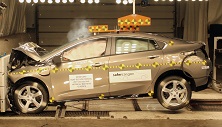
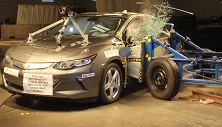
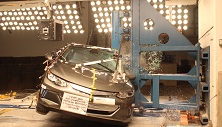
NHTSA crash tests
The agency crash-tested this model year itself. These are its own
photographs and star ratings.
Frontal crash test
Side barrier crash test
Side pole crash test
Photographs taken by NHTSA during its own New Car Assessment Program crash
tests of this model year. Public domain.
Configuration
Overall
Front
Side
Rollover
2017 Chevrolet Volt 5 HB FWD
9.3% risk
When owners complained
A spike years after the car went on sale usually means a part wearing
out on schedule across the whole fleet — the kind of pattern no single
owner can see from inside their own car.
Apr 2016peak 115Sep 2026
NHTSA investigations into the 2017 Chevrolet Volt
An investigation is the step before a recall: the agency has seen enough
complaints to look into a pattern itself. An open one means it thinks
something may be wrong and nothing has been fixed yet.
PE23022Opened 29 Nov 2023Closed 3 Mar 2025ELECTRICAL SYSTEM
Loss of Motive Power due to the Battery Energy Control Module
On November 29, 2023, the Office of Defects Investigations (ODI) opened PE23022 to investigate allegations of a loss of motive power, including a stall, reduced power state, and/or a no start condition due to the Battery Energy Control Module (BECM) in model year (MY) 2016-2019 Chevrolet Volt passenger car vehicles manufactured by General Motors (GM). The BECM is located within the high voltage electric vehicle (EV) battery pack and monitors the temperature, current, and voltage of the high voltage battery cell groups. GM stated that the root cause was identified as an internal failure leading...
DP22005Opened 27 Jan 2023Closed 7 Aug 2023ELECTRICAL SYSTEM:PROPULSION SYSTEM
Pedestrian alert sounds
NHTSA received a petition on or about July 18, 2022, requesting that Federal Motor Vehicle Safety Standard (FMVSS) 141 be applied to all electric and hybrid vehicles operating in the United States. The petition can be reviewed at NHTSA.gov under ODI Number 11486072. FMVSS 141 establishes performance requirements for pedestrian alert sounds for motor vehicles. The standard applies to hybrid and electric vehicles that have a gross vehicle weight rating of 4,536 KG or less or are defined as low-speed vehicles. The standard became fully applicable to all such vehicles manufactured on or after Marc...
Complaints that involved harm
Reports where the owner recorded a crash, a fire, an injury or a death.
at 43,000 milesEucha, OK1 injured
ELECTRICAL SYSTEM
The contact owns a 2017 Chevrolet Volt. The contact stated that while driving approximately 50 MPH, the "Propulsion Power Reduced" and "Shift to Park" messages were intermittently displayed on the instrument panel. The vehicle lost automotive power and stalled, and the contact pulled over to the shoulder to avoid a crash. The failure had occurred on several occasions. The contact sustained emotional distress from the failure. The vehicle was towed back to the residence and then towed to a dealer to be diagnosed, and it was determined that the battery needed to be replaced. The vehicle was towed to an independent mechanic to be diagnosed, and it was determined that the battery energy control module needed to be replaced. The manufacturer was notified of the failure. The failure mileage was approximately 43,000.
NHTSA complaint #11761865 — an unverified report by a vehicle owner.
St Clr Shores, MICrash
VEHICLE SPEED CONTROL
This car has a failed EGR valve which first became evident in March of 2024. There are no parts available, this in an emissions issue but the failure causes blown fuses which can cause the car to completely stop running which is a safety issue. Reduced propulsion is a symptom which is dangerous and this has been confirmed by three Chevy dealerships. I have had the EGR valve cleaned to the tune of $1200, have a deposit on a new valve which doesn't seem to exist for $850. There were no other messages before the failure. I am driving the car with the EGR valve disconnected, mostly on the battery power but no end is in sight to this problem.
NHTSA complaint #11615510 — an unverified report by a vehicle owner.
St Clr Shores, MICrash
ELECTRICAL SYSTEM
This car has a failed EGR valve which first became evident in March of 2024. There are no parts available, this in an emissions issue but the failure causes blown fuses which can cause the car to completely stop running which is a safety issue. Reduced propulsion is a symptom which is dangerous and this has been confirmed by three Chevy dealerships. I have had the EGR valve cleaned to the tune of $1200, have a deposit on a new valve which doesn't seem to exist for $850. There were no other messages before the failure. I am driving the car with the EGR valve disconnected, mostly on the battery power but no end is in sight to this problem.
NHTSA complaint #11615510 — an unverified report by a vehicle owner.
St Clr Shores, MICrash
FUEL/PROPULSION SYSTEM
This car has a failed EGR valve which first became evident in March of 2024. There are no parts available, this in an emissions issue but the failure causes blown fuses which can cause the car to completely stop running which is a safety issue. Reduced propulsion is a symptom which is dangerous and this has been confirmed by three Chevy dealerships. I have had the EGR valve cleaned to the tune of $1200, have a deposit on a new valve which doesn't seem to exist for $850. There were no other messages before the failure. I am driving the car with the EGR valve disconnected, mostly on the battery power but no end is in sight to this problem.
NHTSA complaint #11615510 — an unverified report by a vehicle owner.
Lake Leelanau, MICrash
UNKNOWN OR OTHER
In 2020 my 2017 Chevrolet Volt had an intermittent problem turning off. My Chevrolet dealer worked to fix the problem. This March I had an accident which involved me thinking the car was shut down. I was half way out of the car when I realized it was moving. Before I could get completely in to apply the brakes, I had hit and pushed an object into a building which caused damage to the building and my car. The was a police report which states that I was at fault. My car was towed to my. Chevrolet dealer for repair. The repair took about two months mostly due to obtaining shifting parts. I can now drive the car but the parts to replace the shifting mechanism is still on back order. It is now early October. The “shift into park” as I think the problem has been named, is still an intermittent problem for me. Sometimes the car shuts down promptly as it should. Sometimes however, I go though the process of shutting down a few times before I am confident that the car has really turned off. I would like to know if this defect has caused other accidents. If so, it my mitigate my responsibility for my my accident which has caused me grief and a large increase in my insurance premium. Another reason I am writing is because There has been a report of a fatal accident in Vienna Township, near Flint, Michigan involving a women being pinned under her car after exiting to check her mail box. The article in “M-Live” paper by Joey Oliver [XXX]. The supposition was that she thought her car was in park. I am hoping that the investigators of her accident would consider the possibility of the car being defective. I believe the police report number [XXX] by officer [XXX]. [XXX], 8525 E. Government center dr., Sutton Bay, MI 49653 I have pictures of the accident, etc but don’t know how to upload them Thank you, [XXX] INFORMATION REDACTED PURSUANT TO THE FREEDOM OF INFORMATION ACT (FOIA), 5 U.S.C. 552(B)(6)
NHTSA complaint #11548325 — an unverified report by a vehicle owner.
Lake Leelanau, MICrash
ELECTRICAL SYSTEM
In 2020 my 2017 Chevrolet Volt had an intermittent problem turning off. My Chevrolet dealer worked to fix the problem. This March I had an accident which involved me thinking the car was shut down. I was half way out of the car when I realized it was moving. Before I could get completely in to apply the brakes, I had hit and pushed an object into a building which caused damage to the building and my car. The was a police report which states that I was at fault. My car was towed to my. Chevrolet dealer for repair. The repair took about two months mostly due to obtaining shifting parts. I can now drive the car but the parts to replace the shifting mechanism is still on back order. It is now early October. The “shift into park” as I think the problem has been named, is still an intermittent problem for me. Sometimes the car shuts down promptly as it should. Sometimes however, I go though the process of shutting down a few times before I am confident that the car has really turned off. I would like to know if this defect has caused other accidents. If so, it my mitigate my responsibility for my my accident which has caused me grief and a large increase in my insurance premium. Another reason I am writing is because There has been a report of a fatal accident in Vienna Township, near Flint, Michigan involving a women being pinned under her car after exiting to check her mail box. The article in “M-Live” paper by Joey Oliver [XXX]. The supposition was that she thought her car was in park. I am hoping that the investigators of her accident would consider the possibility of the car being defective. I believe the police report number [XXX] by officer [XXX]. [XXX], 8525 E. Government center dr., Sutton Bay, MI 49653 I have pictures of the accident, etc but don’t know how to upload them Thank you, [XXX] INFORMATION REDACTED PURSUANT TO THE FREEDOM OF INFORMATION ACT (FOIA), 5 U.S.C. 552(B)(6)
NHTSA complaint #11548325 — an unverified report by a vehicle owner.
The most recent complaints
In the owners' own words, exactly as filed with NHTSA.
Seminole, FL
ENGINE
3rd failure of EGR valve (GM part 12691147, superseded by 19436521) on this vehicle. 10/10/2019 at 11,336 mi: Check Engine Light and Driver Information Center displayed "Loss of Propulsion" message; EGR valve diagnosed as cause and replaced by dealer under warranty at no cost. 11/2023 at approx. 30,000 mi: EGR valve failed again; dealer stated OEM part was no longer available from manufacturer due to supply shortage and installed a third-party replacement part; repair not covered, paid out of pocket. 8/26/2026 at 49,864 mi: EGR valve failed a third time; a used, refurbished part was sourced due to continued unavailability of a reliable new OEM part, with repair scheduled for 9/14/2026, again paid out of pocket. This is a known, recurring failure on 2016-2019 Chevrolet Volts, referenced in GM Technical Service Bulletin 19-NA-206. The failure does not present only as an emissions fault — it triggers a "Loss of Propulsion" driver warning, indicating a direct impact on the vehicle's ability to be safely driven. Sustained unavailability of the OEM part is forcing owners toward third-party or used/refurbished parts of unknown long-term reliability, at repeated cost to the owner, in order to keep the vehicle operable.
NHTSA complaint #11763303 — an unverified report by a vehicle owner.
at 43,000 milesEucha, OK1 injured
ELECTRICAL SYSTEM
The contact owns a 2017 Chevrolet Volt. The contact stated that while driving approximately 50 MPH, the "Propulsion Power Reduced" and "Shift to Park" messages were intermittently displayed on the instrument panel. The vehicle lost automotive power and stalled, and the contact pulled over to the shoulder to avoid a crash. The failure had occurred on several occasions. The contact sustained emotional distress from the failure. The vehicle was towed back to the residence and then towed to a dealer to be diagnosed, and it was determined that the battery needed to be replaced. The vehicle was towed to an independent mechanic to be diagnosed, and it was determined that the battery energy control module needed to be replaced. The manufacturer was notified of the failure. The failure mileage was approximately 43,000.
NHTSA complaint #11761865 — an unverified report by a vehicle owner.
at 95,000 milesGreensboro, NC
ELECTRICAL SYSTEM:PROPULSION SYSTEM:TRACTION BATTERY:MANAGEMENT SYSTEM/ENERGY CONTROL MODULE (BMS/BECM)
The contact owns a 2017 Chevrolet Volt. The contact stated that he had experienced a recurring loss of propulsion that would occur shortly after vehicle startup, which was attributed to a failure with the Battery Energy Control Module (BECM). The failure caused the check engine, ABS, Stabili-Trak, and Forward Collision Avoidance warning lights to illuminate. The contact informed the local dealer of the failure and was referred to the manufacturer for assistance. The manufacturer acknowledged that there was a Customer Satisfaction Program for the failure, but the vehicle was not included. The contact was referred by the manufacturer to the NHTSA Hotline to report the failure. The vehicle was not repaired. The failure mileage was approximately 95,000.
NHTSA complaint #11757651 — an unverified report by a vehicle owner.
Mayslick, KY
ELECTRICAL SYSTEM
Chevrolet is denying that my car is included in Special Coverage Bulletin N232432680, because of where it was built. The car is now in Kentucky, which is not a CARB state. Was the reason for a vehicle not to be included in the bulletin because it would be included under CARB? It seems like a loophole they are using not to fix my car. Am I wrong?
NHTSA complaint #11755240 — an unverified report by a vehicle owner.
Whitmore Lake, MI
POWER TRAIN
Battery Energy Control Module Malfunction Module replaced but not covered under Special Coverage N232432680
NHTSA complaint #11755054 — an unverified report by a vehicle owner.
Whitmore Lake, MI
FUEL/PROPULSION SYSTEM
Battery Energy Control Module Malfunction Module replaced but not covered under Special Coverage N232432680
NHTSA complaint #11755054 — an unverified report by a vehicle owner.
Spring Branch, TX
FUEL/PROPULSION SYSTEM
While driving down highway rapidly slowed to 15mph. "reduced propulsion" was displayed with significant battery and gas left. Caused cars to swerve and pile up behind me. The car was inspected by dealer and received a variety of U26XXX codes. Dealer states its a faulty BECM. There was no warning lights on before the incident and have had no issues till then. We were lucky this was during the day. Nighttime would have been a terrible accident with oncoming traffic. Dealer is not wanting to cover BECM repair from GM Special Coverage Bulletin N232432680 that was investigated by your organization a couple of years ago.
NHTSA complaint #11752213 — an unverified report by a vehicle owner.
Washougal, WA
ELECTRICAL SYSTEM
In March 2026, our 2017 Chevrolet Volt (89,300 miles) would not charge nor start, and had to be towed to an authorized Chevrolet dealership in Portland, Oregon. The dealership diagnosed an internal fault in the Battery Energy Control Module (BECM) producing U26XX diagnostic trouble codes, per GM bulletin #18-NA-261, and replaced the BECM under GM Special Coverage N232432680 — GM's field remedy for a known BECM defect affecting 2016–2019 Volts that causes reduced power, no-start, or no-charge conditions (the subject of NHTSA investigation PE23022).The remedy failed immediately. On the day the vehicle was returned to us (March 26, 2026), the check engine light illuminated while driving home on public roads, and the vehicle failed to charge that same night — the identical condition it had before. It was towed back to the dealership. The dealership's second work order confirms in writing that the vehicle "will not start after previous repairs and is having the same issues," and attributes the failure to the high-voltage battery contactor. The dealership informed us the part is no longer produced and cannot be obtained, advising that the vehicle be scrapped. Safety concerns: (1) after the repair, the dealership returned the vehicle to us as fixed, and we drove it approximately 26 miles home on public highways in traffic, unaware the defect was still present — the check engine light illuminated during that drive. This defect is the subject of NHTSA investigation PE23022 into sudden loss of propulsion, we unknowingly operated a defective vehicle in conditions where that failure could have occurred at highway speed; (2) GM's official field remedy for this known defect (Special Coverage N232432680) failed within hours of being performed; and (3) the parts required to complete the remedy are reportedly discontinued, leaving a known safety defect permanently unrepairable. Supporting documents uploaded: dealer repair orders, and the GM warranty history of the N232432680 repair
NHTSA complaint #11751708 — an unverified report by a vehicle owner.
Washougal, WA
FUEL/PROPULSION SYSTEM
In March 2026, our 2017 Chevrolet Volt (89,300 miles) would not charge nor start, and had to be towed to an authorized Chevrolet dealership in Portland, Oregon. The dealership diagnosed an internal fault in the Battery Energy Control Module (BECM) producing U26XX diagnostic trouble codes, per GM bulletin #18-NA-261, and replaced the BECM under GM Special Coverage N232432680 — GM's field remedy for a known BECM defect affecting 2016–2019 Volts that causes reduced power, no-start, or no-charge conditions (the subject of NHTSA investigation PE23022).The remedy failed immediately. On the day the vehicle was returned to us (March 26, 2026), the check engine light illuminated while driving home on public roads, and the vehicle failed to charge that same night — the identical condition it had before. It was towed back to the dealership. The dealership's second work order confirms in writing that the vehicle "will not start after previous repairs and is having the same issues," and attributes the failure to the high-voltage battery contactor. The dealership informed us the part is no longer produced and cannot be obtained, advising that the vehicle be scrapped. Safety concerns: (1) after the repair, the dealership returned the vehicle to us as fixed, and we drove it approximately 26 miles home on public highways in traffic, unaware the defect was still present — the check engine light illuminated during that drive. This defect is the subject of NHTSA investigation PE23022 into sudden loss of propulsion, we unknowingly operated a defective vehicle in conditions where that failure could have occurred at highway speed; (2) GM's official field remedy for this known defect (Special Coverage N232432680) failed within hours of being performed; and (3) the parts required to complete the remedy are reportedly discontinued, leaving a known safety defect permanently unrepairable. Supporting documents uploaded: dealer repair orders, and the GM warranty history of the N232432680 repair
NHTSA complaint #11751708 — an unverified report by a vehicle owner.
Spotsylvania, VA
ELECTRICAL SYSTEM
While driving at highway speeds over 100 miles away from home with my child in the vehicle, the car experienced a sudden, catastrophic loss of propulsion power and entered 'Propulsion Power Reduced' mode, dropping vehicle speed immediately and creating an extreme hazard with high-speed highway traffic. A full computer scan revealed active diagnostic codes U2603 through U2624, confirming an internal hardware communication failure of the Battery Energy Control Module (BECM). This matches GM Technical Service Bulletin 18-NA-261. The vehicle has over 150,000 miles, but I have only owned the car since January. This is a known, systemic manufacturing defect (cracked internal circuit board solder joints) that creates a critical safety liability regardless of vehicle mileage. GM has refused to remedy the safety defect due to the mileage limit.
NHTSA complaint #11745949 — an unverified report by a vehicle owner.
Spotsylvania, VA
FUEL/PROPULSION SYSTEM
While driving at highway speeds over 100 miles away from home with my child in the vehicle, the car experienced a sudden, catastrophic loss of propulsion power and entered 'Propulsion Power Reduced' mode, dropping vehicle speed immediately and creating an extreme hazard with high-speed highway traffic. A full computer scan revealed active diagnostic codes U2603 through U2624, confirming an internal hardware communication failure of the Battery Energy Control Module (BECM). This matches GM Technical Service Bulletin 18-NA-261. The vehicle has over 150,000 miles, but I have only owned the car since January. This is a known, systemic manufacturing defect (cracked internal circuit board solder joints) that creates a critical safety liability regardless of vehicle mileage. GM has refused to remedy the safety defect due to the mileage limit.
NHTSA complaint #11745949 — an unverified report by a vehicle owner.
Pasadena, CA
POWER TRAIN
Received "reduced propulsion" message, with no engine detected. Car slowed to a near stop while driving on the Interstate highway. Very dangerous to have that suddenly happen. Message popped up randomly with no prior warning.
NHTSA complaint #11745522 — an unverified report by a vehicle owner.
Pasadena, CA
ENGINE
Received "reduced propulsion" message, with no engine detected. Car slowed to a near stop while driving on the Interstate highway. Very dangerous to have that suddenly happen. Message popped up randomly with no prior warning.
NHTSA complaint #11745522 — an unverified report by a vehicle owner.
Pasadena, CA
FUEL/PROPULSION SYSTEM
Received "reduced propulsion" message, with no engine detected. Car slowed to a near stop while driving on the Interstate highway. Very dangerous to have that suddenly happen. Message popped up randomly with no prior warning.
NHTSA complaint #11745522 — an unverified report by a vehicle owner.
Apalachin, NY
ELECTRICAL SYSTEM
I was not going to put in a complaint about this failure but after learning about GM creating a special extended warranty program for this issue, I felt it should be addressed and treated as a recall. The battery energy control module (BECM) failed on my 2017 Chevrolet Volt at exactly 170,000 miles in December of 2024, leaving me in a dangerous position on the roadway and almost causing me to be rear ended due to losing the ability to accelerate. I had no choice but to have the vehicle towed to a dealership where it was eventually repaired with an out of pocket cost of $1900. My vehicle was not eligible for the extended warranty program which I find to be unacceptable.
NHTSA complaint #11742228 — an unverified report by a vehicle owner.
Apalachin, NY
FUEL/PROPULSION SYSTEM
I was not going to put in a complaint about this failure but after learning about GM creating a special extended warranty program for this issue, I felt it should be addressed and treated as a recall. The battery energy control module (BECM) failed on my 2017 Chevrolet Volt at exactly 170,000 miles in December of 2024, leaving me in a dangerous position on the roadway and almost causing me to be rear ended due to losing the ability to accelerate. I had no choice but to have the vehicle towed to a dealership where it was eventually repaired with an out of pocket cost of $1900. My vehicle was not eligible for the extended warranty program which I find to be unacceptable.
NHTSA complaint #11742228 — an unverified report by a vehicle owner.
Grand Rapids, MI
ELECTRICAL SYSTEM
BECM failure. My car is available for inspection upon request. This car has unexpectedly stopped adequately accelerating all of a sudden while on the road! This problems has been confirmed by the dealership. The manufacturer has not inspected it. Not much warning. I found out SOME not ALL chevrolet volt 2017 users got their BECM replaced without cost because it is a WELL KNOWN ISSUE with the car. Chevrolet did not provide extended warranty for all chevrolet volt users even though it is an issue with most volts. I do drive much. I got the car when it was brand new and in 8 years accumulated 77k miles. If I had known all of the cars would have had this safety issue I would not have bought the car in the first place. Chevrolet expects me to pay 2500 out of pocket for something they know is faulty and dangerous in their vehicles.
NHTSA complaint #11735404 — an unverified report by a vehicle owner.
Chapel Hill, NC
ENGINE
Egr valve went out ; causing a fuse to go out; which triggered a limp home mode: stranding me on side of road
NHTSA complaint #11732820 — an unverified report by a vehicle owner.
Ferndale, MI
ENGINE
Brought car into Chevrolet dealership for intermittent “miss” when driving. Dealer diagnosed it needed an EGR valve replaced at a cost of around $4,000.00 which is a significant portion of the cars value.
NHTSA complaint #11726050 — an unverified report by a vehicle owner.
Birmingham, MI
POWER TRAIN
Failure of Battery Energy Control Module (BECM), within the high voltage battery. Vehicle is unable to charge and sets “reduced power” message. GM released special coverage bulletin for this issue (N232432680), but this vehicle is not listed due to which state it was registered. Continued failure of the BECM will lead to inoperability of the vehicle.
NHTSA complaint #11725760 — an unverified report by a vehicle owner.
Birmingham, MI
ELECTRICAL SYSTEM
Failure of Battery Energy Control Module (BECM), within the high voltage battery. Vehicle is unable to charge and sets “reduced power” message. GM released special coverage bulletin for this issue (N232432680), but this vehicle is not listed due to which state it was registered. Continued failure of the BECM will lead to inoperability of the vehicle.
NHTSA complaint #11725760 — an unverified report by a vehicle owner.
Birmingham, MI
FUEL/PROPULSION SYSTEM
Failure of Battery Energy Control Module (BECM), within the high voltage battery. Vehicle is unable to charge and sets “reduced power” message. GM released special coverage bulletin for this issue (N232432680), but this vehicle is not listed due to which state it was registered. Continued failure of the BECM will lead to inoperability of the vehicle.
NHTSA complaint #11725760 — an unverified report by a vehicle owner.
at 84,000 milesYukon, OK
ELECTRICAL SYSTEM:PROPULSION SYSTEM:TRACTION BATTERY:MANAGEMENT SYSTEM/ENERGY CONTROL MODULE (BMS/BECM)
The contact owns a 2017 Chevrolet Volt. The contact stated that the vehicle failed to start while parked. The check engine warning light illuminated and remained illuminated, with several unknown warning lights illuminated. The vehicle was restarted. The vehicle was taken to the dealer, where it was diagnosed with Battery Energy Control Module (BECM) failure. The manufacturer was notified of the failure and informed the contact that the repair would be at the owner's expense. The approximate failure mileage was 84,000.
NHTSA complaint #11725069 — an unverified report by a vehicle owner.
at 92,000 milesTorrance, CA
ENGINE
The contact owns a 2017 Chevrolet Volt. The contact stated that while driving at an undisclosed speed or while starting the vehicle, the check engine warning light was unexpectedly illuminated. Additionally, there were several error codes provided through the Mobile App for engine-related failures. The dealer was contacted; however, the vehicle was not diagnosed or repaired. The manufacturer was made aware of the failure and referred the contact to the NHTSA Hotline for assistance. The approximate failure mileage was 92,000.
NHTSA complaint #11724699 — an unverified report by a vehicle owner.
Elgin, IL
FUEL/PROPULSION SYSTEM
Coolant was found inside the Lithium-Ion battery module when the dealership opened it to repair a different issue. They condemned the battery on the spot. There was no damage to the battery module. All PMs were performed at Chevrolet dealerships throughout the life of the car. All recalls were fixed. Including the BECM replacement the car is known have problems with. Car had 127,000 miles on it. One of the service reps even admited that he's seen it on multiple cars and that it is a manufacturing problem. Dealership said the repair is $29,000. The car was $35000 new 10 years ago. Thank God there was no fire, I drove my family around in that car for years. The dealership won't even let me see the diagnosis report online anymore...
NHTSA complaint #11724388 — an unverified report by a vehicle owner.