Owners have filed 233 complaints
about the 2019 BMW X3 with NHTSA between 2019 and 2026.
The largest single group is the electrical system.
Across this model's run it ranks 1 of 23 worst.
The letter says how bad. This says what kind — whether this year drew
an unusual number of complaints, unusually dangerous
ones, or failures that arrived unusually early.
The dashed ring is 50 — the national norm. Further out is worse.
Complaint volume — 95
Against the median year of the BMW X3. 50 means typical for this
model; 100 means roughly double.
Severity — 35
6.9% of these complaints
involved a crash, fire, injury or death, against a national rate of
9.7%.
Early failure — 100
73% of failures with a mileage on record happened under
36,000 miles, against a national rate of
29%.
NHTSA files every complaint against a named sub-assembly, not just a
system. This is the difference between knowing it was "the engine" and
knowing which part of it — the list to hand a mechanic.
Body
2047.6%
Automatic Emergency Braking
819.0%
Camera
37.1%
Warnings
37.1%
Rearview System Braking
24.8%
Instrument Cluster/Panel
24.8%
Hatchback/Liftgate
24.8%
Sun/Moon Roof Assembly
24.8%
When it fails
Odometer readings owners gave when they filed. About half of all
complaints include one.
Under 1,000 miles
912.2%
1,000 – 9,999 miles
3344.6%
10,000 – 24,999 miles
810.8%
25,000 – 49,999 miles
810.8%
50,000 – 74,999 miles
810.8%
75,000 – 99,999 miles
68.1%
100,000 – 149,999 miles
22.7%
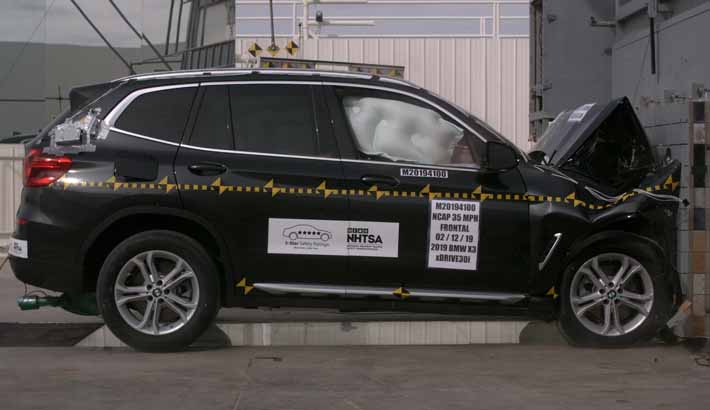
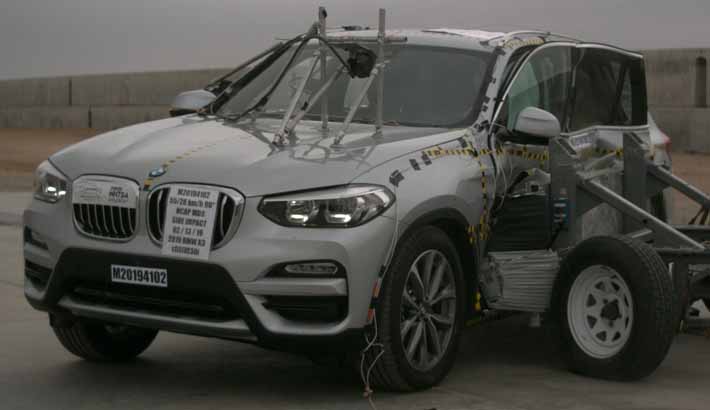
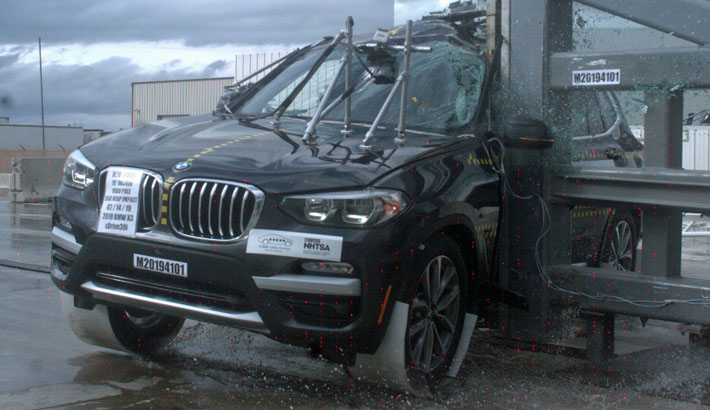
NHTSA crash tests
The agency crash-tested this model year itself. These are its own
photographs and star ratings.
Frontal crash test
Side barrier crash test
Side pole crash test
Photographs taken by NHTSA during its own New Car Assessment Program crash
tests of this model year. Public domain.
Configuration
Overall
Front
Side
Rollover
2019 BMW X3 SUV AWD
17.1% risk
2019 BMW X3 SUV RWD
17.2% risk
When owners complained
A spike years after the car went on sale usually means a part wearing
out on schedule across the whole fleet — the kind of pattern no single
owner can see from inside their own car.
Feb 2019peak 12Sep 2026
Recalls on the 2019 BMW X3
A complaint is one owner's allegation. A recall is the point at which
the manufacturer or a regulator agreed the defect is real and dangerous
enough to fix for free — however old the car is.
United States — NHTSA
24V764000
STRUCTURE
BMW of North America, LLC (BMW) is recalling certain 2018-2022 X3 sDrive30i, X3 xDrive30i, X3 M40i, and X3 M vehicles. The attachment for the rear cargo rail may become damaged in a rear crash and result in the cargo rail detaching.
Risk: Interior rear cargo rail detachment during a crash can increase the risk of injury.
24V534000
STRUCTURE
BMW of North America, LLC (BMW) is recalling certain 2018-2023 X3 sDrive30i, X3 xDrive30i, X3 M40i, and X3 M vehicles. The attachment for the interior cargo rail may become damaged in a rear crash and result in the cargo rail detaching.
Risk: Interior cargo rail detachment during a rear crash can increase the risk of injury.
21V521000
AIR BAGS:FRONTAL
BMW of North America, LLC (BMW) is recalling certain 2018-2019 X3 sDrive30i, X3 xDrive30i, X3 M40i and 2019 X4 xDrive30i, and X4 M40i vehicles. The front passenger seat occupant classification system may have been improperly assembled, which could result in the misclassification of the seat as unoccupied, and deactivate the front air bag.
Risk: A deactivated front air bag will not deploy in the event of a crash, increasing the risk of injury.
21V096000
BACK OVER PREVENTION: SENSING SYSTEM: CAMERA
BMW of North America, LLC (BMW) is recalling certain 2019-2021 X3 sDrive30i, X3 xDrive30i, X3 M40i, X3M, X4 xDrive30i, X4 M40i, M550i, X4M, X5 sDrive40i, X5 xDrive40i, X5 xDrive50i, X5M, X5 M50i, X7 xDrive40i, X7 xDrive50i, X7 M50i, Alpina XB7, 330i, 330i xDrive, M340i, M340i xDrive, and 8 Series Coupe, Convertible and Grand Coupe, 840i, 840i xDrive, M850i xDrive, M8, 2020-2021 530e, 530e xDrive, 330e, 330e xDrive, 745Le, 745Le xDrive, X5 xDrive45e, X3 xDrive30e, X6 sDrive40i, X6 xDrive40i, X6 xDrive50i, X6 M50i, X6M, 530i, 530i xDrive, 540i, 540i xDrive, M550i xDrive, M5, 740i, 740Li, 740Li xDrive, M760i Drive, M760Li xDrive, 750Li xDrive Alpina, Alpina B7 xDrive, and 2021 4 Series Coupe 430i, 430i xDrive, M440i xDrive vehicles. When shifting into Reverse, a small portion of the rearview image may be obscured, or the screen may not illuminate. As such, these vehicles fail to comply with the requirements of Federal Motor Vehicle Safety Standard (FMVSS) number 111, "Rear Visibility."
Risk: If the driver relies on only the rearview camera image, the missing or reduced rearview image view can increase the risk of a crash or injury.
20V152000
ELECTRICAL SYSTEM: INSTRUMENT CLUSTER/PANEL
BMW of North America, LLC (BMW) is recalling certain 2019-2020 X4 xDrive30i and X4 M40i, and 2018-2020 X3 sDrive30i, X3 xDrive30i, X3 M40i, and X3M vehicles. The instrument panel casing may not have been tightened properly to the passenger air bag.
Risk: In the event of a crash necessitating air bag deployment, the air bag could damage the instrument panel and cause small pieces of the panel to strike the driver or other occupants, increasing the risk of injury.
19V684000
BACK OVER PREVENTION: SENSING SYSTEM: CAMERA
BMW of North America, LLC (BMW) is recalling certain 2018 540d, 2018-2020 530i, 530i xDrive, 540i, 540i xDrive, M550i xDrive, M5, 530e, 530e xDrive, X3 sDrive, X3 xDrive, X3 M40i, X3 M, and 2019-2020 X4 xDrive, X4 M40i, X4 M, X7 xDrive, X7 M50i, 740Li, 740Li xDrive, 750Li, 750Li xDrive, 8 Series Convertible and Coupe 840i, 840i xDrive, M850i xDrive, X5 sDrive, X5 xDrive, X5 M50i, X6 xDrive, X6 M50i, 330i, 330i xDrive, M340i, M340i xDrive, Z4 sDrive, Z4 M40i, 740Le xDrive and 745Le xDrive, 2018-2019 640i xDrive Gran Turismo and Rolls-Royce Phantom, 2019 M850i xDrive Gran Coupe and Rolls-Royce Cullinan and 2020 Toyota Supra vehicles. The back-up camera and display settings can be adjusted such that the rear view image is no longer visible and the system will retain that setting the next time the vehicle is placed in reverse. As such, these vehicles fail to comply with the requirements of Federal Motor Vehicle Safety Standard (FMVSS) number 111, "Rearview Mirrors."
Risk: The lack of an image in the back-up camera display increases the risk of a crash.
19V563000
SEATS
BMW of North America, LLC (BMW) is recalling certain 2018-2019 X3 sDrive30i, xDrive30i and M40i and 2019 X4 xDrive30i and M40i vehicles. The front seatback frames may have been improperly welded, allowing the seatback to unexpectedly fold forward or rearward.
Risk: In the event of a crash, there is an increased risk of injury if the seatback folds forward or rearward.
19V291000
AIR BAGS:FRONTAL:PASSENGER SIDE:INFLATOR MODULE
BMW of North America, LLC (BMW) is recalling certain 2019 X3 sDrive30i, X3 xDrive30i, X3 M40i, and X4 M40i vehicles. The instrument panel assembly may have been improperly manufactured, possibly affecting the deployment of the passenger's frontal air bag.
Risk: If the front passenger air bag does not deploy properly in the event of a crash, the occupant has an increased risk of injury.
Canada — Transport Canada
Canada runs its own recall programme, and its campaigns do not
always mirror the American ones.
Recall 2024609557 units in Canada
Structure
Issue: On certain vehicles, the recall repairs completed by a BMW dealer during recall 51 84 24RC (Transport Canada recall no. 2024-410) may not be effective. As a result, a second repair is required. On certain vehicles, the cargo area tie down rails could detach in a rear crash. Safety Risk: A cargo rail that detaches in a crash could create a risk of injury to rear passengers. Corrective Actions: BMW will notify owners by mail and advise you to take your vehicle to a dealership to replace the fasteners that secure the cargo rails to the body.
Recall 2024544587,250 units in Canada
Label
Issue: On certain vehicles, the tire and loading information label does not list that there is no spare tire in both official languages. The label reads as "NONE" when it should read as "NONE / AUCUN". Canadian regulations require the information to be listed on the label in both English and French. Safety Risk: This error does not affect vehicle safety. Corrective Actions: This is not a recall. The company has corrected the tire and loading information label for all new vehicles.
Recall 202441013,830 units in Canada
Structure
Issue: On certain vehicles, the cargo area tie down rails could detach in a rear crash. Safety Risk: A cargo rail that detaches in a crash could create a risk of injury to rear passengers. Corrective Actions: BMW will notify owners by mail and advise you to take your vehicle to a dealership to replace the fasteners that secure the cargo rails to the body.
Recall 202141914 units in Canada
Airbag
Issue: On certain vehicles, the seat trim may not be properly attached to the front passenger seat. Over time, this could cause the occupant classification system (OCS) not to work properly. If this happens, the airbag system can turn off the passenger-front airbag even when an adult is sitting in the seat. Safety Risk: In a crash where an airbag is required, an airbag that does not inflate could increase the risk of injury for an adult passenger. Corrective Action: BMW will notify owners by mail and instruct you to make an appointment with a dealer to replace the front passenger seat cushion (including the occupant classification system).
Recall 201948014,323 units in Canada
Visual System
Issue: On certain vehicles, the rearview camera does not return to the default settings when it turns on. This could make the rearview image difficult to see if a driver had previously adjusted the camera display brightness at or near the lowest setting, and contrast at or near the highest setting. Canadian regulations require that the rearview display returns to the default view each time the camera is turned on. Safety Risk: Reduced rear visibility could increase the risk of a crash. Corrective Actions: The company will notify owners by mail and instruct them to take their vehicle to a dealer to update the software for the rearview camera. Drivers are recommended not to adjust the display brightness at or near the lowest setting, and contrast at or near the highest setting, until this recall is completed.
Recall 20191772 units in Canada
Airbag
Issue: On certain vehicles, the instrument trim panel could cause the passenger-front airbag not to deploy properly in a crash. Safety Risk: A passenger-front airbag that does not work properly could cause increased injuries in a crash. Corrective Actions: BMW dealers will replace the instrument trim panel prior to vehicle sale.
Recall 20184971,313 units in Canada
Engine
On certain vehicles, a crankshaft sensor error may cause the engine to stall. This would result in a loss of motive power, which could increase the risk of a crash causing injury and/or damage to property. Correction: Dealers will replace the crankshaft sensor. Note: This condition would result in the illumination of the check engine warning lamp and an “engine malfunction” message appearing in the instrument cluster. Note: This is an expansion of recall 2018-373.
Reports where the owner recorded a crash, a fire, an injury or a death.
Fremont, CAFire
UNKNOWN OR OTHER
**Description of Incident** On **July 25, 2026**, I parked my 2019 BMW X3 xDrive30i in a parking lot and turned the engine off. The vehicle was shifted into Park, locked, and I walked into a nearby store. At approximately 6:41 p.m., I received the update on my phone confirming that my vehicle had been locked. I remained inside the store for approximately six minutes. My purchase transaction was completed at approximately 6:47 p.m., at which time I immediately exited the store. When I returned to the parking lot, I found my vehicle fully engulfed in flames, not merely smoking. The fire had developed rapidly during the brief period the vehicle was parked and unattended. Prior to parking the vehicle, it had been operating normally. There were no warning lights illuminated on the instrument panel, including no check engine light, no engine overheating warning, no temperature warnings, and no other indications of a mechanical or electrical problem. The vehicle was not overdue for scheduled maintenance, and I had no reason to believe there was any issue that would place the vehicle at risk of catching fire. The vehicle was completely destroyed by the fire, which also spread to nearby parked vehicles. Based on the absence of any warning signs and the fact that the fire occurred while the vehicle was parked with the engine turned off for only a few minutes, I am requesting that this incident be investigated to determine whether it may have resulted from a vehicle defect.
NHTSA complaint #11752961 — an unverified report by a vehicle owner.
North Hollywood, CA1 injured
SERVICE BRAKES
At some point in June 2025, between approximately 11 a.m. and 2 p.m., I was driving southbound on the 110 Freeway in Los Angeles, just south of the 134 interchange, at approximately 45 mph. Traffic was light, with no vehicles in front of me and no vehicles attempting to merge into my lane. Without warning, a bright red alert appeared on the dashboard of my 2019 BMW x3 and the vehicle suddenly applied full braking. The position of my arms at that moment caused an injury to my right elbow, which has remained painful since the incident. In January 2026, under nearly identical circumstances, the emergency warning appeared again. This time, the brakes did not engage. In July, I contacted BMW Corporate and service center regarding these incidents. I found their response dismissive, stating that “sometimes that happens.” A service center later informed me that this is a known issue referred to as “phantom braking.” Having experienced this firsthand, I believe this represents a serious safety concern. In addition to my injury, I could easily have been rear-ended at freeway speed. Despite acknowledging the issue, BMW Corporate requested that I sign an indemnity waiver in exchange for covering only the inspection cost. This response feels inappropriate, as their initial focus appeared to be limiting liability rather than addressing a known safety defect. Given that this is reportedly a known issue, I believe an inquiry is warranted into how often this has occurred and whether others have been injured.
NHTSA complaint #11710937 — an unverified report by a vehicle owner.
At some point in June 2025, between approximately 11 a.m. and 2 p.m., I was driving southbound on the 110 Freeway in Los Angeles, just south of the 134 interchange, at approximately 45 mph. Traffic was light, with no vehicles in front of me and no vehicles attempting to merge into my lane. Without warning, a bright red alert appeared on the dashboard of my 2019 BMW x3 and the vehicle suddenly applied full braking. The position of my arms at that moment caused an injury to my right elbow, which has remained painful since the incident. In January 2026, under nearly identical circumstances, the emergency warning appeared again. This time, the brakes did not engage. In July, I contacted BMW Corporate and service center regarding these incidents. I found their response dismissive, stating that “sometimes that happens.” A service center later informed me that this is a known issue referred to as “phantom braking.” Having experienced this firsthand, I believe this represents a serious safety concern. In addition to my injury, I could easily have been rear-ended at freeway speed. Despite acknowledging the issue, BMW Corporate requested that I sign an indemnity waiver in exchange for covering only the inspection cost. This response feels inappropriate, as their initial focus appeared to be limiting liability rather than addressing a known safety defect. Given that this is reportedly a known issue, I believe an inquiry is warranted into how often this has occurred and whether others have been injured.
NHTSA complaint #11710937 — an unverified report by a vehicle owner.
Spring, TXCrash
VEHICLE SPEED CONTROL
Subject: Rear Differential Mount Failure and Driveshaft Breakage — Sudden Loss of Vehicle Control at Highway Speed Complaint Summary: While driving at highway speed, I experienced a sudden and extremely loud bang from the rear of the vehicle. Immediately afterward, I lost complete control of the rear end, accompanied by violent clanking and grinding noises from the driveline area. The gearbox then stalled, leaving the vehicle disabled in the middle of the highway. Upon inspection, it was determined that a rear differential mounting bolt had sheared, causing the differential to shift violently out of position. This sudden movement resulted in the driveshaft breaking, which further destabilized the vehicle and led to a severe and immediate loss of control. This failure occurred without warning and created an extremely dangerous situation. The sudden loss of drivetrain integrity at highway speed placed both myself and nearby motorists at serious risk of a crash. A component as critical as a differential mount or driveshaft should not fail under normal operating conditions. This incident strongly indicates a serious design or manufacturing defect affecting the vehicle’s powertrain and structural safety. Requested Action: I urge the NHTSA to investigate rear differential mounting and driveshaft failures on this vehicle model. Such failures can lead to catastrophic loss of control, and immediate attention is necessary to prevent future incidents and ensure driver safety.
NHTSA complaint #11695243 — an unverified report by a vehicle owner.
Spring, TXCrash
STEERING
Subject: Rear Differential Mount Failure and Driveshaft Breakage — Sudden Loss of Vehicle Control at Highway Speed Complaint Summary: While driving at highway speed, I experienced a sudden and extremely loud bang from the rear of the vehicle. Immediately afterward, I lost complete control of the rear end, accompanied by violent clanking and grinding noises from the driveline area. The gearbox then stalled, leaving the vehicle disabled in the middle of the highway. Upon inspection, it was determined that a rear differential mounting bolt had sheared, causing the differential to shift violently out of position. This sudden movement resulted in the driveshaft breaking, which further destabilized the vehicle and led to a severe and immediate loss of control. This failure occurred without warning and created an extremely dangerous situation. The sudden loss of drivetrain integrity at highway speed placed both myself and nearby motorists at serious risk of a crash. A component as critical as a differential mount or driveshaft should not fail under normal operating conditions. This incident strongly indicates a serious design or manufacturing defect affecting the vehicle’s powertrain and structural safety. Requested Action: I urge the NHTSA to investigate rear differential mounting and driveshaft failures on this vehicle model. Such failures can lead to catastrophic loss of control, and immediate attention is necessary to prevent future incidents and ensure driver safety.
NHTSA complaint #11695243 — an unverified report by a vehicle owner.
Spring, TXCrash
ENGINE
Subject: Rear Differential Mount Failure and Driveshaft Breakage — Sudden Loss of Vehicle Control at Highway Speed Complaint Summary: While driving at highway speed, I experienced a sudden and extremely loud bang from the rear of the vehicle. Immediately afterward, I lost complete control of the rear end, accompanied by violent clanking and grinding noises from the driveline area. The gearbox then stalled, leaving the vehicle disabled in the middle of the highway. Upon inspection, it was determined that a rear differential mounting bolt had sheared, causing the differential to shift violently out of position. This sudden movement resulted in the driveshaft breaking, which further destabilized the vehicle and led to a severe and immediate loss of control. This failure occurred without warning and created an extremely dangerous situation. The sudden loss of drivetrain integrity at highway speed placed both myself and nearby motorists at serious risk of a crash. A component as critical as a differential mount or driveshaft should not fail under normal operating conditions. This incident strongly indicates a serious design or manufacturing defect affecting the vehicle’s powertrain and structural safety. Requested Action: I urge the NHTSA to investigate rear differential mounting and driveshaft failures on this vehicle model. Such failures can lead to catastrophic loss of control, and immediate attention is necessary to prevent future incidents and ensure driver safety.
NHTSA complaint #11695243 — an unverified report by a vehicle owner.
The most recent complaints
In the owners' own words, exactly as filed with NHTSA.
Lexington, NC
UNKNOWN OR OTHER
UNKNOWN cause. while driving approximately 45–55 mph, the vehicle experienced a sudden and unexpected braking event and engine shut down. •The vehicle automatically came to an abrupt, complete stop. •The engine shut off and then immediately restarted automatically. •A “Service Rear Pads” warning appeared after the vehicle auto-restarted. The vehicle did not gradually slow down; it suddenly and forcefully braked to a complete stop and shut down completely. This was a serious and potentially dangerous safety event as an unexpected stop/shut down event at 45–55 mph could have created a significant risk of collision. We contacted the BMW service center and scheduled a diagnostic appointment for June 22. During the June service visit, the dealership performed: diagnostics, rear brakes and rotors replacement, A/C recharge, tire rotation and balance, and oil change/service. Following the June service, we began experiencing new and intermittent symptoms that had not been present before, including: Ticking, metal clanking, new road/tire noise, Changes in vehicle dynamics and overall driving feel, other intermittent noises. On July 21, we contacted BMW to report the new intermittent noises and changes following the June service and requested an appointment to have these concerns evaluated. An appointment was scheduled for July 24. The July MPI identified several concerns that differed substantially from the June MPI, including: Rear differential leak, worn motor mounts, low battery concerns, & uneven tire wear and cracking. We also observed a permanent brake-pad imprint on a new rotor. These discrepancies raised additional questions and we were told by the SM that the technician had “missed” them in June, even though he documented as good. We refused to accept the X3 back for now d/t safety concerns, and we notified BMW of North America for investigation. The cause for the critical shut down event remains unknown. How can Flow BMW assure it's safe to drive?
NHTSA complaint #11764232 — an unverified report by a vehicle owner.
Lexington, NC
ENGINE
UNKNOWN cause. while driving approximately 45–55 mph, the vehicle experienced a sudden and unexpected braking event and engine shut down. •The vehicle automatically came to an abrupt, complete stop. •The engine shut off and then immediately restarted automatically. •A “Service Rear Pads” warning appeared after the vehicle auto-restarted. The vehicle did not gradually slow down; it suddenly and forcefully braked to a complete stop and shut down completely. This was a serious and potentially dangerous safety event as an unexpected stop/shut down event at 45–55 mph could have created a significant risk of collision. We contacted the BMW service center and scheduled a diagnostic appointment for June 22. During the June service visit, the dealership performed: diagnostics, rear brakes and rotors replacement, A/C recharge, tire rotation and balance, and oil change/service. Following the June service, we began experiencing new and intermittent symptoms that had not been present before, including: Ticking, metal clanking, new road/tire noise, Changes in vehicle dynamics and overall driving feel, other intermittent noises. On July 21, we contacted BMW to report the new intermittent noises and changes following the June service and requested an appointment to have these concerns evaluated. An appointment was scheduled for July 24. The July MPI identified several concerns that differed substantially from the June MPI, including: Rear differential leak, worn motor mounts, low battery concerns, & uneven tire wear and cracking. We also observed a permanent brake-pad imprint on a new rotor. These discrepancies raised additional questions and we were told by the SM that the technician had “missed” them in June, even though he documented as good. We refused to accept the X3 back for now d/t safety concerns, and we notified BMW of North America for investigation. The cause for the critical shut down event remains unknown. How can Flow BMW assure it's safe to drive?
NHTSA complaint #11764232 — an unverified report by a vehicle owner.
UNKNOWN cause. while driving approximately 45–55 mph, the vehicle experienced a sudden and unexpected braking event and engine shut down. •The vehicle automatically came to an abrupt, complete stop. •The engine shut off and then immediately restarted automatically. •A “Service Rear Pads” warning appeared after the vehicle auto-restarted. The vehicle did not gradually slow down; it suddenly and forcefully braked to a complete stop and shut down completely. This was a serious and potentially dangerous safety event as an unexpected stop/shut down event at 45–55 mph could have created a significant risk of collision. We contacted the BMW service center and scheduled a diagnostic appointment for June 22. During the June service visit, the dealership performed: diagnostics, rear brakes and rotors replacement, A/C recharge, tire rotation and balance, and oil change/service. Following the June service, we began experiencing new and intermittent symptoms that had not been present before, including: Ticking, metal clanking, new road/tire noise, Changes in vehicle dynamics and overall driving feel, other intermittent noises. On July 21, we contacted BMW to report the new intermittent noises and changes following the June service and requested an appointment to have these concerns evaluated. An appointment was scheduled for July 24. The July MPI identified several concerns that differed substantially from the June MPI, including: Rear differential leak, worn motor mounts, low battery concerns, & uneven tire wear and cracking. We also observed a permanent brake-pad imprint on a new rotor. These discrepancies raised additional questions and we were told by the SM that the technician had “missed” them in June, even though he documented as good. We refused to accept the X3 back for now d/t safety concerns, and we notified BMW of North America for investigation. The cause for the critical shut down event remains unknown. How can Flow BMW assure it's safe to drive?
NHTSA complaint #11764232 — an unverified report by a vehicle owner.
at 69,000 milesPalm Beach Garden, FL
ENGINE AND ENGINE COOLING
The contact owns a 2019 BMW X3. While the vehicle was at an independent mechanic for maintenance, the technician discovered an active coolant leak coming from the coolant expansion tank. The mechanic stated that the leak was caused by excessive system pressure stressing the factory plastic tank. The mechanic informed the contact that if the issue was not resolved, the failure might become a major coolant leak into the engine, and the engine would need to be replaced. The vehicle was not repaired because the leak was coming from several areas. The contact stated that all the plastic parts need to be replaced with metallic parts. The vehicle was towed to the dealer but was not yet diagnosed. The vehicle was not repaired. The manufacturer was notified of the failure. The failure mileage was 69,000.
NHTSA complaint #11759410 — an unverified report by a vehicle owner.
Port Lavaca, TX
SUSPENSION
I was driving in my bmw x3 going about 35 miles an hour and hit a small pothole next thing I know is I got a flat tire when I pulled over the perch plate on the strut had slipped down and hit the tire causing it to blow out and now I'm stuck having to replace the entire strut assembly
NHTSA complaint #11755647 — an unverified report by a vehicle owner.
Fremont, CAFire
UNKNOWN OR OTHER
**Description of Incident** On **July 25, 2026**, I parked my 2019 BMW X3 xDrive30i in a parking lot and turned the engine off. The vehicle was shifted into Park, locked, and I walked into a nearby store. At approximately 6:41 p.m., I received the update on my phone confirming that my vehicle had been locked. I remained inside the store for approximately six minutes. My purchase transaction was completed at approximately 6:47 p.m., at which time I immediately exited the store. When I returned to the parking lot, I found my vehicle fully engulfed in flames, not merely smoking. The fire had developed rapidly during the brief period the vehicle was parked and unattended. Prior to parking the vehicle, it had been operating normally. There were no warning lights illuminated on the instrument panel, including no check engine light, no engine overheating warning, no temperature warnings, and no other indications of a mechanical or electrical problem. The vehicle was not overdue for scheduled maintenance, and I had no reason to believe there was any issue that would place the vehicle at risk of catching fire. The vehicle was completely destroyed by the fire, which also spread to nearby parked vehicles. Based on the absence of any warning signs and the fact that the fire occurred while the vehicle was parked with the engine turned off for only a few minutes, I am requesting that this incident be investigated to determine whether it may have resulted from a vehicle defect.
NHTSA complaint #11752961 — an unverified report by a vehicle owner.
Palm Beach Gardens, FL
UNKNOWN OR OTHER
I bought my 2019 BMW X3 late 2025 before Christmas. The Carfax was fine and there were no open recalls on the vehicle. The vehicle had been serviced regularly at BMW facilities. Our family mechanic looked at the vehicle before I bought it and performed some basic diagnostics. The vehicle appeared fine. There were no error codes and all of the fluids were topped off. I don't know if the issues with the coolant were there before I purchased the vehicle or if they happened afterwards. There were no warning lights and everything looked good. This car is garage kept and is used a couple of times a week. I did my research on the internet and took my car in for an oil change at a highly-rated independent auto repair facility that specializes in European vehicles and are famous for providing dealership-level expertise, ASE-certified with factory trained technicians from Germany. On March 5th, 2026, when I went to pick up my car, they told me the bad news that is a well known manufacturer defect within the industry regarding these vehicles. They used plastic components in the engine compartment and in the cooling system, which makes the vehicles malfunction. From their report, with pictures, they state the following repairs need to be made, "During the vehicle inspection noticed active coolant leaks are present from multiple locations. The radiator plastic tank actively leaking coolant. The water pump change over valve leaking coolant. The turbocharger coolant line has a coolant crud build up . Oil filter housing and coolant flange on the cylinder block are discolored. For proper cooling system repair recommend complete update of the cooling system. Both balance shaft end caps leaking oil. Recommend replacement during cooling system update." They quoted me $8,914.86 for this repair. That's over HALF the value of the vehicle. They said the entire system needs to be replaced because ALL of the plastic parts in Florida's hot sun will fail. Sudden coolant failures in FL = DEATH.
NHTSA complaint #11748660 — an unverified report by a vehicle owner.
Palm Beach Gardens, FL
ENGINE
I bought my 2019 BMW X3 late 2025 before Christmas. The Carfax was fine and there were no open recalls on the vehicle. The vehicle had been serviced regularly at BMW facilities. Our family mechanic looked at the vehicle before I bought it and performed some basic diagnostics. The vehicle appeared fine. There were no error codes and all of the fluids were topped off. I don't know if the issues with the coolant were there before I purchased the vehicle or if they happened afterwards. There were no warning lights and everything looked good. This car is garage kept and is used a couple of times a week. I did my research on the internet and took my car in for an oil change at a highly-rated independent auto repair facility that specializes in European vehicles and are famous for providing dealership-level expertise, ASE-certified with factory trained technicians from Germany. On March 5th, 2026, when I went to pick up my car, they told me the bad news that is a well known manufacturer defect within the industry regarding these vehicles. They used plastic components in the engine compartment and in the cooling system, which makes the vehicles malfunction. From their report, with pictures, they state the following repairs need to be made, "During the vehicle inspection noticed active coolant leaks are present from multiple locations. The radiator plastic tank actively leaking coolant. The water pump change over valve leaking coolant. The turbocharger coolant line has a coolant crud build up . Oil filter housing and coolant flange on the cylinder block are discolored. For proper cooling system repair recommend complete update of the cooling system. Both balance shaft end caps leaking oil. Recommend replacement during cooling system update." They quoted me $8,914.86 for this repair. That's over HALF the value of the vehicle. They said the entire system needs to be replaced because ALL of the plastic parts in Florida's hot sun will fail. Sudden coolant failures in FL = DEATH.
NHTSA complaint #11748660 — an unverified report by a vehicle owner.
Glen Mills, PA
UNKNOWN OR OTHER
I am submitting this complaint regarding a serious mechanical and safety issue involving my 2019 BMW X3. On or around January 21, 2024, while driving from my home, a warning signal suddenly appeared on my dashboard related to the vehicle’s cooling system/engine. Due to safety concerns, I pulled into a nearby Wawa parking lot, which was the safest available place to stop at the time. I turned the vehicle off and waited approximately 15 minutes before carefully driving the vehicle back home. After inspection and diagnosis, I was informed that the vehicle required extensive repairs, including an engine replacement and cooling system repairs. At the time the coolant warning appeared, the replacement engine reportedly had approximately 59 miles on it. I believe a sudden engine or cooling system malfunction while operating a vehicle presents a serious safety concern for drivers, passengers, and others on the roadway. In addition, I experienced issues involving the shark fin antenna on the vehicle, which I understand may be connected to broader complaints involving BMW vehicles. I am requesting that NHTSA review this matter to determine whether these issues may indicate a broader defect or safety-related concern affecting other consumers. I am willing to provide supporting documentation including repair invoices, dealership records, photographs, and any additional information requested. Thank you for your attention to this matter and for your commitment to vehicle safety.
NHTSA complaint #11740824 — an unverified report by a vehicle owner.
Glen Mills, PA
ENGINE
I am submitting this complaint regarding a serious mechanical and safety issue involving my 2019 BMW X3. On or around January 21, 2024, while driving from my home, a warning signal suddenly appeared on my dashboard related to the vehicle’s cooling system/engine. Due to safety concerns, I pulled into a nearby Wawa parking lot, which was the safest available place to stop at the time. I turned the vehicle off and waited approximately 15 minutes before carefully driving the vehicle back home. After inspection and diagnosis, I was informed that the vehicle required extensive repairs, including an engine replacement and cooling system repairs. At the time the coolant warning appeared, the replacement engine reportedly had approximately 59 miles on it. I believe a sudden engine or cooling system malfunction while operating a vehicle presents a serious safety concern for drivers, passengers, and others on the roadway. In addition, I experienced issues involving the shark fin antenna on the vehicle, which I understand may be connected to broader complaints involving BMW vehicles. I am requesting that NHTSA review this matter to determine whether these issues may indicate a broader defect or safety-related concern affecting other consumers. I am willing to provide supporting documentation including repair invoices, dealership records, photographs, and any additional information requested. Thank you for your attention to this matter and for your commitment to vehicle safety.
NHTSA complaint #11740824 — an unverified report by a vehicle owner.
Painesville, OH
UNKNOWN OR OTHER
My SOS system has failed due to tsp/atm module defect from faulty shark fin component. My vehicle is off line and im unable to receive emergency services in case of an emergent situation.
NHTSA complaint #11740194 — an unverified report by a vehicle owner.
APO, NY
STRUCTURE:BODY:HATCHBACK/LIFTGATE
While driving our BMW 2019 X3 on the highway, other drivers honked to get my attention that our vehicle's rear hatch was partially open. When we came to a stop light, I had my son riding in the passenger seat press the hatch button on the key fob to close the hatch. Instead this fully opened the back hatch. We continued pressing the fob button in an attempt to get the hatch to close without having to exit the vehicle. Rather than exit the vechicle in the middle of the roadway, we drove about 50 yards until we could pull over safely. A motorcyclist had been following us, and came up behind and communicated that he wanted to press the button to close the hatch. After I gave my consent, he pressed the close button and the hatch closed and latched. My husband has previously had incidents where after parking the BMW, he finds the back hatch open. He's also researched online this is apparently an issue. Reference: [XXX] NHTSA claim XXX INFORMATION REDACTED PURSUANT TO THE FREEDOM OF INFORMATION ACT (FOIA), 5 U.S.C. 552(B)(6)
NHTSA complaint #11740123 — an unverified report by a vehicle owner.
Painesville, OH
SERVICE BRAKES
Rear caliper locking up when in reverse. Knocking noise and crunching sound.
NHTSA complaint #11740195 — an unverified report by a vehicle owner.
Fuquay Varina, NC
POWER TRAIN
My 2019 BMW X3 equipped with a B46 engine developed a significant coolant leak at approximately 80,000 miles. The vehicle displayed a low coolant warning, and coolant was visibly leaking underneath the vehicle. Around the same time, I began noticing excessive white exhaust/steam during cold starts and, for the first time since owning the vehicle, had to add engine oil between scheduled oil changes. The vehicle is currently undergoing inspection by an independent repair facility. Preliminary findings indicate concerns involving premature failure of critical plastic cooling system and/or oil filter housing components. Based on my research, these failures appear consistent with widespread complaints involving BMW B46/B48 engine cooling system and oil filter housing defects. I am concerned this defect could lead to sudden coolant loss, overheating, engine failure, or unsafe driving conditions. Prior to the coolant warning appearing, there were no significant alerts indicating a major or imminent cooling system failure. The apparent failure of critical plastic engine cooling components under normal driving conditions raises serious concerns regarding the durability and safety of these parts. I have photographs documenting the coolant leak, as well as detailed notes and diagnostic information from the repair facility, available upon request. The vehicle is available for inspection.
NHTSA complaint #11739354 — an unverified report by a vehicle owner.
Fuquay Varina, NC
UNKNOWN OR OTHER
My 2019 BMW X3 equipped with a B46 engine developed a significant coolant leak at approximately 80,000 miles. The vehicle displayed a low coolant warning, and coolant was visibly leaking underneath the vehicle. Around the same time, I began noticing excessive white exhaust/steam during cold starts and, for the first time since owning the vehicle, had to add engine oil between scheduled oil changes. The vehicle is currently undergoing inspection by an independent repair facility. Preliminary findings indicate concerns involving premature failure of critical plastic cooling system and/or oil filter housing components. Based on my research, these failures appear consistent with widespread complaints involving BMW B46/B48 engine cooling system and oil filter housing defects. I am concerned this defect could lead to sudden coolant loss, overheating, engine failure, or unsafe driving conditions. Prior to the coolant warning appearing, there were no significant alerts indicating a major or imminent cooling system failure. The apparent failure of critical plastic engine cooling components under normal driving conditions raises serious concerns regarding the durability and safety of these parts. I have photographs documenting the coolant leak, as well as detailed notes and diagnostic information from the repair facility, available upon request. The vehicle is available for inspection.
NHTSA complaint #11739354 — an unverified report by a vehicle owner.
Fuquay Varina, NC
ENGINE
My 2019 BMW X3 equipped with a B46 engine developed a significant coolant leak at approximately 80,000 miles. The vehicle displayed a low coolant warning, and coolant was visibly leaking underneath the vehicle. Around the same time, I began noticing excessive white exhaust/steam during cold starts and, for the first time since owning the vehicle, had to add engine oil between scheduled oil changes. The vehicle is currently undergoing inspection by an independent repair facility. Preliminary findings indicate concerns involving premature failure of critical plastic cooling system and/or oil filter housing components. Based on my research, these failures appear consistent with widespread complaints involving BMW B46/B48 engine cooling system and oil filter housing defects. I am concerned this defect could lead to sudden coolant loss, overheating, engine failure, or unsafe driving conditions. Prior to the coolant warning appearing, there were no significant alerts indicating a major or imminent cooling system failure. The apparent failure of critical plastic engine cooling components under normal driving conditions raises serious concerns regarding the durability and safety of these parts. I have photographs documenting the coolant leak, as well as detailed notes and diagnostic information from the repair facility, available upon request. The vehicle is available for inspection.
NHTSA complaint #11739354 — an unverified report by a vehicle owner.
Beverly Hills, MI
UNKNOWN OR OTHER
Our 2019 BMW X3 M40i shows "EMERGENCY CALL SYSTEM MALFUNCTION" which means the "SOS" system, which is crucial for post-collision response, fails. Erhardt BMW in Bloomfield Hills, Michigan confirmed water leakage due to defective sealing around the roof-mounted shark fin antenna damaged the Telematics Control Box (TCB) and now requires replacement. The estimated cost is $3,600. Some quick research revealed this to be a repeated problem with my vehicle. BMW has acknowledged it as a defect in 2017-2023 model year BMW M440i, M550i, X1, X3, X4, X5, X6, X7, 330, 340i and 750i vehicles and fix it at no cost, but only for citizens of [XXX] , as reported by [XXX] of [XXX] . For details, see: [XXX] . This seems unfair to non [XXX] residents like me [XXX] ). INFORMATION REDACTED PURSUANT TO THE FREEDOM OF INFORMATION ACT (FOIA), 5 U.S.C. 552(B)(6)
NHTSA complaint #11736041 — an unverified report by a vehicle owner.
Beverly Hills, MI
ELECTRICAL SYSTEM
Our 2019 BMW X3 M40i shows "EMERGENCY CALL SYSTEM MALFUNCTION" which means the "SOS" system, which is crucial for post-collision response, fails. Erhardt BMW in Bloomfield Hills, Michigan confirmed water leakage due to defective sealing around the roof-mounted shark fin antenna damaged the Telematics Control Box (TCB) and now requires replacement. The estimated cost is $3,600. Some quick research revealed this to be a repeated problem with my vehicle. BMW has acknowledged it as a defect in 2017-2023 model year BMW M440i, M550i, X1, X3, X4, X5, X6, X7, 330, 340i and 750i vehicles and fix it at no cost, but only for citizens of [XXX] , as reported by [XXX] of [XXX] . For details, see: [XXX] . This seems unfair to non [XXX] residents like me [XXX] ). INFORMATION REDACTED PURSUANT TO THE FREEDOM OF INFORMATION ACT (FOIA), 5 U.S.C. 552(B)(6)
NHTSA complaint #11736041 — an unverified report by a vehicle owner.
Somerville, MA
ENGINE
I'm reporting a safety issue with BMW vehicles equipped with the B58 engine, primarily 2019-2021 models. These vehicles have an oil pump with an internal plastic component that regulates oil pressure, and this part is fracturing in the field, causing sudden loss of oil pressure. The failure typically occurs during cold starts in low temperatures. When it fails, oil pressure becomes erratic or is lost entirely, often with little to no warning before engine damage or vehicle disablement. Warning signs, when present, include inability to measure oil level electronically, abnormal oil pressure, or sudden drive train malfunction warnings. These can rapidly progress to engine shutdown or severe damage from oil starvation. This creates a dangerous situation because the vehicle can become disabled without warning while driving or after startup. This is especially hazardous when cars become immobilized in traffic or during winter conditions when failures occur most frequently, leaving occupants exposed to freezing temperatures while awaiting assistance. Pump replacement requires extensive disassembly and commonly costs $6,000-$8,000, assuming no engine damage. A critical concern: owners cannot determine if their vehicle has the original plastic pump or the later metal revision. BMW's VIN-based parts lookup now shows updated components even when original plastic parts remain installed, and BMW has removed the original plastic part number from dealer networks entirely. Failures are reported across multiple production years, and the scope of affected vehicles remains unclear. Because this condition causes sudden vehicle disablement without adequate warning, especially in cold weather, I believe this warrants investigation as a potential safety-related defect.
NHTSA complaint #11735215 — an unverified report by a vehicle owner.
Somerville, MA
FUEL/PROPULSION SYSTEM
I'm reporting a safety issue with BMW vehicles equipped with the B58 engine, primarily 2019-2021 models. These vehicles have an oil pump with an internal plastic component that regulates oil pressure, and this part is fracturing in the field, causing sudden loss of oil pressure. The failure typically occurs during cold starts in low temperatures. When it fails, oil pressure becomes erratic or is lost entirely, often with little to no warning before engine damage or vehicle disablement. Warning signs, when present, include inability to measure oil level electronically, abnormal oil pressure, or sudden drive train malfunction warnings. These can rapidly progress to engine shutdown or severe damage from oil starvation. This creates a dangerous situation because the vehicle can become disabled without warning while driving or after startup. This is especially hazardous when cars become immobilized in traffic or during winter conditions when failures occur most frequently, leaving occupants exposed to freezing temperatures while awaiting assistance. Pump replacement requires extensive disassembly and commonly costs $6,000-$8,000, assuming no engine damage. A critical concern: owners cannot determine if their vehicle has the original plastic pump or the later metal revision. BMW's VIN-based parts lookup now shows updated components even when original plastic parts remain installed, and BMW has removed the original plastic part number from dealer networks entirely. Failures are reported across multiple production years, and the scope of affected vehicles remains unclear. Because this condition causes sudden vehicle disablement without adequate warning, especially in cold weather, I believe this warrants investigation as a potential safety-related defect.
NHTSA complaint #11735215 — an unverified report by a vehicle owner.
Greenwich, CT
ELECTRICAL SYSTEM
Main dashboard display is partially blocked by a message stating “emergency call system malfunction.” Apparently the roof mounted antenna’s seal fails and allows water into the electronics for the emergency call system. Upon failure, it also stops the Bluetooth microphone for the cell phone to stop working. The dealer quoted the repair at $3,200. Judging from a google search, this is a common problem among this generation of BMW vehicles.
NHTSA complaint #11734717 — an unverified report by a vehicle owner.
Roslindale, MA
ELECTRICAL SYSTEM
The vehicle's Telematics Control Box (TCB), located beneath the roof-mounted shark fin antenna, failed due to water intrusion and internal corrosion. The failure produced the following fault codes confirmed by BMW of Norwood, MA: B7F341 (backup battery hardware defective), B7F33C (internal ECU error), and B7F327 (microphone short circuit to ground), along with cascading faults across multiple other vehicle modules. Symptoms included a persistent 'Emergency Call System Malfunction' warning on the instrument cluster, loss of GPS/navigation accuracy, and loss of odometer display. The shark fin antenna base seal — a foam tape and adhesive system — had likely deteriorated after approximately 6-7 years of service, consistent with a pattern of failures reported by numerous other owners of 2017-2023 BMW X1, X3, X4, X5, X6, X7, M440i, M550i, 330, 340i, and 750i vehicles. BMW dealer quoted $3,300 for repair. An independent BMW specialist quoted $3,500. BMW North America declined to cover the repair as the vehicle is out of warranty, despite acknowledging the issue as known. This failure mode is the subject of active class action litigation (Craft v. BMW of North America LLC, Case No. 1:24-cv-06826, U.S. District Court for the District of New Jersey) and an ongoing investigation by Sauder Schelkopf LLC on behalf of affected owners. SAFETY CONCERN: The failure disables the Intelligent Emergency Call system, which automatically contacts emergency services in the event of a serious accident. Additionally, the persistent warning obscures the instrument cluster including the odometer display, impairing normal vehicle operation. Water intrusion reaching vehicle electronics represents a broader safety risk if it propagates to safety-critical modules. ACTION REQUESTED: Formal investigation into the adequacy of the shark fin antenna sealing design across affected model years, and consideration of a recall or extended warranty to cover TCB replacement costs for affected owners.
NHTSA complaint #11730452 — an unverified report by a vehicle owner.
Norman, OK
UNKNOWN OR OTHER
I am reporting a water intrusion issue in my 2019 BMW X3 involving both the roof-mounted “shark fin” antenna and the sunroof. Water enters the vehicle during normal rain conditions and has caused failure of the emergency call (SOS) system. This presents a serious safety concern, as the emergency communication system may not function in the event of a crash or emergency. Water intrusion also creates a risk of electrical damage and potential malfunction of critical vehicle systems while driving. The vehicle has been properly maintained, and this issue appears to be related to known defects involving water leaks from roof components in BMW vehicles. The total repair cost to address these issues is $4,650.
NHTSA complaint #11727108 — an unverified report by a vehicle owner.
Norman, OK
ELECTRICAL SYSTEM
I am reporting a water intrusion issue in my 2019 BMW X3 involving both the roof-mounted “shark fin” antenna and the sunroof. Water enters the vehicle during normal rain conditions and has caused failure of the emergency call (SOS) system. This presents a serious safety concern, as the emergency communication system may not function in the event of a crash or emergency. Water intrusion also creates a risk of electrical damage and potential malfunction of critical vehicle systems while driving. The vehicle has been properly maintained, and this issue appears to be related to known defects involving water leaks from roof components in BMW vehicles. The total repair cost to address these issues is $4,650.
NHTSA complaint #11727108 — an unverified report by a vehicle owner.
Longview, TX
UNKNOWN OR OTHER
While driving down the highway at about 60 mph, the vehicle made a loud noise like a gunshot, and the sunroof exploded. Fragments of glass fell from the sunroof onto the backseat and floor board and large chunks of glass fell after. There was not any indication that the sunroof was damaged prior to failure and there were no other cars around that could have caused a rock or other debris to fly up and hit the sunroof. Fragments of glass could have injured the driver and the noise startled the driver and could have caused a wreck.
NHTSA complaint #11726843 — an unverified report by a vehicle owner.