Owners have filed 71 complaints
about the 2015 Volvo XC60 with NHTSA between 2015 and 2026.
The largest single group is the engine & cooling.
Across this model's run it ranks 2 of 16 worst.
The letter says how bad. This says what kind — whether this year drew
an unusual number of complaints, unusually dangerous
ones, or failures that arrived unusually early.
The dashed ring is 50 — the national norm. Further out is worse.
Complaint volume — 59
Against the median year of the Volvo XC60. 50 means typical for this
model; 100 means roughly double.
Severity — 100
28.2% of these complaints
involved a crash, fire, injury or death, against a national rate of
9.7%.
Early failure — 95
56% of failures with a mileage on record happened under
36,000 miles, against a national rate of
29%.
Odometer readings owners gave when they filed. About half of all
complaints include one.
1,000 – 9,999 miles
920.9%
10,000 – 24,999 miles
1023.3%
25,000 – 49,999 miles
1227.9%
50,000 – 74,999 miles
49.3%
75,000 – 99,999 miles
49.3%
100,000 – 149,999 miles
49.3%
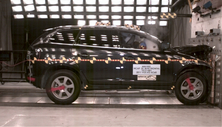
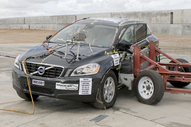
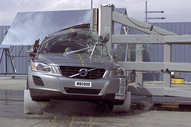
NHTSA crash tests
The agency crash-tested this model year itself. These are its own
photographs and star ratings.
Frontal crash test
Side barrier crash test
Side pole crash test
Photographs taken by NHTSA during its own New Car Assessment Program crash
tests of this model year. Public domain.
Configuration
Overall
Front
Side
Rollover
2015 Volvo XC60 SUV FWD
17.6% risk
2015 Volvo XC60 SUV AWD
17.6% risk
When owners complained
A spike years after the car went on sale usually means a part wearing
out on schedule across the whole fleet — the kind of pattern no single
owner can see from inside their own car.
Apr 2015peak 6Aug 2026
Recalls on the 2015 Volvo XC60
A complaint is one owner's allegation. A recall is the point at which
the manufacturer or a regulator agreed the defect is real and dangerous
enough to fix for free — however old the car is.
United States — NHTSA
20V378000
SEAT BELTS:FRONT
Volvo Cars of N.A., LLC (Volvo) is recalling certain 2008-2016 V70 and XC70, 2007-2016 S80, 2011-2018 S60 and V60, 2016-2018 S60 Cross Country, 2014-2020 S60L, 2009-2015 S80L, 2009-2016 XC60 and 2015-2018 V60 Cross Country vehicles. The flexible steel cable that connects the seat belt to the front outboard seating positions may fatigue over time, causing the seat belt to not secure the occupant in the event of a crash.
Risk: An unsecured occupant has an increased risk of injury in the event of a crash.
Canada — Transport Canada
Canada runs its own recall programme, and its campaigns do not
always mirror the American ones.
Recall 202029824,089 units in Canada
Seats And Restraints
Issue: On certain vehicles, the flexible steel cable that attaches the seat belt to the outside of the front seats may weaken over time. As a result, the seat belt could detach. Safety Risk: A seat belt that detaches in a crash could create an increased risk of injury. Corrective Action: Volvo will notify owners by mail and instruct you to take your vehicle to a dealer to replace the front-outboard seat belt anchors.
Reports where the owner recorded a crash, a fire, an injury or a death.
Marana, AZCrash1 injured
AIR BAGS
The vehicle's Supplemental Restraint System (SRS) safety network experienced a total electrical blackout, resulting in complete airbag non-deployment during a severe unibody-deforming hit-and-run collision. The vehicle was stationary when a high-speed car rammed the passenger side and front profile. Kinetic forces split the cast aluminum steering rack housing completely in half, fractured front CV axle joint cages, and shifted the engine subframe mounts (creating physical gaps and shiny mechanical abrasions beneath the rust layer). Despite catastrophic structural distortion—which twisted the greenhouse safety cage and cracked the windshield directly beneath the laser cluster—zero front, side, or curtain airbags deployed. No dashboard SRS warning lights illuminated prior to or after the crash.A post-crash scan by a Master Mechanic confirms high-speed CAN-bus fragmentation, storing module timeouts U016700, U042268, and steering column resistance deployment inhibitors B1C0224, B1CO424, B1C0524. Additional codes include P134600, P134613, P261086, P0A0F68, C006468, B109B15, B116415, and B108467.Teardown reveals extensive, pre-existing saltwater intrusion residue inside passenger footwell fuse blocks (Centers B/C) and the under-hood relay box, plus green cupric carbonate oxidation on chassis grounds. This induced extreme electrical resistance, blinding the SRS module's ability to read the crash pulse. Occupant safety was heavily compromised; the driver sustained a severe concussion, whiplash, and active neurological time-loss blackouts after being struck by flying cabin cargo during the pulse. Both front seatbelt receiver buckles permanently bound and locked. The vehicle was inspected by local police under an active criminal hit-and-run report. Diagnostic logs are preserved and available for federal review.
NHTSA complaint #11755236 — an unverified report by a vehicle owner.
Marana, AZCrash1 injured
STEERING
The vehicle's Supplemental Restraint System (SRS) safety network experienced a total electrical blackout, resulting in complete airbag non-deployment during a severe unibody-deforming hit-and-run collision. The vehicle was stationary when a high-speed car rammed the passenger side and front profile. Kinetic forces split the cast aluminum steering rack housing completely in half, fractured front CV axle joint cages, and shifted the engine subframe mounts (creating physical gaps and shiny mechanical abrasions beneath the rust layer). Despite catastrophic structural distortion—which twisted the greenhouse safety cage and cracked the windshield directly beneath the laser cluster—zero front, side, or curtain airbags deployed. No dashboard SRS warning lights illuminated prior to or after the crash.A post-crash scan by a Master Mechanic confirms high-speed CAN-bus fragmentation, storing module timeouts U016700, U042268, and steering column resistance deployment inhibitors B1C0224, B1CO424, B1C0524. Additional codes include P134600, P134613, P261086, P0A0F68, C006468, B109B15, B116415, and B108467.Teardown reveals extensive, pre-existing saltwater intrusion residue inside passenger footwell fuse blocks (Centers B/C) and the under-hood relay box, plus green cupric carbonate oxidation on chassis grounds. This induced extreme electrical resistance, blinding the SRS module's ability to read the crash pulse. Occupant safety was heavily compromised; the driver sustained a severe concussion, whiplash, and active neurological time-loss blackouts after being struck by flying cabin cargo during the pulse. Both front seatbelt receiver buckles permanently bound and locked. The vehicle was inspected by local police under an active criminal hit-and-run report. Diagnostic logs are preserved and available for federal review.
NHTSA complaint #11755236 — an unverified report by a vehicle owner.
Marana, AZCrash1 injured
STRUCTURE:BODY
The vehicle's Supplemental Restraint System (SRS) safety network experienced a total electrical blackout, resulting in complete airbag non-deployment during a severe unibody-deforming hit-and-run collision. The vehicle was stationary when a high-speed car rammed the passenger side and front profile. Kinetic forces split the cast aluminum steering rack housing completely in half, fractured front CV axle joint cages, and shifted the engine subframe mounts (creating physical gaps and shiny mechanical abrasions beneath the rust layer). Despite catastrophic structural distortion—which twisted the greenhouse safety cage and cracked the windshield directly beneath the laser cluster—zero front, side, or curtain airbags deployed. No dashboard SRS warning lights illuminated prior to or after the crash.A post-crash scan by a Master Mechanic confirms high-speed CAN-bus fragmentation, storing module timeouts U016700, U042268, and steering column resistance deployment inhibitors B1C0224, B1CO424, B1C0524. Additional codes include P134600, P134613, P261086, P0A0F68, C006468, B109B15, B116415, and B108467.Teardown reveals extensive, pre-existing saltwater intrusion residue inside passenger footwell fuse blocks (Centers B/C) and the under-hood relay box, plus green cupric carbonate oxidation on chassis grounds. This induced extreme electrical resistance, blinding the SRS module's ability to read the crash pulse. Occupant safety was heavily compromised; the driver sustained a severe concussion, whiplash, and active neurological time-loss blackouts after being struck by flying cabin cargo during the pulse. Both front seatbelt receiver buckles permanently bound and locked. The vehicle was inspected by local police under an active criminal hit-and-run report. Diagnostic logs are preserved and available for federal review.
NHTSA complaint #11755236 — an unverified report by a vehicle owner.
at 108,000 milesBothell, WAFire
EQUIPMENT:EMERGENCY:FIRE SUPRESSION
The contact owned a 2015 Volvo XC60. The contact stated that while driving on a main road at 25 MPH, when a message was displayed on the instrument panel that stated "Engine Performance Degraded" and the vehicle experienced a significant reduction in automotive power, the contact proceeded to pull over and a few moments later smoke was emitted from the front end of the vehicle, the contact immediatley exited the vehicle and shortly afterwards the vehicle was engulfed in flames. The contact mentioned that the vehicle was serviced at the dealer prior to the fire. The origin of the fire was unknown. The vehicle was unoccupied during the fire. The location of the fire was the front passenger side of the engine compartment. The fire department arrived to extinguish the fire. A fire department report was filed. A police report was not filed. The vehicle was destroyed. The manufacturer was not notified of the failure. The approximate failure mileage was 108,000.
NHTSA complaint #11666124 — an unverified report by a vehicle owner.
Plumas Lake, CAFire
ELECTRICAL SYSTEM
On 9/8/2021, Niello Volvo Sacramento service replaced my fuel pressure sensor and fuel line. On 9/15/2021, my engine caught fire and the car was deemed a total loss by insurance company. I drove from my home in Plumas Lake 95961 to Marysville approximately 10 miles away at 9:50 AM, at approximately 10:00-10:05 as I was nearing the end of my trip, a trouble light came on that said “engine performance decreased” and the picture of a turtle appeared on my dash screen, shortly after that another light appeared that said “battery not charging”, I parked my car in the Save Mart parking lot and exited and noticed some smoke coming out of the hood, it was light at first but increased quickly so I called 911 immediately. As I was on the phone with 911, flames began shooting out from under the hood, so I grabbed my fire extinguisher out of the back of my car and tried to put the fire out, but extinguisher was too small, a man from the grocery store brought out a bigger extinguisher, but fire continued to grow, by now the fire dept. arrived, opened the hood and after about 10 minutes extinguished the fire with a hose. I contacted Niello Volvo but they seemed disinterested in getting involved and after a second call to them, the service manager [XXX] hung up on me. I could have been killed! If my elderly husband or mother had been in the car with me, it would have been difficult to get them out! I want to know what caused the fire! Faulty electrical system, faulty fuel sensor/fuel line which had just been installed 7 days prior? Faulty engine? There are still many 2015 Volvo XC60’s on the road and I fear for anyone driving one if there is a problem in need of recall. INFORMATION Redacted PURSUANT TO THE FREEDOM OF INFORMATION ACT (FOIA), 5 U.S.C. 552(B)(6).
NHTSA complaint #11433750 — an unverified report by a vehicle owner.
Plumas Lake, CAFire
ENGINE
On 9/8/2021, Niello Volvo Sacramento service replaced my fuel pressure sensor and fuel line. On 9/15/2021, my engine caught fire and the car was deemed a total loss by insurance company. I drove from my home in Plumas Lake 95961 to Marysville approximately 10 miles away at 9:50 AM, at approximately 10:00-10:05 as I was nearing the end of my trip, a trouble light came on that said “engine performance decreased” and the picture of a turtle appeared on my dash screen, shortly after that another light appeared that said “battery not charging”, I parked my car in the Save Mart parking lot and exited and noticed some smoke coming out of the hood, it was light at first but increased quickly so I called 911 immediately. As I was on the phone with 911, flames began shooting out from under the hood, so I grabbed my fire extinguisher out of the back of my car and tried to put the fire out, but extinguisher was too small, a man from the grocery store brought out a bigger extinguisher, but fire continued to grow, by now the fire dept. arrived, opened the hood and after about 10 minutes extinguished the fire with a hose. I contacted Niello Volvo but they seemed disinterested in getting involved and after a second call to them, the service manager [XXX] hung up on me. I could have been killed! If my elderly husband or mother had been in the car with me, it would have been difficult to get them out! I want to know what caused the fire! Faulty electrical system, faulty fuel sensor/fuel line which had just been installed 7 days prior? Faulty engine? There are still many 2015 Volvo XC60’s on the road and I fear for anyone driving one if there is a problem in need of recall. INFORMATION Redacted PURSUANT TO THE FREEDOM OF INFORMATION ACT (FOIA), 5 U.S.C. 552(B)(6).
NHTSA complaint #11433750 — an unverified report by a vehicle owner.
The most recent complaints
In the owners' own words, exactly as filed with NHTSA.
Marana, AZCrash1 injured
AIR BAGS
The vehicle's Supplemental Restraint System (SRS) safety network experienced a total electrical blackout, resulting in complete airbag non-deployment during a severe unibody-deforming hit-and-run collision. The vehicle was stationary when a high-speed car rammed the passenger side and front profile. Kinetic forces split the cast aluminum steering rack housing completely in half, fractured front CV axle joint cages, and shifted the engine subframe mounts (creating physical gaps and shiny mechanical abrasions beneath the rust layer). Despite catastrophic structural distortion—which twisted the greenhouse safety cage and cracked the windshield directly beneath the laser cluster—zero front, side, or curtain airbags deployed. No dashboard SRS warning lights illuminated prior to or after the crash.A post-crash scan by a Master Mechanic confirms high-speed CAN-bus fragmentation, storing module timeouts U016700, U042268, and steering column resistance deployment inhibitors B1C0224, B1CO424, B1C0524. Additional codes include P134600, P134613, P261086, P0A0F68, C006468, B109B15, B116415, and B108467.Teardown reveals extensive, pre-existing saltwater intrusion residue inside passenger footwell fuse blocks (Centers B/C) and the under-hood relay box, plus green cupric carbonate oxidation on chassis grounds. This induced extreme electrical resistance, blinding the SRS module's ability to read the crash pulse. Occupant safety was heavily compromised; the driver sustained a severe concussion, whiplash, and active neurological time-loss blackouts after being struck by flying cabin cargo during the pulse. Both front seatbelt receiver buckles permanently bound and locked. The vehicle was inspected by local police under an active criminal hit-and-run report. Diagnostic logs are preserved and available for federal review.
NHTSA complaint #11755236 — an unverified report by a vehicle owner.
Marana, AZCrash1 injured
STEERING
The vehicle's Supplemental Restraint System (SRS) safety network experienced a total electrical blackout, resulting in complete airbag non-deployment during a severe unibody-deforming hit-and-run collision. The vehicle was stationary when a high-speed car rammed the passenger side and front profile. Kinetic forces split the cast aluminum steering rack housing completely in half, fractured front CV axle joint cages, and shifted the engine subframe mounts (creating physical gaps and shiny mechanical abrasions beneath the rust layer). Despite catastrophic structural distortion—which twisted the greenhouse safety cage and cracked the windshield directly beneath the laser cluster—zero front, side, or curtain airbags deployed. No dashboard SRS warning lights illuminated prior to or after the crash.A post-crash scan by a Master Mechanic confirms high-speed CAN-bus fragmentation, storing module timeouts U016700, U042268, and steering column resistance deployment inhibitors B1C0224, B1CO424, B1C0524. Additional codes include P134600, P134613, P261086, P0A0F68, C006468, B109B15, B116415, and B108467.Teardown reveals extensive, pre-existing saltwater intrusion residue inside passenger footwell fuse blocks (Centers B/C) and the under-hood relay box, plus green cupric carbonate oxidation on chassis grounds. This induced extreme electrical resistance, blinding the SRS module's ability to read the crash pulse. Occupant safety was heavily compromised; the driver sustained a severe concussion, whiplash, and active neurological time-loss blackouts after being struck by flying cabin cargo during the pulse. Both front seatbelt receiver buckles permanently bound and locked. The vehicle was inspected by local police under an active criminal hit-and-run report. Diagnostic logs are preserved and available for federal review.
NHTSA complaint #11755236 — an unverified report by a vehicle owner.
Marana, AZCrash1 injured
STRUCTURE:BODY
The vehicle's Supplemental Restraint System (SRS) safety network experienced a total electrical blackout, resulting in complete airbag non-deployment during a severe unibody-deforming hit-and-run collision. The vehicle was stationary when a high-speed car rammed the passenger side and front profile. Kinetic forces split the cast aluminum steering rack housing completely in half, fractured front CV axle joint cages, and shifted the engine subframe mounts (creating physical gaps and shiny mechanical abrasions beneath the rust layer). Despite catastrophic structural distortion—which twisted the greenhouse safety cage and cracked the windshield directly beneath the laser cluster—zero front, side, or curtain airbags deployed. No dashboard SRS warning lights illuminated prior to or after the crash.A post-crash scan by a Master Mechanic confirms high-speed CAN-bus fragmentation, storing module timeouts U016700, U042268, and steering column resistance deployment inhibitors B1C0224, B1CO424, B1C0524. Additional codes include P134600, P134613, P261086, P0A0F68, C006468, B109B15, B116415, and B108467.Teardown reveals extensive, pre-existing saltwater intrusion residue inside passenger footwell fuse blocks (Centers B/C) and the under-hood relay box, plus green cupric carbonate oxidation on chassis grounds. This induced extreme electrical resistance, blinding the SRS module's ability to read the crash pulse. Occupant safety was heavily compromised; the driver sustained a severe concussion, whiplash, and active neurological time-loss blackouts after being struck by flying cabin cargo during the pulse. Both front seatbelt receiver buckles permanently bound and locked. The vehicle was inspected by local police under an active criminal hit-and-run report. Diagnostic logs are preserved and available for federal review.
NHTSA complaint #11755236 — an unverified report by a vehicle owner.
Cedar Park, TX
ENGINE
Engine blew up while my daughter was driving due to excessive oil consumption. Issue known by Volvo but we bought the car in 2023 and the 8year warranty recall was just about to expire and we knew nothing about it. Very dangerous
NHTSA complaint #11751199 — an unverified report by a vehicle owner.
Washington, DC
VEHICLE SPEED CONTROL
Component/System that failed: The engine (T5 Drive-E) experienced sudden loss of propulsion and entered reduced engine performance mode. The vehicle is currently available for inspection and was towed to an authorized Volvo dealer following the incident. How safety was put at risk: On July 3, 2025, while driving approximately 75 mph on a crowded interstate highway in rural Ohio with cruise control engaged, the vehicle suddenly and without warning lost propulsion. Traffic included semi-trucks and other vehicles, with limited shoulder availability. The sudden loss of acceleration at highway speed created an immediate risk of rear-end collision and left the vehicle unsafe to operate. Confirmation or reproduction: Prior to the failure, in July 2024 at approximately 92,000 miles, I reported abnormal oil consumption to an authorized Volvo dealer and raised a known Volvo service advisory related to oil consumption in the T5 Drive-E engine. The dealer acknowledged the advisory but refused testing, stating the vehicle did not meet Volvo’s internal threshold. After the failure, a service agent acknowledged that this issue is known to occur in this model at approximately this mileage. Inspections: The vehicle was serviced at an authorized Volvo dealer in Bethesda, Maryland just days prior to the incident. Following the failure, the vehicle was towed to an authorized Volvo dealer in Columbus, Ohio. Volvo Cars USA has not repaired the vehicle and denied a goodwill request. Warnings or symptoms prior to failure: There were no warning lamps or messages prior to the loss of propulsion. The engine warning light and a “Reduced Engine Performance” message appeared only after power was lost.
NHTSA complaint #11708737 — an unverified report by a vehicle owner.
Washington, DC
ENGINE
Component/System that failed: The engine (T5 Drive-E) experienced sudden loss of propulsion and entered reduced engine performance mode. The vehicle is currently available for inspection and was towed to an authorized Volvo dealer following the incident. How safety was put at risk: On July 3, 2025, while driving approximately 75 mph on a crowded interstate highway in rural Ohio with cruise control engaged, the vehicle suddenly and without warning lost propulsion. Traffic included semi-trucks and other vehicles, with limited shoulder availability. The sudden loss of acceleration at highway speed created an immediate risk of rear-end collision and left the vehicle unsafe to operate. Confirmation or reproduction: Prior to the failure, in July 2024 at approximately 92,000 miles, I reported abnormal oil consumption to an authorized Volvo dealer and raised a known Volvo service advisory related to oil consumption in the T5 Drive-E engine. The dealer acknowledged the advisory but refused testing, stating the vehicle did not meet Volvo’s internal threshold. After the failure, a service agent acknowledged that this issue is known to occur in this model at approximately this mileage. Inspections: The vehicle was serviced at an authorized Volvo dealer in Bethesda, Maryland just days prior to the incident. Following the failure, the vehicle was towed to an authorized Volvo dealer in Columbus, Ohio. Volvo Cars USA has not repaired the vehicle and denied a goodwill request. Warnings or symptoms prior to failure: There were no warning lamps or messages prior to the loss of propulsion. The engine warning light and a “Reduced Engine Performance” message appeared only after power was lost.
NHTSA complaint #11708737 — an unverified report by a vehicle owner.
Savannah, GA
POWER TRAIN
The vehicle shakes and engine abruptly shuts off even after a new tune up
NHTSA complaint #11684302 — an unverified report by a vehicle owner.
Savannah, GA
ENGINE
The vehicle shakes and engine abruptly shuts off even after a new tune up
NHTSA complaint #11684302 — an unverified report by a vehicle owner.
Bellevue, WA
ENGINE
02/15/2025 I received a letter for oil consumption recall that was dated on 02/03/2023. Appointment was made same day I received the letter on 02/15/2023 and appointment couldnt be set sooner then 02/23/2023 which is the date the Oil consumption was done at Volvo of Bellevue. They changed the oil and sealed it and had me drive it 1000 miles, they said I didn't have an oil consumption problem and I disagreed because I told them I have to put in oil all the time. They said it has exceeded the 8yr or 100K miles of the extended warranty of the vehicle which ever comes first. I argued it had less then 100K miles when I got the letter on 02/15/2023 and the appointment couldnt be set til 02/23/2025 and Volvo of Bellevue said not to worry about it and they would take care of the recall. But after they had me pay for the oil change they said it exceeded the 100K miles and 8 yrs age of the vehicle. I argued the letter was sent to me after the vehicle was 8 years old and the avg miles of 12K was over 100K miles and I argued this was a known problem with Volvo but they kept on selling these vehicles knowing these vehicles have oil consumption problems. They refused to fix the car unless I paid them Thousands and thousands and thousands of dollars. I trusted what they told me that there was no oil consumption and in less then 7K miles later my engine smoked from their oil change and there was no oil in the vehicle as the engine had consumed all the oil and my car sat in my driveway for 22 months and I replaced many parts and still car wouldn't run. I took it back to Bellevue Volvo on 07/23/2025 to see what was wrong with the vehicle and they said the pistons were bent.
NHTSA complaint #11676798 — an unverified report by a vehicle owner.
Bellevue, WA
FUEL/PROPULSION SYSTEM
02/15/2025 I received a letter for oil consumption recall that was dated on 02/03/2023. Appointment was made same day I received the letter on 02/15/2023 and appointment couldnt be set sooner then 02/23/2023 which is the date the Oil consumption was done at Volvo of Bellevue. They changed the oil and sealed it and had me drive it 1000 miles, they said I didn't have an oil consumption problem and I disagreed because I told them I have to put in oil all the time. They said it has exceeded the 8yr or 100K miles of the extended warranty of the vehicle which ever comes first. I argued it had less then 100K miles when I got the letter on 02/15/2023 and the appointment couldnt be set til 02/23/2025 and Volvo of Bellevue said not to worry about it and they would take care of the recall. But after they had me pay for the oil change they said it exceeded the 100K miles and 8 yrs age of the vehicle. I argued the letter was sent to me after the vehicle was 8 years old and the avg miles of 12K was over 100K miles and I argued this was a known problem with Volvo but they kept on selling these vehicles knowing these vehicles have oil consumption problems. They refused to fix the car unless I paid them Thousands and thousands and thousands of dollars. I trusted what they told me that there was no oil consumption and in less then 7K miles later my engine smoked from their oil change and there was no oil in the vehicle as the engine had consumed all the oil and my car sat in my driveway for 22 months and I replaced many parts and still car wouldn't run. I took it back to Bellevue Volvo on 07/23/2025 to see what was wrong with the vehicle and they said the pistons were bent.
NHTSA complaint #11676798 — an unverified report by a vehicle owner.
at 108,000 milesBothell, WAFire
EQUIPMENT:EMERGENCY:FIRE SUPRESSION
The contact owned a 2015 Volvo XC60. The contact stated that while driving on a main road at 25 MPH, when a message was displayed on the instrument panel that stated "Engine Performance Degraded" and the vehicle experienced a significant reduction in automotive power, the contact proceeded to pull over and a few moments later smoke was emitted from the front end of the vehicle, the contact immediatley exited the vehicle and shortly afterwards the vehicle was engulfed in flames. The contact mentioned that the vehicle was serviced at the dealer prior to the fire. The origin of the fire was unknown. The vehicle was unoccupied during the fire. The location of the fire was the front passenger side of the engine compartment. The fire department arrived to extinguish the fire. A fire department report was filed. A police report was not filed. The vehicle was destroyed. The manufacturer was not notified of the failure. The approximate failure mileage was 108,000.
NHTSA complaint #11666124 — an unverified report by a vehicle owner.
Houston, TX
ENGINE
My engine always continues to break down even after changing engine twice.
NHTSA complaint #11658730 — an unverified report by a vehicle owner.
North Adams, MA
Chest Clip, Buckle, Harness
Chest clip is magnetized to assist with closing the clip - my clip does not stay latched shut, pops open at a slight push. I have another one of these seats, manufactured at a later date, and the chest clip needs the buttons pushed to open, so I know this is incorrect. Chicco does not feel the need to replace the seat, said they will send me a new retainer clip. If there was an option to attach a video to this complaint, I would.
NHTSA complaint #11640491 — an unverified report by a vehicle owner.
at 111,000 milesHouston, TX
ENGINE AND ENGINE COOLING
The contact owns a 2015 Volvo XC60. The contact stated that every three weeks an oil change was performed on the vehicle. The contact stated that low oil level or oil empty messages were displayed. The vehicle was taken to the dealer who confirmed that the vehicle was consuming 15-quarts of engine oil every 6,000 miles driven. The dealer determined that oil was leaking into the pistons. The dealer stated that the pistons and piston rings needed to be replaced. The contact learned of an extended warranty coverage under NHTSA ID Number: 10234800 (Equipment). The vehicle had not been repaired. The manufacturer was made aware of the failure. The manufacturer confirmed that the vehicle was not covered under NHTSA ID Number: 10234800 (Equipment) extended warranty coverage due to the vehicle exceeding the mileage limitations. The approximate failure mileage was 111,000.
NHTSA complaint #11628991 — an unverified report by a vehicle owner.
at 111,000 milesHouston, TX
EQUIPMENT
The contact owns a 2015 Volvo XC60. The contact stated that every three weeks an oil change was performed on the vehicle. The contact stated that low oil level or oil empty messages were displayed. The vehicle was taken to the dealer who confirmed that the vehicle was consuming 15-quarts of engine oil every 6,000 miles driven. The dealer determined that oil was leaking into the pistons. The dealer stated that the pistons and piston rings needed to be replaced. The contact learned of an extended warranty coverage under NHTSA ID Number: 10234800 (Equipment). The vehicle had not been repaired. The manufacturer was made aware of the failure. The manufacturer confirmed that the vehicle was not covered under NHTSA ID Number: 10234800 (Equipment) extended warranty coverage due to the vehicle exceeding the mileage limitations. The approximate failure mileage was 111,000.
NHTSA complaint #11628991 — an unverified report by a vehicle owner.
Glen Allen, VA
ENGINE
Volvo mechanics claim the engine seized due to alternator pulley failure, however, at the time of the event, the engine showed no oil on the dipstick despite having added multiple quarts of oil over the last three months. Volvo has issued an extended warranty letter to customers due to excessive oil consumption, but Volvo failed to provide this letter for this vehicle. I’ve checked Volvo databases for engines matching this extended warranty and confirmed the engine is in fact covered under this extended warranty. Due to Volvo’s failure to communicate this problem, my daughter continued to drive this vehicle until it completely lost power in high speed traffic on I-95 nearly causing an accident and stranding her on the side of the interstate for several hours. Upon arriving at the cite of this incident, I notice there was no low oil warning light illuminated on the dash, so I double checked oil dipstick and added at least two quarts of oil. Unfortunately the engine had already seized at this point and the vehicle was inoperable.
NHTSA complaint #11609144 — an unverified report by a vehicle owner.
Chesterfield, MO
ELECTRICAL SYSTEM
Vehicle failed to start after short trip (<5 miles) with no electrical power present. Jump started from another car after approximately 1/2 hour. Drove car to home, car stalled in driveway again with no electrical power. Replaced 5 year old battery car started fine then stalled on road during test drive while approaching an intersection and suffered loss of all electrical power including inoperative hazard flashers. Transmission went into park and car could not be moved out of active traffic lane. Car towed to repair shop where cracked fuse at positive battery terminal found (see photos attached). Repair shop contacted a Volvo dealer and was informed they typically see a couple vehicles a week for same issue.
NHTSA complaint #11585107 — an unverified report by a vehicle owner.
Bridgewater, NJ
UNKNOWN OR OTHER
VOLVO DEALER DESCRIBE AS ISSUE: Motor mounts: Front lower engine mount collapsed, other engine mount not yet verified. Power Steering: Stiff and hard to turn wheels. Transmission: Transmission shift sometimes is not easy to move up to down.
NHTSA complaint #11582817 — an unverified report by a vehicle owner.
Bridgewater, NJ
ELECTRICAL SYSTEM
VOLVO DEALER DESCRIBE AS ISSUE: Motor mounts: Front lower engine mount collapsed, other engine mount not yet verified. Power Steering: Stiff and hard to turn wheels. Transmission: Transmission shift sometimes is not easy to move up to down.
NHTSA complaint #11582817 — an unverified report by a vehicle owner.
Bridgewater, NJ
FORWARD COLLISION AVOIDANCE: WARNINGS
VOLVO DEALER DESCRIBE AS ISSUE: Motor mounts: Front lower engine mount collapsed, other engine mount not yet verified. Power Steering: Stiff and hard to turn wheels. Transmission: Transmission shift sometimes is not easy to move up to down.
NHTSA complaint #11582817 — an unverified report by a vehicle owner.
at 121,000 milesAlbion, MI
ELECTRICAL SYSTEM:ADAS:PARKING ASSIST:SENSORS
The contact owns a 2015 Volvo XC60. The contact stated while driving 30 MPH, the vehicle inadvertently stopped without driver input. The contact was able to drive the vehicle to the residence. The vehicle was taken to an independent mechanic and the mechanic repaired the parking brake actuator. The manufacturer was not contacted. The failure mileage was 121,000.
NHTSA complaint #11509752 — an unverified report by a vehicle owner.
Hayti, MO
SEAT BELTS
Since buying our xc60 Feb 2022, anytime we have our grandchildren we buckle their high back car seats in the rear seat of our volvo. Every time we install the car seats, the seat belts will not lock after being buckled. The implications of a seat belt failing to lock a car seat down could he catastrophic. It doesn't matter how many times we expand the belt and release it, tap the brake, buckle or unbuckle the belts will not lock. This poses a life threatening danger to children who are supposed to be safely secured in their seats. Coincidentally, the driver belt randomly locks sometimes even choking me if I lean forward quickly to get a better view. This happens without any sudden braking or change of speed. I have not visited a service center regarding the issue yet, I plan to address the issue at the upcoming vehicle maintenance and service appointment. Parents or caregivers need to be aware of this possibly dangerous failure. I check the belt tightness for our grandchildren car seats every time we stop. Until there is a resolution in place, I will attempt to find something that will keep the belt locked for a temporary solution. Please investigate for more possible complaints and issue a warning regarding this issue.
NHTSA complaint #11491124 — an unverified report by a vehicle owner.
Spindale, NC
ENGINE
Excessive Oil Consumption! Safety issue with the speed at which the oil is depleted! I just bought this car two weeks ago and I already have had to add a quart of "synthetic" oil TWICE!, in one Weeks time! This is a safety issue. I have driven less than 500 miles each time the car alerted me to needing a quart of oil. This car was serviced by Volvo of Greenville, SC for all of it's maintenance and based on the service records, I felt safe buying this vehicle because Volvo had always serviced it! I was robbed! This engine is a Lemon and I need it replaced!!!
NHTSA complaint #11487158 — an unverified report by a vehicle owner.
Mesquite, TX
ENGINE
Between 1000 -1500 miles Oil Level low Refill 1quart/ 1 liter request come on, had no Ideal this Volvo xc60 consume that much oil, I buy Castrol Edge High mileage SAE 5W-30 for engines over 75k at $12.98 including tax add, buying once to twice amount add up ..
NHTSA complaint #11486027 — an unverified report by a vehicle owner.
Coral Gables, FL
FUEL/PROPULSION SYSTEM
In approximately 2016 we noticed a strong smell of gasoline around our new car. There was a puddle of gasoline under the car in our garage. We had the car towed to the Volvo dealership and they replaced some fuel-line components under the hood. Two days ago we started to notice a strong smell of gasoline in the passenger compartment of the vehicle. I lifted the hood and and removed the engine cover. I noticed the fuel sensor on top of the engine had fuel on it. I went to the Volvo dealer and they would not sell me a new sensor, they no longer sold just the sensor. Now, you have to buy an improved sensor and fuel line combination kit. I had the car towed to a shop as it was not safe to drive with leaking fuel. It would seem to me if Volvo was having issues with the fuel sensor that required them to quit selling the original part and re-engineer the replacement part with a new hose that Volvo is aware of a problem. This is the second gasoline leak that we have had on this vehicle related to these fuel lines and sensors.
NHTSA complaint #11470184 — an unverified report by a vehicle owner.