Owners have filed 756 complaints
about the 2016 Nissan Rogue with NHTSA between 2016 and 2026.
The largest single group is the transmission & drivetrain.
Across this model's run it ranks 6 of 19 worst.
The letter says how bad. This says what kind — whether this year drew
an unusual number of complaints, unusually dangerous
ones, or failures that arrived unusually early.
The dashed ring is 50 — the national norm. Further out is worse.
Complaint volume — 69
Against the median year of the Nissan Rogue. 50 means typical for this
model; 100 means roughly double.
Severity — 62
12% of these complaints
involved a crash, fire, injury or death, against a national rate of
9.7%.
Early failure — 57
33% of failures with a mileage on record happened under
36,000 miles, against a national rate of
29%.
NHTSA files every complaint against a named sub-assembly, not just a
system. This is the difference between knowing it was "the engine" and
knowing which part of it — the list to hand a mechanic.
Body
2147.7%
Sun/Moon Roof Assembly
715.9%
Warnings
511.4%
Blind Spot Detection
36.8%
Automatic Emergency Braking
24.5%
AIR Conditioner
24.5%
Defroster/Defogger/Hvac System
24.5%
Door
24.5%
When it fails
Odometer readings owners gave when they filed. About half of all
complaints include one.
Under 1,000 miles
297.7%
1,000 – 9,999 miles
379.8%
10,000 – 24,999 miles
328.5%
25,000 – 49,999 miles
8021.2%
50,000 – 74,999 miles
7820.7%
75,000 – 99,999 miles
6918.3%
100,000 – 149,999 miles
4311.4%
150,000+ miles
92.4%
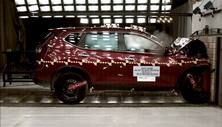
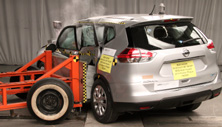
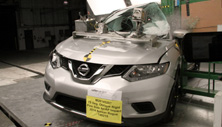
NHTSA crash tests
The agency crash-tested this model year itself. These are its own
photographs and star ratings.
Frontal crash test
Side barrier crash test
Side pole crash test
Photographs taken by NHTSA during its own New Car Assessment Program crash
tests of this model year. Public domain.
Configuration
Overall
Front
Side
Rollover
2016 Nissan Rogue SUV FWD
16.9% risk
2016 Nissan Rogue SUV AWD
16.4% risk
When owners complained
A spike years after the car went on sale usually means a part wearing
out on schedule across the whole fleet — the kind of pattern no single
owner can see from inside their own car.
Jan 2016peak 22Sep 2026
Recalls on the 2016 Nissan Rogue
A complaint is one owner's allegation. A recall is the point at which
the manufacturer or a regulator agreed the defect is real and dangerous
enough to fix for free — however old the car is.
Nissan North America, Inc. (Nissan) is recalling certain 2014-2020 Rogue and 2017-2022 Rogue Sport vehicles equipped with a jackknife style ignition key. The jackknife key may collapse into a folded position while driving.
Risk: Driver contact with a key in the collapsed position could inadvertently shut off the vehicle while driving, increasing the risk of a crash. Additionally, if the vehicle shuts off while driving, the air bags may not deploy in a crash as intended, increasing the risk of injury.
22V024000
ELECTRICAL SYSTEM:WIRING:INTERIOR/UNDER DASH
Nissan North America, Inc. (Nissan) is recalling certain 2014-2016 Rogue vehicles. The electrical connector for the under dash harness may corrode due to water and salt intrusion from the driver's side foot well.
Risk: Corrosion in the electrical connector can result in power window/seat failure, all-wheel-drive warning light illumination, battery drainage, and electrical connector damage that increases the risk of a fire.
17V716000
SEATS
Nissan North America, Inc. (Nissan) is recalling certain 2016 Nissan Rogue vehicles. The vehicles have front passenger seat frames that may be improperly welded. As such, these vehicles fail to meet performance requirements of Federal Motor Vehicle Safety Standard (FMVSS) number 202a, "Head Restraints" and FMVSS 207, "Seating Systems."
Risk: In the event of a crash, the improperly welded seat back frames may increase the risk of injury.
17V663000
SEATS
Nissan North America, Inc. (Nissan) is recalling certain 2016-2017 Nissan Rogue vehicles. The recliner joints on the lower seat frame for the rear seats may have improper welds. As such, these vehicles fail to comply with the requirements of Federal Motor Vehicle Safety Standards (FMVSS) number 207, "Seating Systems," and 210, "Seat Belt Assembly Anchorages."
Risk: The insufficient welds can increase the risk of injury to the occupants in the event of a crash.
16V911000
AIR BAGS:SENSOR:OCCUPANT CLASSIFICATION
Nissan North America, Inc. (Nissan) is recalling certain model year 2013-2015 Altima vehicles manufactured January 3, 2013, to July 29, 2013, 2015-2016 Rogue vehicles manufactured October 14, 2014, to August 12, 2016, and 2016 Maxima vehicles manufactured June 4, 2015, to August 19, 2015. An incorrect Occupant Classification System (OCS) Electronic Control Unit (ECU) may have been installed in the front passenger seat. The incorrect ECU and seat combination may misclassify the front passenger seat occupant.
Risk: If the front passenger seat occupant is misclassified, the air bag may deploy incorrectly in the event of a crash, increasing the risk of injury.
16V244000
AIR BAGS:SENSOR:OCCUPANT CLASSIFICATION
Nissan North America, Inc. (Nissan) is recalling certain model year 2016-2017 Nissan Maxima, 2013-2016 Nissan Altima, NV200, LEAF, Sentra, and Pathfinder, 2014-2016 Nissan NV200 Taxi, Infiniti QX60, QX60 Hybrid, and Q50 Hybrid, 2014-2017 Nissan Rogue and Infiniti Q50, 2015-2016 Nissan Murano, Murano Hybrid, and Chevrolet City Express, 2014-2015 Nissan Pathfinder Hybrid, and 2013 Infiniti JX35 vehicles. In these vehicles, the front seat passenger Occupant Classification System (OCS) may incorrectly classify an adult passenger as a child or classify the seat as empty despite it being occupied. As a result, the passenger frontal air bag may be turned off and not deploy in the event of a crash.
Risk: If the passenger frontal air bag does not deploy as intended in the event of a crash, the passenger is at an increased risk of injury.
Nissan North America, Inc. (Nissan) is recalling certain model year 2014-2016 Nissan Rogue vehicles manufactured July 31, 2013, to January 16, 2016. In the affected vehicles, the rear lift gate support stays may corrode due to insufficient anti-corrosion treatment.
Risk: Corrosion of one or both of the rear lift gate support stays could cause a sudden release of pressure. If this occurs, the support stays may break off, increasing the risk of injury.
Canada — Transport Canada
Canada runs its own recall programme, and its campaigns do not
always mirror the American ones.
Recall 202307896,900 units in Canada
Accessories
Issue: On vehicles equipped with a jackknife-type folding key, over time the key blade may not stay locked in the fully extended (open) position. If you drive the vehicle with the key in the partially folded position, you could bump the ignition key and turn the engine off. This can cause a sudden loss of engine power, power steering and power brakes. This could also cause the airbags not to deploy in a crash. Note: This recall only affects vehicles that have an "S" trim level. Safety Risk: Airbags that do not deploy in a crash could create an increased risk of injury. A loss of power brakes can cause a sudden increase in brake pedal force and lead to an increase in stopping distance. A loss of power steering assist can cause a sudden increase in steering effort. A sudden loss of engine power could also increase the risk of a crash. Corrective Actions: Nissan will notify owners by mail and advise you not to attach any accessories to the key fob, and to ensure that the key is fully extended before driving. As an interim repair, a dealer will install a fastener in the key slot to prevent the key from folding. Once replacement parts are available, you will need to return to a dealership to have a spacer inserted into the slot of the key fob that will stop if from collapsing.
Recall 2022017104,464 units in Canada
Electrical
Issue: On certain vehicles, water could build up under the carpet in the driver's foot well. If this happens, the water could cause damage to electrical connections. This could cause problems with various electrical systems (like the power windows or power seat) and the wiring harness could short circuit. Safety Risk: A short circuit can create the risk of a fire, even while the vehicle is parked and turned off. Corrective Actions: Nissan will notify owners by mail and instruct you to bring your vehicle to a dealership to inspect the dash side wiring harness. If necessary, they will replace the harness connector. The dealership will also apply grease to the connector to prevent water intrusion. Nissan advises that you should park your vehicle outdoors and away from other vehicles or structures until the recall repairs have been completed.
Recall 201756086 units in Canada
Seats And Restraints
Certain vehicles may fail to conform to Canada Motor Vehicle Safety Standard (CMVSS) 202 - Head Restraints and CMVSS 207 - Anchorage of Seats. The front passenger seat back frame assembly may contain a weld that fails to meet the strength performance requirements of the standards, which could increase the risk of injury to the seat occupant in a crash. Correction: Dealers will replace the front passenger seat back assembly.
Recall 20175091,296 units in Canada
Seats And Restraints
Certain vehicles may fail to conform to Canada Motor Vehicle Safety Standard (CMVSS) 207 - Anchorage of Seats and CMVSS 210 – Seat Belt Anchorages. The recliner joint on the lower seat frame assembly of the second and/or third row seats may contain inadequate welds. As a result, the seat frames may not meet certain performance requirements of the standards, which could increase the risk of injury to the seat occupant(s) in the event of a crash. Correction: Dealers will inspect the seat frame barcode and replace the lower seat frame assembly with a new one if necessary.
Recall 2016179257,130 units in Canada
Seats And Restraints
On certain vehicles, a defect in the occupant classification system could allow an adult sitting in the front passenger seat to be classified as a child or an “empty seat”. This would suppress the airbag, which could increase the risk of injury in a crash. Correction: For affected Altima, Maxima, Murano, Rogue and Sentra vehicles, dealers will reprogram the airbag control unit and the occupant classification system control unit. For affected Leaf, NV200, Pathfinder, Q50 and JX35/QX60 vehicles, dealers will replace the occupant classification system electronic control unit.
Recall 201616546,492 units in Canada
Structure
On certain vehicles, the anti-corrosion treatment of the outer tube of the rear lift gate stay may be insufficient. Over time, the outer tube of the rear lift gate stay may corrode and break off, which could increase the risk of injury. Correction: Dealers will replace both rear door stays.
Reports where the owner recorded a crash, a fire, an injury or a death.
at 120,000 milesYorktown Heights, NY1 injured
STRUCTURE
The contact owns a 2016 Nissan Rogue. The contact stated that while attempting to maintain the lift gate open, the lift gate independently lowered and fell down. No warning lights illuminated. The contact stated that the lift gate independently lowered itself, hitting the contact heads. No medical attention was sought. The vehicle was taken to a local independent mechanic, where it was diagnosed as needing the power lift gate struts replaced. In addition, the contact related the failure to NHTSA Campaign Number: 16V219000 (Structure) however, the VIN was not included. The local dealer was contacted. The vehicle was not diagnosed or repaired. The manufacturer was made aware of the failure. The failure mileage was approximately 120,000.
NHTSA complaint #11682773 — an unverified report by a vehicle owner.
at 112,000 milesRomney, INCrash3 injured
AIR BAGS
The contact owned a 2016 Nissan Rogue. The contact stated that while driving at 65 MPH with the cruise control activated, the vehicle crashed into a deer that jumped into the middle of the roadway. During the crash, the vehicle was destroyed, but no air bags were deployed. The driver sustained a concussion, neck and back injury, which later required medical attention. The front passenger sustained a left knee injury, which did not require medical treatment. The daughter, seated in the rear passenger side seat, sustained a concussion, neck and back injury, and was transported from the crash site to the hospital. A police report was filed, and the vehicle was towed to the nearby salvage lot. The cause of the failure was not determined. The manufacturer and local dealer were not contacted. The failure mileage was 112,000.
NHTSA complaint #11653867 — an unverified report by a vehicle owner.
at 25,000 milesMilwaukee, WICrash
AIR BAGS
The contact owns a 2016 Nissan Rogue. The contact stated that while parking the vehicle at 2 MPH, the vehicle suddenly accelerated forward. The vehicle jumped the curb, embankment, bushes, and crashed into the building in front. Parts of the vehicle caught onto the bushes, holding the vehicle while still crashing into the building. The air bags did not deploy. The police were not contacted. No police report. There were no injuries. The vehicle was damaged on the front end. The contact received assistance pushing the vehicle back into the parking space. The vehicle was towed to the dealer, who was unable to diagnose the cause of the failure. The vehicle was not repaired. The manufacturer was informed of the failure and opened a case. The manufacturer referred the contact to the NHTSA Hotline to file a safety complaint. The approximate failure mileage was 25,000.
NHTSA complaint #11651286 — an unverified report by a vehicle owner.
at 25,000 milesMilwaukee, WICrash
VEHICLE SPEED CONTROL
The contact owns a 2016 Nissan Rogue. The contact stated that while parking the vehicle at 2 MPH, the vehicle suddenly accelerated forward. The vehicle jumped the curb, embankment, bushes, and crashed into the building in front. Parts of the vehicle caught onto the bushes, holding the vehicle while still crashing into the building. The air bags did not deploy. The police were not contacted. No police report. There were no injuries. The vehicle was damaged on the front end. The contact received assistance pushing the vehicle back into the parking space. The vehicle was towed to the dealer, who was unable to diagnose the cause of the failure. The vehicle was not repaired. The manufacturer was informed of the failure and opened a case. The manufacturer referred the contact to the NHTSA Hotline to file a safety complaint. The approximate failure mileage was 25,000.
NHTSA complaint #11651286 — an unverified report by a vehicle owner.
Broadalbin, NYCrash
ENGINE
Auto was parked in driveway, facing garage (door opened). When I turned on ignition to place car in garage it accelerated without warning. My hard braking had no effect and car went through garage knocking out the back wall and a large portion of cement block foundation.
NHTSA complaint #11651088 — an unverified report by a vehicle owner.
Broadalbin, NYCrash
SERVICE BRAKES
Auto was parked in driveway, facing garage (door opened). When I turned on ignition to place car in garage it accelerated without warning. My hard braking had no effect and car went through garage knocking out the back wall and a large portion of cement block foundation.
NHTSA complaint #11651088 — an unverified report by a vehicle owner.
The most recent complaints
In the owners' own words, exactly as filed with NHTSA.
Chalfont, PA
POWER TRAIN
While driving the car, it seemed to slip into neutral. We took it to the dealer who does all our maintenance on the car and was told we needed to replace the transmission. The cost would be $6046.45 plus tax. The car is 10 years old, but only has 58,714 miles on it. We contacted Nissan Consumer Affairs, and they only told us that the car is outside the extended warranty of 7 years Nissan offered as part of the Class Action Suit. We purchased the extended warranty of 7 years, 84,000 miles when we purchased the car. They actually offered us nothing. Based on all the complaints, suits and Class Action Suit, it is clear the Nissan Continuous Variable Transmission is inherently defective and a traffic safety hazard. We should be reimbursed for replacement of our transmission.
NHTSA complaint #11762894 — an unverified report by a vehicle owner.
Lone Tree, CO
VEHICLE SPEED CONTROL
From time to time the accelleration hesitates. I have to press the accelerator very deeply before the car starts moving. Usually it happens when the car reaches a complete stop and takes off. It clears after the engine restarts and works normally until it happens again. It is very random, no correlation to heat/cold or time driving. This has been happening since the car passed thr 50k miles. It never happened before. I have a second nissan rogue 2018 that is doing exactly the same after it passed the 50k miles. Some glitch must be happening in the electical system after a certain milage. There must be some software issue as the engine restart clears the glitch.
NHTSA complaint #11759272 — an unverified report by a vehicle owner.
Lone Tree, CO
ELECTRICAL SYSTEM
From time to time the accelleration hesitates. I have to press the accelerator very deeply before the car starts moving. Usually it happens when the car reaches a complete stop and takes off. It clears after the engine restarts and works normally until it happens again. It is very random, no correlation to heat/cold or time driving. This has been happening since the car passed thr 50k miles. It never happened before. I have a second nissan rogue 2018 that is doing exactly the same after it passed the 50k miles. Some glitch must be happening in the electical system after a certain milage. There must be some software issue as the engine restart clears the glitch.
NHTSA complaint #11759272 — an unverified report by a vehicle owner.
Lone Tree, CO
FUEL/PROPULSION SYSTEM
From time to time the accelleration hesitates. I have to press the accelerator very deeply before the car starts moving. Usually it happens when the car reaches a complete stop and takes off. It clears after the engine restarts and works normally until it happens again. It is very random, no correlation to heat/cold or time driving. This has been happening since the car passed thr 50k miles. It never happened before. I have a second nissan rogue 2018 that is doing exactly the same after it passed the 50k miles. Some glitch must be happening in the electical system after a certain milage. There must be some software issue as the engine restart clears the glitch.
NHTSA complaint #11759272 — an unverified report by a vehicle owner.
Belleville, NJ
UNKNOWN OR OTHER
What component or system failed or malfunctioned, and is it available for inspection upon request? The sunroof drainage system became clogged, preventing water from draining properly. As a result, rainwater leaked into the vehicle's interior. The vehicle and affected components are available for inspection upon request. How was your safety or the safety of others put at risk? During rainstorms, water entered the vehicle through the sunroof area and dripped into the passenger compartment while I was driving. This was distracting and created a safety concern because my attention was diverted from the roadway. In addition, the ongoing water intrusion has caused mold growth inside the vehicle, which raises health and safety concerns for occupants. Has the problem been reproduced or confirmed by a dealer or independent service center? Yes. The clogged sunroof drains were identified as the cause of the water intrusion. Has the vehicle or component been inspected by the manufacturer, police, insurance representatives, or others? The vehicle has been inspected by a service provider/dealer who determined that the sunroof drains were clogged. Were there any warning lamps, messages, or other symptoms of the problem prior to the failure, and when did they first appear? No warning lamps or messages appeared before the failure. The first symptom was water entering the vehicle during rainfall. The owner's manual does not mention routine maintenance or cleaning of the sunroof drains, and I was unaware that clogged drains could cause water intrusion until rainwater began leaking into the vehicle and then TIKTOK taught me.
NHTSA complaint #11758416 — an unverified report by a vehicle owner.
Jersey City, NJ
POWER TRAIN
Formal complaint against Nissan North America regarding premature CVT transmission failure on a 2016 Nissan Rogue (VIN: [XXX], Case #XXX, XXX with under 54,000 original miles. During a routine check-up, an independent mechanic scanned the vehicle and found hard codes P17F0 and P17S0, indicating severe internal CVT failure and judder defects. Following their advice, I brought the vehicle to Hudson Nissan (Jersey City, NJ) for official diagnosis. The dealer charged a $219.20 diagnostic fee and confirmed total internal failure of the CVT, quoting $7,829.88 plus taxes to replace it. On XXX, Nissan Executive Level denied my goodwill request, claiming the warranty expired and they "did not know the service history since 2019." I completely reject this. I possess physical, dated service receipts from 2019 to 2026 proving the car was meticulously maintained (oil changes, alignments, fluid checks) at certified shops. I am fully prepared to upload this complete history to the BBB portal. A transmission failure at under 54k miles is unacceptable and points directly to an inherent manufacturing defect in Nissan’s Jatco CVT8 systems, which is well-documented and the subject of major federal scrutiny and class-action lawsuits (e.g., XXX v. Nissan North America). Hiding behind a chronological warranty window to evade responsibility for a known defective part on a low-mileage, well-maintained vehicle is bad-faith customer service. Desired Resolution: I demand a formal re-review of Case #XXX by Nissan’s corporate dispute team. Nissan must provide 100% financial coverage for the CVT transmission replacement at an authorized dealer and full reimbursement of the $219.20 diagnostic fee. I will upload all 2019-2026 maintenance records the moment this file opens. INFORMATION REDACTED PURSUANT TO THE FREEDOM OF INFORMATION ACT (FOIA), 5 U.S.C. 552(B)(6)
NHTSA complaint #11748936 — an unverified report by a vehicle owner.
Bremerton, WA
POWER TRAIN
Vehicle experienced hesitation and intermittent delayed acceleration beginning around 2018, with symptoms progressively worsening over time. In the past week, the check engine light illuminated and the vehicle began experiencing significant acceleration delay from stops, including engine revving without proper acceleration for approximately 5-10 seconds. In some cases, the vehicle would not accelerate until the engine was turned off and restarted. Vehicle also became unusually loud during acceleration. Independent repair shop retrieved DTC codes P0776 (Pressure Control Solenoid B Performance/Stuck Off) and P1715 (Input Speed Sensor Primary Speed). Research identified Nissan Technical Service Bulletin NTB15-086d describing these exact codes and symptoms, including hesitation and reduced power in 2014-2016 Nissan Rogue vehicles equipped with CVT transmissions. Condition creates a safety risk because vehicle may fail to accelerate properly when entering traffic, crossing intersections, or merging. Problem has been reproduced multiple times and confirmed by repair shop diagnostic codes. Vehicle has approximately 131,954 miles.
NHTSA complaint #11740436 — an unverified report by a vehicle owner.
Bremerton, WA
FUEL/PROPULSION SYSTEM
Vehicle experienced hesitation and intermittent delayed acceleration beginning around 2018, with symptoms progressively worsening over time. In the past week, the check engine light illuminated and the vehicle began experiencing significant acceleration delay from stops, including engine revving without proper acceleration for approximately 5-10 seconds. In some cases, the vehicle would not accelerate until the engine was turned off and restarted. Vehicle also became unusually loud during acceleration. Independent repair shop retrieved DTC codes P0776 (Pressure Control Solenoid B Performance/Stuck Off) and P1715 (Input Speed Sensor Primary Speed). Research identified Nissan Technical Service Bulletin NTB15-086d describing these exact codes and symptoms, including hesitation and reduced power in 2014-2016 Nissan Rogue vehicles equipped with CVT transmissions. Condition creates a safety risk because vehicle may fail to accelerate properly when entering traffic, crossing intersections, or merging. Problem has been reproduced multiple times and confirmed by repair shop diagnostic codes. Vehicle has approximately 131,954 miles.
NHTSA complaint #11740436 — an unverified report by a vehicle owner.
Pleasanton, CA
SEAT BELTS
The seat belt on front passenger side has got stuck and won't come out at all to secure the passenger in their seat making this seat entire unusable. The vehicle has not been in any accident or anything like that. It just got stuck by itself even with just regular use. With only 62000 miles.
NHTSA complaint #11738299 — an unverified report by a vehicle owner.
Aurora, CO
ELECTRICAL SYSTEM
All 4 car doors lock and unlock and the trunk lock door (tries yo open) warning comes on
NHTSA complaint #11733823 — an unverified report by a vehicle owner.
Washington, UT
AIR BAGS
My vehicle is included in the correct year range and shows the same symptoms as NHTSA ID Number: 16V911000. The airbag light is also on and I am worried that it will not operate properly in an accident. I contacted the local Nissan Dealer and they said there were no recalls on this vehicle. They also told me that no recalls had been completed on my vehicle. I am concerned that they either missed some VINs in the recall or that they have incorrect information. Nissan was not willing to help, I also contacted their Consumer Affairs.
NHTSA complaint #11732445 — an unverified report by a vehicle owner.
Washington, UT
ELECTRICAL SYSTEM
My vehicle is included in the correct year range and shows the same symptoms as NHTSA ID Number: 16V911000. The airbag light is also on and I am worried that it will not operate properly in an accident. I contacted the local Nissan Dealer and they said there were no recalls on this vehicle. They also told me that no recalls had been completed on my vehicle. I am concerned that they either missed some VINs in the recall or that they have incorrect information. Nissan was not willing to help, I also contacted their Consumer Affairs.
NHTSA complaint #11732445 — an unverified report by a vehicle owner.
Springfield, NJ
ELECTRICAL SYSTEM
POWER LIFT GATE ACTUATORS HAVE FAILED AND BEEN REPLACED 3 TIMES - SEEMS THEY ALWAYS STOP WORKING EVEN IF I RESET AND TROUBLESHOOT.
NHTSA complaint #11732067 — an unverified report by a vehicle owner.
at 75,000 milesShelton, WA
POWER TRAIN
The contact owns a 2016 Nissan Rogue. The contact stated that while driving at various speeds, the vehicle lost automotive power and decelerated and failed to properly accelerate. During the failure, the cruise control unexpectedly deactivated. After turning off and restarting the vehicle, the failure was self-corrected. Additionally, the contact stated that while standing near the vehicle, the rear hatch door erroneously unlocked without pressing the key fob button. While operating the vehicle, the message "Key not Detected" was displayed. The cause of the failure was not yet determined. The manufacturer and local dealer were not yet contacted. The failure mileage was approximately 75,000.
NHTSA complaint #11728220 — an unverified report by a vehicle owner.
Charlottesville, VA
POWER TRAIN
Rogue seems to hesitate when transmission changes gears
NHTSA complaint #11727800 — an unverified report by a vehicle owner.
Signal Mountain, TN
ELECTRICAL SYSTEM
Both doors on the driver side have quit locking and sometimes unlock by themselves. This is scary.
NHTSA complaint #11725143 — an unverified report by a vehicle owner.
Roanoke Rapids, NC
UNKNOWN OR OTHER
The transmission was ….. violently shaking , jerking, hesitating and eventually completely stopped working . The dealer recommended another transmission. In the meantime, we saw that some tranmissions from this car had a recall and vouchers were out to used to fix it.
NHTSA complaint #11724816 — an unverified report by a vehicle owner.
at 106,000 milesJacksonville, FL
AIR BAGS
The contact owns a 2016 Nissan Rogue. The contact stated that while the vehicle was parked, the passenger’s side air bag warning illuminated even though the passenger’s side seat was not occupied and remained illuminated. The vehicle was taken to two dealers, where it was diagnosed, and determined that the passenger’s side seat module and two sensors had failed and needed to be replaced. The vehicle was not repaired. The manufacturer was notified of the failure. The failure mileage was approximately 106,000.
NHTSA complaint #11720882 — an unverified report by a vehicle owner.
at 158,687 milesNew Britain, CT
ENGINE
The contact owns a 2016 Nissan Rogue. The contact stated that while driving at an undisclosed speed, the vehicle failed to accelerate as intended while depressing the accelerator pedal, and the engine seized. In addition, when the gear shift lever was shifted to reverse(R), the vehicle failed to move as intended. The check engine warning light illuminated, and the message "Engine Overheated" was displayed. Passersby stopped and helped to push the vehicle to the side of the road. The vehicle was towed to the residence. The vehicle was not taken to the dealer or an independent mechanic. The vehicle was not repaired. The contact stated that prior to the failure, the vehicle had received an oil change. The contact was given a checklist of possible issues with the vehicle, but the checklist was not available. The manufacturer was not made aware of the failure. The failure mileage was 158,687.
NHTSA complaint #11721038 — an unverified report by a vehicle owner.
Omaha, NE
POWER TRAIN
Following up on original report: 11628730. The ignition key can be removed while the vehicle is in Drive, creating a serious risk of unintended vehicle rollaway, which could result in property damage, injury, or death. This occurs every time the vehicle is in Drive. Follow-Up Request: I have received no response to my original report. I am formally requesting that this issue be: Logged in NHTSA’s safety defect database Reviewed and investigated as a potential safety defect Addressed with a recall or safety advisory if the defect is confirmed Additional Information: No accidents have occurred yet, but the safety risk is high. I am willing to provide additional documentation or demonstration of the defect if required
NHTSA complaint #11720605 — an unverified report by a vehicle owner.
Omaha, NE
ELECTRICAL SYSTEM
Following up on original report: 11628730. The ignition key can be removed while the vehicle is in Drive, creating a serious risk of unintended vehicle rollaway, which could result in property damage, injury, or death. This occurs every time the vehicle is in Drive. Follow-Up Request: I have received no response to my original report. I am formally requesting that this issue be: Logged in NHTSA’s safety defect database Reviewed and investigated as a potential safety defect Addressed with a recall or safety advisory if the defect is confirmed Additional Information: No accidents have occurred yet, but the safety risk is high. I am willing to provide additional documentation or demonstration of the defect if required
NHTSA complaint #11720605 — an unverified report by a vehicle owner.
Hampton, VA
SUSPENSION
This complaint concerns a 2016 Nissan Rogue purchased from a used-vehicle dealership and involves safety-related defects present at or shortly after sale, raising concerns regarding inspection adequacy, disclosure accuracy, and systemic sales practices. Within days of purchase, the vehicle exhibited active water intrusion through the moonroof, interior ceiling stains, mold spotting, and moisture exposure to electronic components. These conditions indicate prolonged or pre-existing water intrusion rather than post-sale wear. Service personnel later advised that the vehicle showed indicators consistent with prior water or flood-related damage. The vehicle also demonstrated multiple mechanical and electrical malfunctions affecting safety and drivability. Subsequent inspection determined that handling and pulling issues were not caused by wheel alignment, but by worn sway bar frame bushings and cracked CV axle boots on both sides, indicating suspension and drivetrain deterioration. Noise initially attributed to rear brake issues was later identified as wheel bearing failure after prior evaluations misdiagnosed the source. Wheel bearing degradation is a progressive condition consistent with pre-existing mechanical wear. Additional defects included keyless entry and ignition errors, electrical shorts affecting interior systems, malfunctioning lift-gate controls, and crash-sensor irregularities occurring during rain and highway driving. These conditions created an unreasonable risk of impaired braking response, electronic failure, or loss of vehicle control. The vehicle was represented as inspected, safe, and reliable at the time of sale. However, the defects manifested immediately and required repeated repair attempts during the warranty period, resulting in significant loss of use.
NHTSA complaint #11712546 — an unverified report by a vehicle owner.
Hampton, VA
ELECTRICAL SYSTEM
This complaint concerns a 2016 Nissan Rogue purchased from a used-vehicle dealership and involves safety-related defects present at or shortly after sale, raising concerns regarding inspection adequacy, disclosure accuracy, and systemic sales practices. Within days of purchase, the vehicle exhibited active water intrusion through the moonroof, interior ceiling stains, mold spotting, and moisture exposure to electronic components. These conditions indicate prolonged or pre-existing water intrusion rather than post-sale wear. Service personnel later advised that the vehicle showed indicators consistent with prior water or flood-related damage. The vehicle also demonstrated multiple mechanical and electrical malfunctions affecting safety and drivability. Subsequent inspection determined that handling and pulling issues were not caused by wheel alignment, but by worn sway bar frame bushings and cracked CV axle boots on both sides, indicating suspension and drivetrain deterioration. Noise initially attributed to rear brake issues was later identified as wheel bearing failure after prior evaluations misdiagnosed the source. Wheel bearing degradation is a progressive condition consistent with pre-existing mechanical wear. Additional defects included keyless entry and ignition errors, electrical shorts affecting interior systems, malfunctioning lift-gate controls, and crash-sensor irregularities occurring during rain and highway driving. These conditions created an unreasonable risk of impaired braking response, electronic failure, or loss of vehicle control. The vehicle was represented as inspected, safe, and reliable at the time of sale. However, the defects manifested immediately and required repeated repair attempts during the warranty period, resulting in significant loss of use.
NHTSA complaint #11712546 — an unverified report by a vehicle owner.
Hampton, VA
FORWARD COLLISION AVOIDANCE: WARNINGS
This complaint concerns a 2016 Nissan Rogue purchased from a used-vehicle dealership and involves safety-related defects present at or shortly after sale, raising concerns regarding inspection adequacy, disclosure accuracy, and systemic sales practices. Within days of purchase, the vehicle exhibited active water intrusion through the moonroof, interior ceiling stains, mold spotting, and moisture exposure to electronic components. These conditions indicate prolonged or pre-existing water intrusion rather than post-sale wear. Service personnel later advised that the vehicle showed indicators consistent with prior water or flood-related damage. The vehicle also demonstrated multiple mechanical and electrical malfunctions affecting safety and drivability. Subsequent inspection determined that handling and pulling issues were not caused by wheel alignment, but by worn sway bar frame bushings and cracked CV axle boots on both sides, indicating suspension and drivetrain deterioration. Noise initially attributed to rear brake issues was later identified as wheel bearing failure after prior evaluations misdiagnosed the source. Wheel bearing degradation is a progressive condition consistent with pre-existing mechanical wear. Additional defects included keyless entry and ignition errors, electrical shorts affecting interior systems, malfunctioning lift-gate controls, and crash-sensor irregularities occurring during rain and highway driving. These conditions created an unreasonable risk of impaired braking response, electronic failure, or loss of vehicle control. The vehicle was represented as inspected, safe, and reliable at the time of sale. However, the defects manifested immediately and required repeated repair attempts during the warranty period, resulting in significant loss of use.
NHTSA complaint #11712546 — an unverified report by a vehicle owner.
London, AR
UNKNOWN OR OTHER
My check engine light came on spring of 2025 and my Rogue was losing speed from 80mph to 50mph on the intersate with the RPM's shooting up to 5-6. On 5/30/2025, I paid $800 to get the intake manifold sensor replaced. A few months later in October of 2025, engine light came back on and was having the same issue on the interstate. I took it in and I'm told its the actual intake manifold now. In October 2025, the part was on back order with no release date, it is now 1/20/2026. I have contacted nissan dealerships and looked online and at scrap yards. THIS PART IS IMPOSSIBLE TO FIND. If its been on back order for months, with none in America to be found, I can not be the only one with this issue.
NHTSA complaint #11712070 — an unverified report by a vehicle owner.