Owners have filed 771 complaints
about the 2020 Tesla Model 3 with NHTSA between 2019 and 2026.
The largest single group is the driver assist & collision avoidance.
Across this model's run it ranks 5 of 10 worst.
The letter says how bad. This says what kind — whether this year drew
an unusual number of complaints, unusually dangerous
ones, or failures that arrived unusually early.
The dashed ring is 50 — the national norm. Further out is worse.
Complaint volume — 50
Against the median year of the Tesla Model 3. 50 means typical for this
model; 100 means roughly double.
Severity — 100
20.8% of these complaints
involved a crash, fire, injury or death, against a national rate of
9.7%.
Early failure — 100
87% of failures with a mileage on record happened under
36,000 miles, against a national rate of
29%.
NHTSA files every complaint against a named sub-assembly, not just a
system. This is the difference between knowing it was "the engine" and
knowing which part of it — the list to hand a mechanic.
Adaptive Cruise Control
10738.1%
Automatic Emergency Braking
8229.2%
Warnings
258.9%
Assist
248.5%
Body
196.8%
Warning
113.9%
Blind Spot Detection
93.2%
Warnings
41.4%
When it fails
Odometer readings owners gave when they filed. About half of all
complaints include one.
Under 1,000 miles
3124.4%
1,000 – 9,999 miles
5341.7%
10,000 – 24,999 miles
1915.0%
25,000 – 49,999 miles
1310.2%
50,000 – 74,999 miles
86.3%
75,000 – 99,999 miles
10.8%
100,000 – 149,999 miles
21.6%
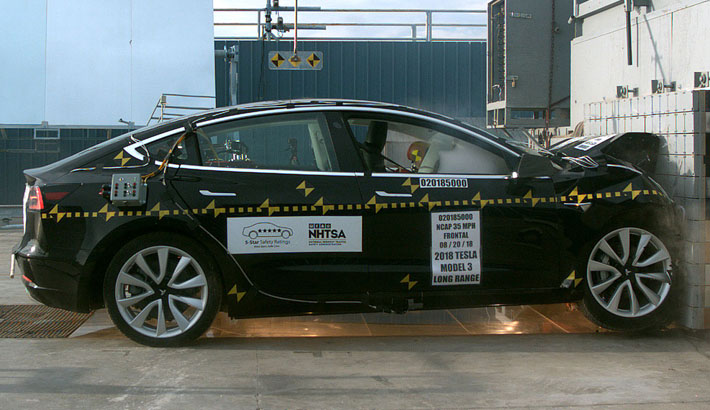
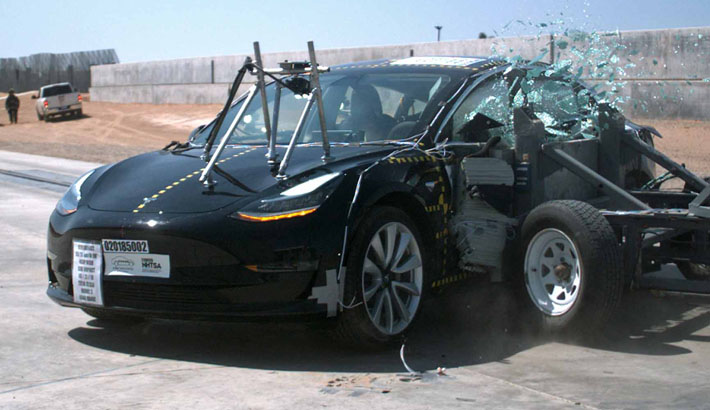
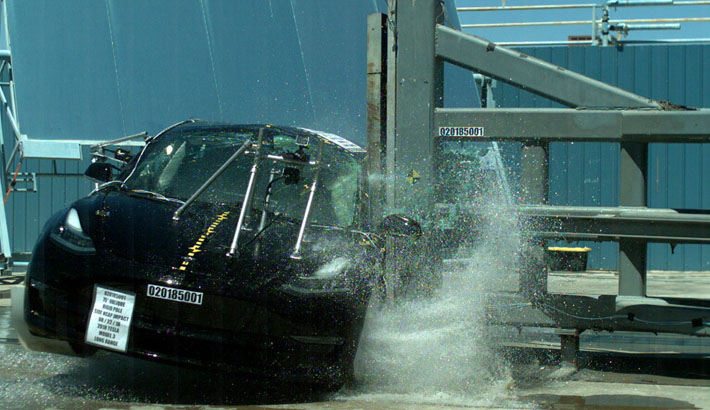
NHTSA crash tests
The agency crash-tested this model year itself. These are its own
photographs and star ratings.
Frontal crash test
Side barrier crash test
Side pole crash test
Photographs taken by NHTSA during its own New Car Assessment Program crash
tests of this model year. Public domain.
Configuration
Overall
Front
Side
Rollover
2020 Tesla Model 3 4 DR RWD
6.6% risk
2020 Tesla Model 3 4 DR AWD
6.6% risk
When owners complained
A spike years after the car went on sale usually means a part wearing
out on schedule across the whole fleet — the kind of pattern no single
owner can see from inside their own car.
Dec 2019peak 57Sep 2026
Recalls on the 2020 Tesla Model 3
A complaint is one owner's allegation. A recall is the point at which
the manufacturer or a regulator agreed the defect is real and dangerous
enough to fix for free — however old the car is.
United States — NHTSA
26V507000
EXTERIOR LIGHTING:HEADLIGHTS
Tesla, Inc. (Tesla) is recalling certain 2017-2023 Model 3 and 2020-2023 Model Y vehicles. The headlight low beams may be too bright and exceed the maximum light output. As such, these vehicles fail to comply with the requirements of Federal Motor Vehicle Safety Standard (FMVSS) number 108, "Lamps, Reflective Devices, and Associated Equipment."
Risk: Headlight low beams that are too bright can reduce visibility for oncoming drivers, increasing the risk of a crash.
24V935000
TIRES:PRESSURE MONITORING AND REGULATING SYSTEMS
Tesla, Inc. (Tesla) is recalling certain 2024 Cybertruck, 2017-2025 Model 3, and 2020-2025 Model Y vehicles. The tire pressure monitoring system (TPMS) warning light may not remain illuminated between drive cycles, failing to warn the driver of low tire pressure. As such, these vehicles fail to comply with the requirements of Federal Motor Vehicle Safety Standard number 138, "Tire Pressure Monitoring Systems."
Risk: Driving with improperly inflated tires increases the risk of a crash.
24V376000
SEAT BELTS:FRONT:WARNING LIGHT/DEVICES
Tesla, Inc. (Tesla) is recalling certain 2012-2024 Model S, 2015-2024 Model X, 2017-2023 Model 3, and 2020-2023 Model Y vehicles. In the event of an unbelted driver, the seat belt warning light and audible chime may not activate as intended. As such, these vehicles fail to comply with the requirements of Federal Motor Vehicle Safety Standard number 208, "Occupant Crash Protection."
Risk: A seat belt warning system that fails to alert occupants of an unbelted seat belt can increase the risk of injury during a crash.
Tesla, Inc. (Tesla) is recalling certain 2013, 2018-2021 Model S, 2020-2021 Model X, 2018-2022 Model 3, and 2020-2022 Model Y vehicles. A factory reset muted the Pedestrian Warning System (PWS) sounds. As such, these vehicles fail to comply with the requirements of Federal Motor Vehicle Safety Standard number 141, "Minimum Sound Requirements for Hybrid and Electric Vehicles."
Risk: Pedestrians may be unaware of an approaching vehicle if the PWS sounds are muted, increasing the risk of a crash.
24V051000
ELECTRICAL SYSTEM: INSTRUMENT CLUSTER/PANEL
Tesla, Inc. (Tesla) is recalling certain 2012-2023 Model S, 2016-2024 Model X, 2017-2023 Model 3, 2019-2024 Model Y, and 2024 Cybertruck vehicles. An incorrect font size is displayed on the instrument panel for the Brake, Park, and Antilock Brake System (ABS) warning lights. As such, these vehicles fail to comply with the requirements of Federal Motor Vehicle Safety Standard number 105, "Hydraulic and Electric Brake Systems" and 135, "Light Vehicle Brake Systems."
Risk: Warning lights with a smaller font size can make critical safety information on the instrument panel difficult to read, increasing the risk of a crash.
Tesla, Inc. (Tesla) is recalling 2012-2023 Model S, 2016-2023 Model X, 2017-2023 Model 3, and 2020-2023 Model Y vehicles equipped with all versions of Autosteer leading up to the version(s) that contains the recall remedy. In certain circumstances when Autosteer is engaged, the prominence and scope of the feature's controls may not be sufficient to prevent driver misuse of the SAE Level 2 advanced driver-assistance feature.
Risk: In certain circumstances when Autosteer is engaged, and the driver does not maintain responsibility for vehicle operation and is unprepared to intervene as necessary or fails to recognize when Autosteer is canceled or not engaged, there may be an increased risk of a crash.
23V085000
STEERING:AUTOMATED/ADAPTIVE STEERING
Tesla, Inc. (Tesla) is recalling certain 2016-2023 Model S, Model X, 2017-2023 Model 3, and 2020-2023 Model Y vehicles equipped with Full Self-Driving Beta (FSD Beta) software or pending installation. The FSD Beta system may allow the vehicle to act unsafe around intersections, such as traveling straight through an intersection while in a turn-only lane, entering a stop sign-controlled intersection without coming to a complete stop, or proceeding into an intersection during a steady yellow traffic signal without due caution. In addition, the system may respond insufficiently to changes in posted speed limits or not adequately account for the driver's adjustment of the vehicle's speed to exceed posted speed limits.
Risk: FSD Beta software that allows a vehicle to exceed speed limits or travel through intersections in an unlawful or unpredictable manner increases the risk of a crash.
22V798000
SEAT BELTS:REAR/OTHER:ANCHORAGE
Tesla, Inc. (Tesla) is recalling certain 2017-2022 Model 3 vehicles. The second-row left seat belt buckle and second-row center seat belt anchor may have been incorrectly reassembled during vehicle service.
Risk: An incorrectly reassembled seat belt anchor can impair the performance of the seat belt during a crash, increasing the risk of injury.
Canada — Transport Canada
Canada runs its own recall programme, and its campaigns do not
always mirror the American ones.
Recall 2026401454 units in Canada
Lights And Instruments
Issue: On certain vehicles, the low beam headlights may be too bright. Canadian regulations specify a maximum brightness for low beam headlights. Safety Risk: Low beam headlights that are too bright could cause reduced visibility for the driver and/or glare for oncoming drivers and increase the risk of a crash. Corrective Actions: Tesla will notify owners by email. The corrective actions for this recall are under development.
Recall 20242989,435 units in Canada
Seats And Restraints
Issue: On certain vehicles, the seat belt reminder chime and visual warning may not work when you start the vehicle and your seat belt is not buckled. Canadian regulations require both a seat belt reminder sound and visual telltale when a driver is not wearing their seat belt. Safety Risk: A seat belt warning that doesn't work correctly may not remind you to buckle your seat belt. Not wearing your seat belt can increase the risk of injury in a crash. Corrective Actions: Tesla will notify owners by email and supply an over-the-air software update to activate the seat belt reminder chime and visual warning.
Recall 2024283109,791 units in Canada
Lights And Instruments
Issue: A previous over-the-air (OTA) software update could cause the vehicle not to display the correct visual warning indicators when there are problems with the brake system or when the parking brake is applied. As a result, the BRAKE, PARK, and antilock brake system (ABS) visual indicators would display as text instead of symbols. Safety Risk: While there is a low risk to safety, Canadian regulations require visual warnings to use common symbols, instead of words, to avoid driver confusion. Corrective Actions: Tesla will notify affected owners by email. Tesla has released an over-the-air software update to fix this problem. There is no further action required if your vehicle has software release 2024.3.25, 2024.14.5, or a release later than 2024.14.5.
Recall 2024130340 units in Canada
Other
Issue: On certain vehicles, a software problem could cause the pedestrian warning system not to work. As a result, the vehicle may not produce enough sound to be detected by other road users. New Canadian regulations require electric vehicles to make a minimum sound level when operating at low speeds. Safety Risk: A pedestrian warning system that doesn't work could create an increased risk of injury for other road users. Corrective Actions: Tesla will notify affected owners by email. Tesla has released an over-the-air software update to fix this problem. There is no further action required if your vehicle has software release 2023.44.30.14 or a software deployed after 2023.44.30.14.
Recall 2023657192,769 units in Canada
Accessories
Issue: On vehicles equipped with the Autosteer advanced driver-assistance feature, when using the feature, the vehicle may not provide strong enough warnings or monitor the driver closely enough to prevent misuse of the feature. Safety Risk: A driver that doesn't pay close attention while using the Autosteer feature or who doesn't react quickly when Autosteer is canceled could have an increased risk of a crash. Corrective Actions: Tesla will notify owners by email and supply an over-the-air software update to improve driver monitoring and alerts while using the Autosteer feature. Tesla advises that you must always pay attention and be ready to take control of the vehicle at any time while using the Autosteer advanced driver-assistance feature.
Recall 202306320,667 units in Canada
Accessories
Issue: In certain traffic situations, when the FSD Beta advanced driver assistance feature is engaged, the vehicle may perform maneuvers that break certain traffic laws, if the driver doesn't intervene and take control. Note: This recall only affects vehicles equipped with the FSD Beta feature. Safety Risk: Certain maneuvers performed by the FSD Beta advanced driver assistance feature may break traffic laws. This could increase the risk of a crash if the driver doesn't intervene. Corrective Actions: Tesla will notify owners by email and supply an over-the-air software update to improve how the FSD Beta feature maneuvers the vehicle in certain traffic situations. Tesla reminds that FSD Beta is only an advanced driver assistance feature, and the driver must pay attention and be ready to take control at all times when the feature is engaged.
Recall 20226044,247 units in Canada
Seats And Restraints
Issue: On certain vehicles, the bolt attaching the left-rear seat belt buckle and center-rear seat belt anchorage may not have been reassembled correctly after previous service repair. As a result, the seat belts may not work properly in a crash. Safety Risk: A seat belt that moves or detaches in a crash could create an increased risk of injury. Corrective Actions: Tesla will notify owners by email and advise you to contact Tesla Service to arrange for an inspection of the left-rear seat belt buckle and center-rear seat belt anchorage bolt. The bolt will be re-tightened, if necessary.
Recall 2022528114,536 units in Canada
Visual System
Issue: The window automatic reversal system may not react correctly after detecting an obstruction. This could cause the window to close with too much force before it stops and retracts. Also, the window may not retract enough after detecting an obstruction. As a result, the power windows do not pass certain tests under Canadian safety regulations. Safety Risk: A window that closes with excessive force could pinch a person and create a risk of injury. Corrective Actions: Tesla will email a notice to owners and provide an over-the-air firmware update to fix this condition.
Reports where the owner recorded a crash, a fire, an injury or a death.
at 119,730 milesMontville, NJCrash2 injured
AIR BAGS
The contact owned a 2020 Tesla Model 3. The contact stated that while driving 50 MPH in traffic on a sunny day, the vehicle drove over a pothole, and the traction control and ABS warning lights illuminated. The brake pedal was checked; however, fifteen minutes later the vehicle crashed into a 26-foot box truck. The contact stated that the box truck left the scene of the crash. The tire skid marks were 100 feet long. The air bags failed to deploy. The contact stated there was an electrical failure which caused the brakes to become inoperable. Additionally, the alerts were late. The contact stated that the battery might need to be replaced. The driver and his daughter, who was seated inside the vehicle, sustained back pain, whiplash, and knee injuries. The driver was transported by ambulance. Medical attention was provided. The contact stated that surgery might be needed in the future. The daughter was taken to the hospital, and medical attention was provided. A Police report was filed. The vehicle was towed to an auto body shop. The EDR was requested on the manufacturer website. The failure mileage was approximately 119,730.
NHTSA complaint #11761825 — an unverified report by a vehicle owner.
at 119,730 milesMontville, NJCrash2 injured
SERVICE BRAKES, HYDRAULIC
The contact owned a 2020 Tesla Model 3. The contact stated that while driving 50 MPH in traffic on a sunny day, the vehicle drove over a pothole, and the traction control and ABS warning lights illuminated. The brake pedal was checked; however, fifteen minutes later the vehicle crashed into a 26-foot box truck. The contact stated that the box truck left the scene of the crash. The tire skid marks were 100 feet long. The air bags failed to deploy. The contact stated there was an electrical failure which caused the brakes to become inoperable. Additionally, the alerts were late. The contact stated that the battery might need to be replaced. The driver and his daughter, who was seated inside the vehicle, sustained back pain, whiplash, and knee injuries. The driver was transported by ambulance. Medical attention was provided. The contact stated that surgery might be needed in the future. The daughter was taken to the hospital, and medical attention was provided. A Police report was filed. The vehicle was towed to an auto body shop. The EDR was requested on the manufacturer website. The failure mileage was approximately 119,730.
NHTSA complaint #11761825 — an unverified report by a vehicle owner.
Santa Monica, CACrash
ELECTRICAL SYSTEM:ADAS
I was operating my Tesla with Full Self-Driving (FSD) engaged when the incident occurred. I was turning right onto [XXX] from [XXX] and was positioned in the left right-turn lane approaching a railroad crossing. The railroad crossing gates were already fully lowered, indicating an approaching train. Despite the lowered crossing gates, the vehicle accelerated forward into the crossing rather than stopping. The vehicle drove through the lowered crossing gate, which struck and shattered the windshield. Seconds later, the train passed through the intersection. I did not command the vehicle to proceed through the lowered gates. The incident resulted in significant damage to the windshield and raised serious safety concerns because the vehicle entered an active railroad crossing immediately before the train arrived. The vehicle was towed to a Tesla Service Center due to the damage. Fortunately, no collision with the train occurred and there were no injuries, but the incident had the potential to result in catastrophic injury or death. INFORMATION REDACTED PURSUANT TO THE FREEDOM OF INFORMATION ACT (FOIA), 5 U.S.C. 552(B)(6)
NHTSA complaint #11755168 — an unverified report by a vehicle owner.
Santa Barbara, CACrash
VEHICLE SPEED CONTROL
I was making a right turn from the parking lot onto the street, a maneuver I have made hundreds of times previously without any issue. My foot was on the accelerator pedal as normal for this turn. The vehicle accelerated far faster than intended for this maneuver, with tires screeching, and continued across the width of the street. The vehicle's front left wheel struck the curb on the opposite side of the street from the parking lot exit. The wheel sustained significant damage, and the wheel rim was torn. When I regained my bearings, I lifted my foot off the accelerator and the vehicle slowed down. At the time, I believed a serious crash was imminent. I was able to drive the vehicle home, which was about 1 1/2 miles away, but it is not safe to drive so I won't drive it until it is repaired. I am aware that Tesla and NHTSA have attributed many prior sudden acceleration incidents to drivers unintentionally pressing the accelerator when intending to press the brake. Due to the vehicle's regenerative braking, I rarely use the brake pedal during normal driving, which makes this explanation virtually impossible in my case. I am also aware that NHTSA reopened an investigation in 2023 after learning about a potential inverter-related design flaw that could cause sudden unintended acceleration in Tesla vehicles, and that this investigation remains open as of this writing.
NHTSA complaint #11753407 — an unverified report by a vehicle owner.
El Paso, TXCrash1 injured
VEHICLE SPEED CONTROL
On July 11 at approximately 6:47 a.m., I was operating my Tesla Model 3 on Interstate 65 in Hart County, Kentucky, with Full Self-Driving (FSD) engaged during normal highway travel. Approximately one hour earlier, I had departed a highway rest area after sleeping from the previous day’s travel. Rain developed during the trip, but I observed adequate visibility, apparent roadway traction, and I was not impaired. I was traveling in the far-right lane of a three-lane interstate. The posted speed limit was approximately 70 mph; however, FSD limited the vehicle to approximately 65 mph and displayed warnings indicating that the higher speed was unavailable. While FSD remained engaged, the system initiated a lane change from the far-right lane into the center lane. After entering the center lane, the vehicle began displaying repeated warning messages and FSD disengaged multiple times. I attempted to locate settings related to the warnings on the touchscreen but could not identify an available adjustment. During the third disengagement, I perceived that the vehicle continued braking without releasing while steering resistance increased significantly. The steering wheel then rotated abruptly, and I was unable to regain normal directional control before the vehicle departed its intended travel path and struck a concrete median. The collision caused personal injuries and substantial vehicle damage. I have not been able to reproduce the condition. The incident was investigated by the Kentucky State Police. Based on the sequence of repeated FSD warnings, disengagements, continued braking, and abrupt steering behavior, I believe this event warrants investigation. I request that NHTSA review the vehicle’s Full Self-Driving logs, telemetry, Event Data Recorder (EDR) data, steering and braking commands, diagnostic records, and software history to determine whether a vehicle or software malfunction contributed to the collision. Almost like someone had control, into the wall -KM
NHTSA complaint #11750430 — an unverified report by a vehicle owner.
El Paso, TXCrash1 injured
STEERING
On July 11 at approximately 6:47 a.m., I was operating my Tesla Model 3 on Interstate 65 in Hart County, Kentucky, with Full Self-Driving (FSD) engaged during normal highway travel. Approximately one hour earlier, I had departed a highway rest area after sleeping from the previous day’s travel. Rain developed during the trip, but I observed adequate visibility, apparent roadway traction, and I was not impaired. I was traveling in the far-right lane of a three-lane interstate. The posted speed limit was approximately 70 mph; however, FSD limited the vehicle to approximately 65 mph and displayed warnings indicating that the higher speed was unavailable. While FSD remained engaged, the system initiated a lane change from the far-right lane into the center lane. After entering the center lane, the vehicle began displaying repeated warning messages and FSD disengaged multiple times. I attempted to locate settings related to the warnings on the touchscreen but could not identify an available adjustment. During the third disengagement, I perceived that the vehicle continued braking without releasing while steering resistance increased significantly. The steering wheel then rotated abruptly, and I was unable to regain normal directional control before the vehicle departed its intended travel path and struck a concrete median. The collision caused personal injuries and substantial vehicle damage. I have not been able to reproduce the condition. The incident was investigated by the Kentucky State Police. Based on the sequence of repeated FSD warnings, disengagements, continued braking, and abrupt steering behavior, I believe this event warrants investigation. I request that NHTSA review the vehicle’s Full Self-Driving logs, telemetry, Event Data Recorder (EDR) data, steering and braking commands, diagnostic records, and software history to determine whether a vehicle or software malfunction contributed to the collision. Almost like someone had control, into the wall -KM
NHTSA complaint #11750430 — an unverified report by a vehicle owner.
The most recent complaints
In the owners' own words, exactly as filed with NHTSA.
Lynnwood, WA
SUSPENSION
Lower Lateral Link Fronts and front lower compliance link assembly for both right and left. There have apparently been on going issues for the Tesla Model 3 suspension links. I first started hearing noises from the suspension last month, I was booked for a weekend service and then rescheduled for today. I stopped by for a formal comprehensive inspection and was informed that there is tearing in the suspension. I already had this vehicle brought in for warranty earlier this year, how was this not brought up to me during that time frame? Did the suspension suddenly start tearing after 6 months?
NHTSA complaint #11763382 — an unverified report by a vehicle owner.
Reston, VA
SUSPENSION
I own a 2020 Tesla Model 3. Over approximately the past 2–3 weeks, the vehicle has developed a noticeable rattle/creaking noise coming from the left-front suspension area. The noise was not previously present and appears to be getting my attention as a potential suspension-related safety issue. I am concerned because my vehicle falls within the model-year range of Tesla Model 3 vehicles associated with reported front suspension/lateral-link issues. I understand NHTSA is investigating reports involving front suspension component failures that could potentially affect vehicle control. I contacted Tesla through the Tesla app and requested that the vehicle be inspected because of the suspension noise and my safety concern. Tesla provided an estimate requiring approximately $240 for diagnosis/inspection before determining the cause. At this time, I have not experienced a suspension separation, crash, injury, or loss of vehicle control. However, because the vehicle is producing a new and persistent noise from the left-front suspension area, I am concerned that this could be an early indication of a suspension component problem. I am submitting this complaint so NHTSA has a record of the symptoms on my vehicle and can determine whether they may be related to other reported front suspension failures. I am also requesting that this complaint be considered in connection with any ongoing investigation involving front suspension/lateral-link failures in 2020 Tesla Model 3 vehicles. I will retain Tesla service records and any inspection findings and can provide additional information if requested.
NHTSA complaint #11762629 — an unverified report by a vehicle owner.
at 119,730 milesMontville, NJCrash2 injured
AIR BAGS
The contact owned a 2020 Tesla Model 3. The contact stated that while driving 50 MPH in traffic on a sunny day, the vehicle drove over a pothole, and the traction control and ABS warning lights illuminated. The brake pedal was checked; however, fifteen minutes later the vehicle crashed into a 26-foot box truck. The contact stated that the box truck left the scene of the crash. The tire skid marks were 100 feet long. The air bags failed to deploy. The contact stated there was an electrical failure which caused the brakes to become inoperable. Additionally, the alerts were late. The contact stated that the battery might need to be replaced. The driver and his daughter, who was seated inside the vehicle, sustained back pain, whiplash, and knee injuries. The driver was transported by ambulance. Medical attention was provided. The contact stated that surgery might be needed in the future. The daughter was taken to the hospital, and medical attention was provided. A Police report was filed. The vehicle was towed to an auto body shop. The EDR was requested on the manufacturer website. The failure mileage was approximately 119,730.
NHTSA complaint #11761825 — an unverified report by a vehicle owner.
at 119,730 milesMontville, NJCrash2 injured
SERVICE BRAKES, HYDRAULIC
The contact owned a 2020 Tesla Model 3. The contact stated that while driving 50 MPH in traffic on a sunny day, the vehicle drove over a pothole, and the traction control and ABS warning lights illuminated. The brake pedal was checked; however, fifteen minutes later the vehicle crashed into a 26-foot box truck. The contact stated that the box truck left the scene of the crash. The tire skid marks were 100 feet long. The air bags failed to deploy. The contact stated there was an electrical failure which caused the brakes to become inoperable. Additionally, the alerts were late. The contact stated that the battery might need to be replaced. The driver and his daughter, who was seated inside the vehicle, sustained back pain, whiplash, and knee injuries. The driver was transported by ambulance. Medical attention was provided. The contact stated that surgery might be needed in the future. The daughter was taken to the hospital, and medical attention was provided. A Police report was filed. The vehicle was towed to an auto body shop. The EDR was requested on the manufacturer website. The failure mileage was approximately 119,730.
NHTSA complaint #11761825 — an unverified report by a vehicle owner.
at 80,000 milesIrvine, CA
ELECTRICAL SYSTEM
The contact owns a 2020 Tesla Model 3. The contact stated that while driving at an undisclosed speed, the safety features independently deactivated. The contact purchased and replaced the battery. The vehicle was taken to the dealer, where it was diagnosed with ECU failure. The contact was informed that the ECU needed to be replaced. The vehicle was not repaired. The contact stated that an unknown software update was completed in June 2026. In addition, the contact stated that the unknown software update caused the ECU to fail. The manufacturer was made aware of the failure, and a case was filed. The contact was informed that the failure was a known failure with similar vehicles. The failure mileage was approximately 80,000.
NHTSA complaint #11757430 — an unverified report by a vehicle owner.
Poway, CA
STRUCTURE:BODY
The front passenger door intermittently becomes “unclosed.” When this occurs, the vehicle displays “door open” and the passenger door window rolls down and up repeatedly. The window cycling continues until the door is slammed firmly shut. Once the door is securely shut, the window cycling stops and the door-open warning clears. When it occurs: The issue began in the second week of August while a passenger was in the front seat. It continued while the passenger remained seated. The issue occurs intermittently while the vehicle is moving, including when the vehicle goes around a curve.
NHTSA complaint #11757329 — an unverified report by a vehicle owner.
Willsboro, NY
SUSPENSION
I was told my car is unsafe to drive after taking it to the mechanic for a routine tire balance and rotation. I currently need both rear control arms replaced. I had them replaced in the past. In addition, I have had the front control arms replaced more than once, the lower lateral links replaced, numerous hubs repaired, forelinks and knuckles all replaced not too long ago, so this news comes as a shock. The first control arm failure occurred when the car was only a year and a half old with very little milage. I have all of the service records in my tesla app vehicle repair history. They are in a pdf format and I would be happy to send them in, if helpful.
NHTSA complaint #11756378 — an unverified report by a vehicle owner.
Santa Monica, CACrash
ELECTRICAL SYSTEM:ADAS
I was operating my Tesla with Full Self-Driving (FSD) engaged when the incident occurred. I was turning right onto [XXX] from [XXX] and was positioned in the left right-turn lane approaching a railroad crossing. The railroad crossing gates were already fully lowered, indicating an approaching train. Despite the lowered crossing gates, the vehicle accelerated forward into the crossing rather than stopping. The vehicle drove through the lowered crossing gate, which struck and shattered the windshield. Seconds later, the train passed through the intersection. I did not command the vehicle to proceed through the lowered gates. The incident resulted in significant damage to the windshield and raised serious safety concerns because the vehicle entered an active railroad crossing immediately before the train arrived. The vehicle was towed to a Tesla Service Center due to the damage. Fortunately, no collision with the train occurred and there were no injuries, but the incident had the potential to result in catastrophic injury or death. INFORMATION REDACTED PURSUANT TO THE FREEDOM OF INFORMATION ACT (FOIA), 5 U.S.C. 552(B)(6)
NHTSA complaint #11755168 — an unverified report by a vehicle owner.
Signal Hill, CA
FORWARD COLLISION AVOIDANCE: WARNINGS
All Teslas vehicles running HW3 / AI3 Autopilot self driving computers have been known for years to have a defective design problem with the cooling system without its own dedicated cooling and which puts the self driving computer last in the cooling looping at the top of the cooling stack. When the computer fails and they will Tesla requires the owner to replace the computer. This does not result in a redesigned improvement to the computer or cooling system that reduces the thermal stress being applied to the new computer. Tesla is now pushing a new version of the self driving FSD software with the “v14 Lite” release over the last two weeks. This software release uses large complex software models which Tesla design to use every part of the HW4 / AI3 compute power which stressed the computer by pushing it to it compute limiting. All this compute is causing the computer to overheat and fail. Tesla then require owners who are all out of warranty now to pay thousands to replace the computer. This replacemen uses the same flawed cooling system and the same computer incapable of dealing passive compute requests on it by the latest v14 Lite software to eventually cause the computer to just require the replacement computer to eventually need yet another replacement of the same flawed design at owners cost. There is also supposed to systems which monitor the thermal stress on the computer and shut it off abruptly until it cools down which is not ideal at freeway speeds which is not happening. Recall to address and resolve the issue with improved cooling, more powerful computer that doesn’t reach maximum capacity and it’s each use, and less taxing software needs to be issue. This is a major safety design problem which Tesla has not addressed. There only solution is to just replace design constrained components with the exact same parts at owners cost. These multiple design issues can and often result is sudden shutdown of the computer, or worse case sudden complete failure.
NHTSA complaint #11754878 — an unverified report by a vehicle owner.
Signal Hill, CA
FORWARD COLLISION AVOIDANCE: ADAPTIVE CRUISE CONTROL
All Teslas vehicles running HW3 / AI3 Autopilot self driving computers have been known for years to have a defective design problem with the cooling system without its own dedicated cooling and which puts the self driving computer last in the cooling looping at the top of the cooling stack. When the computer fails and they will Tesla requires the owner to replace the computer. This does not result in a redesigned improvement to the computer or cooling system that reduces the thermal stress being applied to the new computer. Tesla is now pushing a new version of the self driving FSD software with the “v14 Lite” release over the last two weeks. This software release uses large complex software models which Tesla design to use every part of the HW4 / AI3 compute power which stressed the computer by pushing it to it compute limiting. All this compute is causing the computer to overheat and fail. Tesla then require owners who are all out of warranty now to pay thousands to replace the computer. This replacemen uses the same flawed cooling system and the same computer incapable of dealing passive compute requests on it by the latest v14 Lite software to eventually cause the computer to just require the replacement computer to eventually need yet another replacement of the same flawed design at owners cost. There is also supposed to systems which monitor the thermal stress on the computer and shut it off abruptly until it cools down which is not ideal at freeway speeds which is not happening. Recall to address and resolve the issue with improved cooling, more powerful computer that doesn’t reach maximum capacity and it’s each use, and less taxing software needs to be issue. This is a major safety design problem which Tesla has not addressed. There only solution is to just replace design constrained components with the exact same parts at owners cost. These multiple design issues can and often result is sudden shutdown of the computer, or worse case sudden complete failure.
NHTSA complaint #11754878 — an unverified report by a vehicle owner.
All Teslas vehicles running HW3 / AI3 Autopilot self driving computers have been known for years to have a defective design problem with the cooling system without its own dedicated cooling and which puts the self driving computer last in the cooling looping at the top of the cooling stack. When the computer fails and they will Tesla requires the owner to replace the computer. This does not result in a redesigned improvement to the computer or cooling system that reduces the thermal stress being applied to the new computer. Tesla is now pushing a new version of the self driving FSD software with the “v14 Lite” release over the last two weeks. This software release uses large complex software models which Tesla design to use every part of the HW4 / AI3 compute power which stressed the computer by pushing it to it compute limiting. All this compute is causing the computer to overheat and fail. Tesla then require owners who are all out of warranty now to pay thousands to replace the computer. This replacemen uses the same flawed cooling system and the same computer incapable of dealing passive compute requests on it by the latest v14 Lite software to eventually cause the computer to just require the replacement computer to eventually need yet another replacement of the same flawed design at owners cost. There is also supposed to systems which monitor the thermal stress on the computer and shut it off abruptly until it cools down which is not ideal at freeway speeds which is not happening. Recall to address and resolve the issue with improved cooling, more powerful computer that doesn’t reach maximum capacity and it’s each use, and less taxing software needs to be issue. This is a major safety design problem which Tesla has not addressed. There only solution is to just replace design constrained components with the exact same parts at owners cost. These multiple design issues can and often result is sudden shutdown of the computer, or worse case sudden complete failure.
NHTSA complaint #11754878 — an unverified report by a vehicle owner.
Carnation, WA
SUSPENSION
The front upper control arms. Causing poor steering and unbearable loud creaks when turning wheel. Mobile tesla tech confirmed upper control arm
NHTSA complaint #11754639 — an unverified report by a vehicle owner.
Bakersfield, CA
SUSPENSION
I own a Tesla Model 3 and have been experiencing concerning front suspension and steering issues that appear to be worsening over time. While driving and especially during low speed turns, parking and maneuvering, the front suspension produces loud screeching, squeaking, and rubbing noises. The steering has also become noticeably stiffer that normal at times, and the noises can be felt through the steering wheel. The sounds are coming from the front suspension area and occur repeatedly during normal driving. The issues raises significant safety concerns because I am worried there may be a defect affecting the front suspension of steering components. Unexpected steering resistance combined with loud suspension noises creates concern that a suspension component could fail while the vehicle is in motion, potentially resulting in loss of steering control or a crash. There were no warning lights or messages displayed before or during these symptoms. The vehicle has not been involved in any collision that would explain these symptoms. The problem has continued during normal operation and appears to be getting progressively worse. The vehicle is available for inspection upon request. I am submitting this complaint because I understand NHTSA is investigating front suspension issues involving 2018-2020 Tesla Model 3 vehicles, and my vehicle is experiencing similar symptoms. I believe this issue should be investigated to determine whether it is related to the front suspension components under investigation.
NHTSA complaint #11754693 — an unverified report by a vehicle owner.
Levittown, NY
SUSPENSION
Component that failed was the lower lateral link. There was no loss of control but there was a sound going over any uneven surface. Upon bringing the vehicle to the Tesla dealership they recommended a replacement of the upper and lower control arm on both the driver and passenger side. This greatly increased the cost of the repair to a total of $2356.84
NHTSA complaint #11754443 — an unverified report by a vehicle owner.
Fremont, CA
EXTERIOR LIGHTING
Suspension is grinding. I had it replaced once at Tesla and it began grinding again in less than 18 months. I took it to Tesla and was informed the lower control arm failed and the price had more than doubled from the prior replacement. No warning lights have come on regarding this issue. The original replacement was 3/7/2024. I noticed the grinding between 12-18 months later. Also, the rear brake light gets condensation in it somehow. I had noticed this about 1 year ago.
NHTSA complaint #11754235 — an unverified report by a vehicle owner.
Fremont, CA
SUSPENSION
Suspension is grinding. I had it replaced once at Tesla and it began grinding again in less than 18 months. I took it to Tesla and was informed the lower control arm failed and the price had more than doubled from the prior replacement. No warning lights have come on regarding this issue. The original replacement was 3/7/2024. I noticed the grinding between 12-18 months later. Also, the rear brake light gets condensation in it somehow. I had noticed this about 1 year ago.
NHTSA complaint #11754235 — an unverified report by a vehicle owner.
Williamsburg, VA
SUSPENSION
In Jan, 2026, the front suspension in the 2020 Model 3 started making a cracking, catching, grinding and/or popping noise as I turned the steering column while parked or driving slowly. When investigating, it sounded like it was coming from bearings in the front suspension. It continued to get worse, making the catching / grinding / popping noise when driving on the highway, turning or not turning, to the point that it felt like the suspension would completely tear apart, and I took the vehicle in for service in early March. Telsa service ended up replacing the left and right upper control arm assembly, the front left and right lower compliance link and the lower lateral links. Online research on various tesla forums showed this to be a known problem with vehicle owners. Unsure if continuing with the issue prior to service would have caused a safety concren, but it was beyond the point of sounding safe to operate to me.
NHTSA complaint #11754038 — an unverified report by a vehicle owner.
Santa Barbara, CACrash
VEHICLE SPEED CONTROL
I was making a right turn from the parking lot onto the street, a maneuver I have made hundreds of times previously without any issue. My foot was on the accelerator pedal as normal for this turn. The vehicle accelerated far faster than intended for this maneuver, with tires screeching, and continued across the width of the street. The vehicle's front left wheel struck the curb on the opposite side of the street from the parking lot exit. The wheel sustained significant damage, and the wheel rim was torn. When I regained my bearings, I lifted my foot off the accelerator and the vehicle slowed down. At the time, I believed a serious crash was imminent. I was able to drive the vehicle home, which was about 1 1/2 miles away, but it is not safe to drive so I won't drive it until it is repaired. I am aware that Tesla and NHTSA have attributed many prior sudden acceleration incidents to drivers unintentionally pressing the accelerator when intending to press the brake. Due to the vehicle's regenerative braking, I rarely use the brake pedal during normal driving, which makes this explanation virtually impossible in my case. I am also aware that NHTSA reopened an investigation in 2023 after learning about a potential inverter-related design flaw that could cause sudden unintended acceleration in Tesla vehicles, and that this investigation remains open as of this writing.
NHTSA complaint #11753407 — an unverified report by a vehicle owner.
Malden, MA
LANE DEPARTURE: ASSIST
On XXX, at approximately 2:47:42 PM, I was driving a 2020 Tesla Model 3 Long Range AWD VIN [XXX] on a two-lane road in the Adirondacks with Full Self-Driving (Supervised) active. The vehicle was traveling approximately 50–52 mph. An oncoming SUV moved toward or across the double-yellow centerline while passing a bicyclist. FSD reacted with a sudden and aggressive steering maneuver to the right. The vehicle crossed the white edge line and entered the paved shoulder. Because it appeared that the vehicle might leave the roadway, I immediately took control and steered it back toward the travel lane. The vehicle then oscillated sharply in both directions before stabilizing. External telemetry shows lateral acceleration reaching approximately 0.88 g in one direction and 0.84 g in the opposite direction, with a 1.72 g peak-to-peak lateral swing. Vehicle speed fell from approximately 50 mph to approximately 28 mph during the recovery. No collision or injury occurred. The rapid deceleration and stabilization appeared consistent with possible electronic stability-control intervention, but I cannot confirm that from the available external telemetry. I have preserved the front dashcam video and telemetry file. I request that Tesla preserve and review the internal vehicle logs, including FSD commanded steering, planned path, driver steering torque, road-edge perception, oncoming-vehicle perception, stability-control activation, individual-wheel braking, and motor-torque reduction. INFORMATION REDACTED PURSUANT TO THE FREEDOM OF INFORMATION ACT (FOIA), 5 U.S.C. 552(B)(6)
NHTSA complaint #11753097 — an unverified report by a vehicle owner.
Malden, MA
LANE DEPARTURE: WARNING
On XXX, at approximately 2:47:42 PM, I was driving a 2020 Tesla Model 3 Long Range AWD VIN [XXX] on a two-lane road in the Adirondacks with Full Self-Driving (Supervised) active. The vehicle was traveling approximately 50–52 mph. An oncoming SUV moved toward or across the double-yellow centerline while passing a bicyclist. FSD reacted with a sudden and aggressive steering maneuver to the right. The vehicle crossed the white edge line and entered the paved shoulder. Because it appeared that the vehicle might leave the roadway, I immediately took control and steered it back toward the travel lane. The vehicle then oscillated sharply in both directions before stabilizing. External telemetry shows lateral acceleration reaching approximately 0.88 g in one direction and 0.84 g in the opposite direction, with a 1.72 g peak-to-peak lateral swing. Vehicle speed fell from approximately 50 mph to approximately 28 mph during the recovery. No collision or injury occurred. The rapid deceleration and stabilization appeared consistent with possible electronic stability-control intervention, but I cannot confirm that from the available external telemetry. I have preserved the front dashcam video and telemetry file. I request that Tesla preserve and review the internal vehicle logs, including FSD commanded steering, planned path, driver steering torque, road-edge perception, oncoming-vehicle perception, stability-control activation, individual-wheel braking, and motor-torque reduction. INFORMATION REDACTED PURSUANT TO THE FREEDOM OF INFORMATION ACT (FOIA), 5 U.S.C. 552(B)(6)
NHTSA complaint #11753097 — an unverified report by a vehicle owner.
Fairbanks, AK
UNKNOWN OR OTHER
Car was sitting at a red light while in Full Self Driving (supervised). The screen showed at least four red lights. Suddenly the car started to move forward while the lights were still red. I was able to stop it from going further. This has happened before and I reported it then. If I had not had my foot near the brake pedal the car might have just run through the light.
NHTSA complaint #11751847 — an unverified report by a vehicle owner.
Fairbanks, AK
FORWARD COLLISION AVOIDANCE: ADAPTIVE CRUISE CONTROL
Car was sitting at a red light while in Full Self Driving (supervised). The screen showed at least four red lights. Suddenly the car started to move forward while the lights were still red. I was able to stop it from going further. This has happened before and I reported it then. If I had not had my foot near the brake pedal the car might have just run through the light.
NHTSA complaint #11751847 — an unverified report by a vehicle owner.
El Paso, TXCrash1 injured
VEHICLE SPEED CONTROL
On July 11 at approximately 6:47 a.m., I was operating my Tesla Model 3 on Interstate 65 in Hart County, Kentucky, with Full Self-Driving (FSD) engaged during normal highway travel. Approximately one hour earlier, I had departed a highway rest area after sleeping from the previous day’s travel. Rain developed during the trip, but I observed adequate visibility, apparent roadway traction, and I was not impaired. I was traveling in the far-right lane of a three-lane interstate. The posted speed limit was approximately 70 mph; however, FSD limited the vehicle to approximately 65 mph and displayed warnings indicating that the higher speed was unavailable. While FSD remained engaged, the system initiated a lane change from the far-right lane into the center lane. After entering the center lane, the vehicle began displaying repeated warning messages and FSD disengaged multiple times. I attempted to locate settings related to the warnings on the touchscreen but could not identify an available adjustment. During the third disengagement, I perceived that the vehicle continued braking without releasing while steering resistance increased significantly. The steering wheel then rotated abruptly, and I was unable to regain normal directional control before the vehicle departed its intended travel path and struck a concrete median. The collision caused personal injuries and substantial vehicle damage. I have not been able to reproduce the condition. The incident was investigated by the Kentucky State Police. Based on the sequence of repeated FSD warnings, disengagements, continued braking, and abrupt steering behavior, I believe this event warrants investigation. I request that NHTSA review the vehicle’s Full Self-Driving logs, telemetry, Event Data Recorder (EDR) data, steering and braking commands, diagnostic records, and software history to determine whether a vehicle or software malfunction contributed to the collision. Almost like someone had control, into the wall -KM
NHTSA complaint #11750430 — an unverified report by a vehicle owner.
El Paso, TXCrash1 injured
STEERING
On July 11 at approximately 6:47 a.m., I was operating my Tesla Model 3 on Interstate 65 in Hart County, Kentucky, with Full Self-Driving (FSD) engaged during normal highway travel. Approximately one hour earlier, I had departed a highway rest area after sleeping from the previous day’s travel. Rain developed during the trip, but I observed adequate visibility, apparent roadway traction, and I was not impaired. I was traveling in the far-right lane of a three-lane interstate. The posted speed limit was approximately 70 mph; however, FSD limited the vehicle to approximately 65 mph and displayed warnings indicating that the higher speed was unavailable. While FSD remained engaged, the system initiated a lane change from the far-right lane into the center lane. After entering the center lane, the vehicle began displaying repeated warning messages and FSD disengaged multiple times. I attempted to locate settings related to the warnings on the touchscreen but could not identify an available adjustment. During the third disengagement, I perceived that the vehicle continued braking without releasing while steering resistance increased significantly. The steering wheel then rotated abruptly, and I was unable to regain normal directional control before the vehicle departed its intended travel path and struck a concrete median. The collision caused personal injuries and substantial vehicle damage. I have not been able to reproduce the condition. The incident was investigated by the Kentucky State Police. Based on the sequence of repeated FSD warnings, disengagements, continued braking, and abrupt steering behavior, I believe this event warrants investigation. I request that NHTSA review the vehicle’s Full Self-Driving logs, telemetry, Event Data Recorder (EDR) data, steering and braking commands, diagnostic records, and software history to determine whether a vehicle or software malfunction contributed to the collision. Almost like someone had control, into the wall -KM
NHTSA complaint #11750430 — an unverified report by a vehicle owner.
El Paso, TXCrash1 injured
SERVICE BRAKES
On July 11 at approximately 6:47 a.m., I was operating my Tesla Model 3 on Interstate 65 in Hart County, Kentucky, with Full Self-Driving (FSD) engaged during normal highway travel. Approximately one hour earlier, I had departed a highway rest area after sleeping from the previous day’s travel. Rain developed during the trip, but I observed adequate visibility, apparent roadway traction, and I was not impaired. I was traveling in the far-right lane of a three-lane interstate. The posted speed limit was approximately 70 mph; however, FSD limited the vehicle to approximately 65 mph and displayed warnings indicating that the higher speed was unavailable. While FSD remained engaged, the system initiated a lane change from the far-right lane into the center lane. After entering the center lane, the vehicle began displaying repeated warning messages and FSD disengaged multiple times. I attempted to locate settings related to the warnings on the touchscreen but could not identify an available adjustment. During the third disengagement, I perceived that the vehicle continued braking without releasing while steering resistance increased significantly. The steering wheel then rotated abruptly, and I was unable to regain normal directional control before the vehicle departed its intended travel path and struck a concrete median. The collision caused personal injuries and substantial vehicle damage. I have not been able to reproduce the condition. The incident was investigated by the Kentucky State Police. Based on the sequence of repeated FSD warnings, disengagements, continued braking, and abrupt steering behavior, I believe this event warrants investigation. I request that NHTSA review the vehicle’s Full Self-Driving logs, telemetry, Event Data Recorder (EDR) data, steering and braking commands, diagnostic records, and software history to determine whether a vehicle or software malfunction contributed to the collision. Almost like someone had control, into the wall -KM
NHTSA complaint #11750430 — an unverified report by a vehicle owner.