Owners have filed 1,235 complaints
about the 2021 Tesla Model 3 with NHTSA between 2020 and 2026.
The largest single group is the driver assist & collision avoidance.
Across this model's run it ranks 3 of 10 worst.
The letter says how bad. This says what kind — whether this year drew
an unusual number of complaints, unusually dangerous
ones, or failures that arrived unusually early.
The dashed ring is 50 — the national norm. Further out is worse.
Complaint volume — 81
Against the median year of the Tesla Model 3. 50 means typical for this
model; 100 means roughly double.
Severity — 58
11.2% of these complaints
involved a crash, fire, injury or death, against a national rate of
9.7%.
Early failure — 100
84% of failures with a mileage on record happened under
36,000 miles, against a national rate of
29%.
NHTSA files every complaint against a named sub-assembly, not just a
system. This is the difference between knowing it was "the engine" and
knowing which part of it — the list to hand a mechanic.
Adaptive Cruise Control
28243.5%
Automatic Emergency Braking
22935.3%
Warnings
7611.7%
Assist
213.2%
Warning
152.3%
Body
142.2%
Autonomous/Self Driving
71.1%
Blind Spot Detection
40.6%
When it fails
Odometer readings owners gave when they filed. About half of all
complaints include one.
Under 1,000 miles
69.7%
1,000 – 9,999 miles
2641.9%
10,000 – 24,999 miles
1422.6%
25,000 – 49,999 miles
1016.1%
50,000 – 74,999 miles
46.5%
75,000 – 99,999 miles
23.2%
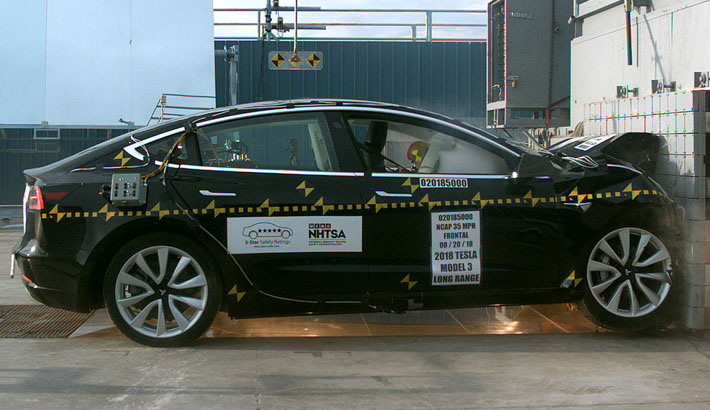
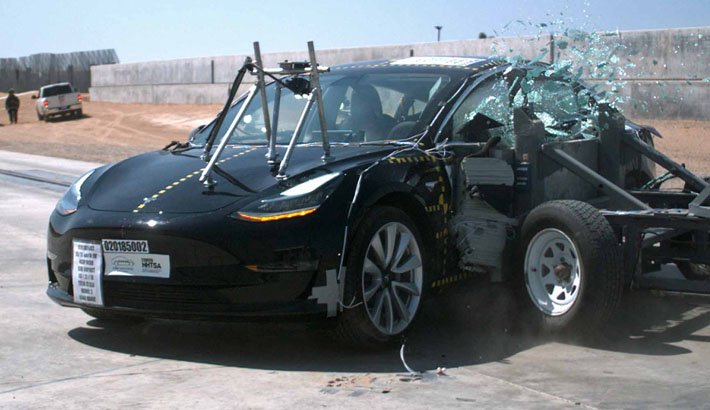
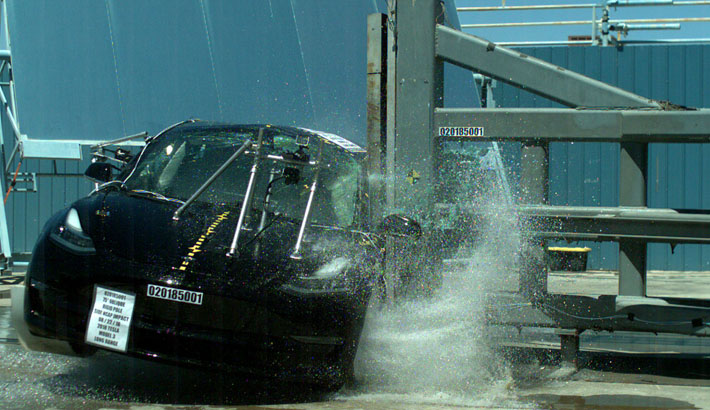
NHTSA crash tests
The agency crash-tested this model year itself. These are its own
photographs and star ratings.
Frontal crash test
Side barrier crash test
Side pole crash test
Photographs taken by NHTSA during its own New Car Assessment Program crash
tests of this model year. Public domain.
Configuration
Overall
Front
Side
Rollover
2021 Tesla Model 3 4 DR RWD Later Release
6.6% risk
2021 Tesla Model 3 4 DR AWD Later Release
6.6% risk
2021 Tesla Model 3 4 DR AWD Early Release
6.6% risk
2021 Tesla Model 3 4 DR RWD Early Release
6.6% risk
When owners complained
A spike years after the car went on sale usually means a part wearing
out on schedule across the whole fleet — the kind of pattern no single
owner can see from inside their own car.
Dec 2020peak 312Sep 2026
Recalls on the 2021 Tesla Model 3
A complaint is one owner's allegation. A recall is the point at which
the manufacturer or a regulator agreed the defect is real and dangerous
enough to fix for free — however old the car is.
United States — NHTSA
26V507000
EXTERIOR LIGHTING:HEADLIGHTS
Tesla, Inc. (Tesla) is recalling certain 2017-2023 Model 3 and 2020-2023 Model Y vehicles. The headlight low beams may be too bright and exceed the maximum light output. As such, these vehicles fail to comply with the requirements of Federal Motor Vehicle Safety Standard (FMVSS) number 108, "Lamps, Reflective Devices, and Associated Equipment."
Risk: Headlight low beams that are too bright can reduce visibility for oncoming drivers, increasing the risk of a crash.
26V283000
BACK OVER PREVENTION:SOFTWARE
Tesla, Inc. (Tesla) is recalling certain 2017, 2021-2023 Model 3, 2020-2023 Model Y, 2021-2023 Model S, and Model X vehicles operating software version 2026.8.6. The rearview camera image may be delayed when the vehicle is placed in reverse. As such, these vehicles fail to comply with the requirements of Federal Motor Vehicle Safety Standard number 111, "Rear Visibility."
Risk: A delayed rearview image reduces the driver's view behind the vehicle, increasing the risk of a crash.
24V935000
TIRES:PRESSURE MONITORING AND REGULATING SYSTEMS
Tesla, Inc. (Tesla) is recalling certain 2024 Cybertruck, 2017-2025 Model 3, and 2020-2025 Model Y vehicles. The tire pressure monitoring system (TPMS) warning light may not remain illuminated between drive cycles, failing to warn the driver of low tire pressure. As such, these vehicles fail to comply with the requirements of Federal Motor Vehicle Safety Standard number 138, "Tire Pressure Monitoring Systems."
Risk: Driving with improperly inflated tires increases the risk of a crash.
24V554000
LATCHES/LOCKS/LINKAGES:HOOD:LATCH
Tesla, Inc. (Tesla) is recalling certain 2021-2024 Model 3, Model S, Model X, and 2020-2024 Model Y vehicles. The hood latch assembly may fail to detect an unlatched hood condition after the hood has been opened.
Risk: An unlatched hood can fully open, obstructing the driver's view and increasing the risk of a crash.
24V376000
SEAT BELTS:FRONT:WARNING LIGHT/DEVICES
Tesla, Inc. (Tesla) is recalling certain 2012-2024 Model S, 2015-2024 Model X, 2017-2023 Model 3, and 2020-2023 Model Y vehicles. In the event of an unbelted driver, the seat belt warning light and audible chime may not activate as intended. As such, these vehicles fail to comply with the requirements of Federal Motor Vehicle Safety Standard number 208, "Occupant Crash Protection."
Risk: A seat belt warning system that fails to alert occupants of an unbelted seat belt can increase the risk of injury during a crash.
Tesla, Inc. (Tesla) is recalling certain 2013, 2018-2021 Model S, 2020-2021 Model X, 2018-2022 Model 3, and 2020-2022 Model Y vehicles. A factory reset muted the Pedestrian Warning System (PWS) sounds. As such, these vehicles fail to comply with the requirements of Federal Motor Vehicle Safety Standard number 141, "Minimum Sound Requirements for Hybrid and Electric Vehicles."
Risk: Pedestrians may be unaware of an approaching vehicle if the PWS sounds are muted, increasing the risk of a crash.
24V051000
ELECTRICAL SYSTEM: INSTRUMENT CLUSTER/PANEL
Tesla, Inc. (Tesla) is recalling certain 2012-2023 Model S, 2016-2024 Model X, 2017-2023 Model 3, 2019-2024 Model Y, and 2024 Cybertruck vehicles. An incorrect font size is displayed on the instrument panel for the Brake, Park, and Antilock Brake System (ABS) warning lights. As such, these vehicles fail to comply with the requirements of Federal Motor Vehicle Safety Standard number 105, "Hydraulic and Electric Brake Systems" and 135, "Light Vehicle Brake Systems."
Risk: Warning lights with a smaller font size can make critical safety information on the instrument panel difficult to read, increasing the risk of a crash.
Tesla, Inc. (Tesla) is recalling 2012-2023 Model S, 2016-2023 Model X, 2017-2023 Model 3, and 2020-2023 Model Y vehicles equipped with all versions of Autosteer leading up to the version(s) that contains the recall remedy. In certain circumstances when Autosteer is engaged, the prominence and scope of the feature's controls may not be sufficient to prevent driver misuse of the SAE Level 2 advanced driver-assistance feature.
Risk: In certain circumstances when Autosteer is engaged, and the driver does not maintain responsibility for vehicle operation and is unprepared to intervene as necessary or fails to recognize when Autosteer is canceled or not engaged, there may be an increased risk of a crash.
Canada — Transport Canada
Canada runs its own recall programme, and its campaigns do not
always mirror the American ones.
Recall 2026401454 units in Canada
Lights And Instruments
Issue: On certain vehicles, the low beam headlights may be too bright. Canadian regulations specify a maximum brightness for low beam headlights. Safety Risk: Low beam headlights that are too bright could cause reduced visibility for the driver and/or glare for oncoming drivers and increase the risk of a crash. Corrective Actions: Tesla will notify owners by email. The corrective actions for this recall are under development.
Recall 202622113,846 units in Canada
Visual System
Issue: On certain vehicles, a software problem could delay the rearview camera image from displaying when the transmission is shifted into reverse shortly after the vehicle is started. Canadian regulations require the rearview image to display within 2 seconds of shifting the transmission into reverse gear. Safety Risk: A rearview camera image that doesn't display could reduce a driver's ability to see behind the vehicle while backing up. This could increase the risk of a crash. Corrective Actions: Tesla will notify owners by email. Tesla has released an over-the-air software update to fix this problem. There is no further action required if your vehicle has software release 2026.8.6.1 or a later release.
Recall 2024427179,752 units in Canada
Electrical
Issue: On certain vehicles, the hood latch assembly could fail and cause the unlatched hood warning not to display on the instrument panel. As a result, you may not be aware that the hood isn't latched properly. If this happens, the hood could open suddenly while driving. Safety Risk: A hood that opens suddenly while driving can block the driver's view and increase the risk of a crash. Corrective Actions: Tesla will notify affected owners by email. Tesla has released an over-the-air software update to fix this issue. There is no further action required if your vehicle has software release 2024.20.3 or a later release.
Recall 20242989,435 units in Canada
Seats And Restraints
Issue: On certain vehicles, the seat belt reminder chime and visual warning may not work when you start the vehicle and your seat belt is not buckled. Canadian regulations require both a seat belt reminder sound and visual telltale when a driver is not wearing their seat belt. Safety Risk: A seat belt warning that doesn't work correctly may not remind you to buckle your seat belt. Not wearing your seat belt can increase the risk of injury in a crash. Corrective Actions: Tesla will notify owners by email and supply an over-the-air software update to activate the seat belt reminder chime and visual warning.
Recall 2024283109,791 units in Canada
Lights And Instruments
Issue: A previous over-the-air (OTA) software update could cause the vehicle not to display the correct visual warning indicators when there are problems with the brake system or when the parking brake is applied. As a result, the BRAKE, PARK, and antilock brake system (ABS) visual indicators would display as text instead of symbols. Safety Risk: While there is a low risk to safety, Canadian regulations require visual warnings to use common symbols, instead of words, to avoid driver confusion. Corrective Actions: Tesla will notify affected owners by email. Tesla has released an over-the-air software update to fix this problem. There is no further action required if your vehicle has software release 2024.3.25, 2024.14.5, or a release later than 2024.14.5.
Recall 2024130340 units in Canada
Other
Issue: On certain vehicles, a software problem could cause the pedestrian warning system not to work. As a result, the vehicle may not produce enough sound to be detected by other road users. New Canadian regulations require electric vehicles to make a minimum sound level when operating at low speeds. Safety Risk: A pedestrian warning system that doesn't work could create an increased risk of injury for other road users. Corrective Actions: Tesla will notify affected owners by email. Tesla has released an over-the-air software update to fix this problem. There is no further action required if your vehicle has software release 2023.44.30.14 or a software deployed after 2023.44.30.14.
Recall 2023657192,769 units in Canada
Accessories
Issue: On vehicles equipped with the Autosteer advanced driver-assistance feature, when using the feature, the vehicle may not provide strong enough warnings or monitor the driver closely enough to prevent misuse of the feature. Safety Risk: A driver that doesn't pay close attention while using the Autosteer feature or who doesn't react quickly when Autosteer is canceled could have an increased risk of a crash. Corrective Actions: Tesla will notify owners by email and supply an over-the-air software update to improve driver monitoring and alerts while using the Autosteer feature. Tesla advises that you must always pay attention and be ready to take control of the vehicle at any time while using the Autosteer advanced driver-assistance feature.
Recall 202306320,667 units in Canada
Accessories
Issue: In certain traffic situations, when the FSD Beta advanced driver assistance feature is engaged, the vehicle may perform maneuvers that break certain traffic laws, if the driver doesn't intervene and take control. Note: This recall only affects vehicles equipped with the FSD Beta feature. Safety Risk: Certain maneuvers performed by the FSD Beta advanced driver assistance feature may break traffic laws. This could increase the risk of a crash if the driver doesn't intervene. Corrective Actions: Tesla will notify owners by email and supply an over-the-air software update to improve how the FSD Beta feature maneuvers the vehicle in certain traffic situations. Tesla reminds that FSD Beta is only an advanced driver assistance feature, and the driver must pay attention and be ready to take control at all times when the feature is engaged.
Reports where the owner recorded a crash, a fire, an injury or a death.
Cincinnati, OHCrash2 killed
SEAT BELTS
Component: Lane Support System — Emergency Lane Keeping (ELK) Part of standard Autopilot safety suite (not FSD) activated without valid lane detection data and pushed the vehicle into the oncoming lane of traffic on Ohio State Route [XXX]. The system then aborted mid-intervention (LSS_STATE_ABORT), leaving the driver in the oncoming lane. The resulting head-on collision killed both drivers — the [XXX] Tesla driver and the driver of the oncoming vehicle. Two people died because of this ELK malfunction. Tesla's own telematics data confirms the following sequence: 5At 23:51:17.420 UTC, the Lane Support System activated Emergency Lane Keeping (LSS_STATE_ELK). 6At 23:51:17.652 UTC (232 milliseconds after activation), the system logged ALC_UNAVAILABLE_NO_LANES — confirming it had no valid lane detection data during the intervention. 7At 23:51:17.755 UTC (335 milliseconds after activation), the system logged LSS_STATE_ABORT — the system cancelled itself mid-intervention. 8During the 335-millisecond intervention, the vehicle's steering angle reached -16.79 degrees leftward and lateral acceleration measured +1.200 m/s² leftward — both confirming the vehicle was pushed into the oncoming lane. 9The driver responded with the largest steering torque (-5.08 Nm rightward) and largest rightward steering angle (+19.50 degrees) recorded in the entire telematics file — confirming he was actively attempting to recover. 10 The head-on collision killed both him and the driver of the oncoming vehicle. We requested additional telematics data from Tesla through the Tesla app. A forensic expert has examined the vehicle's ECU motherboard— missing critical fields including continuous yaw rate, high-resolution steering data, ELK steering commands, and lane detection confidence scores. A subsequent request for additional data produced an error message and Tesla has not provided further data. This crash is the exact behavior under PE25012. INFORMATION REDACTED PURSUANT TO THE FREEDOM OF INFORMATION ACT (FOIA), 5 U.S.C. 552(B)(6)
NHTSA complaint #11750627 — an unverified report by a vehicle owner.
Cincinnati, OHCrash2 killed
SEAT BELTS
Front Seatbelt On March 13, 2026, at approximately 7:51 PM EST (23:51 UTC), the driver of a 2021 Tesla Model 3 was killed in a head-on collision on SR 741 in Warren County, Ohio. Two people died in this crash — the Tesla driver and the driver of the oncoming vehicle. Tesla's own telematics data (provided to the family post-crash) reveals that the driver's seatbelt unlatched at Row 5115 / 23:51:03.269 UTC — exactly 14.15 seconds before the collision. The driver was actively driving at the time, as confirmed by 66 separate steering torque readings between the seatbelt unlatch and the crash, ranging from −1.59 Nm to +2.15 Nm in constantly alternating directions — the signature of active lane-holding. The seatbelt released on its own while the driver was actively steering based on tesla data at approximately 66 mph. No rational driver unbuckles their seatbelt while driving 66 mph on a busy two-lane road. The telematics data proves continuous active driving before, during, and after the seatbelt event. The seatbelt failure is a separate and independent defect from the Emergency Lane Keeping (ELK) system failure that caused the collision (which is the subject of a separate NHTSA complaint). Even if the collision was unavoidable, a functioning seatbelt may have saved the driver's life. The seatbelt failure independently contributed to the fatality. The following data is from Tesla's own telematics file provided to the family: Timestamp (UTC)RowEvent 23:51:03.269 5115 Driver seatbelt status changes from LATCHED to UNLATCHED 23:51:03.269 – 23:51:17.420(row 5115–5311)66 steering torque readings confirm active driving (−1.59 to +2.15 Nm) 23:51:17.4205311ELK system activates (separate defect) ~23:51:19.0—Head-on collision — driver unrestrained — two fatalities Pattern of identical complaints from other 2021 Model 3 owners (ODI 11713076, 11738583, 11684327)
NHTSA complaint #11750698 — an unverified report by a vehicle owner.
Cincinnati, OHCrash2 killed
LANE DEPARTURE: ASSIST
Component: Lane Support System — Emergency Lane Keeping (ELK) Part of standard Autopilot safety suite (not FSD) activated without valid lane detection data and pushed the vehicle into the oncoming lane of traffic on Ohio State Route [XXX]. The system then aborted mid-intervention (LSS_STATE_ABORT), leaving the driver in the oncoming lane. The resulting head-on collision killed both drivers — the [XXX] Tesla driver and the driver of the oncoming vehicle. Two people died because of this ELK malfunction. Tesla's own telematics data confirms the following sequence: 5At 23:51:17.420 UTC, the Lane Support System activated Emergency Lane Keeping (LSS_STATE_ELK). 6At 23:51:17.652 UTC (232 milliseconds after activation), the system logged ALC_UNAVAILABLE_NO_LANES — confirming it had no valid lane detection data during the intervention. 7At 23:51:17.755 UTC (335 milliseconds after activation), the system logged LSS_STATE_ABORT — the system cancelled itself mid-intervention. 8During the 335-millisecond intervention, the vehicle's steering angle reached -16.79 degrees leftward and lateral acceleration measured +1.200 m/s² leftward — both confirming the vehicle was pushed into the oncoming lane. 9The driver responded with the largest steering torque (-5.08 Nm rightward) and largest rightward steering angle (+19.50 degrees) recorded in the entire telematics file — confirming he was actively attempting to recover. 10 The head-on collision killed both him and the driver of the oncoming vehicle. We requested additional telematics data from Tesla through the Tesla app. A forensic expert has examined the vehicle's ECU motherboard— missing critical fields including continuous yaw rate, high-resolution steering data, ELK steering commands, and lane detection confidence scores. A subsequent request for additional data produced an error message and Tesla has not provided further data. This crash is the exact behavior under PE25012. INFORMATION REDACTED PURSUANT TO THE FREEDOM OF INFORMATION ACT (FOIA), 5 U.S.C. 552(B)(6)
NHTSA complaint #11750627 — an unverified report by a vehicle owner.
Cincinnati, OHCrash2 killed
LANE DEPARTURE: WARNING
Component: Lane Support System — Emergency Lane Keeping (ELK) Part of standard Autopilot safety suite (not FSD) activated without valid lane detection data and pushed the vehicle into the oncoming lane of traffic on Ohio State Route [XXX]. The system then aborted mid-intervention (LSS_STATE_ABORT), leaving the driver in the oncoming lane. The resulting head-on collision killed both drivers — the [XXX] Tesla driver and the driver of the oncoming vehicle. Two people died because of this ELK malfunction. Tesla's own telematics data confirms the following sequence: 5At 23:51:17.420 UTC, the Lane Support System activated Emergency Lane Keeping (LSS_STATE_ELK). 6At 23:51:17.652 UTC (232 milliseconds after activation), the system logged ALC_UNAVAILABLE_NO_LANES — confirming it had no valid lane detection data during the intervention. 7At 23:51:17.755 UTC (335 milliseconds after activation), the system logged LSS_STATE_ABORT — the system cancelled itself mid-intervention. 8During the 335-millisecond intervention, the vehicle's steering angle reached -16.79 degrees leftward and lateral acceleration measured +1.200 m/s² leftward — both confirming the vehicle was pushed into the oncoming lane. 9The driver responded with the largest steering torque (-5.08 Nm rightward) and largest rightward steering angle (+19.50 degrees) recorded in the entire telematics file — confirming he was actively attempting to recover. 10 The head-on collision killed both him and the driver of the oncoming vehicle. We requested additional telematics data from Tesla through the Tesla app. A forensic expert has examined the vehicle's ECU motherboard— missing critical fields including continuous yaw rate, high-resolution steering data, ELK steering commands, and lane detection confidence scores. A subsequent request for additional data produced an error message and Tesla has not provided further data. This crash is the exact behavior under PE25012. INFORMATION REDACTED PURSUANT TO THE FREEDOM OF INFORMATION ACT (FOIA), 5 U.S.C. 552(B)(6)
NHTSA complaint #11750627 — an unverified report by a vehicle owner.
Vass, NCCrash
AIR BAGS
The components involved are the automatic emergency braking (AEB) system and the airbag system. During the collision, the AEB system did not activate, and the airbags did not deploy. The vehicle is available for inspection upon request. I was driving on a main roadway with no stop signs or traffic controls in my direction when another driver entered from a side street with a stop sign and pulled directly in front of me. I was unable to avoid the collision, and my vehicle was struck the other vehicle. The failure of the AEB system to engage and the airbags not deploying increased the risk of injury to myself and could have posed a risk to others involved. The issue has not been reproduced, and it has not yet been confirmed by a dealer or independent service center. The vehicle has been inspected by police and insurance representatives. The other driver was determined to be at fault. I am in the process of addressing the incident with the manufacturer. There were no warning lights, messages, or prior symptoms indicating any issue with the braking or airbag systems before the collision.
NHTSA complaint #11728185 — an unverified report by a vehicle owner.
The components involved are the automatic emergency braking (AEB) system and the airbag system. During the collision, the AEB system did not activate, and the airbags did not deploy. The vehicle is available for inspection upon request. I was driving on a main roadway with no stop signs or traffic controls in my direction when another driver entered from a side street with a stop sign and pulled directly in front of me. I was unable to avoid the collision, and my vehicle was struck the other vehicle. The failure of the AEB system to engage and the airbags not deploying increased the risk of injury to myself and could have posed a risk to others involved. The issue has not been reproduced, and it has not yet been confirmed by a dealer or independent service center. The vehicle has been inspected by police and insurance representatives. The other driver was determined to be at fault. I am in the process of addressing the incident with the manufacturer. There were no warning lights, messages, or prior symptoms indicating any issue with the braking or airbag systems before the collision.
NHTSA complaint #11728185 — an unverified report by a vehicle owner.
The most recent complaints
In the owners' own words, exactly as filed with NHTSA.
Lehighton, PA
FORWARD COLLISION AVOIDANCE: WARNINGS
Interior camera circuit failed in the main computer as diagnosed by Tesla, it disables most safety features of the car, no collision warning or avoidance, no automatic emergency breaking, no lane departure warning or correction, no reverse cam, no cruise control or self driving, and probably more. Only Tesla can replace it because it's vin matched to the car, for $2400. This part should be more durable
NHTSA complaint #11763429 — an unverified report by a vehicle owner.
Lehighton, PA
FORWARD COLLISION AVOIDANCE: ADAPTIVE CRUISE CONTROL
Interior camera circuit failed in the main computer as diagnosed by Tesla, it disables most safety features of the car, no collision warning or avoidance, no automatic emergency breaking, no lane departure warning or correction, no reverse cam, no cruise control or self driving, and probably more. Only Tesla can replace it because it's vin matched to the car, for $2400. This part should be more durable
NHTSA complaint #11763429 — an unverified report by a vehicle owner.
Interior camera circuit failed in the main computer as diagnosed by Tesla, it disables most safety features of the car, no collision warning or avoidance, no automatic emergency breaking, no lane departure warning or correction, no reverse cam, no cruise control or self driving, and probably more. Only Tesla can replace it because it's vin matched to the car, for $2400. This part should be more durable
NHTSA complaint #11763429 — an unverified report by a vehicle owner.
at 82,000 milesLos Angeles, CA
LATCHES/LOCKS/LINKAGES:HATCHBACK/LIFTGATE:LOCK
The contact owns a 2021 Tesla Model 3. The contact stated that the trunk strut failed, and the lift fractured, causing the rear glass to crack. There was a long crack from the edge to the top of the glass. The contact's husband cut the strut because the vehicle could not be driven with the truck ajar. A service appointment was scheduled on the App by text with the local dealer. A message was sent to the Tesla manufacturer. The failure mileage was approximately 82,000.
NHTSA complaint #11763100 — an unverified report by a vehicle owner.
Greenwood, IN
ELECTRICAL SYSTEM
As we were normally driving, the car lost power immediately with no warning sign. After the power is lost, brake does not function, electrical door button doesn't function, hazard light doesn't function. Car was able to scroll to a complete stop to the side of the road. The steering wheel is locked. Again, BRAKE DID NOT FUNCTION after the power is lost. No button works, no screen turns on, car is not able to turn to neutral. There was no collision prior and no warning prior. Tried to file a police report. But Officer [XXX], badge # XXX, refused due to there was no collision and no accident. INFORMATION REDACTED PURSUANT TO THE FREEDOM OF INFORMATION ACT (FOIA), 5 U.S.C. 552(B)(6)
NHTSA complaint #11763172 — an unverified report by a vehicle owner.
Greenwood, IN
SERVICE BRAKES
As we were normally driving, the car lost power immediately with no warning sign. After the power is lost, brake does not function, electrical door button doesn't function, hazard light doesn't function. Car was able to scroll to a complete stop to the side of the road. The steering wheel is locked. Again, BRAKE DID NOT FUNCTION after the power is lost. No button works, no screen turns on, car is not able to turn to neutral. There was no collision prior and no warning prior. Tried to file a police report. But Officer [XXX], badge # XXX, refused due to there was no collision and no accident. INFORMATION REDACTED PURSUANT TO THE FREEDOM OF INFORMATION ACT (FOIA), 5 U.S.C. 552(B)(6)
NHTSA complaint #11763172 — an unverified report by a vehicle owner.
Greenwood, IN
FUEL/PROPULSION SYSTEM
As we were normally driving, the car lost power immediately with no warning sign. After the power is lost, brake does not function, electrical door button doesn't function, hazard light doesn't function. Car was able to scroll to a complete stop to the side of the road. The steering wheel is locked. Again, BRAKE DID NOT FUNCTION after the power is lost. No button works, no screen turns on, car is not able to turn to neutral. There was no collision prior and no warning prior. Tried to file a police report. But Officer [XXX], badge # XXX, refused due to there was no collision and no accident. INFORMATION REDACTED PURSUANT TO THE FREEDOM OF INFORMATION ACT (FOIA), 5 U.S.C. 552(B)(6)
NHTSA complaint #11763172 — an unverified report by a vehicle owner.
Roselle, IL
VISIBILITY/WIPER
Tesla replaced the windshield on my 2021 Model 3 at the Tesla Service Center in Schaumburg, IL. Days after the installation, following a light rain, a film appeared on the exterior surface of the glass. In the presence of moisture the film hazes over and substantially obscures forward visibility from the driver's seat. The first occurrence was on 8/22/2026 while leaving a venue in heavy pedestrian traffic. Forward visibility was significantly degraded. During that drive the vehicle's driver-assist system issued a take-control prompt and returned control to the driver. The system did not display a reason for the prompt, so I cannot attribute it; I am reporting that it occurred while visibility through the windshield was degraded. The condition is not removable by normal means. Windshield wipers and washer fluid do not clear it. The defroster/defogger does not clear it, which rules out interior condensation. It required manual scrubbing to reduce, and it has recurred repeatedly since. It presents only in high humidity or after precipitation; in dry conditions the glass appears normal. The condition did not exist prior to the windshield replacement. I have photographs taken from the driver's seat showing the obscured view. I reported this to Tesla on 8/22/2026 through two in-app channels; both were closed without a response. I escalated by email on 8/24/2026. The service manager responded and scheduled an inspection. As of this filing the substance has not been identified, no cause has been determined, and no correction has been made. The condition remains active. I am filing because a windshield that intermittently obscures forward vision under ordinary weather conditions is a driving hazard, and because the vehicle has been operated in that condition while awaiting resolution. No crash, injury, or fire has occurred.
NHTSA complaint #11761153 — an unverified report by a vehicle owner.
Roselle, IL
FORWARD COLLISION AVOIDANCE: WARNINGS
Tesla replaced the windshield on my 2021 Model 3 at the Tesla Service Center in Schaumburg, IL. Days after the installation, following a light rain, a film appeared on the exterior surface of the glass. In the presence of moisture the film hazes over and substantially obscures forward visibility from the driver's seat. The first occurrence was on 8/22/2026 while leaving a venue in heavy pedestrian traffic. Forward visibility was significantly degraded. During that drive the vehicle's driver-assist system issued a take-control prompt and returned control to the driver. The system did not display a reason for the prompt, so I cannot attribute it; I am reporting that it occurred while visibility through the windshield was degraded. The condition is not removable by normal means. Windshield wipers and washer fluid do not clear it. The defroster/defogger does not clear it, which rules out interior condensation. It required manual scrubbing to reduce, and it has recurred repeatedly since. It presents only in high humidity or after precipitation; in dry conditions the glass appears normal. The condition did not exist prior to the windshield replacement. I have photographs taken from the driver's seat showing the obscured view. I reported this to Tesla on 8/22/2026 through two in-app channels; both were closed without a response. I escalated by email on 8/24/2026. The service manager responded and scheduled an inspection. As of this filing the substance has not been identified, no cause has been determined, and no correction has been made. The condition remains active. I am filing because a windshield that intermittently obscures forward vision under ordinary weather conditions is a driving hazard, and because the vehicle has been operated in that condition while awaiting resolution. No crash, injury, or fire has occurred.
NHTSA complaint #11761153 — an unverified report by a vehicle owner.
Roselle, IL
FORWARD COLLISION AVOIDANCE: ADAPTIVE CRUISE CONTROL
Tesla replaced the windshield on my 2021 Model 3 at the Tesla Service Center in Schaumburg, IL. Days after the installation, following a light rain, a film appeared on the exterior surface of the glass. In the presence of moisture the film hazes over and substantially obscures forward visibility from the driver's seat. The first occurrence was on 8/22/2026 while leaving a venue in heavy pedestrian traffic. Forward visibility was significantly degraded. During that drive the vehicle's driver-assist system issued a take-control prompt and returned control to the driver. The system did not display a reason for the prompt, so I cannot attribute it; I am reporting that it occurred while visibility through the windshield was degraded. The condition is not removable by normal means. Windshield wipers and washer fluid do not clear it. The defroster/defogger does not clear it, which rules out interior condensation. It required manual scrubbing to reduce, and it has recurred repeatedly since. It presents only in high humidity or after precipitation; in dry conditions the glass appears normal. The condition did not exist prior to the windshield replacement. I have photographs taken from the driver's seat showing the obscured view. I reported this to Tesla on 8/22/2026 through two in-app channels; both were closed without a response. I escalated by email on 8/24/2026. The service manager responded and scheduled an inspection. As of this filing the substance has not been identified, no cause has been determined, and no correction has been made. The condition remains active. I am filing because a windshield that intermittently obscures forward vision under ordinary weather conditions is a driving hazard, and because the vehicle has been operated in that condition while awaiting resolution. No crash, injury, or fire has occurred.
NHTSA complaint #11761153 — an unverified report by a vehicle owner.
Cypress, TX
SUSPENSION
My 2021 Tesla Model 3 with approximately 70,000 miles developed front suspension problems. It began with squeaking, creaking and groaning, similar to a rusty playground swing, especially while turning or when the suspension moved. The noise was worse in hot weather and progressively became extremely loud and constant during normal driving. I also began hearing intermittent knocking/"bonking" or clunking. I could even hear the suspension when the vehicle compressed as I sat in the driver's seat. There were no warning lights or messages. Tesla inspected the vehicle and diagnosed both front lower lateral links and both front lower compliance links as needing replacement, along with an alignment. Tesla estimated approximately $1,960. CPR EV Repair replaced the diagnosed lower suspension components. After removal, the bushings showed significant visible deterioration, including cracked, torn and separated rubber around the inner sleeves. CPR EV also advised that the front upper control arms were worn and would need replacement. I was concerned for my safety because failure or separation of a deteriorated front suspension component while driving could affect steering or vehicle stability and potentially cause loss of control. Although I did not experience a complete separation or crash, the rapidly worsening and eventually constant symptoms made me concerned about continuing to drive. I have Tesla's estimate, CPR EV documentation and photographs of the deteriorated components after removal.
NHTSA complaint #11757148 — an unverified report by a vehicle owner.
Tampa, FL
SUSPENSION
my 2021 tesla model 3 required replacement of both front upper control arms due to premature wear. the vehicle developed suspension noise, and an inspection determined both upper control arm assemblies with ball joints needed replacement. the repair cost was $1,845, including a wheel alignment. i am aware of numerous similar owner reports involving premature front suspension component failures in tesla model 3 vehicles and am submitting this complaint because i believe this may represent a broader safety-related issue.
NHTSA complaint #11754861 — an unverified report by a vehicle owner.
Dallas, TX
LANE DEPARTURE: ASSIST
I was driving down Interstate 635 Lane Departure Assist on my 2021 Model 3 pulls me into the lane it senses im departing into when system is set to "assist" (if vehicle sense im straying into the left lane as an example, it will pull me further towards the left lane markings and requires an abnormal amount of effort into recentering the vehicle within the lane I am in). Vehicle has since been driven in "warning" setting since this event with no further issues.
NHTSA complaint #11754632 — an unverified report by a vehicle owner.
Dallas, TX
LANE DEPARTURE: WARNING
I was driving down Interstate 635 Lane Departure Assist on my 2021 Model 3 pulls me into the lane it senses im departing into when system is set to "assist" (if vehicle sense im straying into the left lane as an example, it will pull me further towards the left lane markings and requires an abnormal amount of effort into recentering the vehicle within the lane I am in). Vehicle has since been driven in "warning" setting since this event with no further issues.
NHTSA complaint #11754632 — an unverified report by a vehicle owner.
West Jordan, UT
FORWARD COLLISION AVOIDANCE: ADAPTIVE CRUISE CONTROL
The adaptive cruise control on Tesla vehicles is dangerous. The model in question is a 2021 Model 3 but its an issue with many model years. The cruise control tends to get confused and applies the brakes during normal driving leading to very unsafe conditions for the Tesla and anybody behind it. The issue can happen in any environment and from 1-2 times per drive. There are no warnings or indications that the car is about to apply the brakes. The car has not been inspected by a service center but is in good working condition.
NHTSA complaint #11754569 — an unverified report by a vehicle owner.
Lake Harmony, PA
UNKNOWN OR OTHER
Passenger side view mirror intermittently gets stuck in the "reverse" position while in drive gear. I have the side view mirrors settings to where they are in a certain position when in reverse gear, and then a different position when in drive gear. I will reverse out of a parking spot and then proceed on my drive. Every now and then, the passenger side mirror will still be in the "reverse" position while driving and I only notice it when making a lane change and looking at the mirror and its pointed down at the ground in its reverse position. This has distracted me a few times as I expect the mirror to be in the normal drive position and I'm unable to see any cars in my blind spot. The issue has never occured on the driver side mirror, and has happened for the past few months. I have to correct this each time it does this by going into the mirror settings and hitting the reset position button.
NHTSA complaint #11753472 — an unverified report by a vehicle owner.
Bakersfield, CA
STRUCTURE:BODY
I am reporting a safety concern regarding the glovebox fascia on my Tesla Model 3. The material on the glovebox trim is peeling and separating, which appears to be caused by prolonged exposure to heat inside the vehicle. The peeling fascia creates concerns about the durability and integrity of the interior component, as the material may continue to deteriorate over time. Loose or damaged trim could potentially interfere with the proper use of the glovebox, create sharp edges, or become a distraction while driving. I am requesting that Tesla inspect the affected area and determine the appropriate repair or replacement to ensure the vehicle remains safe and maintains proper interior component quality.
NHTSA complaint #11751588 — an unverified report by a vehicle owner.
Cincinnati, OHCrash2 killed
SEAT BELTS
Component: Lane Support System — Emergency Lane Keeping (ELK) Part of standard Autopilot safety suite (not FSD) activated without valid lane detection data and pushed the vehicle into the oncoming lane of traffic on Ohio State Route [XXX]. The system then aborted mid-intervention (LSS_STATE_ABORT), leaving the driver in the oncoming lane. The resulting head-on collision killed both drivers — the [XXX] Tesla driver and the driver of the oncoming vehicle. Two people died because of this ELK malfunction. Tesla's own telematics data confirms the following sequence: 5At 23:51:17.420 UTC, the Lane Support System activated Emergency Lane Keeping (LSS_STATE_ELK). 6At 23:51:17.652 UTC (232 milliseconds after activation), the system logged ALC_UNAVAILABLE_NO_LANES — confirming it had no valid lane detection data during the intervention. 7At 23:51:17.755 UTC (335 milliseconds after activation), the system logged LSS_STATE_ABORT — the system cancelled itself mid-intervention. 8During the 335-millisecond intervention, the vehicle's steering angle reached -16.79 degrees leftward and lateral acceleration measured +1.200 m/s² leftward — both confirming the vehicle was pushed into the oncoming lane. 9The driver responded with the largest steering torque (-5.08 Nm rightward) and largest rightward steering angle (+19.50 degrees) recorded in the entire telematics file — confirming he was actively attempting to recover. 10 The head-on collision killed both him and the driver of the oncoming vehicle. We requested additional telematics data from Tesla through the Tesla app. A forensic expert has examined the vehicle's ECU motherboard— missing critical fields including continuous yaw rate, high-resolution steering data, ELK steering commands, and lane detection confidence scores. A subsequent request for additional data produced an error message and Tesla has not provided further data. This crash is the exact behavior under PE25012. INFORMATION REDACTED PURSUANT TO THE FREEDOM OF INFORMATION ACT (FOIA), 5 U.S.C. 552(B)(6)
NHTSA complaint #11750627 — an unverified report by a vehicle owner.
Cincinnati, OHCrash2 killed
SEAT BELTS
Front Seatbelt On March 13, 2026, at approximately 7:51 PM EST (23:51 UTC), the driver of a 2021 Tesla Model 3 was killed in a head-on collision on SR 741 in Warren County, Ohio. Two people died in this crash — the Tesla driver and the driver of the oncoming vehicle. Tesla's own telematics data (provided to the family post-crash) reveals that the driver's seatbelt unlatched at Row 5115 / 23:51:03.269 UTC — exactly 14.15 seconds before the collision. The driver was actively driving at the time, as confirmed by 66 separate steering torque readings between the seatbelt unlatch and the crash, ranging from −1.59 Nm to +2.15 Nm in constantly alternating directions — the signature of active lane-holding. The seatbelt released on its own while the driver was actively steering based on tesla data at approximately 66 mph. No rational driver unbuckles their seatbelt while driving 66 mph on a busy two-lane road. The telematics data proves continuous active driving before, during, and after the seatbelt event. The seatbelt failure is a separate and independent defect from the Emergency Lane Keeping (ELK) system failure that caused the collision (which is the subject of a separate NHTSA complaint). Even if the collision was unavoidable, a functioning seatbelt may have saved the driver's life. The seatbelt failure independently contributed to the fatality. The following data is from Tesla's own telematics file provided to the family: Timestamp (UTC)RowEvent 23:51:03.269 5115 Driver seatbelt status changes from LATCHED to UNLATCHED 23:51:03.269 – 23:51:17.420(row 5115–5311)66 steering torque readings confirm active driving (−1.59 to +2.15 Nm) 23:51:17.4205311ELK system activates (separate defect) ~23:51:19.0—Head-on collision — driver unrestrained — two fatalities Pattern of identical complaints from other 2021 Model 3 owners (ODI 11713076, 11738583, 11684327)
NHTSA complaint #11750698 — an unverified report by a vehicle owner.
Cincinnati, OHCrash2 killed
LANE DEPARTURE: ASSIST
Component: Lane Support System — Emergency Lane Keeping (ELK) Part of standard Autopilot safety suite (not FSD) activated without valid lane detection data and pushed the vehicle into the oncoming lane of traffic on Ohio State Route [XXX]. The system then aborted mid-intervention (LSS_STATE_ABORT), leaving the driver in the oncoming lane. The resulting head-on collision killed both drivers — the [XXX] Tesla driver and the driver of the oncoming vehicle. Two people died because of this ELK malfunction. Tesla's own telematics data confirms the following sequence: 5At 23:51:17.420 UTC, the Lane Support System activated Emergency Lane Keeping (LSS_STATE_ELK). 6At 23:51:17.652 UTC (232 milliseconds after activation), the system logged ALC_UNAVAILABLE_NO_LANES — confirming it had no valid lane detection data during the intervention. 7At 23:51:17.755 UTC (335 milliseconds after activation), the system logged LSS_STATE_ABORT — the system cancelled itself mid-intervention. 8During the 335-millisecond intervention, the vehicle's steering angle reached -16.79 degrees leftward and lateral acceleration measured +1.200 m/s² leftward — both confirming the vehicle was pushed into the oncoming lane. 9The driver responded with the largest steering torque (-5.08 Nm rightward) and largest rightward steering angle (+19.50 degrees) recorded in the entire telematics file — confirming he was actively attempting to recover. 10 The head-on collision killed both him and the driver of the oncoming vehicle. We requested additional telematics data from Tesla through the Tesla app. A forensic expert has examined the vehicle's ECU motherboard— missing critical fields including continuous yaw rate, high-resolution steering data, ELK steering commands, and lane detection confidence scores. A subsequent request for additional data produced an error message and Tesla has not provided further data. This crash is the exact behavior under PE25012. INFORMATION REDACTED PURSUANT TO THE FREEDOM OF INFORMATION ACT (FOIA), 5 U.S.C. 552(B)(6)
NHTSA complaint #11750627 — an unverified report by a vehicle owner.
Cincinnati, OHCrash2 killed
LANE DEPARTURE: WARNING
Component: Lane Support System — Emergency Lane Keeping (ELK) Part of standard Autopilot safety suite (not FSD) activated without valid lane detection data and pushed the vehicle into the oncoming lane of traffic on Ohio State Route [XXX]. The system then aborted mid-intervention (LSS_STATE_ABORT), leaving the driver in the oncoming lane. The resulting head-on collision killed both drivers — the [XXX] Tesla driver and the driver of the oncoming vehicle. Two people died because of this ELK malfunction. Tesla's own telematics data confirms the following sequence: 5At 23:51:17.420 UTC, the Lane Support System activated Emergency Lane Keeping (LSS_STATE_ELK). 6At 23:51:17.652 UTC (232 milliseconds after activation), the system logged ALC_UNAVAILABLE_NO_LANES — confirming it had no valid lane detection data during the intervention. 7At 23:51:17.755 UTC (335 milliseconds after activation), the system logged LSS_STATE_ABORT — the system cancelled itself mid-intervention. 8During the 335-millisecond intervention, the vehicle's steering angle reached -16.79 degrees leftward and lateral acceleration measured +1.200 m/s² leftward — both confirming the vehicle was pushed into the oncoming lane. 9The driver responded with the largest steering torque (-5.08 Nm rightward) and largest rightward steering angle (+19.50 degrees) recorded in the entire telematics file — confirming he was actively attempting to recover. 10 The head-on collision killed both him and the driver of the oncoming vehicle. We requested additional telematics data from Tesla through the Tesla app. A forensic expert has examined the vehicle's ECU motherboard— missing critical fields including continuous yaw rate, high-resolution steering data, ELK steering commands, and lane detection confidence scores. A subsequent request for additional data produced an error message and Tesla has not provided further data. This crash is the exact behavior under PE25012. INFORMATION REDACTED PURSUANT TO THE FREEDOM OF INFORMATION ACT (FOIA), 5 U.S.C. 552(B)(6)
NHTSA complaint #11750627 — an unverified report by a vehicle owner.
Ceres, CA
ELECTRICAL SYSTEM
The high voltage battery on my 2021 Tesla Model 3 Standard Range suddenly failed without any prior warning or gradual degradation. The vehicle was consistently achieving approximately 180 miles of range per full charge. Overnight, the battery charge was restricted to approximately 30% capacity, reducing usable range to roughly 30 miles. No warning signs or symptoms appeared prior to this failure. The failure was sudden and immediate. The vehicle displayed the alert "Maximum Battery Charge Level Reduced / OK to Drive, Schedule Service." The battery has been confirmed by a Tesla Service Center as having an internal fault. The only remedy offered by Tesla is full battery replacement at a cost of approximately $9,000 to $14,000 depending on the option selected. This failure poses a safety risk as the severely limited range can result in the vehicle becoming stranded unexpectedly, particularly during highway driving or in areas without nearby charging infrastructure. The failure occurred approximately 6 months after the battery warranty expired with no prior indication of degradation, suggesting a potential defect in the battery unit. The vehicle has been inspected by a Tesla Service Center and the fault has been confirmed. The component is available for inspection upon request.
NHTSA complaint #11750373 — an unverified report by a vehicle owner.
Northville, MI
STEERING
My steering suddenly got extremely stiff on the highway while driving. There was a warning that assist will be reduced but no assist was present. I had to use all my strength to turn the steering and pulled into a parking lot with great difficulty. Then I reset the main computer and the power steering was functional again. I was lucky since the traffic was moving slower than usual but it could have been very dangerous and was a major safety concern.
NHTSA complaint #11749019 — an unverified report by a vehicle owner.
Burlingame, CA
FORWARD COLLISION AVOIDANCE: ADAPTIVE CRUISE CONTROL
On July 1, 2026, the vehicle was serviced by the manufacturer for GPS and camera malfunctions, and the vehicle computer was replaced. On the morning of July 2, 2026, during the first use of Autopilot after that repair, the vehicle experienced repeated serious driver-assistance malfunctions over a short period while traveling on a highway. While Autopilot was engaged, the vehicle repeatedly moved/steered toward the center of the road and near the path of a truck in an adjacent lane. The truck nearly struck the vehicle. The driver had to manually intervene to maintain control and avoid a potential collision. Video of the incident is available upon request and shows the truck and manual intervention. The vehicle was returned to the manufacturer service center the same day. The service center reviewed logs, performed an inspection/test drive, and stated that no hardware faults or issues were found and that the test drive was normal. However, the incidents were intermittent, occurred during highway Autopilot use, occurred the morning after a computer replacement related to GPS/camera systems, and were captured on video.
NHTSA complaint #11748046 — an unverified report by a vehicle owner.
Burlingame, CA
LANE DEPARTURE: ASSIST
On July 1, 2026, the vehicle was serviced by the manufacturer for GPS and camera malfunctions, and the vehicle computer was replaced. On the morning of July 2, 2026, during the first use of Autopilot after that repair, the vehicle experienced repeated serious driver-assistance malfunctions over a short period while traveling on a highway. While Autopilot was engaged, the vehicle repeatedly moved/steered toward the center of the road and near the path of a truck in an adjacent lane. The truck nearly struck the vehicle. The driver had to manually intervene to maintain control and avoid a potential collision. Video of the incident is available upon request and shows the truck and manual intervention. The vehicle was returned to the manufacturer service center the same day. The service center reviewed logs, performed an inspection/test drive, and stated that no hardware faults or issues were found and that the test drive was normal. However, the incidents were intermittent, occurred during highway Autopilot use, occurred the morning after a computer replacement related to GPS/camera systems, and were captured on video.
NHTSA complaint #11748046 — an unverified report by a vehicle owner.