Owners have filed 229 complaints
about the 2011 Toyota Highlander with NHTSA between 2010 and 2026.
The largest single group is the windows, mirrors & wipers.
Across this model's run it ranks 21 of 25 worst.
The letter says how bad. This says what kind — whether this year drew
an unusual number of complaints, unusually dangerous
ones, or failures that arrived unusually early.
The dashed ring is 50 — the national norm. Further out is worse.
Complaint volume — 40
Against the median year of the Toyota Highlander. 50 means typical for this
model; 100 means roughly double.
Severity — 56
10.9% of these complaints
involved a crash, fire, injury or death, against a national rate of
9.7%.
Early failure — 56
33% of failures with a mileage on record happened under
36,000 miles, against a national rate of
29%.
How 2011 compares with every other Toyota Highlander
NHTSA files every complaint against a named sub-assembly, not just a
system. This is the difference between knowing it was "the engine" and
knowing which part of it — the list to hand a mechanic.
Body
1551.7%
Hatchback/Liftgate
620.7%
Door
310.3%
Oil/Lubrication
13.4%
SUN Visor
13.4%
OIL Cooler
13.4%
Automatic Emergency Braking
13.4%
Speedometer/Odometer
13.4%
When it fails
Odometer readings owners gave when they filed. About half of all
complaints include one.
Under 1,000 miles
63.3%
1,000 – 9,999 miles
2513.7%
10,000 – 24,999 miles
158.2%
25,000 – 49,999 miles
3921.3%
50,000 – 74,999 miles
4524.6%
75,000 – 99,999 miles
2010.9%
100,000 – 149,999 miles
2212.0%
150,000+ miles
116.0%
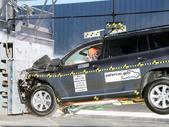
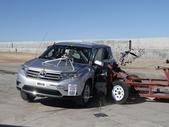
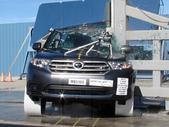
NHTSA crash tests
The agency crash-tested this model year itself. These are its own
photographs and star ratings.
Frontal crash test
Side barrier crash test
Side pole crash test
Photographs taken by NHTSA during its own New Car Assessment Program crash
tests of this model year. Public domain.
Configuration
Overall
Front
Side
Rollover
2011 Toyota Highlander SUV AWD
17.4% risk
2011 Toyota Highlander SUV FWD
19.8% risk
When owners complained
A spike years after the car went on sale usually means a part wearing
out on schedule across the whole fleet — the kind of pattern no single
owner can see from inside their own car.
Nov 2010peak 9Jun 2026
NHTSA investigations into the 2011 Toyota Highlander
An investigation is the step before a recall: the agency has seen enough
complaints to look into a pattern itself. An open one means it thinks
something may be wrong and nothing has been fixed yet.
EA18006Opened 16 Nov 2018Closed 2 Apr 2024STEERING:COLUMN
Steering Column Separation
On November 16, 2018, the Office of Defects Investigation (ODI) opened an Engineering Analysis (EA18-006) as an upgrade to a Preliminary Evaluation (PE18-005). The investigation focused on allegations of steering wheel separation from the lower steering column after using the tilt and/or telescoping mechanism. Given the separation occurring when operating the tilt and/or telescoping function and failure of both shear capsules to maintain the lower steering column mounting position, potential for shear capsule damage in the known failures due to collisions, the overall low rate of occurrence,...
PE18005Opened 4 May 2018Closed 20 Nov 2018STEERING:COLUMN
Upper Steering Column Separation
On May 4, 2018, the Office of Defects Investigation (ODI) opened Preliminary Evaluation PE18-005 to investigate three allegations of steering column separation for Model Year (MY) 2008 through 2013 Toyota Highlander vehicles. Two (2) of the 3 complaints were received by ODI in April 2018 and occurred while the vehicle was in motion. Since opening PE18-005, one (1) additional VOQ involving steering column separation has been received. This incident occurred while the vehicle was stationary.As part of PE18-005, ODI examined the field data, warranty data, and relevant technical information submit...
Recalls on the 2011 Toyota Highlander
A complaint is one owner's allegation. A recall is the point at which
the manufacturer or a regulator agreed the defect is real and dangerous
enough to fix for free — however old the car is.
United States — NHTSA
16V396000
SEATS:FRONT ASSEMBLY:SEAT HEATER/COOLER
Southeast Toyota Distributors, LLC (SET) is recalling certain 2005-2011 4Runner, Highlander, Sequoia, and Sienna, 2005-2010 Avalon and Tundra, 2006-2008 Camry Solara, 2006-2010 Highlander hybrid, 2006-2011 Rav4 and Tacoma, 2007-2010 FJ Cruiser, 2007-2011 Camry hybrid, 2009-2010 Venza, 2010-2012 Prius, 1988-1990 and 2005-2010 Camry, and 1989 and 2009-2010 Corolla vehicles equipped with aftermarket accessory seat heaters with a copper strand heating element. The electrical wiring in the seat heaters may be damaged when the seat cushion is compressed.
Risk: If damaged, the copper strand heating element may short circuit, increasing the risk of a fire.
15V689000
VISIBILITY:POWER WINDOW DEVICES AND CONTROLS
Toyota Motor Company (Toyota) is recalling certain model year 2009-2011 Tundra, Sequoia, Corolla, Corolla Matrix and Scion xB, 2008-2011 Highlander and Highlander Hybrid, 2007 Camry and Camry Hybrid, 2009 Camry and Camry Hybrid, 2006-2011 RAV4, 2006-2010 Yaris, and 2009-2010 Scion xD and Pontiac Vibe vehicles. During the manufacturing of the Power Window Master Switch (PWMS), grease lubricant may have been inconsistently applied to the sliding electrical contacts.
Risk: If the sliding electrical contacts are not protected by lubricant, debris and moisture that get into the switch may cause a short circuit and the switch assembly may overheat and melt, increasing the risk of a fire.
14V743000
SEATS:FRONT ASSEMBLY:SEAT HEATER/COOLER
Southeast Toyota Distributors, LLC (SET) is recalling certain model year 2010-2011 Prius and Corolla, 2009-2011 Venza, 2006-2010 Avalon, 2007-2010 FJ Cruiser, 2005-2011 Sienna and Sequoia, 2006-2011 Tacoma 4x2 and 4x4, Camry, Highlander, Tundra 4x2 and 4x4, and 2007-2011 Rav4 and 4Runner. The affected vehicles may experience compression of the seat cushion which may damage the seat heater wiring.
Risk: Damage to the seat heater wiring could cause the wires to short, increasing the risk of the seat burning and causing personal injury to the occupant.
13V123000
EQUIPMENT:OTHER:LABELS
Southeast Toyota is recalling certain model year 2008 and 2010-2013 Toyota Tundra, 2010-2012 Rav4, 2012 Toyota Sequoia, 2010-2011 Toyota Corolla, 2010-2011 Toyota Camry and Camry Hybrid, 2010-2013 Toyota Highlander and Highlander Hybrid, 2010-2013 Toyota FJ Cruiser, 2011 Toyota Land Cruiser, 2010-2013 Toyota Venza, 2010-2011 Toyota 4Runner, 2010-2013 Toyota Tacoma, 2011-2012 Toyota Sienna, 2012 Toyota Prius, 2013 Scion FR-S, 2011 Scion XD, 2011 Scion XB, and 2012 Scion TC vehicles. These vehicles were sold with labels that were outside the allowable one percent of accuracy of actual weight added. Thus, these vehicles fail to comply with the requirements of Federal Motor Vehicle Safety Standard (FMVSS) Number 110, "Tire Selection and Rims."
Risk: An inaccurate label could lead to owners overloading their vehicles and tires. An overloaded vehicle can result in a tire failure which may result in a vehicle crash, personal injury, or property damage.
13V014000
AIR BAGS:FRONTAL:SENSOR/CONTROL MODULE-INACTIVE
Southeast Toyota Distributors, LLC (SET) is recalling certain models interspersed through model years 2009 through 2013 as follows: model year 2009-2012 Tacoma, 4Runner, Camry, Camry Hybrid, Prius, and RAV4; model year 2009-2010 Avalon, FJ Cruiser, and Highlander Hybrid; model year 2010-2013 model year Corolla, Sienna and Tundra; model year 2009-2013 Highlander and Venza; model year 2012 Prius V; and model year 2010-2012 Sequoia. During modification by SET to include accessories such as leather seat covers, seat heaters or headrest DVD systems, these vehicles may not have had the passenger seat occupant sensing system calibration tested. Without passing the calibration test, the occupant sensing system may not operate as designed.
Risk: If the front passenger seat occupant sensing system is out of calibration, the front passenger airbags may not deploy or they may deploy inappropriately for the passenger's size and position. This could increase the risk of personal injury during the event of a vehicle crash necessitating airbag deployment.
Canada — Transport Canada
Canada runs its own recall programme, and its campaigns do not
always mirror the American ones.
Recall 202172355,683 units in Canada
Electrical
Issue: This recall is for certain block heater kits installed on certain vehicles or sold as accessories at Toyota or Lexus dealerships. On certain vehicles, the engine block heater cable may not have enough heat protection and could be damaged by high temperatures. If this happens, the cable could short circuit while plugged in, and cause the wiring to overheat or melt. Note: This recall only affects the following block heater/cord part numbers: C014003034 PK5A408J09 PU14000904 C014003151 PK5A408J13 PU14000905 C014000885 PK5A489J11 PU14000907 C014000888 PK5A489J22 PU14000909 C014000907 PK5A410H00 PU14000911 C014100904 PU14000900 PU14000913 C014100907 PU14000901 PU14003571 C014100911 PU14000902 PK5A489J14 PK5A408J05 PU14000903 Safety Risk: Engine block heater wiring that overheats or melts could create the risk of a fire. Corrective Actions: Toyota recommends that you should stop using the engine block heater immediately. Toyota will notify owners by mail and instruct you to take your vehicle to a dealer to disable the engine block heater. For some vehicles, the corrective actions for this recall are under development. For others, a new engine block heater cannot be installed, and the owner will receive a refund of the purchase price of the engine block heater.
Recall 2015493315,091 units in Canada
Electrical
On certain vehicles, inconsistent application of grease during the manufacturing process could cause the driver's side power window master switch to stick or become inoperative due to electrical contact point wear. This could cause debris to accumulate between the contact points, potentially resulting in an electrical short circuit. If a short circuit occurs, the switch assembly may overheat, produce smoke, melt and/or potentially lead to a fire causing injury and/or property damage. Correction: Dealers will inspect the driver's power window master switch and apply a specialized grease that inhibits heat build-up, or replace the power window master switch circuit board, as necessary. Note: This is an expansion of recall 2012-338.
Reports where the owner recorded a crash, a fire, an injury or a death.
Greeley, COCrash2 injured
AIR BAGS
Steering wheel air bag did not deploy in front end MVA
NHTSA complaint #11619420 — an unverified report by a vehicle owner.
Mahopac, FLCrash1 injured
SEAT BELTS
I was going about 40 mph on the Taconic Pkwy over the amvet bridge in the far left lane of the highway. Traffic was heavy and slowing down. It had st finished raining. I was hit on the rear right rear side by a F150 truck that caused me to slide into the guard rail on the left side of the road. The car spun out of control and slid three lanes and hit the guard rail on the right side of the road. Both front sides over the tail lights and the entire front were badly damaged. The side airbags activated but the front airbags failed to activate. Because of this failure I was badly injured. My head hit the steering wheel. I was not protected by the seat belt. My passenger and I had to be cut out of the vehicle. My neck sustained a dislocated disk and I still have pain going from my left shoulder, down my arm, into my hand. I suffered a permanent loss of vision in my right eye, a concussion and lacerations to my left hand and rear scalp. My iris in the right eye was severely damaged and still needs to be surgically repaired. I have suffered both physical and mental damages because of the failure of the seat belts to restrain me and the failure of the airbags to inflate.
NHTSA complaint #11454317 — an unverified report by a vehicle owner.
Mahopac, FLCrash1 injured
AIR BAGS
I was going about 40 mph on the Taconic Pkwy over the amvet bridge in the far left lane of the highway. Traffic was heavy and slowing down. It had st finished raining. I was hit on the rear right rear side by a F150 truck that caused me to slide into the guard rail on the left side of the road. The car spun out of control and slid three lanes and hit the guard rail on the right side of the road. Both front sides over the tail lights and the entire front were badly damaged. The side airbags activated but the front airbags failed to activate. Because of this failure I was badly injured. My head hit the steering wheel. I was not protected by the seat belt. My passenger and I had to be cut out of the vehicle. My neck sustained a dislocated disk and I still have pain going from my left shoulder, down my arm, into my hand. I suffered a permanent loss of vision in my right eye, a concussion and lacerations to my left hand and rear scalp. My iris in the right eye was severely damaged and still needs to be surgically repaired. I have suffered both physical and mental damages because of the failure of the seat belts to restrain me and the failure of the airbags to inflate.
NHTSA complaint #11454317 — an unverified report by a vehicle owner.
Sealy, TXCrash1 injured
AIR BAGS
I HIT A CONCRETE POST AT ROUGHLY 30 MPH, DEAD CENTER FRONT OF VEHICLE. THE CAR WAS TOTALLED, AND NONE OF THE AIRBAGS DEPLOYED. I BROKE MY NECK DUE TO THE SEATBELT HOLDING MY CHEST AND TORSO BACK ON THE SEAT, WHILE MY HEAD MOVED FORWARD, ALL THE WAY DOWN AND HITTING THE STEERING WHEEL. THIS HEAD MOVEMENT RESULTED IN A COMPLETE BREAK OF MY C2 VERTEBRAE. THIS HAPPENED AFTER ENTERING THE LARGE AREA OF A WALMART PARKING LOT FROM THE HIGHWAY.
NHTSA complaint #11405618 — an unverified report by a vehicle owner.
at 150,000 milesSalinas, CACrash
AIR BAGS
TL* THE CONTACT OWNED A 2011 TOYOTA HIGHLANDER. WHILE DRIVING ON THE HIGHWAY, THE VEHICLE HYDROPLANED AROUND A CORNER AND WENT INTO A SMALL EMBANKMENT. THE VEHICLE T-BONED THE CENTER BARRIER OF THE FREEWAY. NONE OF THE AIR BAGS DEPLOYED. MOST OF THE FRONT END WAS CRASHED IN AND THE DRIVER'S SIDE WAS SEVERELY DAMAGED. THE ENGINE AND RADIATOR WERE PUSHED FAR BACK FROM THEIR ORIGINAL POSITIONS. THE VEHICLE WAS TOWED AND INSPECTED BY THE INSURANCE COMPANY THEN BY AN INDEPENDENT MECHANIC. THE CONSENSUS WAS THAT THE VEHICLE WOULD BE DEEMED DESTROYED. A POLICE REPORT WAS FILED AND THERE WERE NO INJURIES. THE DEALER AND MANUFACTURER WERE NOT CONTACTED. THE CAUSE OF THE FAILURE WAS UNKNOWN. THE FAILURE MILEAGE WAS 150,000.
NHTSA complaint #11288500 — an unverified report by a vehicle owner.
at 180,000 milesFreeport, FLCrash1 injured
SEAT BELTS
TL* THE CONTACT COMPLAINED ABOUT A 2011 TOYOTA HIGHLANDER. THE CONTACT STATED THAT WHILE THE DRIVER WAS DRIVING ABOUT 60 MPH, THE VEHICLE CRASHED INTO THE VEHICLE IN FRONT WHICH STOPPED ABRUPTLY. THE AIR BAGS DID NOT DEPLOY AND THE SEAT BELT DID NOT LOCK IN PLACE (STAYED LOOSE). THERE WAS NO WARNING. THE DRIVER SUSTAINED INJURIES THAT REQUIRED MEDICAL ATTENTION. A POLICE REPORT WAS FILED. THE CONTACT WHO WAS AN INDEPENDENT MECHANIC STATED THAT THE VEHICLE WAS TOTALED. THE VEHICLE WAS TOWED TO A BODY SHOP. THE DEALER AND THE MANUFACTURER WERE NOT MADE AWARE OF THE FAILURE. THE FAILURE MILEAGE WAS APPROXIMATELY 180,000.
NHTSA complaint #11218881 — an unverified report by a vehicle owner.
The most recent complaints
In the owners' own words, exactly as filed with NHTSA.
Odometer Fraud. The contact purchased a 2011 Toyota Highlander. It was discovered that there was a mileage discrepancy. The vehicle was a private sale but contacted by a dealer. At the time of purchase, the vehicle mileage was 122,000, and at the time of registration, it was discovered that the mileage was 303,000.
NHTSA complaint #11742114 — an unverified report by a vehicle owner.
East Orange, NJ
POWER TRAIN
1. The 3.5L V6 Engine (2GR-FE) failed due to the subsequent loss of lubrication caused by the rupture of the Oil Cooler Pipe (Rubber component), a manufacturing defect known under TSB T-SB-0201-11 (ZE2 Program). The failed engine is currently available for inspection by request at the independent service center before it is disposed of. 2. The defect causes a sudden and severe loss of engine oil. This creates a high probability of the engine seizing (losing all power) while driving at highway speeds, resulting in a complete loss of propulsion and placing occupants at severe risk of collision. 3. The failure was confirmed, not reproduced. The vehicle was initially diagnosed with misfire codes (P0300, P0301). New spark plugs and ignition coils were installed in an attempt to resolve the issue. As the misfire persisted, the mechanic performed a compression test, confirming catastrophic zero compression failure in cylinders 1 and 2. Professional diagnostics then revealed critical codes: P1603 (ECM Malfunction), P1604 (Startability Malfunction), and P1605 (Rough Idling). These codes confirm a severe internal engine issue, consistent with permanent damage sustained during the oil loss event caused by the ZE2 pipe defect in July 2024. 4. No, not physically inspected by the manufacturer. The manufacturer (Toyota Executive Office Case Manager) was provided with certified documentation of the failure, including the photo of the faulty pipe, maintenance records during our ownership, and the dealership purchase statement for the replacement part. Toyota refused to authorize a physical diagnostic inspection of the failed engine at a dealership before denying goodwill assistance. 5.Yes. The initial lubrication loss event on July 4, 2024, was preceded by a message displayed on the dashboard (followed by a second failure event in October 2025 indicated by a flashing Check Engine light and the Traction Control light).
NHTSA complaint #11701620 — an unverified report by a vehicle owner.
East Orange, NJ
UNKNOWN OR OTHER
1. The 3.5L V6 Engine (2GR-FE) failed due to the subsequent loss of lubrication caused by the rupture of the Oil Cooler Pipe (Rubber component), a manufacturing defect known under TSB T-SB-0201-11 (ZE2 Program). The failed engine is currently available for inspection by request at the independent service center before it is disposed of. 2. The defect causes a sudden and severe loss of engine oil. This creates a high probability of the engine seizing (losing all power) while driving at highway speeds, resulting in a complete loss of propulsion and placing occupants at severe risk of collision. 3. The failure was confirmed, not reproduced. The vehicle was initially diagnosed with misfire codes (P0300, P0301). New spark plugs and ignition coils were installed in an attempt to resolve the issue. As the misfire persisted, the mechanic performed a compression test, confirming catastrophic zero compression failure in cylinders 1 and 2. Professional diagnostics then revealed critical codes: P1603 (ECM Malfunction), P1604 (Startability Malfunction), and P1605 (Rough Idling). These codes confirm a severe internal engine issue, consistent with permanent damage sustained during the oil loss event caused by the ZE2 pipe defect in July 2024. 4. No, not physically inspected by the manufacturer. The manufacturer (Toyota Executive Office Case Manager) was provided with certified documentation of the failure, including the photo of the faulty pipe, maintenance records during our ownership, and the dealership purchase statement for the replacement part. Toyota refused to authorize a physical diagnostic inspection of the failed engine at a dealership before denying goodwill assistance. 5.Yes. The initial lubrication loss event on July 4, 2024, was preceded by a message displayed on the dashboard (followed by a second failure event in October 2025 indicated by a flashing Check Engine light and the Traction Control light).
NHTSA complaint #11701620 — an unverified report by a vehicle owner.
East Orange, NJ
ENGINE
1. The 3.5L V6 Engine (2GR-FE) failed due to the subsequent loss of lubrication caused by the rupture of the Oil Cooler Pipe (Rubber component), a manufacturing defect known under TSB T-SB-0201-11 (ZE2 Program). The failed engine is currently available for inspection by request at the independent service center before it is disposed of. 2. The defect causes a sudden and severe loss of engine oil. This creates a high probability of the engine seizing (losing all power) while driving at highway speeds, resulting in a complete loss of propulsion and placing occupants at severe risk of collision. 3. The failure was confirmed, not reproduced. The vehicle was initially diagnosed with misfire codes (P0300, P0301). New spark plugs and ignition coils were installed in an attempt to resolve the issue. As the misfire persisted, the mechanic performed a compression test, confirming catastrophic zero compression failure in cylinders 1 and 2. Professional diagnostics then revealed critical codes: P1603 (ECM Malfunction), P1604 (Startability Malfunction), and P1605 (Rough Idling). These codes confirm a severe internal engine issue, consistent with permanent damage sustained during the oil loss event caused by the ZE2 pipe defect in July 2024. 4. No, not physically inspected by the manufacturer. The manufacturer (Toyota Executive Office Case Manager) was provided with certified documentation of the failure, including the photo of the faulty pipe, maintenance records during our ownership, and the dealership purchase statement for the replacement part. Toyota refused to authorize a physical diagnostic inspection of the failed engine at a dealership before denying goodwill assistance. 5.Yes. The initial lubrication loss event on July 4, 2024, was preceded by a message displayed on the dashboard (followed by a second failure event in October 2025 indicated by a flashing Check Engine light and the Traction Control light).
NHTSA complaint #11701620 — an unverified report by a vehicle owner.
Greeley, COCrash2 injured
AIR BAGS
Steering wheel air bag did not deploy in front end MVA
NHTSA complaint #11619420 — an unverified report by a vehicle owner.
Bothell, WA
ENGINE
Our car had a major oil leak from the engine Oil Cooler Pipe Manifold at the bottom of the engine (front). My research has concluded that this has been a known issue with various Toyota models with the 2GR-FE engine, however Toyota has not issued a recall and the local dealership has never mentioned it during services. The NHTSA has known about this issue, however it appears that little to no action has been taken with the vehicle manufacturer or public. The issue concerns a leak that is waiting to happen on all engines with the original Oil Cooler Pipe as it is designed with rubber pipes that degrade over time and even a pin hole oil leak will cause virtually all the engine oil to drain from the engine onto the pavement below and underside of the vehicle including brake components. It is not a matter of “if” but “when” it will happen, and the consequences can leave people stranded with a damaged engine and undriveable vehicle. Severe injury and deaths can and will result due to the ongoing lack of action by the NHTSA and vehicle manufacturer. As an aside, the cost to repair is in the thousands of dollars, unless the owner is fortunate like myself who was able to replace the Oil Cooler Pipe at my own time and cost with the vehicle out of service and significant clean up required. I still don’t know the long-term effects of our engine being almost drained of oil and because of this may now sell the car which was not in our plan. I have added a photo of the original inadequately designed Oil Cooler Pipe and the replacement version purchased from Toyota. Also, the dealership were not interested in doing anything for us. I demand that the NHTSA takes action which is long overdue. Please take this issue seriously
NHTSA complaint #11596623 — an unverified report by a vehicle owner.
Alpharetta, GA
POWER TRAIN
Dear Sir/Madam, I am writing to file a formal complaint regarding persistent safety issues with my 2011 Toyota Highlander V6 AWD. Specifically, I have experienced significant problems related to the engine timing guide, timing chain, transmission system, which pose a risk to both vehicle occupants and other road users. Vehicle Information: Toyota Highlander V6 AWD, VIN: [XXX] Description of the Issue: The transmission in my Highlander has exhibited the following problems: 1) Low engine oil pressure, ticking Noise: There is low engine pressure, faulty guides timing chains, recurring ticking noise. This noise represents issues from the powertrain area and has raised concerns about potential mechanical flaws1. 2) Defective components, slipping Transmission: The transmission surges/slips affecting overall control and safety. This issue has been reported by other Highlander owners as well. Cross-Referencing Other Complaints and Recalls: 3) They did not go far back, Per the NHTSA database, there have been two documented complaints related to transmission issues in the 2011 Toyota Highlander V6 AWD, these complaints align with my experience, however they have not sent me the recall notice. In fact, Toyota has faced recalls and technical service bulletins (TSBs) related to transmission problems in various Highlander models: The 8-speed UA80E/UA80F automatic transmission used in the 2020 Highlander received a TSB for shift flare during wide-open throttle acceleration from 40 – 60 mph and during the upshift from 2nd to 3rd gear. Toyota addressed this issue under warranty1. The 6-speed U660F/U760E automatic transmission, used in earlier Highlander models, was generally reliable. However, the introduction of the 8-speed UA80E/UA80F unit caused initial problems1. Request for Action: Per NHTSA findings please ensure all the models sharing the chassis, model family, part and Toyota transmission oil are included in recall or service campaign. INFORMATION REDACTED PURSUANT TO THE FREEDOM OF INFORMATION ACT (FOIA), 5 U.S.C.
NHTSA complaint #11590714 — an unverified report by a vehicle owner.
Alpharetta, GA
ENGINE
Dear Sir/Madam, I am writing to file a formal complaint regarding persistent safety issues with my 2011 Toyota Highlander V6 AWD. Specifically, I have experienced significant problems related to the engine timing guide, timing chain, transmission system, which pose a risk to both vehicle occupants and other road users. Vehicle Information: Toyota Highlander V6 AWD, VIN: [XXX] Description of the Issue: The transmission in my Highlander has exhibited the following problems: 1) Low engine oil pressure, ticking Noise: There is low engine pressure, faulty guides timing chains, recurring ticking noise. This noise represents issues from the powertrain area and has raised concerns about potential mechanical flaws1. 2) Defective components, slipping Transmission: The transmission surges/slips affecting overall control and safety. This issue has been reported by other Highlander owners as well. Cross-Referencing Other Complaints and Recalls: 3) They did not go far back, Per the NHTSA database, there have been two documented complaints related to transmission issues in the 2011 Toyota Highlander V6 AWD, these complaints align with my experience, however they have not sent me the recall notice. In fact, Toyota has faced recalls and technical service bulletins (TSBs) related to transmission problems in various Highlander models: The 8-speed UA80E/UA80F automatic transmission used in the 2020 Highlander received a TSB for shift flare during wide-open throttle acceleration from 40 – 60 mph and during the upshift from 2nd to 3rd gear. Toyota addressed this issue under warranty1. The 6-speed U660F/U760E automatic transmission, used in earlier Highlander models, was generally reliable. However, the introduction of the 8-speed UA80E/UA80F unit caused initial problems1. Request for Action: Per NHTSA findings please ensure all the models sharing the chassis, model family, part and Toyota transmission oil are included in recall or service campaign. INFORMATION REDACTED PURSUANT TO THE FREEDOM OF INFORMATION ACT (FOIA), 5 U.S.C.
NHTSA complaint #11590714 — an unverified report by a vehicle owner.
Cedar Park, TX
ENGINE
the intake VVT-i gear on 2AR-FE equipped Rav-4s and other Toyota models Has failed after 113k miles. The vehicle is at risk of causing self inflicted damage due to this common issue many toyota owners are facing 2008-2013 highlanders. The part has not been inspected but was diagnosed by a mechanic based on their past experience with these vehicles and sound. No warnings or dash lights just a terrible metallic rattle upon cold start. This started around 2k miles ago.
NHTSA complaint #11542525 — an unverified report by a vehicle owner.
Watkinsville, GA
ENGINE
As my family was driving down Interstate 85 in Atlanta going around 80 MPH a dash notification came on that said "Low Oil Pressure pull over" the notification came on then went away then came back on (car never ran hot). Thankfully we were near an exit so we pulled off and into the first parking lot we could find. There was a huge puddle of oil under the car and smoke coming from the engine. We got our Highlander towed back to our nearest Toyota dealership to our home to be inspected. It was discovered our Engine Oil Cooler Pipe had failed resulting in all of the oil in our car being released from the car. If we hadn't been able to pull over so fast most likely my engine would have seized up and caused a wreck in the middle of the interstate. After doing research on this issue I discover there was a Warranty Enhancement Program done by Toyota on this very part valid through 2021 or 150,000 miles. I have 163,000 miles on my car. I tried to explain to Toyota that like majority of people my car was not driven for 2 years due to covid so they should at the very least expand the warranty. The dealership also told me they couldn't have replaces the part until it failed which from what I can tell of the hundreds of other Toyotas experiencing this same issue there are no warning signs prior to the part failing, you discover it failed by it releasing all your oil while driving at a high rate of speed.
NHTSA complaint #11513598 — an unverified report by a vehicle owner.
Saint Matthews, SC
ENGINE AND ENGINE COOLING:ENGINE:OIL/LUBRICATION: OIL COOLER
Pin hole in oil line causing excessive oil leak. Loose oil very quickly. Could cause permanent damage to engine. Had old line replaced by mechanic with a metal line only inspected by my mechanic and there was mention of past recall by my mechanic but it does not show this on your sight. There was no warning lights at all. A coworker noticed excessive oil on the ground when I left work and called me immediately to check oil. Very little left in engine and I could see it coming from under car. Incident happen on 1-9-2023 Had car towed to mechanic to avoid damage to engine. My issue was there a recall at some point ? If other Toyotas are having this issue need to be addressed before cars blow there engines from no oil ! Since no warning lights came on I would have no idea I was losing oil this fast just driving down the road! I only knew because my coworker saw massive spill on concrete at work .
NHTSA complaint #11501313 — an unverified report by a vehicle owner.
Nokesville, VA
STEERING
Clicking in steering column light comes on dash for power steering then hard to make turn then well go back off then able to make turns with ease again
NHTSA complaint #11497862 — an unverified report by a vehicle owner.
Crownsville, MD
STEERING
In the last 30 days, the steering has begun to feel "loose", as if I am driving on ice. At first it was barely perceptable. There has been more "play" in the steering. During the last 2 days, the car is now making a thud when I am steering right. I have an appointment for a mechanic to look at it. The car is a 2011 Highlander, AWD, with 89,000 miles on it. I feel the steering issue could be very dangerous at some point.
NHTSA complaint #11497341 — an unverified report by a vehicle owner.
Meridian, ID
STEERING
The power steering is clunky, locks in position when backing out of a parking spot, is clunky and unreliable at slow speeds. I can feel the steering column get far tighter feeling when turning at slow speed (3-10 mph)
NHTSA complaint #11496660 — an unverified report by a vehicle owner.
at 108,000 milesNashville, TN
STRUCTURE:INTERIOR PANELS:SUN VISOR
The contact owns a 2011 Toyota Highlander. The contact stated that the sun visors on the driver’s and passenger’s sides were hanging down and would not stay in the upright position. The contact stated that the sun visors obstructed her vision while driving at various speeds. The contact called the dealer and was informed that there was a recall on the vehicle for the sun visors; however, the recall had expired. The manufacturer was notified of the failure. The vehicle was not repaired. The failure mileage was approximately 108,000.
NHTSA complaint #11486115 — an unverified report by a vehicle owner.
Chicago, IL
POWER TRAIN
My 2011 Toyota Highlander is burning engine oil. So much that I almost got into a major accident on the highway. So what happens is the engine starts burning oil. When the oil level is low the Highlander gives a warning sign saying “low oil pressure” and then the SUV TURNS OFF automatically (even if you’re on the highway). Thousands of people have complained about this and Toyota is ignoring all the complaints. This issue should be a recall as this is a major problem with highlanders year 2008-2013
NHTSA complaint #11467660 — an unverified report by a vehicle owner.
Chicago, IL
POWER TRAIN
A very common problem and a very expensive fix. There is a rattling noise at cold startup that is coming from the engine. This is a very common problem and many people have complained about this. I don’t know why Toyota is ignoring it. I believe the problem is with the camshaft timing gear but I could be wrong. There should definitely be a recall for this issue!
NHTSA complaint #11467662 — an unverified report by a vehicle owner.
Chicago, IL
ENGINE
My 2011 Toyota Highlander is burning engine oil. So much that I almost got into a major accident on the highway. So what happens is the engine starts burning oil. When the oil level is low the Highlander gives a warning sign saying “low oil pressure” and then the SUV TURNS OFF automatically (even if you’re on the highway). Thousands of people have complained about this and Toyota is ignoring all the complaints. This issue should be a recall as this is a major problem with highlanders year 2008-2013
NHTSA complaint #11467660 — an unverified report by a vehicle owner.
Chicago, IL
ENGINE
A very common problem and a very expensive fix. There is a rattling noise at cold startup that is coming from the engine. This is a very common problem and many people have complained about this. I don’t know why Toyota is ignoring it. I believe the problem is with the camshaft timing gear but I could be wrong. There should definitely be a recall for this issue!
NHTSA complaint #11467662 — an unverified report by a vehicle owner.
Chicago, IL
ENGINE AND ENGINE COOLING:ENGINE:OIL/LUBRICATION
My 2011 Toyota Highlander is burning engine oil. So much that I almost got into a major accident on the highway. So what happens is the engine starts burning oil. When the oil level is low the Highlander gives a warning sign saying “low oil pressure” and then the SUV TURNS OFF automatically (even if you’re on the highway). Thousands of people have complained about this and Toyota is ignoring all the complaints. This issue should be a recall as this is a major problem with highlanders year 2008-2013
NHTSA complaint #11467660 — an unverified report by a vehicle owner.
Red Bank, NJ
ENGINE
While driving on the parkway, an oil pressure warning light came on and said to turn off the car. The car immediately started making noise so we pulled onto the shoulder and turned the car off. We were with our 3 children stuck on the side of the very busy road and had to wait for a tow truck. After having it towed our mechanic said it is a known problem with our car. The rubber oil line hose ruptured and we lost all of our oil immediately. The engine could have seized at any moment while driving. Toyota knows of this issue and has since changed it to a metal system but never did a formal recall for this issue. We are currently waiting for it to be fixed so I don't have a bill yet. This seems like something dangerous that could be avoided with a recall. Toyota will not fix this issue.
NHTSA complaint #11461440 — an unverified report by a vehicle owner.
Miami, FL
SERVICE BRAKES
Abs brake actuator started to fail.
NHTSA complaint #11458335 — an unverified report by a vehicle owner.
NHTSA complaint #11458335 — an unverified report by a vehicle owner.
Mahopac, FLCrash1 injured
SEAT BELTS
I was going about 40 mph on the Taconic Pkwy over the amvet bridge in the far left lane of the highway. Traffic was heavy and slowing down. It had st finished raining. I was hit on the rear right rear side by a F150 truck that caused me to slide into the guard rail on the left side of the road. The car spun out of control and slid three lanes and hit the guard rail on the right side of the road. Both front sides over the tail lights and the entire front were badly damaged. The side airbags activated but the front airbags failed to activate. Because of this failure I was badly injured. My head hit the steering wheel. I was not protected by the seat belt. My passenger and I had to be cut out of the vehicle. My neck sustained a dislocated disk and I still have pain going from my left shoulder, down my arm, into my hand. I suffered a permanent loss of vision in my right eye, a concussion and lacerations to my left hand and rear scalp. My iris in the right eye was severely damaged and still needs to be surgically repaired. I have suffered both physical and mental damages because of the failure of the seat belts to restrain me and the failure of the airbags to inflate.
NHTSA complaint #11454317 — an unverified report by a vehicle owner.
Mahopac, FLCrash1 injured
AIR BAGS
I was going about 40 mph on the Taconic Pkwy over the amvet bridge in the far left lane of the highway. Traffic was heavy and slowing down. It had st finished raining. I was hit on the rear right rear side by a F150 truck that caused me to slide into the guard rail on the left side of the road. The car spun out of control and slid three lanes and hit the guard rail on the right side of the road. Both front sides over the tail lights and the entire front were badly damaged. The side airbags activated but the front airbags failed to activate. Because of this failure I was badly injured. My head hit the steering wheel. I was not protected by the seat belt. My passenger and I had to be cut out of the vehicle. My neck sustained a dislocated disk and I still have pain going from my left shoulder, down my arm, into my hand. I suffered a permanent loss of vision in my right eye, a concussion and lacerations to my left hand and rear scalp. My iris in the right eye was severely damaged and still needs to be surgically repaired. I have suffered both physical and mental damages because of the failure of the seat belts to restrain me and the failure of the airbags to inflate.
NHTSA complaint #11454317 — an unverified report by a vehicle owner.