Owners have filed 283 complaints
about the 2014 Toyota Prius with NHTSA between 2014 and 2026.
The largest single group is the brakes.
Across this model's run it ranks 9 of 25 worst.
The letter says how bad. This says what kind — whether this year drew
an unusual number of complaints, unusually dangerous
ones, or failures that arrived unusually early.
The dashed ring is 50 — the national norm. Further out is worse.
Complaint volume — 23
Against the median year of the Toyota Prius. 50 means typical for this
model; 100 means roughly double.
Severity — 100
22.6% of these complaints
involved a crash, fire, injury or death, against a national rate of
9.7%.
Early failure — 89
52% of failures with a mileage on record happened under
36,000 miles, against a national rate of
29%.
Odometer readings owners gave when they filed. About half of all
complaints include one.
Under 1,000 miles
1510.6%
1,000 – 9,999 miles
3121.8%
10,000 – 24,999 miles
2014.1%
25,000 – 49,999 miles
2014.1%
50,000 – 74,999 miles
1712.0%
75,000 – 99,999 miles
96.3%
100,000 – 149,999 miles
1712.0%
150,000+ miles
139.2%
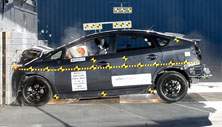
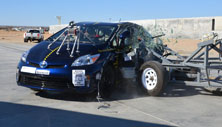
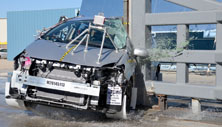
NHTSA crash tests
The agency crash-tested this model year itself. These are its own
photographs and star ratings.
Frontal crash test
Side barrier crash test
Side pole crash test
Photographs taken by NHTSA during its own New Car Assessment Program crash
tests of this model year. Public domain.
Configuration
Overall
Front
Side
Rollover
2014 Toyota Prius 5 HB FWD
12.1% risk
When owners complained
A spike years after the car went on sale usually means a part wearing
out on schedule across the whole fleet — the kind of pattern no single
owner can see from inside their own car.
Jan 2014peak 9Sep 2026
NHTSA investigations into the 2014 Toyota Prius
An investigation is the step before a recall: the agency has seen enough
complaints to look into a pattern itself. An open one means it thinks
something may be wrong and nothing has been fixed yet.
1
investigation is
still open.
DP23005Opened 22 Nov 2023Still openSERVICE BRAKES, HYDRAULIC:FOUNDATION COMPONENTS
Brake Actuator Valve Wear
The Office of Defects Investigation (ODI) has received a petition dated September 19, 2023 from the owner of a 2012 Toyota Prius V requesting that ODI reevaluate its decision to deny DP19-004. In the letter, the petitioner reported experiencing an unexpected and complete loss of brake power while driving, accompanied by multiple dashboard warning lights. This petition is based on the petitioner's direct experience and assessment that ODI closed DP19-004 because its prompting petition was withdrawn by that petitioner. ODI will review the work conducted during DP19-004 and a review of any additi...
DP22005Opened 27 Jan 2023Closed 7 Aug 2023ELECTRICAL SYSTEM:PROPULSION SYSTEM
Pedestrian alert sounds
NHTSA received a petition on or about July 18, 2022, requesting that Federal Motor Vehicle Safety Standard (FMVSS) 141 be applied to all electric and hybrid vehicles operating in the United States. The petition can be reviewed at NHTSA.gov under ODI Number 11486072. FMVSS 141 establishes performance requirements for pedestrian alert sounds for motor vehicles. The standard applies to hybrid and electric vehicles that have a gross vehicle weight rating of 4,536 KG or less or are defined as low-speed vehicles. The standard became fully applicable to all such vehicles manufactured on or after Marc...
DP19004Opened 30 Sep 2019Closed 21 Jan 2021SERVICE BRAKES, HYDRAULIC:POWER ASSIST
Brake Actuator Valve Wear
On September 19, 2019, the Office of Defects Investigation (ODI) received a defect petition from Mr. Roger Hogan requesting that the Agency investigate and recall certain Toyota Prius, Prius PHV, Camry Hybrid and Avalon Hybrid vehicles for a brake actuator valve wear condition covered under Toyota Customer Support Programs ZJB and ZKK (subject CSP?s). In support of his request, the petitioner identified 117 NHTSA complaints allegedly related to the subject CSP condition, including 60 reporting crashes. On September 30, 2019, ODI opened Defect Petition DP19-004 to evaluate the petitioner?s requ...
Recalls on the 2014 Toyota Prius
A complaint is one owner's allegation. A recall is the point at which
the manufacturer or a regulator agreed the defect is real and dangerous
enough to fix for free — however old the car is.
United States — NHTSA
20V369000
HYBRID PROPULSION SYSTEM: INVERTER
Toyota Motor Engineering & Manufacturing (Toyota) is recalling certain 2013-2015 Prius and 2014-2017 Prius V vehicles not included in recall 18V-684. Excessive voltage in the Intelligent Power Module (IPM) within the inverter may cause the hybrid system to shut down, causing the vehicle to stall while being driven.
Risk: An unexpected hybrid power system shut down may increase the risk of a crash.
18V684000
HYBRID PROPULSION SYSTEM
Toyota Motor Engineering & Manufacturing (Toyota) is recalling certain 2010-2014 Toyota Prius and 2012-2014 Toyota Prius V vehicles. Excessive voltage in the Intelligent Power Module (IPM) within the inverter may cause the hybrid system to shut down, causing the vehicle to stall while being driven.
Risk: If the hybrid system shuts down unexpectedly, it can increase the risk of a crash.
14V053000
HYBRID PROPULSION SYSTEM: INVERTER
Toyota is recalling certain model year 2010 through 2014 Prius vehicles. In the affected vehicles, the Intelligent Power Module (IPM) inside the inverter module (a component of the hybrid system) contains transistors that may become damaged from high operating temperatures. If this occurs, various warning lamps will be illuminated on the instrument panel and the vehicle will have reduced power allowing it to only drive a short distance.
Risk: The vehicle may enter a fail-safe/limp-home mode that limits the drivability of the vehicle. The hybrid system could also shut down completely resulting in a vehicle stall, increasing the risk of a crash.
Canada — Transport Canada
Canada runs its own recall programme, and its campaigns do not
always mirror the American ones.
Recall 202028411,576 units in Canada
Electrical
Issue: The Intelligent Power Module (IPM), which is part of the hybrid drive system, could become damaged under certain driving conditions. This could cause various warnings to appear on the instrument panel and cause the hybrid system to shut down. If this happens, there can be a loss of power to the wheels. Safety Risk: A loss of power to the wheels could create the risk of a crash. Corrective Actions: Toyota will notify owners by mail and instruct you to take your vehicle to a dealer to update the software for the hybrid system.
Recall 20194205,327 units in Canada
Other
Issue: This recall is for aftermarket replacement rear window glass produced by Vitro Automotriz. Certain rear window glass may not have been properly tempered. If the window breaks, the glass may separate into large pieces instead of very small ones. Note: This is a voluntary recall that is not being conducted under the requirements of the Motor Vehicle Safety Act. Safety Risk: Glass that breaks in to large pieces could create a risk of injury. Corrective Actions: The company will notify consumers by mail and instruct them to inspect the designation code marked on the rear window glass. Products affected by this recall have the designation “DOT 287” along with the lettering “VMR” (Replacement Market) and a date code that is before July 2019. This information is printed on the bottom corner of the glass. Consumers should contact Vitro's customer service at 1-412-995-6457 or [email protected] to arrange for replacement of the glass.
Recall 201854623,125 units in Canada
Powertrain
On certain vehicles, the Intelligent Power Module (IPM), which is part of the hybrid drive system, could become damaged under certain driving conditions. This could cause various warning lights to illuminate on the instrument panel of the vehicle and cause a reduction or loss of motive power, increasing the risk of a crash causing injury and/or property damage. Correction: Dealers will update motor/generator and hybrid control ECU software and affect repairs as necessary. Note: This recall supersedes recalls 2014-042 and 2015-312. Vehicles repaired under the previous recall(s) will require repair.
Recall 2017558363 units in Canada
Powertrain
On certain plug-in hybrid vehicles, the electric vehicle (EV) hybrid battery's fuse could be subjected to excessive thermal stress and potentially fracture if the vehicle is operated by the electric motor under high-load driving conditions, such as during a long ascent. This would illuminate warning lights and warning messages in the instrument cluster, and in some cases cause the vehicle to enter a fail-safe mode resulting in reduced motive power. In other cases, the hybrid system could shut down, resulting in loss of motive power, which could increase the risk of a crash causing injury and/or property damage. Correction: Dealers will replace the EV fuse with a new one of an improved design.
Recall 201404213,791 units in Canada
Powertrain
On certain vehicles, the Intelligent Power Module (IPM), which is part of the hybrid system inverter assembly, could become damaged under certain driving conditions. This could cause various warning lights to illuminate in the instrument panel of the vehicle and cause a reduction or loss of motive power, increasing the risk of a crash causing injury and/or property damage. Correction: Dealers will update motor/generator and hybrid control ECU software and affect repairs as necessary. Note: This recall is superseded by recall 2018546. Please see <a href="http://wwwapps.tc.gc.ca/Saf-Sec-Sur/7/VRDB-BDRV/search-recherche/detail.aspx?lang=eng&&rn=2018546">recall 2018546</a> for more information.
Reports where the owner recorded a crash, a fire, an injury or a death.
at 100,000 milesHarlingen, TXCrash
STRUCTURE:BODY
I was in stop and go traffic. We got into a crash and my vehicle was totalled. I’ve never been in an accident before. It felt like the break system just broke down.
NHTSA complaint #11511726 — an unverified report by a vehicle owner.
at 100,000 milesHarlingen, TXCrash
SERVICE BRAKES
I was in stop and go traffic. We got into a crash and my vehicle was totalled. I’ve never been in an accident before. It felt like the break system just broke down.
NHTSA complaint #11511726 — an unverified report by a vehicle owner.
Honolulu, HICrash2 injured
AIR BAGS
My 2014 Toyota Prius was in a T-bone accident, directly on the driver door and the side air bags did not deploy.
NHTSA complaint #11465834 — an unverified report by a vehicle owner.
Thetford, VTCrash1 injured
AIR BAGS
Airbags did not deploy when I got into an accident on I-91. The car has been totaled and is in Allstate's possession, and I believe it is available for inspection. My safety was put at risk because the airbags didn't deploy in a head-on collision with multiple objects (reflector pole, trees). The vehicle is in the process of being inspected by Allstate insurance representatives. There were no warning messages or symptoms prior to this incident.
NHTSA complaint #11458765 — an unverified report by a vehicle owner.
at 75,000 milesGriffith, INCrash
SEAT BELTS
TRAVELING ON A HIGHWAY, CHANGED LANES TO AVOID IN ACCIDENT, CAR BEHIND ME CHANGED LANES TOO. CAR BEHIND FAILED TO SLOW DOWN AND SMASHED TRUNK AND PUSHED ME INTO A STEEL GUARD RAIL. SIDE, FRONT, AND KNEE AIR BAGS DID NOT DEPLOY. SEAT BELT PRETENSIONERS DID NOT ENGAGE. NOR DID HEAD RESTRAINTS.
NHTSA complaint #11361547 — an unverified report by a vehicle owner.
at 75,000 milesGriffith, INCrash
AIR BAGS
TRAVELING ON A HIGHWAY, CHANGED LANES TO AVOID IN ACCIDENT, CAR BEHIND ME CHANGED LANES TOO. CAR BEHIND FAILED TO SLOW DOWN AND SMASHED TRUNK AND PUSHED ME INTO A STEEL GUARD RAIL. SIDE, FRONT, AND KNEE AIR BAGS DID NOT DEPLOY. SEAT BELT PRETENSIONERS DID NOT ENGAGE. NOR DID HEAD RESTRAINTS.
NHTSA complaint #11361547 — an unverified report by a vehicle owner.
The most recent complaints
In the owners' own words, exactly as filed with NHTSA.
Hanford, CA
SERVICE BRAKES
ABS and brake light are on. was on the freeway and when i pressed the brake the wheels got locked and the car made a 360 spin, it almost flipped over
NHTSA complaint #11763835 — an unverified report by a vehicle owner.
Houston, TX
SERVICE BRAKES
While driving my 2014 Toyota Prius, the BRAKE, ABS, and vehicle stability/traction control warning lights illuminated. There was no crash, injury, or noticeable loss of braking before the warnings appeared, and there were no preceding symptoms. The vehicle was evaluated by Mac Haik Toyota in League City, TX, an authorized Toyota dealer. They diagnosed DTC C1391, “Abnormal Leak of Accumulator,” and determined that the brake booster and brake booster pump/accumulator assembly require replacement. The dealer advised that the vehicle cannot be driven and is considered down. The vehicle/components are available for inspection upon request. My safety concern is that this is a brake-system malfunction serious enough that an authorized Toyota dealer has determined the vehicle cannot be driven. Toyota previously established Customer Support Program ZJB addressing internal malfunctions of the brake booster and brake booster pump assemblies in 2011–2015 Prius vehicles. Toyota’s documentation specifically identifies C1391 as a diagnostic code associated with this condition. My Prius has only approximately 102,000 miles, well below the program’s 150,000-mile limitation, but is outside its 10-year time limitation. The Toyota replacement part required to repair the brake system is now backordered with no known timeframe for availability. Because Toyota has advised the vehicle cannot be driven, it will remain out of service until the part becomes available. I am reporting this because a previously identified brake-system failure continues to occur after Toyota’s support period expires. I ask NHTSA to consider whether continued C1391 brake booster/accumulator failures in these Prius vehicles warrant further investigation or safety action.
NHTSA complaint #11762180 — an unverified report by a vehicle owner.
Honolulu, HI
UNKNOWN OR OTHER
I am submitting this complaint regarding a serious safety concern involving the brake actuator/booster assembly on my 2014 Toyota Prius. My vehicle has experienced failure of this critical braking component and has been unable to be properly repaired since November due to difficulty obtaining the correct replacement parts. This involves a major safety system required for proper braking operation. Brake actuator/booster assembly. Diagnostic codes: B1206, B2321, C1252, C1253 C1256. Toyota previously acknowledged brake actuator concerns through Customer Support Program ZJB. However, my vehicle is outside the program limits despite experiencing what appears to be the same type of failure reported by many other Prius owners. Since November, I have faced difficulty obtaining the correct parts, reports of nationwide backorders or limited availability, conflicting information regarding updated Toyota part numbers, and concerns about repair providers advertising new OEM parts that may actually be aftermarket or incorrect components. This creates a safety concern because owners experiencing brake failures may be unable to obtain timely repairs using verified, appropriate parts. Repair estimates have ranged from approximately $3,000 to over $4,000, including a Toyota dealership estimate of approximately $4,100. This creates a significant barrier to restoring a vehicle to safe operation, especially involving a component Toyota has previously addressed through a customer support program. I request that NHTSA review this complaint and similar reports to determine whether further investigation is warranted regarding Toyota Prius brake actuator failures, parts availability issues, and whether additional manufacturer action or support is needed. A vehicle’s braking system is a fundamental safety component. Owners should be able to obtain a safe and reliable repair without months of delay or uncertainty regarding replacement parts.
NHTSA complaint #11754349 — an unverified report by a vehicle owner.
Honolulu, HI
ELECTRICAL SYSTEM
I am submitting this complaint regarding a serious safety concern involving the brake actuator/booster assembly on my 2014 Toyota Prius. My vehicle has experienced failure of this critical braking component and has been unable to be properly repaired since November due to difficulty obtaining the correct replacement parts. This involves a major safety system required for proper braking operation. Brake actuator/booster assembly. Diagnostic codes: B1206, B2321, C1252, C1253 C1256. Toyota previously acknowledged brake actuator concerns through Customer Support Program ZJB. However, my vehicle is outside the program limits despite experiencing what appears to be the same type of failure reported by many other Prius owners. Since November, I have faced difficulty obtaining the correct parts, reports of nationwide backorders or limited availability, conflicting information regarding updated Toyota part numbers, and concerns about repair providers advertising new OEM parts that may actually be aftermarket or incorrect components. This creates a safety concern because owners experiencing brake failures may be unable to obtain timely repairs using verified, appropriate parts. Repair estimates have ranged from approximately $3,000 to over $4,000, including a Toyota dealership estimate of approximately $4,100. This creates a significant barrier to restoring a vehicle to safe operation, especially involving a component Toyota has previously addressed through a customer support program. I request that NHTSA review this complaint and similar reports to determine whether further investigation is warranted regarding Toyota Prius brake actuator failures, parts availability issues, and whether additional manufacturer action or support is needed. A vehicle’s braking system is a fundamental safety component. Owners should be able to obtain a safe and reliable repair without months of delay or uncertainty regarding replacement parts.
NHTSA complaint #11754349 — an unverified report by a vehicle owner.
Honolulu, HI
SERVICE BRAKES
I am submitting this complaint regarding a serious safety concern involving the brake actuator/booster assembly on my 2014 Toyota Prius. My vehicle has experienced failure of this critical braking component and has been unable to be properly repaired since November due to difficulty obtaining the correct replacement parts. This involves a major safety system required for proper braking operation. Brake actuator/booster assembly. Diagnostic codes: B1206, B2321, C1252, C1253 C1256. Toyota previously acknowledged brake actuator concerns through Customer Support Program ZJB. However, my vehicle is outside the program limits despite experiencing what appears to be the same type of failure reported by many other Prius owners. Since November, I have faced difficulty obtaining the correct parts, reports of nationwide backorders or limited availability, conflicting information regarding updated Toyota part numbers, and concerns about repair providers advertising new OEM parts that may actually be aftermarket or incorrect components. This creates a safety concern because owners experiencing brake failures may be unable to obtain timely repairs using verified, appropriate parts. Repair estimates have ranged from approximately $3,000 to over $4,000, including a Toyota dealership estimate of approximately $4,100. This creates a significant barrier to restoring a vehicle to safe operation, especially involving a component Toyota has previously addressed through a customer support program. I request that NHTSA review this complaint and similar reports to determine whether further investigation is warranted regarding Toyota Prius brake actuator failures, parts availability issues, and whether additional manufacturer action or support is needed. A vehicle’s braking system is a fundamental safety component. Owners should be able to obtain a safe and reliable repair without months of delay or uncertainty regarding replacement parts.
NHTSA complaint #11754349 — an unverified report by a vehicle owner.
South Pasadena, CA
SERVICE BRAKES
My car experienced a failing brake actuator/accumulator. The first sign was the ABS and break lights accompanied by a whoosing sound. The issue causes intermittent system wide break failure and renders the car undriveable. Toyota had an extended warranty for this issue but that offer was closed by the time my car had the failure even though it was still under 150,000 miles. I believe this is a significant safety issue and should rise to the level of a recall by Toyota.
NHTSA complaint #11751206 — an unverified report by a vehicle owner.
Yorba Linda, CA
SERVICE BRAKES
Brake actuator had been making noises and it finally stopped working on 7/14/26. Thankfully my car was and stopped and parked. The car has 137k miles on it, one owner and no explanation of what caused this. There were no accidents, abuse, or failure to maintenance.
NHTSA complaint #11750234 — an unverified report by a vehicle owner.
Olivehurst, CA
UNKNOWN OR OTHER
The traction control, abs, and emergency brake light came on. We checked and the code produced was C1391. There’s a humming noise every 10 or so seconds when idle. The humming noise is also present when braking. We did some research and this appears to be an issue with Toyota Prius. We called the dealership and were informed that this was not a known issue. Thank you.
NHTSA complaint #11748069 — an unverified report by a vehicle owner.
Olivehurst, CA
SERVICE BRAKES
The traction control, abs, and emergency brake light came on. We checked and the code produced was C1391. There’s a humming noise every 10 or so seconds when idle. The humming noise is also present when braking. We did some research and this appears to be an issue with Toyota Prius. We called the dealership and were informed that this was not a known issue. Thank you.
NHTSA complaint #11748069 — an unverified report by a vehicle owner.
The traction control, abs, and emergency brake light came on. We checked and the code produced was C1391. There’s a humming noise every 10 or so seconds when idle. The humming noise is also present when braking. We did some research and this appears to be an issue with Toyota Prius. We called the dealership and were informed that this was not a known issue. Thank you.
NHTSA complaint #11748069 — an unverified report by a vehicle owner.
Los Angeles, CA
SERVICE BRAKES
Car is at less than 105k miles and yet brake actuator is failing.
NHTSA complaint #11744859 — an unverified report by a vehicle owner.
Alexandria, VA
SERVICE BRAKES
ABS, traction control, brake system, and brake lights turned on while driving. Took the car to the mechanic and pulled the code C1391. It seems from other complaints to NHTSA that it is a common issue and quite dangerous, meaning the brake system is failing.
NHTSA complaint #11741205 — an unverified report by a vehicle owner.
ABS, traction control, brake system, and brake lights turned on while driving. Took the car to the mechanic and pulled the code C1391. It seems from other complaints to NHTSA that it is a common issue and quite dangerous, meaning the brake system is failing.
NHTSA complaint #11741205 — an unverified report by a vehicle owner.
Menifee, CA
SERVICE BRAKES
ABS, brake, and traction warning lights came on. Loss of power brakes/limited manual brake. Extended warranty/customer service outreach did not apply. Car is at 120,000 miles and almost 12 years.
NHTSA complaint #11740747 — an unverified report by a vehicle owner.
Torrance, CA
SERVICE BRAKES
When the brake is applied, the vehicle accelerates for a fraction of a second before slowing down. I have experienced this when the vehicle is moving slowly, such as in a parking lot.
NHTSA complaint #11738043 — an unverified report by a vehicle owner.
Baltimore, MD
SERVICE BRAKES
On April 5, 2026, while driving downhill around a corner in my 2014 Toyota Prius, the brake booster and brake booster pump assembly failed without any prior warning. When I pressed the brake pedal the car did not slow down and instead appeared to accelerate due to a complete loss of braking assist. I was unable to stop the vehicle normally and had to rely on gravity and coasting to slow down, creating a serious risk of collision. There were no warning signs prior to the failure. Immediately after the incident, three warning lights illuminated on the dashboard: the BRAKE light, the ABS light, and the VSC (vehicle stability control) light, which have remained on since. The vehicle was taken to DARCARS Toyota Baltimore, 6007 Eastern Ave, Baltimore, MD 21224, where the failure was confirmed on April 15, 2026. Technician Victor Lawson diagnosed diagnostic trouble code C1391, which is the exact qualifying code listed under Toyota's Customer Support Program ZJB for brake booster and brake booster pump assembly failure (RO# XXX). The vehicle remains at the dealership and is available for inspection. Toyota corporate was contacted and opened case number XXX but declined to cover the repair despite this being a documented issue that Toyota has publicly acknowledged. INFORMATION REDACTED PURSUANT TO THE FREEDOM OF INFORMATION ACT (FOIA), 5 U.S.C. 552(B)(6)
NHTSA complaint #11731351 — an unverified report by a vehicle owner.
Lawrenceville, GA
SERVICE BRAKES
While driving, three warning lights suddenly appeared on the dashboard . Abs warning, traction light, and break warning light At the same time, the brake pedal became very hard to press, and the vehicle did not slow down as expected. This caused a significant increase in stopping distance, and I nearly rear-ended the vehicle in front of me. The issue appears to involve the braking system and created an immediate safety risk. No prior warning signs were noticed before this incident. The vehicle has not yet been inspected but is available for inspection upon request.
NHTSA complaint #11729306 — an unverified report by a vehicle owner.
Mililani, HI
SERVICE BRAKES
Subject: Brake Booster/Pump Assembly Failure – Toyota Program ZJB / 23TE07 Description of Incident: I am reporting a failure of the brake booster and pump assembly on my 3rd Generation Prius (82,000 miles). While the vehicle is 11.3 years old, it is well under the 150,000-mile threshold of Toyota’s Customer Support Program ZJB. The brake pump began cycling every 13 seconds, indicating an internal pressure leak in the accumulator. This is a documented precursor to a total loss of power-assist braking. Despite the clear mechanical failure, no warning lamps or Diagnostic Trouble Codes (DTCs) were triggered, creating a safety hazard where the system could fail without prior electronic notification. Repair and Cost Details: Because the vehicle was 1.3 years past the arbitrary 10-year "Secondary Coverage" window, I was forced to pay $3,461.18 out-of-pocket for a known manufacturing defect. I would like to highlight a discrepancy in labor billing: while Toyota’s own technical bulletins (ZJB/23TE07) state the repair should take approximately 5.3 hours, the dealership charged 8.9 hours of labor for the same procedure. Safety Concern: By limiting coverage to 10 years, Toyota has left many low-mileage owners with a critical safety defect that degrades over time regardless of mileage. I request that the NHTSA transition this from a "Customer Support Program" to a formal Safety Recall to ensure all affected vehicles are repaired and owners are reimbursed, regardless of the vehicle's age.
NHTSA complaint #11726119 — an unverified report by a vehicle owner.
Broomall, PA
ENGINE
the cylinder head gasket blew because of the poor design of the intake manifold and the EGR system. There are updated parts to fix this issue, but there was no recall. This poor design led to the vehicle having "the Death Knock." It started doing this knock on my trip driving my daughter to college. The engine could have seized in traffic on the way to [XXX] from [XXX] . No warning lights came on telling me there was an issue. The vehicle is being taken apart now to see if my connecting rods were bent from the coolant entering the combustion chamber. INFORMATION REDACTED PURSUANT TO THE FREEDOM OF INFORMATION ACT (FOIA), 5 U.S.C. 552(B)(6)
NHTSA complaint #11724395 — an unverified report by a vehicle owner.
at 152,000 milesAuburndale, FL
SERVICE BRAKES, HYDRAULIC
The contact owns a 2014 Toyota Prius. The contact stated that while driving at an undisclosed speed, the vehicle failed to slow down as intended with the brake pedal depressed. The ABS warning light was occasionally illuminated. The vehicle was pulled over to the shoulder of the roadway and restarted. The vehicle was taken to a local independent mechanic, where it was diagnosed, and determined that the brake master cylinder, brake booster, and brake lines needed to be replaced. The local dealer was contacted; however, the vehicle was not diagnosed or repaired. Upon further investigation, the contact related the failure to an undisclosed recall; however, the VIN was not included in the recall. The manufacturer was notified of the failure. The contact was referred to the NHTSA Hotline for assistance. The failure mileage was approximately 152,000.
NHTSA complaint #11724167 — an unverified report by a vehicle owner.
Vista, CA
SERVICE BRAKES
Vehicle: 2014 Toyota Prius v Hybrid Mileage: 79,000 miles The vehicle experienced sudden failure of the brake booster / brake accumulator system. Multiple warning lights appeared including ABS, traction control, and the red brake warning light. Diagnostic code C1391 was retrieved. The brake pedal became soft/spongy and the electric brake pump began cycling frequently. Braking performance felt reduced and inconsistent, creating a potential safety risk. This vehicle has very low mileage (79,000 miles) and has been well maintained. The failure appears to be related to a known defect in the Prius braking system. Toyota previously issued Customer Support Program 20TE07 addressing brake booster and pump failures on 2012–2014 Prius v vehicles. Despite this known issue, the repair is not being covered and the cost quoted is several thousand dollars. A failure of the brake booster/accumulator system significantly affects braking performance and should not occur at this mileage. This appears to be a widespread issue affecting Prius vehicles and represents a potential safety defect involving the braking system.
NHTSA complaint #11722125 — an unverified report by a vehicle owner.
Woodstock, GA
ENGINE
Head gasket failure. No check, engine, light or warning. My car was very well maintained regularly. After research, I found this to be a very common problem. Yes it is available for inspection. Upon request. The problem was confirmed by chemical test, ignition vapors going into engine coolant. Other symptoms were misfiring on cylinder two and cylinder four. Severe engine knocking.
NHTSA complaint #11721338 — an unverified report by a vehicle owner.
Fort Worth, TX
SERVICE BRAKES
The brake booster/accumulator failed on my vehicle. This part was a common failure during the 2010-2015 production run so much so that Toyota extended coverage to replace. Mine failed recently beyond the warranty extension of 10 years/150k miles. My vehicle has only 108k miles and is 15 months beyond warranty. Toyota Corporate will not replace this vital part, despite the fact it was a defective design. I can’t drive it any longer since I don’t have the $4000 to make repair. Toyota Corporate has shown little concern despite this critical safety defect.
NHTSA complaint #11716906 — an unverified report by a vehicle owner.
Gilbert, AZ
SERVICE BRAKES
The slip notification, abs, and brake lights turned on while driving on the highway. The brakes then became very stiff and the vehicle did not brake as fast or as well as it normally does without the lights.
NHTSA complaint #11715358 — an unverified report by a vehicle owner.
Santa Ana, CA
SERVICE BRAKES
2014 Prius HB with 135k miles , onboard system warning lights for Brakes, ABS system, TPMS and Traction Ctrl all came one suddenly. Brake losing pressure while vehicle making strange noise under front driver side
NHTSA complaint #11714327 — an unverified report by a vehicle owner.