Owners have filed 648 complaints
about the 2002 Toyota Tundra with NHTSA between 2002 and 2026.
The largest single group is the body & structure.
Across this model's run it ranks 4 of 27 worst.
The letter says how bad. This says what kind — whether this year drew
an unusual number of complaints, unusually dangerous
ones, or failures that arrived unusually early.
The dashed ring is 50 — the national norm. Further out is worse.
Complaint volume — 92
Against the median year of the Toyota Tundra. 50 means typical for this
model; 100 means roughly double.
Severity — 55
10.6% of these complaints
involved a crash, fire, injury or death, against a national rate of
9.7%.
Early failure — 37
22% of failures with a mileage on record happened under
36,000 miles, against a national rate of
29%.
NHTSA files every complaint against a named sub-assembly, not just a
system. This is the difference between knowing it was "the engine" and
knowing which part of it — the list to hand a mechanic.
Body
7633.3%
Frame AND Members
4519.7%
Lower Ball Joint
3214.0%
Rotor
2711.8%
Underbody Shields
198.3%
Front
114.8%
Automatic Transmission
114.8%
Caliper
73.1%
When it fails
Odometer readings owners gave when they filed. About half of all
complaints include one.
Under 1,000 miles
40.8%
1,000 – 9,999 miles
387.6%
10,000 – 24,999 miles
377.4%
25,000 – 49,999 miles
6112.2%
50,000 – 74,999 miles
7214.3%
75,000 – 99,999 miles
7815.5%
100,000 – 149,999 miles
11122.1%
150,000+ miles
10120.1%
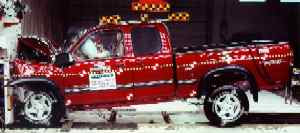
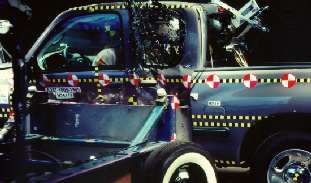
NHTSA crash tests
The agency crash-tested this model year itself. These are its own
photographs and star ratings.
These stars come from the pre-2011 crash test programme. NHTSA
rebuilt the programme for the 2011 model year and states that
ratings either side of that change are not comparable — so do
not read these against a 2011-or-newer car's stars.
Frontal crash test
Side barrier crash test
Photographs taken by NHTSA during its own New Car Assessment Program crash
tests of this model year. Public domain.
Configuration
Overall
Front
Side
Rollover
2002 Toyota Tundra Extended Cab
—
—
—
—
2002 Toyota Tundra Regular Cab
—
—
—
—
When owners complained
A spike years after the car went on sale usually means a part wearing
out on schedule across the whole fleet — the kind of pattern no single
owner can see from inside their own car.
Jan 2002peak 26Jul 2026
NHTSA investigations into the 2002 Toyota Tundra
An investigation is the step before a recall: the agency has seen enough
complaints to look into a pattern itself. An open one means it thinks
something may be wrong and nothing has been fixed yet.
PE09049Opened 6 Oct 2009Closed 26 Jan 2010FUEL SYSTEM, GASOLINE:STORAGE:TANK ASSEMBLY:MOUNTING
FRAME CORROSION
THIS INVESTIGATION WAS OPENED BASED ON 20 REPORTS OF MODEL YEAR (MY) 2000 AND 2001 VEHICLES EXPERIENCING SEVERE CORROSION OF THE FRAME, RESULTING IN EITHER UNDER-BODY MOUNTED SPARE TIRE SEPARATION OR REAR BRAKE FAILURE.THE FAILURE REPORT COUNTS SHOWN ABOVE ARE FOR MY 2000 AND 2001 VEHICLES ONLY.BY LETTER OF NOVEMBER 16, 2009 TOYOTA HAS NOTIFIED THE AGENCY THAT IT WILL CONDUCT A SAFETY RECALL (09V-444) OF APPROXIMATELY 110,000 MODEL YEAR (MY) 2000 THROUGH 2003 TUNDRA VEHICLES.THE AFFECTED RECALLED VEHICLES WERE SOLD OR ARE CURRENTLY REGISTERED IN THE DISTRICT OF COLUMBIA AND THE STATES OF CT, D...
EA04024Opened 20 Aug 2004Closed 8 Jul 2005SUSPENSION:FRONT:CONTROL ARM:LOWER ARM
BALL JOINT SEPARATION
ODI RECEIVED 3 CONSUMER REPORTS OF ALLEGED BALL JOINT SEPARATION ON MY 2002 TUNDRA VEHICLES.THE COMPLAINTS ALLEGE THAT A FRONT SUSPENSION BALL JOINT SEPARATED WHILE DRIVING, WHICH CAUSED THE SUSPENSION TO COLLAPSE AND RESULTED IN A LOSS OF VEHICLE CONTROL.BASED ON THESE COMPLAINTS, ODI OPENED PE02-040 AND LATER UPGRADED TO EA04-024 FOR MY 2002 TUNDRA VEHICLES.DURING EA04-024, ADDITIONAL FAILURE DATA WAS IDENTIFIED AS NOTED IN THE FAILURE REPORT SUMMARY ABOVE. ON MAY 16, 2005, TOYOTA NOTIFIED NHTSA OF A SAFETY DEFECT ON MY 2002-2004 TUNDRA AND SEQUOIA VEHICLES (PRODUCED BETWEEN AUGUST 1, 2001 A...
PE04040Opened 13 Apr 2004Closed 20 Aug 2004SUSPENSION:FRONT:CONTROL ARM:LOWER BALL JOINT
FRONT SUSPENSION BALL JOINT BREAKAGE
ODI OPENED PE04-040 BASED ON THREE CONSUMER REPORTS OF ALLEGED BALL JOINT FAILURE.THE COMPLAINTS ALLEGE THAT A FRONT SUSPENSION BALL JOINT SEPARATED WHILE DRIVING, WHICH CAUSED THE SUSPENSION TO COLLAPSE AND RESULTED IN A LOSS OF VEHICLE CONTROL.ALL OF THESE COMPLAINTS INVOLVED THE FAILURE OF A LOWER BALL JOINT.DURING THE INVESTIGATION, TOYOTA IDENTIFIED A TOTAL OF 15 COMPLAINTS OF LOWER BALL JOINT SEPARATION, ONE OF WHICH RESULTED IN A CRASH, AND 28 WARRANTY CLAIMS RELATED TO LOWER BALL JOINT WEAR.ODI'S ANALYSIS SHOWED THAT OF THE 15 SEPARATIONS, 11 WERE ON FOUR-WHEEL DRIVE VEHICLES (24.2 PER...
Recalls on the 2002 Toyota Tundra
A complaint is one owner's allegation. A recall is the point at which
the manufacturer or a regulator agreed the defect is real and dangerous
enough to fix for free — however old the car is.
United States — NHTSA
09V444000
STRUCTURE:FRAME AND MEMBERS:UNDERBODY SHIELDS
TOYOTA IS RECALLING MODEL YEAR 2000-2003 TUNDRA VEHICLES ORIGINALLY SOLD IN OR CURRENTLY REGISTERED IN THE FOLLOWING STATES: CONNECTICUT, DELAWARE, ILLINOIS, INDIANA, KENTUCKY, MAINE, MARYLAND, MASSACHUSETTS, MICHIGAN, MINNESOTA, NEW HAMPSHIRE, NEW JERSEY, NEW YORK, OHIO, PENNSYLVANIA, RHODE ISLAND, VERMONT, VIRGINIA, WEST VIRGINIA, WISCONSIN AND THE DISTRICT OF COLUMBIA. EXCESSIVE CORROSION OF THE REAR CROSS MEMBER MAY CAUSE THE SEPARATION OF THE SPARE TIRE STOWED UNDER THE TRUCK BED WHICH WOULD PRESENT A ROAD HAZARD THAT COULD CAUSE A CRASH. ALSO, CORROSION OF THE REAR CROSS MEMBER COULD AFFECT THE REAR BRAKE LINES AND THE PROPORTIONING VALVE RESULTING IN DIMINISHED BRAKING CAPABILITY.
Risk: SEPARATION OF THE SPARE TIRE AND DIMINISHED BRAKE CAPACITY COULD INCREASE THE RISK OF A CRASH.
09E025000
EXTERIOR LIGHTING:HEADLIGHTS
DOPE, INC. IS RECALLING 42,540 COMBINATION CORNER AND BUMPER LAMP ASSEMBLIES OF VARIOUS PART NUMBERS SOLD FOR USE AS AFTERMARKET EQUIPMENT FOR VARIOUS PASSENGER VEHICLES. THESE HEADLAMPS FAIL TO CONFORM TO THE REQUIREMENTS OF FEDERAL MOTOR VEHICLE SAFETY STANDARD NO. 108, "LAMPS, REFLECTIVE DEVICES, AND ASSOCIATED EQUIPMENT." THESE LAMPS DO NOT CONTAIN THE REQUIRED AMBER SIDE REFLECTORS.
Risk: DECREASED LIGHTING VISIBILITY MAY RESULT IN A VEHICLE CRASH.
06E065000
EXTERIOR LIGHTING
CERTAIN AJ MOTORSPORT COMBINATION LAMPS SOLD AS REPLACEMENT LAMPS FOR USE ON THE ABOVE LISTED PASSENGER VEHICLES. COMBINATION LAMPS NOT EQUIPPED WITH AMBER SIDE REFLECTORS FAIL TO CONFORM WITH THE REQUIREMENTS OF FEDERAL MOTOR VEHICLE SAFETY STANDARD NO. 108, LAMPS, REFLECTIVE DEVICES, AND ASSOCIATED EQUIPMENT.
Risk: LACK OF AMBER SIDE REFLECTORS IN THE LAMPS WILL DECREASE LIGHTING VISIBILITY TO OTHER DRIVERS AND MAY POSSIBLY RESULT IN A VEHICLE CRASH.
06E026000
EXTERIOR LIGHTING
CERTAIN PRO-A MOTORS CORNER LAMPS, TURN SIGNALS, AND HEADLIGHTS SOLD AS REPLACEMENT LAMPS FOR USE ON CERTAIN PASSENGER VEHICLES LISTED ABOVE. SOME COMBINATION LAMPS THAT ARE NOT EQUIPPED WITH AMBER SIDE REFLECTORS FAIL TO CONFORM TO FEDERAL MOTOR VEHICLE SAFETY STANDARD NO. 108, LAMPS, REFLECTIVE DEVICES, AND ASSOCIATED EQUIPMENT.
Risk: WITHOUT THE AMBER REFLECTORS, THE VEHICLE WILL BE POORLY ILLUMINATED, POSSIBLY RESULTING IN A VEHICLE CRASH WITHOUT WARNING.
05V225000
SUSPENSION:FRONT:CONTROL ARM:LOWER BALL JOINT
ON CERTAIN SPORT UTILITY VEHICLES, DUE TO A MANUFACTURING ISSUE IN THE FRONT SUSPENSION LOWER BALL JOINT, THERE IS A POSSIBILITY THAT THE SURFACE OF THE BALL OF THE JOINT MAY HAVE BEEN SCRATCHED. THE BALL JOINT MAY EVENTUALLY EXPERIENCE EXCESSIVE WEAR AND LOOSENESS, RESULTING IN INCREASED STEERING EFFORT.
Risk: THE LOWER BALL JOINT MAY SEPARATE FROM THE KNUCKLE CAUSING LOSS OF STEERING CONTROL AND A CRASH COULD OCCUR.
02V129000
WHEELS
ON CERTAIN 4X2 VEHICLES EQUIPPED WITH AN ALLOY WHEEL TIRE UPGRADE (OPTIONS WM4, WM8, ZL1-ZL4, DH4, OR DH5) INSTALLED BY THE PROCESSING CENTERS IN JACKSONVILLE, FLORIDA OR COMMERCE, GEORGIA, A LABEL IDENTIFYING THE SPARE TIRE AS A TEMPORARY USE SPARE TIRE WAS NOT INSTALLED. THE UPGRADE INCLUDES 4 LARGER SIZE TIRES WITH ALLOY WHEELS. THE ORIGINAL SPARE TIRE/STEEL WHEEL IS NOT PART OF THE UPGRADE AND WAS NOT CHANGED.
Risk: DIFFERENT OPERATING CHARACTERISTICS CAN BE EXPERIENCED WHEN THE SPARE TIRE IS INSTALLED ON THE VEHICLE.
Canada — Transport Canada
Canada runs its own recall programme, and its campaigns do not
always mirror the American ones.
Recall 20093299,722 units in Canada
Structure
On certain vehicles operated in areas of heavy road salt usage, excessive corrosion of the rear cross member may cause separation of the spare tire stowed under the truck bed. Corrosion of the rear cross member may also affect the functionality of the rear brake line at the proportioning valve. A spare tire that separates during vehicle usage could impact nearby persons or objects resulting in personal injury and/or vehicle and property damage. Correction: Dealers will inspect the rear cross member and surrounding components and, depending on the amount of corrosion detected, either apply a corrosion-resistant compound or replace the cross member assembly.
Recall 200515114,341 units in Canada
Suspension
On certain vehicles, a manufacturing issue with the front lower ball joint could result in premature wear. If the vehicle is operated for an extended period of time in this condition, the ball joint may eventually experience excessive wear and looseness, resulting in increased steering effort, reduced vehicle self-centering and noise in the front suspension. In extreme cases, when the driver continues to operate the vehicle in this condition, the lower ball joint may separate from the knuckle causing a loss of vehicle steering control. Correction: Dealers will inspect and, if necessary, replace the front lower ball joints.
Reports where the owner recorded a crash, a fire, an injury or a death.
Kingston, OHCrash
SUSPENSION
Was told about the recall awhile ago and they said that my frame was ok. But now I have a perfectly good truck in good condition other than a rusted frame. Had some work done and mechanic said it is unsafe to drive due to rusted frame. They know of the defect and only replace a few and it looks like others are dealing with what I am.
NHTSA complaint #11645683 — an unverified report by a vehicle owner.
Fredericksburg, VACrash1 injured
POWER TRAIN
My original owner 2002 Toyota Tundra Truck was being backed up in reverse with a utility trailer attached up a very, very moderate incline on a driveway pushing the trailer onto a gravel pad ALONGSIDE (parallel) the driveway. As it started to spin gravel the truck was put into a 4 wheel Drive LOW RANGE. This is in keeping with the TOYOTA owners manual publication 0M34417U Part Number 01999-34417 Print date 02-0109-01. We followed the manual instruction on 4 WD operation. Within a few feet the truck stopped as if the wheels had hit a curb and there was no further movement no matter the accelerator pedal position and the engine speed was unchanged as if it was in a stall. All of a sudden there was a loud bang underneath the truck and the truck raced rearward 8-10 feet jackknifing the trailer into a tree and upending the truck and trailer. We contacted Toyota on the incident and they had a third party look at the truck for brake condition, floor mat placement and throttle freedom at the body shop & Toyota closed the complaint file. Toyota IGNORED the circumstances and description of the incident in closing the complaint. We have been a very long time TOYOTA truck family and have owned SIX Toyota 4 wheel drives plus a Lexus all-wheel drive. In doing our own evaluation and investigation we have found that the truck went into a 4-wheel drive "wind-up" or "bind" and found information related on it from ASE Certification sites. NO MENTION of this potential issue is provided in the owners manual! We found that the torque from this can be over 4,000 ft/lb. and possible magnified even more by low range. When this bind suddenly is released the movement can be violent as happened here. Why is this not talked about in the owner manual? Why does Toyota ignore this reality? Indeed, the Toyota Rep. Mr. Ronald Inton said "he never heard of anyone backing up in 4 Wheel Drive"! WHAT?? We have the vehicle, photos, Toyota denial all available for review,.
NHTSA complaint #11628419 — an unverified report by a vehicle owner.
Fredericksburg, VACrash1 injured
ENGINE
My original owner 2002 Toyota Tundra Truck was being backed up in reverse with a utility trailer attached up a very, very moderate incline on a driveway pushing the trailer onto a gravel pad ALONGSIDE (parallel) the driveway. As it started to spin gravel the truck was put into a 4 wheel Drive LOW RANGE. This is in keeping with the TOYOTA owners manual publication 0M34417U Part Number 01999-34417 Print date 02-0109-01. We followed the manual instruction on 4 WD operation. Within a few feet the truck stopped as if the wheels had hit a curb and there was no further movement no matter the accelerator pedal position and the engine speed was unchanged as if it was in a stall. All of a sudden there was a loud bang underneath the truck and the truck raced rearward 8-10 feet jackknifing the trailer into a tree and upending the truck and trailer. We contacted Toyota on the incident and they had a third party look at the truck for brake condition, floor mat placement and throttle freedom at the body shop & Toyota closed the complaint file. Toyota IGNORED the circumstances and description of the incident in closing the complaint. We have been a very long time TOYOTA truck family and have owned SIX Toyota 4 wheel drives plus a Lexus all-wheel drive. In doing our own evaluation and investigation we have found that the truck went into a 4-wheel drive "wind-up" or "bind" and found information related on it from ASE Certification sites. NO MENTION of this potential issue is provided in the owners manual! We found that the torque from this can be over 4,000 ft/lb. and possible magnified even more by low range. When this bind suddenly is released the movement can be violent as happened here. Why is this not talked about in the owner manual? Why does Toyota ignore this reality? Indeed, the Toyota Rep. Mr. Ronald Inton said "he never heard of anyone backing up in 4 Wheel Drive"! WHAT?? We have the vehicle, photos, Toyota denial all available for review,.
NHTSA complaint #11628419 — an unverified report by a vehicle owner.
Santa Ysabel, CACrash1 injured
VEHICLE SPEED CONTROL
Sudden maximum acceleration accompanied by brake failure, without warnings, occurred on my 2002 Toyota Tundra 4.7L V8 causing loss of control of the vehicle, which ended in a rollover crash, resulting in total loss of the vehicle and injury to me. While departing a 25 mph zone (sign read "END 25 SPEED LIMIT") on a relatively straight section of the road, I very gently accelerated from 20 mph to 30 mph. As soon as the vehicle reached 30 mph, sudden maximum acceleration occurred. Taking my foot off of the gas pedal, first I verified that the gas pedal was not stuck or blocked, but the gas pedal was in the fully up position. I then pressed the brake pedal very hard, but it was locked in the fully up position and the brakes would not engage. I then verified that nothing was blocking the brake pedal underneath it. At that point, around 3 to 4 seconds after the sudden acceleration began, I had entered the first turn of a 30 mph "S" turn at a high rate of speed, while acceleration continued at the vehicle's maximum acceleration rate beyond my control with the brakes not engaging. In order to avoid collision with a camper motor home and a small car following it, I went into the oncoming traffic lane at the second turn of the "S" turn. My truck fish tailed and struck a reflector marker on the left side of the road. To avoid going down a 50+ foot, nearly straight down drop on the left side of the road, I turned right. To avoid striking the motor home, I turned left, then right again to try to gain control. My truck rolled on its left side and landed upright on the right side of the road. It had been accelerating at its maximum acceleration rate with the brakes failing to engage and fish tailing the entire time. The problem appeared to be a catastrophic failure of the electronic throttle control and/or related electronic systems.
NHTSA complaint #11528828 — an unverified report by a vehicle owner.
Santa Ysabel, CACrash1 injured
ELECTRICAL SYSTEM
Sudden maximum acceleration accompanied by brake failure, without warnings, occurred on my 2002 Toyota Tundra 4.7L V8 causing loss of control of the vehicle, which ended in a rollover crash, resulting in total loss of the vehicle and injury to me. While departing a 25 mph zone (sign read "END 25 SPEED LIMIT") on a relatively straight section of the road, I very gently accelerated from 20 mph to 30 mph. As soon as the vehicle reached 30 mph, sudden maximum acceleration occurred. Taking my foot off of the gas pedal, first I verified that the gas pedal was not stuck or blocked, but the gas pedal was in the fully up position. I then pressed the brake pedal very hard, but it was locked in the fully up position and the brakes would not engage. I then verified that nothing was blocking the brake pedal underneath it. At that point, around 3 to 4 seconds after the sudden acceleration began, I had entered the first turn of a 30 mph "S" turn at a high rate of speed, while acceleration continued at the vehicle's maximum acceleration rate beyond my control with the brakes not engaging. In order to avoid collision with a camper motor home and a small car following it, I went into the oncoming traffic lane at the second turn of the "S" turn. My truck fish tailed and struck a reflector marker on the left side of the road. To avoid going down a 50+ foot, nearly straight down drop on the left side of the road, I turned right. To avoid striking the motor home, I turned left, then right again to try to gain control. My truck rolled on its left side and landed upright on the right side of the road. It had been accelerating at its maximum acceleration rate with the brakes failing to engage and fish tailing the entire time. The problem appeared to be a catastrophic failure of the electronic throttle control and/or related electronic systems.
NHTSA complaint #11528828 — an unverified report by a vehicle owner.
Santa Ysabel, CACrash1 injured
SERVICE BRAKES
Sudden maximum acceleration accompanied by brake failure, without warnings, occurred on my 2002 Toyota Tundra 4.7L V8 causing loss of control of the vehicle, which ended in a rollover crash, resulting in total loss of the vehicle and injury to me. While departing a 25 mph zone (sign read "END 25 SPEED LIMIT") on a relatively straight section of the road, I very gently accelerated from 20 mph to 30 mph. As soon as the vehicle reached 30 mph, sudden maximum acceleration occurred. Taking my foot off of the gas pedal, first I verified that the gas pedal was not stuck or blocked, but the gas pedal was in the fully up position. I then pressed the brake pedal very hard, but it was locked in the fully up position and the brakes would not engage. I then verified that nothing was blocking the brake pedal underneath it. At that point, around 3 to 4 seconds after the sudden acceleration began, I had entered the first turn of a 30 mph "S" turn at a high rate of speed, while acceleration continued at the vehicle's maximum acceleration rate beyond my control with the brakes not engaging. In order to avoid collision with a camper motor home and a small car following it, I went into the oncoming traffic lane at the second turn of the "S" turn. My truck fish tailed and struck a reflector marker on the left side of the road. To avoid going down a 50+ foot, nearly straight down drop on the left side of the road, I turned right. To avoid striking the motor home, I turned left, then right again to try to gain control. My truck rolled on its left side and landed upright on the right side of the road. It had been accelerating at its maximum acceleration rate with the brakes failing to engage and fish tailing the entire time. The problem appeared to be a catastrophic failure of the electronic throttle control and/or related electronic systems.
NHTSA complaint #11528828 — an unverified report by a vehicle owner.
The most recent complaints
In the owners' own words, exactly as filed with NHTSA.
Rosemount, MN
SUSPENSION
The dealership and Toyota Engagement Center refused to service the 2 recalls that was critical for the truck since October 2025. It was supposed to be including frame replacement and other parts but Toyota Engagement decided to active buy back option and took advantage of low offer to solve the matter which I don't accept.
NHTSA complaint #11749814 — an unverified report by a vehicle owner.
Rosemount, MN
SERVICE BRAKES
The dealership and Toyota Engagement Center refused to service the 2 recalls that was critical for the truck since October 2025. It was supposed to be including frame replacement and other parts but Toyota Engagement decided to active buy back option and took advantage of low offer to solve the matter which I don't accept.
NHTSA complaint #11749814 — an unverified report by a vehicle owner.
Rosemount, MN
FUEL/PROPULSION SYSTEM
The dealership and Toyota Engagement Center refused to service the 2 recalls that was critical for the truck since October 2025. It was supposed to be including frame replacement and other parts but Toyota Engagement decided to active buy back option and took advantage of low offer to solve the matter which I don't accept.
NHTSA complaint #11749814 — an unverified report by a vehicle owner.
Gillham, AR
UNKNOWN OR OTHER
Frame and crossmember is rusting. Has one hole on each side of the frame where the cross member is attached inside the frame.
NHTSA complaint #11729614 — an unverified report by a vehicle owner.
Ballston Spa, NY
UNKNOWN OR OTHER
Frame failed inspection for holes in frame. Had part of frame welded and got inspected.11/01/2022. Had been turned down by Toyota dealer previously. Now with less than 10,000 miles added, has another location where frame has rusted thru , making inspection passing impossible. And driving dangerous. Needs a new frame nd Toyota said no, according to the dealer. New Country Toyota, Saratoga NY. Can I sue Toyota? Is there statute of limitations on frame defects? What are my options. Thank you for your time and consideration. [XXX] INFORMATION REDACTED PURSUANT TO THE FREEDOM OF INFORMATION ACT (FOIA), 5 U.S.C. 552(B)(6)
NHTSA complaint #11728356 — an unverified report by a vehicle owner.
Rosemount, MN
UNKNOWN OR OTHER
Toyota won’t cover the safety recalls on my truck
NHTSA complaint #11707586 — an unverified report by a vehicle owner.
Nashua, NH
STRUCTURE:BODY
Excessive frame corrosion and corrosion holes involving even rear subframe
NHTSA complaint #11705338 — an unverified report by a vehicle owner.
Rockland, MA
STRUCTURE:BODY
Frame needs replacement
NHTSA complaint #11695290 — an unverified report by a vehicle owner.
Prescott, AZ
SEAT BELTS
The date it started happening was probably late March now into April to present day as the receptacle on the driver side doesn’t click always and comes undone while on the road and can not get the seatbelt to go back in and has not been assessed or replaced by my local Toyota Dealer and the issue is getting worse these are Stock parts
NHTSA complaint #11660184 — an unverified report by a vehicle owner.
Streeter, ND
EXTERIOR LIGHTING
The headlights and high beams are dim . When the high beams are on other cars oncoming are not affected as they never flash their lights because my high beams seem as though they are just headlights. Also the fact that the high beams shine like headlights, there is no option for brighter lighting which makes it hard to see far ahead. I live in a rural location off of a narrow highway with down slopes with water at the bottom on both sides of the highway where large wildlife such as deer are plentiful . Insufficient high beam lighting imposes unsafe travel conditions since the headlights are dim and the high beams are how the headlights should be leaving no option for brighter visibility. I noticed the lighting being dim years ago but I thought it was just something to do with my trucks lighting until I began searching online again for a remedy and found many other owners of the same year make and model with exactly the same issue. Therefore in conclusion perhaps is a manufacturer defect. My truck is the most reliable vehicle I have ever owned, it still runs great, I keep it well maintained and I intend to keep using it for as long as we both shall live. I am [XXX] and obviously my truck is over 20 years old and runs great, it would be terribly upsetting if an accident were to occur due to insufficient exterior lighting. I cannot remember exactly what it was I had previously contacted NHTSA regarding my truck , though the exterior lighting is of greater concern now. I noticed the dimness of the exterior lighting since I have been living in this location a lot because there are no street lights along the freeway nor highway as opposed to where I lived prior. Thank you very much for giving me the opportunity to express my concerns as I appreciate your time and consideration in this matter. INFORMATION REDACTED PURSUANT TO THE FREEDOM OF INFORMATION ACT (FOIA), 5 U.S.C. 552(B)(6)
NHTSA complaint #11649956 — an unverified report by a vehicle owner.
Kingston, OHCrash
SUSPENSION
Was told about the recall awhile ago and they said that my frame was ok. But now I have a perfectly good truck in good condition other than a rusted frame. Had some work done and mechanic said it is unsafe to drive due to rusted frame. They know of the defect and only replace a few and it looks like others are dealing with what I am.
NHTSA complaint #11645683 — an unverified report by a vehicle owner.
at 190,000 milesWolcott, CT
FUEL SYSTEM, GASOLINE
The contact owns a 2002 Toyota Tundra. The contact, who is an independent mechanic, stated that the fuel tank had detached. The contact stated that the subframe was extremely rusted. There were no warning lights illuminated. The contact stated that the failure was related to NHTSA Campaign Number: 09V444000 (Structure). The contact called the local dealer, but the vehicle was not diagnosed or repaired. The manufacturer was not contacted. The failure mileage was approximately 190,000.
NHTSA complaint #11640935 — an unverified report by a vehicle owner.
at 190,000 milesWolcott, CT
STRUCTURE
The contact owns a 2002 Toyota Tundra. The contact, who is an independent mechanic, stated that the fuel tank had detached. The contact stated that the subframe was extremely rusted. There were no warning lights illuminated. The contact stated that the failure was related to NHTSA Campaign Number: 09V444000 (Structure). The contact called the local dealer, but the vehicle was not diagnosed or repaired. The manufacturer was not contacted. The failure mileage was approximately 190,000.
NHTSA complaint #11640935 — an unverified report by a vehicle owner.
Fredericksburg, VACrash1 injured
POWER TRAIN
My original owner 2002 Toyota Tundra Truck was being backed up in reverse with a utility trailer attached up a very, very moderate incline on a driveway pushing the trailer onto a gravel pad ALONGSIDE (parallel) the driveway. As it started to spin gravel the truck was put into a 4 wheel Drive LOW RANGE. This is in keeping with the TOYOTA owners manual publication 0M34417U Part Number 01999-34417 Print date 02-0109-01. We followed the manual instruction on 4 WD operation. Within a few feet the truck stopped as if the wheels had hit a curb and there was no further movement no matter the accelerator pedal position and the engine speed was unchanged as if it was in a stall. All of a sudden there was a loud bang underneath the truck and the truck raced rearward 8-10 feet jackknifing the trailer into a tree and upending the truck and trailer. We contacted Toyota on the incident and they had a third party look at the truck for brake condition, floor mat placement and throttle freedom at the body shop & Toyota closed the complaint file. Toyota IGNORED the circumstances and description of the incident in closing the complaint. We have been a very long time TOYOTA truck family and have owned SIX Toyota 4 wheel drives plus a Lexus all-wheel drive. In doing our own evaluation and investigation we have found that the truck went into a 4-wheel drive "wind-up" or "bind" and found information related on it from ASE Certification sites. NO MENTION of this potential issue is provided in the owners manual! We found that the torque from this can be over 4,000 ft/lb. and possible magnified even more by low range. When this bind suddenly is released the movement can be violent as happened here. Why is this not talked about in the owner manual? Why does Toyota ignore this reality? Indeed, the Toyota Rep. Mr. Ronald Inton said "he never heard of anyone backing up in 4 Wheel Drive"! WHAT?? We have the vehicle, photos, Toyota denial all available for review,.
NHTSA complaint #11628419 — an unverified report by a vehicle owner.
Fredericksburg, VACrash1 injured
ENGINE
My original owner 2002 Toyota Tundra Truck was being backed up in reverse with a utility trailer attached up a very, very moderate incline on a driveway pushing the trailer onto a gravel pad ALONGSIDE (parallel) the driveway. As it started to spin gravel the truck was put into a 4 wheel Drive LOW RANGE. This is in keeping with the TOYOTA owners manual publication 0M34417U Part Number 01999-34417 Print date 02-0109-01. We followed the manual instruction on 4 WD operation. Within a few feet the truck stopped as if the wheels had hit a curb and there was no further movement no matter the accelerator pedal position and the engine speed was unchanged as if it was in a stall. All of a sudden there was a loud bang underneath the truck and the truck raced rearward 8-10 feet jackknifing the trailer into a tree and upending the truck and trailer. We contacted Toyota on the incident and they had a third party look at the truck for brake condition, floor mat placement and throttle freedom at the body shop & Toyota closed the complaint file. Toyota IGNORED the circumstances and description of the incident in closing the complaint. We have been a very long time TOYOTA truck family and have owned SIX Toyota 4 wheel drives plus a Lexus all-wheel drive. In doing our own evaluation and investigation we have found that the truck went into a 4-wheel drive "wind-up" or "bind" and found information related on it from ASE Certification sites. NO MENTION of this potential issue is provided in the owners manual! We found that the torque from this can be over 4,000 ft/lb. and possible magnified even more by low range. When this bind suddenly is released the movement can be violent as happened here. Why is this not talked about in the owner manual? Why does Toyota ignore this reality? Indeed, the Toyota Rep. Mr. Ronald Inton said "he never heard of anyone backing up in 4 Wheel Drive"! WHAT?? We have the vehicle, photos, Toyota denial all available for review,.
NHTSA complaint #11628419 — an unverified report by a vehicle owner.
at 117,000 milesPark City, UT
STRUCTURE
The contact owns a 2002 Toyota Tundra. The contact stated that the frame and the front bumper were severely rusted. The vehicle was not diagnosed or repaired by an independent mechanic or dealer. The manufacturer was notified of the failure and referred the contact to the NHTSA Hotline for assistance. The failure mileage was approximately 117,000.
NHTSA complaint #11624704 — an unverified report by a vehicle owner.
at 180,000 milesWestminster, MD
STRUCTURE:FRAME AND MEMBERS
The contact owns a 2002 Toyota Tundra. The contact stated that after taking the vehicle to be checked for corrosion to the subframe, the contact was advised that there was significant corrosion on the subframe and the supports underneath the truck bed. The contact was informed that the vehicle was unsafe to drive with any type of load in the truck bed. The vehicle was not repaired. The manufacturer was not informed of the failure. The failure mileage was approximately 180,000.
NHTSA complaint #11589647 — an unverified report by a vehicle owner.
Dover, NJ
UNKNOWN OR OTHER
My frame have a big hole
NHTSA complaint #11582334 — an unverified report by a vehicle owner.
Nevada, MO
STRUCTURE:BODY
I was doing maintenance on front and lifted splash guard for access to bolt. On top of the frame, near the firewall, was severe rust. It looks as if the frame could crack at any time. If this happened in highway speed or in traffic, severe risk of injuries. These are known to have issues in salt states (had recalls) and I thought I checked it pretty good before buying. I think this may be from the air conditioning drain system.
NHTSA complaint #11582138 — an unverified report by a vehicle owner.
Santa Rosa, CA
SEAT BELTS
There are several issues with these seatbelts. They either lock before we can get them buckled or once we unbuckle them, they do not retract and hang out the door, thus draining the battery. They get twisted and stuck in the plastic guide toward the top of the door. The last time this happened, I could not get the seatbelt unstuck despite working on it for almost an hour. I ended up cutting the seatbelt to get it unstuck. Now it is EXTREMELY difficult to use. I need to get it replaced ASAP at my own expense. Very unsafe not to mention frustrating. Also, worth noting is this has been an ongoing problem for years.
NHTSA complaint #11570131 — an unverified report by a vehicle owner.
at 250,000 milesThebes, IL
STRUCTURE:FRAME AND MEMBERS
The contact owns 2002 Toyota Tundra. The contact stated that upon taking the vehicle to an independent mechanic for an oil change and tire rotation, she was informed that the subframe was severely corroded, and the vehicle was unsafe to be driven. The dealer and the manufacturer were not notified of the failure. The vehicle was not repaired. The failure mileage was approximately 250,000.
NHTSA complaint #11569273 — an unverified report by a vehicle owner.
at 200,000 milesOstrander, OH
STRUCTURE
The contact owns a 2002 Toyota Tundra. The contact stated that while the vehicle was in for routine maintenance, the mechanic discovered severe rusting and corrosion on the subframe of the vehicle. The vehicle was taken to the local dealer who determined that the vehicle was unsafe to drive due to the severe rusting of the subframe. The contact was informed that the subframe needed to be replaced. The vehicle was not yet repaired. The manufacturer was not yet notified of the failure. The failure mileage was 200,000.
NHTSA complaint #11565735 — an unverified report by a vehicle owner.
at 249,000 milesLaveen, AZ
SUSPENSION
The contact owns a 2002 Toyota Tundra. The contact stated that while driving at an undisclosed speed, the vehicle began to vibrate, prompting the contact to maintain low speeds. After a visual inspection, the contact observed that the front passenger wheels had a negative toe. No warning lights were illuminated. The vehicle was taken to the dealer, who determined that the lower ball joint had separated from the knuckle. The vehicle was not repaired. After investigating the failure, the contact related it to NHTSA Campaign Number: 05V225000 (Suspension), but the VIN was not included. The manufacturer was notified of the failure but provided no assistance. The failure mileage was 249,000.
NHTSA complaint #11549253 — an unverified report by a vehicle owner.
Santa Ysabel, CACrash1 injured
VEHICLE SPEED CONTROL
Sudden maximum acceleration accompanied by brake failure, without warnings, occurred on my 2002 Toyota Tundra 4.7L V8 causing loss of control of the vehicle, which ended in a rollover crash, resulting in total loss of the vehicle and injury to me. While departing a 25 mph zone (sign read "END 25 SPEED LIMIT") on a relatively straight section of the road, I very gently accelerated from 20 mph to 30 mph. As soon as the vehicle reached 30 mph, sudden maximum acceleration occurred. Taking my foot off of the gas pedal, first I verified that the gas pedal was not stuck or blocked, but the gas pedal was in the fully up position. I then pressed the brake pedal very hard, but it was locked in the fully up position and the brakes would not engage. I then verified that nothing was blocking the brake pedal underneath it. At that point, around 3 to 4 seconds after the sudden acceleration began, I had entered the first turn of a 30 mph "S" turn at a high rate of speed, while acceleration continued at the vehicle's maximum acceleration rate beyond my control with the brakes not engaging. In order to avoid collision with a camper motor home and a small car following it, I went into the oncoming traffic lane at the second turn of the "S" turn. My truck fish tailed and struck a reflector marker on the left side of the road. To avoid going down a 50+ foot, nearly straight down drop on the left side of the road, I turned right. To avoid striking the motor home, I turned left, then right again to try to gain control. My truck rolled on its left side and landed upright on the right side of the road. It had been accelerating at its maximum acceleration rate with the brakes failing to engage and fish tailing the entire time. The problem appeared to be a catastrophic failure of the electronic throttle control and/or related electronic systems.
NHTSA complaint #11528828 — an unverified report by a vehicle owner.
Santa Ysabel, CACrash1 injured
ELECTRICAL SYSTEM
Sudden maximum acceleration accompanied by brake failure, without warnings, occurred on my 2002 Toyota Tundra 4.7L V8 causing loss of control of the vehicle, which ended in a rollover crash, resulting in total loss of the vehicle and injury to me. While departing a 25 mph zone (sign read "END 25 SPEED LIMIT") on a relatively straight section of the road, I very gently accelerated from 20 mph to 30 mph. As soon as the vehicle reached 30 mph, sudden maximum acceleration occurred. Taking my foot off of the gas pedal, first I verified that the gas pedal was not stuck or blocked, but the gas pedal was in the fully up position. I then pressed the brake pedal very hard, but it was locked in the fully up position and the brakes would not engage. I then verified that nothing was blocking the brake pedal underneath it. At that point, around 3 to 4 seconds after the sudden acceleration began, I had entered the first turn of a 30 mph "S" turn at a high rate of speed, while acceleration continued at the vehicle's maximum acceleration rate beyond my control with the brakes not engaging. In order to avoid collision with a camper motor home and a small car following it, I went into the oncoming traffic lane at the second turn of the "S" turn. My truck fish tailed and struck a reflector marker on the left side of the road. To avoid going down a 50+ foot, nearly straight down drop on the left side of the road, I turned right. To avoid striking the motor home, I turned left, then right again to try to gain control. My truck rolled on its left side and landed upright on the right side of the road. It had been accelerating at its maximum acceleration rate with the brakes failing to engage and fish tailing the entire time. The problem appeared to be a catastrophic failure of the electronic throttle control and/or related electronic systems.
NHTSA complaint #11528828 — an unverified report by a vehicle owner.