Owners have filed 653 complaints
about the 2004 Toyota Tundra with NHTSA between 2004 and 2026.
The largest single group is the body & structure.
Across this model's run it ranks 8 of 27 worst.
The letter says how bad. This says what kind — whether this year drew
an unusual number of complaints, unusually dangerous
ones, or failures that arrived unusually early.
The dashed ring is 50 — the national norm. Further out is worse.
Complaint volume — 93
Against the median year of the Toyota Tundra. 50 means typical for this
model; 100 means roughly double.
Severity — 49
9.5% of these complaints
involved a crash, fire, injury or death, against a national rate of
9.7%.
Early failure — 14
8% of failures with a mileage on record happened under
36,000 miles, against a national rate of
29%.
NHTSA files every complaint against a named sub-assembly, not just a
system. This is the difference between knowing it was "the engine" and
knowing which part of it — the list to hand a mechanic.
Body
14155.3%
Lower Ball Joint
4618.0%
Underbody Shields
3413.3%
Frame AND Members
176.7%
Front
83.1%
Upper Ball Joint
31.2%
Temporary/Emergency Spare Tire
31.2%
Sun/Moon Roof Assembly
31.2%
When it fails
Odometer readings owners gave when they filed. About half of all
complaints include one.
1,000 – 9,999 miles
61.3%
10,000 – 24,999 miles
112.5%
25,000 – 49,999 miles
4710.5%
50,000 – 74,999 miles
6113.6%
75,000 – 99,999 miles
8218.3%
100,000 – 149,999 miles
14933.3%
150,000+ miles
9120.4%
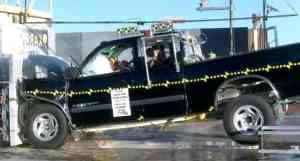
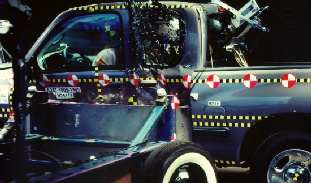
NHTSA crash tests
The agency crash-tested this model year itself. These are its own
photographs and star ratings.
These stars come from the pre-2011 crash test programme. NHTSA
rebuilt the programme for the 2011 model year and states that
ratings either side of that change are not comparable — so do
not read these against a 2011-or-newer car's stars.
Frontal crash test
Side barrier crash test
Photographs taken by NHTSA during its own New Car Assessment Program crash
tests of this model year. Public domain.
Configuration
Overall
Front
Side
Rollover
2004 Toyota Tundra 4-DR.
—
—
—
—
2004 Toyota Tundra Extended Cab
—
—
—
—
2004 Toyota Tundra Regular Cab.
—
—
—
—
When owners complained
A spike years after the car went on sale usually means a part wearing
out on schedule across the whole fleet — the kind of pattern no single
owner can see from inside their own car.
Jan 2004peak 18Sep 2026
NHTSA investigations into the 2004 Toyota Tundra
An investigation is the step before a recall: the agency has seen enough
complaints to look into a pattern itself. An open one means it thinks
something may be wrong and nothing has been fixed yet.
From 2000 through 2017, Takata produced millions of air bag inflators using two types of phase-stabilized ammonium nitrate ("PSAN") propellant -- propellant 2004 and propellant 2004L. After prolonged exposure to high temperature cycles and humidity, inflators using propellant 2004 can degrade, causing the propellant to burn too quickly when ignited. The rapid burning can cause the inflator to rupture during deployment, potentially causing serious or even fatal injury to vehicle occupants. See 2016 Blomquist Report at www.nhtsa.gov/sites/nhtsa.gov/files/documents/expert_report-hrblomquist.pdf.C...
EA15001Opened 24 Feb 2015Still openAIR BAGS:FRONTAL
Air Bag Inflator Rupture
The Office of Defects Investigation (ODI) opened PE14-016 in June 2014 based on six inflator rupture incidents involving consumer owned vehicles produced by five vehicle manufacturers.All six vehicles were operated in Florida or Puerto Rico at the time of the rupture and for the majority of their service life, and were equipped with inflators produced by Takata, a tier-one supplier of automotive air bag systems.During the course of PE14-016, ODI determined that five additional vehicle manufacturers used inflators of a similar design and vintage also supplied by Takata. No evidence of field fai...
PE14016Opened 11 Jun 2014Closed 2 Mar 2015AIR BAGS:FRONTAL
Air Bag Inflator Rupture
The Office of Defects Investigation (ODI) opened PE14-016 in June 2014 based on six inflator rupture incidents involving consumer owned vehicles produced by five vehicle manufacturers.All six vehicles were operated in Florida or Puerto Rico at the time of the rupture and for the majority of their service life, and were equipped with inflators produced by Takata, a tier-one supplier of automotive air bag systems.During the course of PE14-016, ODI determined that five additional vehicle manufacturers used inflators of a similar design and vintage also supplied by Takata. No evidence of field fai...
PE09049Opened 6 Oct 2009Closed 26 Jan 2010FUEL SYSTEM, GASOLINE:STORAGE:TANK ASSEMBLY:MOUNTING
FRAME CORROSION
THIS INVESTIGATION WAS OPENED BASED ON 20 REPORTS OF MODEL YEAR (MY) 2000 AND 2001 VEHICLES EXPERIENCING SEVERE CORROSION OF THE FRAME, RESULTING IN EITHER UNDER-BODY MOUNTED SPARE TIRE SEPARATION OR REAR BRAKE FAILURE.THE FAILURE REPORT COUNTS SHOWN ABOVE ARE FOR MY 2000 AND 2001 VEHICLES ONLY.BY LETTER OF NOVEMBER 16, 2009 TOYOTA HAS NOTIFIED THE AGENCY THAT IT WILL CONDUCT A SAFETY RECALL (09V-444) OF APPROXIMATELY 110,000 MODEL YEAR (MY) 2000 THROUGH 2003 TUNDRA VEHICLES.THE AFFECTED RECALLED VEHICLES WERE SOLD OR ARE CURRENTLY REGISTERED IN THE DISTRICT OF COLUMBIA AND THE STATES OF CT, D...
EA06014Opened 2 Aug 2006Closed 28 Feb 2007SUSPENSION:FRONT:CONTROL ARM:LOWER BALL JOINT
LOWER BALL JOINT FAILURE
IN A LETTER DATED JANUARY 18, 2007, TOYOTA NOTIFIED NHTSA OF A SAFETY DEFECT IN MODEL YEAR (MY) 2004 THROUGH 2006 TOYOTA TUNDRA AND MY 2004 THROUGH 2007 TOYOTA SEQUOIA VEHICLES PRODUCED BETWEEN SEPTEMBER 15, 2003 AND NOVEMBER 17, 2006 (NHTSA RECALL NO. 07V-013). ACCORDING TO TOYOTA, ?IN THE FRONT SUSPENSION LOWER BALL JOINT ON THE SUBJECT VEHICLES, DUE TO POSSIBLE IMPROPER FINISHING OF THE BALL JOINT, SUCH AS THE ASPECT OF THE BALL STUD SURFACE, SOME BALL JOINTS MAY EXPERIENCE AN INCIDENTAL DETERIORATION OF THE INTERNAL LUBRICATION. THIS MAY CAUSE THE BALL JOINT TO WEAR AND LOOSEN PREMATURELY,...
RQ06005Opened 10 Apr 2006Closed 9 Aug 2006SUSPENSION:FRONT:CONTROL ARM:LOWER BALL JOINT
LOWER BALL JOINT SEPARATION
THE OFFICE OF DEFECTS INVESTIGATIONS (ODI) OPENED RQ06-005 BASED ON FOUR CONSUMER REPORTS OF ALLEGED BALL JOINT FAILURE. THE COMPLAINTS ALLEGE THAT A FRONT SUSPENSION BALL JOINT SEPARATED WHILE DRIVING, WHICH CAUSED THE SUSPENSION TO COLLAPSE AND RESULTED IN A LOSS OF VEHICLE CONTROL. ALL OF THESE COMPLAINTS INVOLVED THE FAILURE OF A LOWER TENSION-TYPE BALL JOINT. DURING THE INVESTIGATION THERE WERE 39 (36.7 PER 100,000 VEHICLES) COMPLAINTS AND 74 (69.6 PER 100,000 VEHICLES) WARRANTY CLAIMS FOR THE 2004 MODEL YEAR (MY) TOYOTA TUNDRA. FURTHER ANALYSIS SHOWED THAT THE AVERAGE FAILURE MILEAGE WAS...
Recalls on the 2004 Toyota Tundra
A complaint is one owner's allegation. A recall is the point at which
the manufacturer or a regulator agreed the defect is real and dangerous
enough to fix for free — however old the car is.
United States — NHTSA
22E002000
SUSPENSION:FRONT:CONTROL ARM:LOWER BALL JOINT
Tenneco Automotive (DRiV) is recalling certain aftermarket ball joints for 2004-2007 Toyota Sequoia and 2004-2006 Toyota Tundra vehicles, MOOG part number K80521, K80522, NAPA part number NCP2601633, NCP2601634, ACDelco part number 45D2344, and 45D2345. The ball joint housing may have inadequate hardness, causing premature failure.
Risk: A ball joint failure may cause a loss of control, increasing the risk of a crash.
19V741000
AIR BAGS:FRONTAL:PASSENGER SIDE:INFLATOR MODULE
Toyota Motor Engineering & Manufacturing (Toyota) is recalling certain 2010-2016 4Runner, 2003-2006 Tundra, 2003-2013 Corolla, 2009-2010 Corolla Matrix, 2004-2005 RAV4, 2002-2007 Sequoia, 2011-2013 Sienna, 2008-2012 Scion xB, 2008-2009 Lexus IS-F, 2007-2012 Yaris and Lexus ES350, 2010-2017 Lexus GX460, 2002-2010 Lexus SC430, 2006-2012 Lexus IS250 and IS350 and 2010-2015 Lexus IS250C and IS350C vehicles. These vehicles had their driver or passenger frontal air bag inflators previously replaced under a prior recall using inflators of the same design. The inflators may explode due to propellant degradation occurring after long-term exposure to high absolute humidity, temperature and temperature cycling.
Risk: An inflator explosion may result in sharp metal fragments striking the driver or other occupants resulting in serious injury or death.
18V883000
AIR BAGS:FRONTAL:PASSENGER SIDE:INFLATOR MODULE
Toyota Motor Engineering & Manufacturing (Toyota) is recalling certain 2002-2005 Lexus SC and Toyota Sequoia, 2003-2005 Toyota Corolla and Tundra, and 2003-2007 Pontiac Vibe vehicles. These vehicles are equipped with certain air bag inflators assembled as part of the passenger frontal air bag modules used as original equipment or replacement equipment. In the event of a crash necessitating deployment of the passenger frontal air bag, these inflators may explode due to propellant degradation.
Risk: An inflator explosion may result in sharp metal fragments striking the driver or other occupants resulting in serious injury or death.
15V286000
AIR BAGS
Toyota Motor Engineering & Manufacturing (Toyota) notified the agency on May 13, 2015, that they are recalling 2005-2007 Lexus SC, Toyota Corolla, Corolla Matrix, Sequoia, and Pontiac Vibe, and 2005-2006 Toyota Tundra vehicles that were originally sold, or ever registered, in Florida, along the Gulf Coast, Puerto Rico, Hawaii, the U.S. Virgin Islands, Guam, Saipan and American Samoa. On June 16, 2015 Toyota expanded the recall to cover an additional 769,055 vehicles, including certain model year 2002-2004 Lexus SC, Toyota Sequoia, 2003-2004 Toyota Corolla Matrix, Toyota Corolla, Pontiac Vibe, and Toyota Tundra vehicles, as well the vehicles covered by the May 13, 2015 notification in the portions of Georgia, Alabama, Louisiana, Mississippi and Texas that were not previously included. The inflators in the front passenger air bags are susceptible to rupture in the event of a crash necessitating the deployment of the front passenger air bag.
Risk: In the event of a crash necessitating deployment of the passenger's frontal air bag, the inflator could rupture with metal fragments striking the vehicle occupants potentially resulting in serious injury or death.
15V285000
AIR BAGS
Toyota Motor Engineering & Manufacturing (Toyota) notified the agency on May 13, 2015 that they are recalling certain model year 2004 Sequoia vehicles manufactured August 18, 2003, to August 19, 2004, and 2003-2004 Tundra vehicles manufactured March 18, 2003, to August 25, 2004. On June 16, 2015, Toyota expanded the recall to include an additional 1,270,468 vehicles, including model year 2002-2003 and 2005-2007 Sequoia, 2005-2006 Tundra, 2003-2007 Corolla, 2003-2007 Corolla Matrix, 2003-2007 Pontiac Vibe and 2002-2007 Lexus SC vehicles. This is to address a safety defect in the passenger side frontal air bag inflator which may produce excessive internal pressure causing the inflator to rupture upon deployment of the air bag. This recall addresses both the passenger side frontal air bags that were originally installed in the vehicles, as well as replacement air bags that may have been installed as replacement service parts. A replacement air bag may have been installed, as one example, if a vehicle had been in a crash necessitating the replacement of the passenger side frontal air bag.
Risk: In the event of a crash necessitating deployment of the passenger's frontal air bag, the inflator could rupture with metal fragments striking the vehicle occupants potentially resulting in serious injury or death.
09E025000
EXTERIOR LIGHTING:HEADLIGHTS
DOPE, INC. IS RECALLING 42,540 COMBINATION CORNER AND BUMPER LAMP ASSEMBLIES OF VARIOUS PART NUMBERS SOLD FOR USE AS AFTERMARKET EQUIPMENT FOR VARIOUS PASSENGER VEHICLES. THESE HEADLAMPS FAIL TO CONFORM TO THE REQUIREMENTS OF FEDERAL MOTOR VEHICLE SAFETY STANDARD NO. 108, "LAMPS, REFLECTIVE DEVICES, AND ASSOCIATED EQUIPMENT." THESE LAMPS DO NOT CONTAIN THE REQUIRED AMBER SIDE REFLECTORS.
Risk: DECREASED LIGHTING VISIBILITY MAY RESULT IN A VEHICLE CRASH.
07V013000
SUSPENSION:FRONT:CONTROL ARM:LOWER BALL JOINT
ON CERTAIN TRUCKS AND MINI VANS, DUE TO POSSIBLE IMPROPER FINISHING OF THE FRONT SUSPENSION LOWER BALL JOINT, SOME BALL JOINTS MAY EXPERIENCE AN INCIDENTAL DETERIORATION OF THE INTERNAL LUBRICATION. THIS MAY CAUSE THE BALL JOINT TO WEAR AND LOOSEN PREMATURELY, WHICH COULD RESULT IN INCREASED STEERING EFFORT, REDUCED VEHICLE SELF-CENTERING, AND NOISE IN THE FRONT SUSPENSION.
Risk: IN EXTREME CASES, IF THE VEHICLE IS CONTINUOUSLY OPERATED IN THIS CONDITION, THE LOWER BALL JOINT MAY SEPARATE FROM THE KNUCKLE AND COULD CAUSE A LOSS OF VEHICLE CONTROL.
06E065000
EXTERIOR LIGHTING
CERTAIN AJ MOTORSPORT COMBINATION LAMPS SOLD AS REPLACEMENT LAMPS FOR USE ON THE ABOVE LISTED PASSENGER VEHICLES. COMBINATION LAMPS NOT EQUIPPED WITH AMBER SIDE REFLECTORS FAIL TO CONFORM WITH THE REQUIREMENTS OF FEDERAL MOTOR VEHICLE SAFETY STANDARD NO. 108, LAMPS, REFLECTIVE DEVICES, AND ASSOCIATED EQUIPMENT.
Risk: LACK OF AMBER SIDE REFLECTORS IN THE LAMPS WILL DECREASE LIGHTING VISIBILITY TO OTHER DRIVERS AND MAY POSSIBLY RESULT IN A VEHICLE CRASH.
Canada — Transport Canada
Canada runs its own recall programme, and its campaigns do not
always mirror the American ones.
Recall 201952337,591 units in Canada
Airbag
Issue: On certain vehicles, long-term exposure to high absolute humidity and temperature, combined with high temperature cycling, may eventually degrade the propellant contained in the passenger-front airbag. This could cause the airbag to deploy with more force than normal. If the airbag inflator ruptures, fragments could be propelled toward vehicle occupants or cause damage to the airbag assembly, preventing its proper function. Safety Risk: If the vehicle is involved in a crash requiring an airbag deployment, the airbag inflator could rupture and create a risk of injury. Corrective Action: Owners will be notified by mail and instructed to take their vehicle to a dealer to have the passenger-front airbag inflator or airbag module replaced. Note: The Canadian climate results in the propellant degrading slowly. This recall is being conducted as a precaution to address future risk. It is expected that all airbag inflators will be replaced before their function would be affected. Additional Note: Vehicles may have had the original front passenger airbag inflator replaced as a "like-for-like" replacement under recall 2016-103 (Toyota Recall #'s SRC 241 & SRC 242) as a temporary remedy while evaluating a permanent remedy. These vehicles will receive the permanent remedy passenger airbag assembly under this recall.
Recall 2016103400,124 units in Canada
Airbag
On certain vehicles, the passenger (frontal) airbag inflator could produce excessive internal pressure during airbag deployment. Increased pressure may cause the inflator to rupture, which could allow fragments to be propelled toward vehicle occupants, increasing the risk of injury. This could also damage the airbag module, which could prevent proper deployment. Failure of the passenger airbag to fully deploy during a crash (where deployment is warranted) could increase the risk of personal injury to the seat occupant. Note: This recall supersedes recalls 2013113, 2014224, 2015197 and 2015269. Correction: All vehicles having not received a replacement inflator as part of the previous recall will now have a replacement inflator installed by dealers. For Matrix model vehicles, dealers may replace the front passenger airbag assembly with one equipped with a newly specified inflator.
Recall 2015269366,860 units in Canada
Airbag
On certain vehicles, the passenger (frontal) airbag inflator could produce excessive internal pressure during airbag deployment. Increased pressure may cause the inflator to rupture, which could allow fragments to be propelled toward vehicle occupants, increasing the risk of injury. This could also damage the airbag module, which could prevent proper deployment. Failure of the passenger airbag to fully deploy during a crash (where deployment is warranted) could increase the risk of personal injury to the seat occupant. Note: This recall is superseded by recall 2016103. Please see recall 2016103 for more information. <a href="http://wwwapps.tc.gc.ca/Saf-Sec-Sur/7/VRDB-BDRV/search-recherche/detail.aspx?lang=eng&&rn=2016103">Click here for more information</a>
Recall 20151974,407 units in Canada
Airbag
On certain vehicles, the passenger (frontal) airbag inflator could produce excessive internal pressure during airbag deployment. Increased pressure may cause the inflator to rupture, which could allow fragments to be propelled toward vehicle occupants, increasing the risk of injury. This could also damage the airbag module, which could prevent proper deployment. Failure of the passenger airbag to fully deploy during a crash (where deployment is warranted) could increase the risk of personal injury to the seat occupant. Note: This recall is superseded by recall 2016103. Please see recall 2016103 for more information. <a href="http://wwwapps.tc.gc.ca/Saf-Sec-Sur/7/VRDB-BDRV/search-recherche/detail.aspx?lang=eng&&rn=2016103">Click here for more information</a>
Recall 2014224107,339 units in Canada
Airbag
On certain vehicles, the passenger (frontal) airbag inflator could produce excessive internal pressure during airbag deployment. Increased pressure may cause the inflator to rupture, which could allow fragments to be propelled toward vehicle occupants, increasing the risk of injury. This could also damage the airbag module, which could prevent proper deployment. Failure of the passenger airbag to fully deploy during a crash (where deployment is warranted) could increase the risk of personal injury to the seat occupant. Note: This recall is superseded by recall 2016103. Please see recall 2016103 for more information. <a href="http://wwwapps.tc.gc.ca/Saf-Sec-Sur/7/VRDB-BDRV/search-recherche/detail.aspx?lang=eng&&rn=2016103">Click here for more information</a>
Recall 201311375,000 units in Canada
Airbag
On certain vehicles, the passenger (frontal) airbag inflator could produce excessive internal pressure during airbag deployment. Increased pressure may cause the inflator to rupture, which could allow fragments to be propelled toward vehicle occupants, increasing the risk of injury. This could also damage the airbag module, which could prevent proper deployment. Failure of the passenger airbag to fully deploy during a crash (where deployment is warranted) could increase the risk of personal injury to the seat occupant. Note: This recall is superseded by recall 2016103. Please see recall 2016103 for more information. <a href="http://wwwapps.tc.gc.ca/Saf-Sec-Sur/7/VRDB-BDRV/search-recherche/detail.aspx?lang=eng&&rn=2016103">Click here for more information</a>
Recall 200701411,298 units in Canada
Steering
On certain vehicles, a manufacturing issue with the front lower ball joint could result in premature wear. If the vehicle is operated for an extended period of time in this condition, the ball joint may eventually experience excessive wear and looseness, resulting in increased steering effort, reduced vehicle self-centering and noise in the front suspension. In extreme cases, when the driver continues to operate the vehicle in this condition, the lower ball joint may separate from the knuckle causing a loss of vehicle steering control. Correction: Dealers will inspect and, if necessary, replace the front lower ball joints.
Recall 200515114,341 units in Canada
Suspension
On certain vehicles, a manufacturing issue with the front lower ball joint could result in premature wear. If the vehicle is operated for an extended period of time in this condition, the ball joint may eventually experience excessive wear and looseness, resulting in increased steering effort, reduced vehicle self-centering and noise in the front suspension. In extreme cases, when the driver continues to operate the vehicle in this condition, the lower ball joint may separate from the knuckle causing a loss of vehicle steering control. Correction: Dealers will inspect and, if necessary, replace the front lower ball joints.
Reports where the owner recorded a crash, a fire, an injury or a death.
at 185,000 milesColumbus, GACrash1 injured
AIR BAGS
The contact owns a 2004 Toyota Tundra. The contact stated that while driving approximately 60 MPH during heavy rains, the vehicle hydroplaned and spun several times before the front end crashed into a guardrail. The driver's side air bag failed to deploy, causing the driver's chest to strike the steering wheel. A bystander assisted the contact out of the vehicle and called an ambulance and the Police. The contact was transported to the emergency room by ambulance. The contact sustained internal and external bruises to the chest, stomach, and bruises to the armpit from the seat belt. The vehicle was towed to a tow yard. The failure mileage was approximately 185,000. The VIN and license plate were unavailable.
NHTSA complaint #11762695 — an unverified report by a vehicle owner.
at 142,000 milesNEW Freedom, PACrash1 injured
POWER TRAIN
VEHICLE'S ACCELERATION BECAME UNCONTROLLABLE. IN ADDITION, THE BRAKES AND THE ANTILOCK SYSTEM SEEM TO FAILED. THE VEHICLE WAS IN DRIVE AND PROCEEDING DOWN AN INCLINE, TRAVELLING ABOUT 30MPH WHEN THE UNINTENDED ACCELERATION OCCURRED.
NHTSA complaint #11396124 — an unverified report by a vehicle owner.
at 142,000 milesNEW Freedom, PACrash1 injured
VEHICLE SPEED CONTROL
VEHICLE'S ACCELERATION BECAME UNCONTROLLABLE. IN ADDITION, THE BRAKES AND THE ANTILOCK SYSTEM SEEM TO FAILED. THE VEHICLE WAS IN DRIVE AND PROCEEDING DOWN AN INCLINE, TRAVELLING ABOUT 30MPH WHEN THE UNINTENDED ACCELERATION OCCURRED.
NHTSA complaint #11396124 — an unverified report by a vehicle owner.
at 142,000 milesNEW Freedom, PACrash1 injured
SERVICE BRAKES
VEHICLE'S ACCELERATION BECAME UNCONTROLLABLE. IN ADDITION, THE BRAKES AND THE ANTILOCK SYSTEM SEEM TO FAILED. THE VEHICLE WAS IN DRIVE AND PROCEEDING DOWN AN INCLINE, TRAVELLING ABOUT 30MPH WHEN THE UNINTENDED ACCELERATION OCCURRED.
NHTSA complaint #11396124 — an unverified report by a vehicle owner.
at 142,000 milesNEW Freedom, PACrash1 injured
POWER TRAIN
VEHICLE BEGAN TO ACCELERATE DOWN A STEEP HILL AND NO MATTER WHAT I TRIED TO DO TO STOP THE VEHICLE NOTHING HAPPENED. IT JUST KEPT ACCELERATING. LOST CONTROL OF VEHICLE, AND WAS UNABLE TO NEGOTIATE THE RIGHT HAND TURN. VEHICLE SLAMMED INTO A DIRT EMBANKMENT, THEN ROLLED OVER AND REVERSED IT'S POSITION. CONSEQUENTLY, I WAS TRAPPED IN A RUNNING VEHICLE WITH GASOLINE LEAKING AND UNABLE TO SHUT OFF THE ENGINE. HAD TO WAIT 30N MINUTES FOR EMS/FIRE RESCUE TO ARRIVE. EXTRICATION TOOK ANOTHER 25-30 MINUTES. TRANSPORTED TO TRAUMA CENTER, YORK, PA.
NHTSA complaint #11387346 — an unverified report by a vehicle owner.
at 142,000 milesNEW Freedom, PACrash
VEHICLE SPEED CONTROL
VEHICLE BEGAN TO ACCELERATE DOWN A STEEP HILL AND NO MATTER WHAT I TRIED TO STOP IT, NOTHING HAPPENED, IT JUST KEPT ACCELERATING.
NHTSA complaint #11387344 — an unverified report by a vehicle owner.
The most recent complaints
In the owners' own words, exactly as filed with NHTSA.
at 185,000 milesColumbus, GACrash1 injured
AIR BAGS
The contact owns a 2004 Toyota Tundra. The contact stated that while driving approximately 60 MPH during heavy rains, the vehicle hydroplaned and spun several times before the front end crashed into a guardrail. The driver's side air bag failed to deploy, causing the driver's chest to strike the steering wheel. A bystander assisted the contact out of the vehicle and called an ambulance and the Police. The contact was transported to the emergency room by ambulance. The contact sustained internal and external bruises to the chest, stomach, and bruises to the armpit from the seat belt. The vehicle was towed to a tow yard. The failure mileage was approximately 185,000. The VIN and license plate were unavailable.
NHTSA complaint #11762695 — an unverified report by a vehicle owner.
Clovis, NM
STEERING
1) The newly installed rack & pinion rack locks up and tried to turn right when on a continuous or left turn followed closely by another left turn. 2) My safety and the other drivers near me were all in danger when the loss of steering control occurs. The problem makes the vehicle want to turn hard to the right and the hydraulics are too strong to control the steering. 3) The problem has not been confirmed by a dealer or independent service center, but the problem still exist and is repeatable for any needed inspection. 4) The vehicle has not been inspected by any outside entity, but is available for inspection. The problem still exist and can be confirmed. 5) There are no warning lights or symptoms. When it happens, all of the sudden the truck wants to make a hard right and there is nothing you can do to stop it, other than stop and let go the the steering wheel.
NHTSA complaint #11738850 — an unverified report by a vehicle owner.
at 72,000 milesRochester, NY
STRUCTURE
The contact owns a 2004 Toyota Tundra. The contact stated that the vehicle was Emissions tested, and rust was discovered on the driver’s and passenger’s side subframes. The dealer was notified of the issue, but the vehicle was not repaired. The manufacturer was notified of the failure. The contact related the failure to NHTSA Action Number: PE09049 (Service Brakes, Hydraulic, Tires, Fuel System, Gasoline, Structure). The failure mileage was 72,000.
NHTSA complaint #11731089 — an unverified report by a vehicle owner.
at 200,000 milesAnderson, CA
SUSPENSION
The contact owns a 2004 Toyota Tundra. The contact stated that while driving approximately 40 MPH, there was an abnormal screeching sound coming from the vehicle. The contact then saw sparks coming from the rear driver’s side of the vehicle, and the driver’s side rear wheel was turned sideways. The vehicle was pulled over to the shoulder and was later towed back to the residence. The vehicle was taken to an independent mechanic, and the contact was informed that the ball joint, control arms, front suspension, and several other unknown parts needed to be replaced. The vehicle was repaired; however, the failure persisted. The independent mechanic made the contact aware of an unknown NHTSA Campaign Number; however, the VIN was not under recall. The manufacturer was notified of the failure. The failure mileage was approximately 200,000.
NHTSA complaint #11718541 — an unverified report by a vehicle owner.
at 114,000 milesLouisville, KY
STRUCTURE
The contact owns a 2004 Toyota Tundra. The contact stated that after purchasing tires for replacement, the tire technician stated that the subframe was damaged from corrosion to the front frame, the side members, and the rear subframe. The contact was informed that the most severe corrosion was located on the driver's side front subframe behind the wheel well. The subframe was almost fully rusted through. The contact was referred to a welder by the tire shop. The vehicle was not repaired. The manufacturer was informed of the failure and issued a customer complaint report. The failure mileage was approximately 114,000.
NHTSA complaint #11709590 — an unverified report by a vehicle owner.
Waymart, PA
STRUCTURE:BODY
Frame rot on the original frame with a recall
NHTSA complaint #11688676 — an unverified report by a vehicle owner.
at 150,000 milesSanta Rosa Beach, FL
STRUCTURE:FRAME AND MEMBERS
The contact owns a 2004 Toyota Tundra. The contact stated that on several occasions, while driving at undisclosed speeds and then parking the vehicle, the contact observed oil leaking from the vehicle. The contact stated that on another occasion, while driving at an undisclosed speed, the check engine warning light illuminated. The vehicle was inspected, and the contact observed corrosion and holes on the frame of the vehicle, and the motor mounts were rusted, causing the engine to run abnormally low. The vehicle was towed to an independent mechanic to be diagnosed, and it was determined that the vehicle was flexing due to the holes throughout the frame of the vehicle. The mechanic was unable to lift the vehicle due to the excessive corrosion. The vehicle was deemed unsafe to drive. The manufacturer was notified of the failure. The failure mileage was approximately 150,000.
NHTSA complaint #11681547 — an unverified report by a vehicle owner.
Branchburg, NJ
UNKNOWN OR OTHER
2004 Toyota Tundra. Left rear upper shock mount rotted away and the shock absorber is no longer connected. (rust) Auto Service report 12/30/2024. October 21, 2021 Toyota Dealership report: Recommends replace spare tire cross member. (rust perforation damage) Recall issued for rust and dealership performed a very limited service repair to this vehicle years ago. The recall repair consisted of rust proof paint applied to a very small limited area, not to frame, not to cross member, not to any shock mount) Concerned about rust currently causing the shock mount to fail and the cross member rust damage along with frame rust on the passenger side. 2 different dealerships told me this concern it is not under a recall. This Toyota Tundra truck is well maintained with regular scheduled auto service checks and appointments. It is never used for towing or off road use. I am the original owner, central New Jersey use only. The truck runs and looks good. The high amount of rust under the truck should not have occurred to the level of a shock mount rusting out and a cross member rusting out and frame rust.
NHTSA complaint #11633351 — an unverified report by a vehicle owner.
at 157,000 milesImperial, MO
STRUCTURE:FRAME AND MEMBERS
The contact owns a 2004 Toyota Tundra. The contact stated that while the vehicle was parked, the contact became aware that the sub frame underneath the vehicle was rusted. The contact was concerned that the sub frame could collapse. The vehicle was taking to the dealer to be inspected. The contact was informed that the sub frame needed to be replaced. The vehicle was not repaired. The manufacturer was notified of the failure and a case was opened. The failure mileage was 157,000.
NHTSA complaint #11615451 — an unverified report by a vehicle owner.
Mobile, AL
TIRES
I purchased 4 Cooper Adventurer 265/70R16 tires in 3-2022 from Pep Boys in Mobile, AL. I had a ASE Certified mechanic checked these tires and found there was a bulge on the tread of the passenger front & tread separation on the driver's rear tire. The tires have approx. 17K miles since purchase. Pep Boys refused to replace the 2 tires unless I paid a pro-rated fee which I refused due to the 2 defects out of 4 tires & the limited amount of miles on the tires. Also, I have rotated the tires 4 times since purchased. The mechanic that found the problems checked the shocks & struts and found no issues other that the 2 tires.
NHTSA complaint #11588296 — an unverified report by a vehicle owner.
Plymouth, IN
UNKNOWN OR OTHER
Frame is rusting out, only one bolt is holding left frame per tire dealership & Toyota dealer knows of rusting frame. Spare tire underneath fell out while turning on road, thankfully no cars following.
NHTSA complaint #11584352 — an unverified report by a vehicle owner.
Sheboygan, WI
SUSPENSION
The warranty work done on the frame of my Tundra that has since failed. The Bracket holding my SwayBar has broken off the frame and, more importantly, the frame has rusted to the point where there is now a hole in it. These are areas where the warranty work occurred.
NHTSA complaint #11578237 — an unverified report by a vehicle owner.
Powder Springs, GA
SUSPENSION
This truck has a frame that is rusting out. It has rust holes and is now unsafe to drive.
NHTSA complaint #11578243 — an unverified report by a vehicle owner.
Sheboygan, WI
STRUCTURE:BODY
The warranty work done on the frame of my Tundra that has since failed. The Bracket holding my SwayBar has broken off the frame and, more importantly, the frame has rusted to the point where there is now a hole in it. These are areas where the warranty work occurred.
NHTSA complaint #11578237 — an unverified report by a vehicle owner.
Goshen, IN
STRUCTURE:BODY
I took my truck to a garage for simple tire repair. I had a slow leak. In the process of trying to lift my truck, the technician hear 'crumbling sounds'. They stopped the lift immediately. Upon looking at the my chassis frame, the technicians saw major rust damage. One technician used flashlight to tap against the frame and he poked through it. The technician stated that this was not the first time seeing this problem on this truck model style. I contacted a local dealership. The individual I spoke with at the dealership also confirm rusting issues on the frame of my truck style model. I researched this on the internet to find out multiple complaints concerning the premature rusting of these frames due to poor quality steel and inadequate rust prevention coating. I reached out to my vehicle manufacture "care line". They stated they could not help me. My fear is my frame could break while driving and cause a vehicle accident. The worst frame damage is near the front wheels, both sides. The body, engine, transmission and all other safety components are solid and working well. Side Note: My dad owns a 1992 full size pickup truck (different manufacture). The frame is still solid. My truck is 10 years newer and the frame is falling apart due to manufacture using poor quality steel.
NHTSA complaint #11566253 — an unverified report by a vehicle owner.
Revere, MA
STRUCTURE:BODY
2004 Toyota Tundra’s Frame is abnormally rusted. The paint and the mechanical function of the vehicle is pristine however the frame has corroded and rusted egregiously. There was a class action suit a few years back but they failed to notify me of the open recall to replace and even on file there was never any pending notice of such recall for my vehicle although it qualified and I have been the only owner of the vehicle.
NHTSA complaint #11565606 — an unverified report by a vehicle owner.
Morganton, NC
STRUCTURE:BODY
Noise in front end. Inspection reveals rust holes on the frame rail near the sway bar bracket. Multiple areas rusted through.
NHTSA complaint #11550928 — an unverified report by a vehicle owner.
at 171,000 milesCanton, MA
STRUCTURE:FRAME AND MEMBERS
The contact owns a 2004 Toyota Tundra. The contact stated that while the vehicle was in for the State Inspection, he was informed that the sub frame underneath the front driver's side door was severely corroded. The vehicle was taken to an independent mechanic, and it was determined that the sub frame needed to be replaced. The vehicle was not repaired. The manufacturer was made aware of the failure and referred the contact to the dealer for assistance. The failure mileage was approximately 171,000.
NHTSA complaint #11550367 — an unverified report by a vehicle owner.
at 140,000 milesPortsmouth, VA
SUSPENSION
The contact owns a 2004 Toyota Tundra. The contact stated while driving 25 MPH, the front driver's side lower ball joint detached, causing the driver's side wheel to separate from the vehicle, and the vehicle lowered to the ground. The vehicle was towed to the residence, where it was diagnosed by an independent mechanic. The mechanic determined that the front driver's side lower ball joint needed to be replaced. The mechanic replaced the front driver's side and passenger's side lower ball joints. The contact stated that the vehicle was previously repaired by an unknown dealer for the same failure. The contact stated that the front driver's side and passenger's side ball joints failed several times while driving and were replaced; however, the failure persisted. Additionally, the contact stated while driving approximately 60-65 MPH, the driver's side ball joint failed, which damaged the running board, the brakes, the driver's side door, the tie rod, the coil springs, the lower control arm, and the lower and upper ball joints. The vehicle skidded to the side of the road. The vehicle was towed to the residence. The contact related the failure to NHTSA Campaign Number: 05V225000 (Suspension), 07V013000 (Suspension) and 22E002000 (Suspension); however, the VIN was not included. The dealer was notified of the failure. The vehicle was not repaired. The manufacturer was not notified of the failure. The failure mileage was approximately 140,000.
NHTSA complaint #11542934 — an unverified report by a vehicle owner.
Lafayette, IN
UNKNOWN OR OTHER
I have a 2004 Toyota Tundra SR5 that was part of the frame rust replacement campaign. It was brought into Bob Rohrman Toyota in Lafayette, IN and determined that it did not meet the criterion for replacement. I now have a sway bar bracket that rusted off of the frame. No mechanics or body shops will touch it and I was told there is nothing to even weld a new bracket to and the engine mounts are just a matter of time before rotting away. The truck only has 118k miles and zero body rust. I have lost value in this vehicle because I cannot sell it and the dealership and Toyota both refuse to remedy the situation.
NHTSA complaint #11537637 — an unverified report by a vehicle owner.
Arlington, OH
SUSPENSION
Severe rust to the frame of my 2004 Toyota Tundra SR5 double cab. There are holes through the frame. Took it for an oil change and the mechanic told me to be careful. Crawled under the truck and couldn't believe how bad it was.
NHTSA complaint #11537588 — an unverified report by a vehicle owner.
Cass City, MI
SUSPENSION
Informed by Al Serra at 4200 Bay Rd in Saginaw, MI 48603 that there are holes present in the frame that pose a dire safety concern. This is a known issue with this model year, but Toyota says the recall is no longer valid.
NHTSA complaint #11531577 — an unverified report by a vehicle owner.
Cass City, MI
STRUCTURE:BODY
Informed by Al Serra at 4200 Bay Rd in Saginaw, MI 48603 that there are holes present in the frame that pose a dire safety concern. This is a known issue with this model year, but Toyota says the recall is no longer valid.
NHTSA complaint #11531577 — an unverified report by a vehicle owner.
Oakland, CA
VEHICLE SPEED CONTROL
We had just provided a jump start from our Truck to a disabled older Honda Passport with a suspected low battery. This wasn't successful as it turns out it was a broken fuel pump causing the issue with the Honda. We had taken off the jumper cables, closed the hood and I pulled over to let my husband get into the vehicle. I was at idle, in drive with my foot on the brake when our Tundra started to accelerate rapidly. My husband wasn't even fully in the vehicle. We were on a one way street in a mixed residential/commercial neighborhood about 4 buildings down from a T intersection with a light. Luckily, the light was green in our favor as I had literally no control of the acceleration of the vehicle. I had my foot slammed on the brake with no response. We entered the intersection going roughly 25-35 miles an hour and careened left into the correct lane for our vehicle. Again, we were extremely lucky that there were no other cars in front of us nor any pedestrians. I was in a panic as the truck kept accelerating. I slammed on the emergency brake and threw the car from Drive into Park and only then did the truck slow it's crazy acceleration. We pulled over to the side of the road and I jumped out and wouldn't get into that truck again. My husband started the truck again and it seemed fine so he drove it the mile or so home with no incident. The next day he drove it 6 miles to a mechanic's shop , again with no incident. The mechanics performed tests on all the suspect parts and couldn't find anything defective. In the meantime, I came across stories on the internet about previous problems with some Toyota's Unintended Acceleration problems caused by faulty Electronic throttle systems so I have asked my mechanics to replace ours in our truck . We do not have a floor mat, so that clearly was not the issue.
NHTSA complaint #11521940 — an unverified report by a vehicle owner.
New Buffalo, MI
UNKNOWN OR OTHER
The frame has a large rust area and has a large hole near the passenger side wheel well. The body of the truck is in great shape. Truck is washed very regularly including special attention to the under carriage.
NHTSA complaint #11515524 — an unverified report by a vehicle owner.