Owners have filed 677 complaints
about the 2006 Toyota Tundra with NHTSA between 2005 and 2026.
The largest single group is the body & structure.
Across this model's run it ranks 3 of 27 worst.
The letter says how bad. This says what kind — whether this year drew
an unusual number of complaints, unusually dangerous
ones, or failures that arrived unusually early.
The dashed ring is 50 — the national norm. Further out is worse.
Complaint volume — 96
Against the median year of the Toyota Tundra. 50 means typical for this
model; 100 means roughly double.
Severity — 53
10.3% of these complaints
involved a crash, fire, injury or death, against a national rate of
9.7%.
Early failure — 32
19% of failures with a mileage on record happened under
36,000 miles, against a national rate of
29%.
NHTSA files every complaint against a named sub-assembly, not just a
system. This is the difference between knowing it was "the engine" and
knowing which part of it — the list to hand a mechanic.
Odometer readings owners gave when they filed. About half of all
complaints include one.
Under 1,000 miles
153.8%
1,000 – 9,999 miles
112.8%
10,000 – 24,999 miles
287.2%
25,000 – 49,999 miles
4210.7%
50,000 – 74,999 miles
4210.7%
75,000 – 99,999 miles
5714.6%
100,000 – 149,999 miles
9424.0%
150,000+ miles
10226.1%
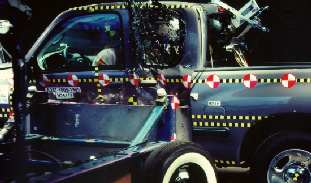
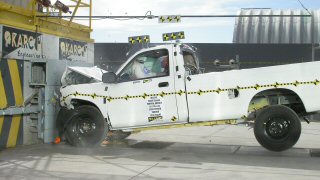
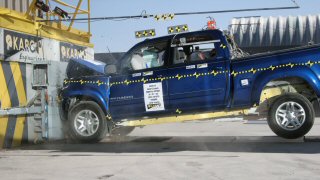
NHTSA crash tests
The agency crash-tested this model year itself. These are its own
photographs and star ratings.
These stars come from the pre-2011 crash test programme. NHTSA
rebuilt the programme for the 2011 model year and states that
ratings either side of that change are not comparable — so do
not read these against a 2011-or-newer car's stars.
Side barrier crash test
Frontal crash test
Frontal crash test
Photographs taken by NHTSA during its own New Car Assessment Program crash
tests of this model year. Public domain.
Configuration
Overall
Front
Side
Rollover
2006 Toyota Tundra Extended Cab
—
—
—
20.4% risk
2006 Toyota Tundra Regular Cab
—
—
—
20.4% risk
2006 Toyota Tundra 4-DR.
—
—
—
20.4% risk
When owners complained
A spike years after the car went on sale usually means a part wearing
out on schedule across the whole fleet — the kind of pattern no single
owner can see from inside their own car.
Oct 2005peak 19May 2026
NHTSA investigations into the 2006 Toyota Tundra
An investigation is the step before a recall: the agency has seen enough
complaints to look into a pattern itself. An open one means it thinks
something may be wrong and nothing has been fixed yet.
From 2000 through 2017, Takata produced millions of air bag inflators using two types of phase-stabilized ammonium nitrate ("PSAN") propellant -- propellant 2004 and propellant 2004L. After prolonged exposure to high temperature cycles and humidity, inflators using propellant 2004 can degrade, causing the propellant to burn too quickly when ignited. The rapid burning can cause the inflator to rupture during deployment, potentially causing serious or even fatal injury to vehicle occupants. See 2016 Blomquist Report at www.nhtsa.gov/sites/nhtsa.gov/files/documents/expert_report-hrblomquist.pdf.C...
PE09049Opened 6 Oct 2009Closed 26 Jan 2010FUEL SYSTEM, GASOLINE:STORAGE:TANK ASSEMBLY:MOUNTING
FRAME CORROSION
THIS INVESTIGATION WAS OPENED BASED ON 20 REPORTS OF MODEL YEAR (MY) 2000 AND 2001 VEHICLES EXPERIENCING SEVERE CORROSION OF THE FRAME, RESULTING IN EITHER UNDER-BODY MOUNTED SPARE TIRE SEPARATION OR REAR BRAKE FAILURE.THE FAILURE REPORT COUNTS SHOWN ABOVE ARE FOR MY 2000 AND 2001 VEHICLES ONLY.BY LETTER OF NOVEMBER 16, 2009 TOYOTA HAS NOTIFIED THE AGENCY THAT IT WILL CONDUCT A SAFETY RECALL (09V-444) OF APPROXIMATELY 110,000 MODEL YEAR (MY) 2000 THROUGH 2003 TUNDRA VEHICLES.THE AFFECTED RECALLED VEHICLES WERE SOLD OR ARE CURRENTLY REGISTERED IN THE DISTRICT OF COLUMBIA AND THE STATES OF CT, D...
EA06014Opened 2 Aug 2006Closed 28 Feb 2007SUSPENSION:FRONT:CONTROL ARM:LOWER BALL JOINT
LOWER BALL JOINT FAILURE
IN A LETTER DATED JANUARY 18, 2007, TOYOTA NOTIFIED NHTSA OF A SAFETY DEFECT IN MODEL YEAR (MY) 2004 THROUGH 2006 TOYOTA TUNDRA AND MY 2004 THROUGH 2007 TOYOTA SEQUOIA VEHICLES PRODUCED BETWEEN SEPTEMBER 15, 2003 AND NOVEMBER 17, 2006 (NHTSA RECALL NO. 07V-013). ACCORDING TO TOYOTA, ?IN THE FRONT SUSPENSION LOWER BALL JOINT ON THE SUBJECT VEHICLES, DUE TO POSSIBLE IMPROPER FINISHING OF THE BALL JOINT, SUCH AS THE ASPECT OF THE BALL STUD SURFACE, SOME BALL JOINTS MAY EXPERIENCE AN INCIDENTAL DETERIORATION OF THE INTERNAL LUBRICATION. THIS MAY CAUSE THE BALL JOINT TO WEAR AND LOOSEN PREMATURELY,...
Recalls on the 2006 Toyota Tundra
A complaint is one owner's allegation. A recall is the point at which
the manufacturer or a regulator agreed the defect is real and dangerous
enough to fix for free — however old the car is.
United States — NHTSA
22E002000
SUSPENSION:FRONT:CONTROL ARM:LOWER BALL JOINT
Tenneco Automotive (DRiV) is recalling certain aftermarket ball joints for 2004-2007 Toyota Sequoia and 2004-2006 Toyota Tundra vehicles, MOOG part number K80521, K80522, NAPA part number NCP2601633, NCP2601634, ACDelco part number 45D2344, and 45D2345. The ball joint housing may have inadequate hardness, causing premature failure.
Risk: A ball joint failure may cause a loss of control, increasing the risk of a crash.
19V741000
AIR BAGS:FRONTAL:PASSENGER SIDE:INFLATOR MODULE
Toyota Motor Engineering & Manufacturing (Toyota) is recalling certain 2010-2016 4Runner, 2003-2006 Tundra, 2003-2013 Corolla, 2009-2010 Corolla Matrix, 2004-2005 RAV4, 2002-2007 Sequoia, 2011-2013 Sienna, 2008-2012 Scion xB, 2008-2009 Lexus IS-F, 2007-2012 Yaris and Lexus ES350, 2010-2017 Lexus GX460, 2002-2010 Lexus SC430, 2006-2012 Lexus IS250 and IS350 and 2010-2015 Lexus IS250C and IS350C vehicles. These vehicles had their driver or passenger frontal air bag inflators previously replaced under a prior recall using inflators of the same design. The inflators may explode due to propellant degradation occurring after long-term exposure to high absolute humidity, temperature and temperature cycling.
Risk: An inflator explosion may result in sharp metal fragments striking the driver or other occupants resulting in serious injury or death.
16V396000
SEATS:FRONT ASSEMBLY:SEAT HEATER/COOLER
Southeast Toyota Distributors, LLC (SET) is recalling certain 2005-2011 4Runner, Highlander, Sequoia, and Sienna, 2005-2010 Avalon and Tundra, 2006-2008 Camry Solara, 2006-2010 Highlander hybrid, 2006-2011 Rav4 and Tacoma, 2007-2010 FJ Cruiser, 2007-2011 Camry hybrid, 2009-2010 Venza, 2010-2012 Prius, 1988-1990 and 2005-2010 Camry, and 1989 and 2009-2010 Corolla vehicles equipped with aftermarket accessory seat heaters with a copper strand heating element. The electrical wiring in the seat heaters may be damaged when the seat cushion is compressed.
Risk: If damaged, the copper strand heating element may short circuit, increasing the risk of a fire.
16V065000
AIR BAGS:SIDE/WINDOW
Toyota Motor Engineering & Manufacturing (Toyota) is recalling certain model year 2003-2006 Toyota Land Cruiser and Lexus LX470, 2005-2006 Toyota Tundra and Sequoia, 2004-2006 Toyota 4Runner and Lexus GX470 vehicles equipped with side curtain-shield-air bags. The affected vehicles have an air bag control module that may be improperly programmed, causing the side curtain-shield-air bags to deploy inadvertently.
Risk: If the side curtain-shield-air bags deploy unexpectedly, it can increase the risk of occupant injury.
15V286000
AIR BAGS
Toyota Motor Engineering & Manufacturing (Toyota) notified the agency on May 13, 2015, that they are recalling 2005-2007 Lexus SC, Toyota Corolla, Corolla Matrix, Sequoia, and Pontiac Vibe, and 2005-2006 Toyota Tundra vehicles that were originally sold, or ever registered, in Florida, along the Gulf Coast, Puerto Rico, Hawaii, the U.S. Virgin Islands, Guam, Saipan and American Samoa. On June 16, 2015 Toyota expanded the recall to cover an additional 769,055 vehicles, including certain model year 2002-2004 Lexus SC, Toyota Sequoia, 2003-2004 Toyota Corolla Matrix, Toyota Corolla, Pontiac Vibe, and Toyota Tundra vehicles, as well the vehicles covered by the May 13, 2015 notification in the portions of Georgia, Alabama, Louisiana, Mississippi and Texas that were not previously included. The inflators in the front passenger air bags are susceptible to rupture in the event of a crash necessitating the deployment of the front passenger air bag.
Risk: In the event of a crash necessitating deployment of the passenger's frontal air bag, the inflator could rupture with metal fragments striking the vehicle occupants potentially resulting in serious injury or death.
15V285000
AIR BAGS
Toyota Motor Engineering & Manufacturing (Toyota) notified the agency on May 13, 2015 that they are recalling certain model year 2004 Sequoia vehicles manufactured August 18, 2003, to August 19, 2004, and 2003-2004 Tundra vehicles manufactured March 18, 2003, to August 25, 2004. On June 16, 2015, Toyota expanded the recall to include an additional 1,270,468 vehicles, including model year 2002-2003 and 2005-2007 Sequoia, 2005-2006 Tundra, 2003-2007 Corolla, 2003-2007 Corolla Matrix, 2003-2007 Pontiac Vibe and 2002-2007 Lexus SC vehicles. This is to address a safety defect in the passenger side frontal air bag inflator which may produce excessive internal pressure causing the inflator to rupture upon deployment of the air bag. This recall addresses both the passenger side frontal air bags that were originally installed in the vehicles, as well as replacement air bags that may have been installed as replacement service parts. A replacement air bag may have been installed, as one example, if a vehicle had been in a crash necessitating the replacement of the passenger side frontal air bag.
Risk: In the event of a crash necessitating deployment of the passenger's frontal air bag, the inflator could rupture with metal fragments striking the vehicle occupants potentially resulting in serious injury or death.
14V743000
SEATS:FRONT ASSEMBLY:SEAT HEATER/COOLER
Southeast Toyota Distributors, LLC (SET) is recalling certain model year 2010-2011 Prius and Corolla, 2009-2011 Venza, 2006-2010 Avalon, 2007-2010 FJ Cruiser, 2005-2011 Sienna and Sequoia, 2006-2011 Tacoma 4x2 and 4x4, Camry, Highlander, Tundra 4x2 and 4x4, and 2007-2011 Rav4 and 4Runner. The affected vehicles may experience compression of the seat cushion which may damage the seat heater wiring.
Risk: Damage to the seat heater wiring could cause the wires to short, increasing the risk of the seat burning and causing personal injury to the occupant.
10V035000
EQUIPMENT:OTHER:LABELS
GULF STATES TOYOTA IS RECALLING CERTAIN MODEL YEAR 2005-2010 VEHICLES FOR FAILING TO COMPLY WITH THE REQUIREMENTS OF FEDERAL MOTOR VEHICLE SAFETY STANDARD NO. 110, "TIRE SELECTION AND RIMS." THESE VEHICLES WERE SOLD BETWEEN SEPTEMBER 1, 2005 AND JUNE 2, 2008 WITHOUT THE REQUISITE LOAD CARRYING CAPACITY MODIFICATION LABELS.
Risk: THIS DOES NOT MEET THE STANDARD REQUIREMENTS.
Canada — Transport Canada
Canada runs its own recall programme, and its campaigns do not
always mirror the American ones.
Recall 201952337,591 units in Canada
Airbag
Issue: On certain vehicles, long-term exposure to high absolute humidity and temperature, combined with high temperature cycling, may eventually degrade the propellant contained in the passenger-front airbag. This could cause the airbag to deploy with more force than normal. If the airbag inflator ruptures, fragments could be propelled toward vehicle occupants or cause damage to the airbag assembly, preventing its proper function. Safety Risk: If the vehicle is involved in a crash requiring an airbag deployment, the airbag inflator could rupture and create a risk of injury. Corrective Action: Owners will be notified by mail and instructed to take their vehicle to a dealer to have the passenger-front airbag inflator or airbag module replaced. Note: The Canadian climate results in the propellant degrading slowly. This recall is being conducted as a precaution to address future risk. It is expected that all airbag inflators will be replaced before their function would be affected. Additional Note: Vehicles may have had the original front passenger airbag inflator replaced as a "like-for-like" replacement under recall 2016-103 (Toyota Recall #'s SRC 241 & SRC 242) as a temporary remedy while evaluating a permanent remedy. These vehicles will receive the permanent remedy passenger airbag assembly under this recall.
Recall 2016103400,124 units in Canada
Airbag
On certain vehicles, the passenger (frontal) airbag inflator could produce excessive internal pressure during airbag deployment. Increased pressure may cause the inflator to rupture, which could allow fragments to be propelled toward vehicle occupants, increasing the risk of injury. This could also damage the airbag module, which could prevent proper deployment. Failure of the passenger airbag to fully deploy during a crash (where deployment is warranted) could increase the risk of personal injury to the seat occupant. Note: This recall supersedes recalls 2013113, 2014224, 2015197 and 2015269. Correction: All vehicles having not received a replacement inflator as part of the previous recall will now have a replacement inflator installed by dealers. For Matrix model vehicles, dealers may replace the front passenger airbag assembly with one equipped with a newly specified inflator.
Recall 2015269366,860 units in Canada
Airbag
On certain vehicles, the passenger (frontal) airbag inflator could produce excessive internal pressure during airbag deployment. Increased pressure may cause the inflator to rupture, which could allow fragments to be propelled toward vehicle occupants, increasing the risk of injury. This could also damage the airbag module, which could prevent proper deployment. Failure of the passenger airbag to fully deploy during a crash (where deployment is warranted) could increase the risk of personal injury to the seat occupant. Note: This recall is superseded by recall 2016103. Please see recall 2016103 for more information. <a href="http://wwwapps.tc.gc.ca/Saf-Sec-Sur/7/VRDB-BDRV/search-recherche/detail.aspx?lang=eng&&rn=2016103">Click here for more information</a>
Recall 200701411,298 units in Canada
Steering
On certain vehicles, a manufacturing issue with the front lower ball joint could result in premature wear. If the vehicle is operated for an extended period of time in this condition, the ball joint may eventually experience excessive wear and looseness, resulting in increased steering effort, reduced vehicle self-centering and noise in the front suspension. In extreme cases, when the driver continues to operate the vehicle in this condition, the lower ball joint may separate from the knuckle causing a loss of vehicle steering control. Correction: Dealers will inspect and, if necessary, replace the front lower ball joints.
Reports where the owner recorded a crash, a fire, an injury or a death.
Williamston, SC1 injured
UNKNOWN OR OTHER
June 14-15, 24 I was driving down the road when all of a sudden it felt like I hit something hard with the passenger front side of my truck. I knew there was nothing anywhere in the road other than potholes, so I was very shocked and worried of what it was. The truck jerked hard and slammed my head into the driver side window post almost knocking me out. It took all I had to keep from wrecking and hitting someone head on. Upon inspection, I saw that the frame had completely rusted through on the passenger side. I had a mechanic, body shop and several very experienced people look at it and have spoken with my insurance company and sent photos, but all are saying this is a serious life threatening Toyota issue where there were recalls and class action suits and they should be held accountable because they know there is a problem. Carfax didn’t show any issues and there were no apparent issues that stood out when I purchased the truck in Oct 2023. I still owe a lot on it and can’t drive it due to this issue. My mom spoke with a lady at Toyota who agreed that this never should’ve happened and that they would work with us to remedy the problem. Then she was transferred to another dept and then another dept and eventually told that Toyota has no open campaigns, the vehicle is out of warranty due to age and miles. No pictures were asked for even though they were offered as this is a serious safety problem that they know about. I was unaware at the time of purchase of this serous problem, but now that I’ve done a lot of research, I see that many have had similar incidents and luckily lived to write about it. Will the next one be so lucky? All I want is for Toyota to repair the vehicle. Toyota did tell my mom that a recall in 2016 had a rust plate/guard placed on the truck. It failed to work! Toyota needs to be held accountable for the many who are still having these issues. They are a large co.whi can afford to assist us who are struggling due to their sorry products.
NHTSA complaint #11607427 — an unverified report by a vehicle owner.
Beaver Dam, WICrash
STRUCTURE:BODY
On April 6, 2024 I was driving my 2006 Toyota Tundra when the brakes gave out and the vehicle went through the back wall of my garage. The brake fluid spilled onto the street and onto my driveway. There are 3 witnesses to this including a police officer. I am lucky that I was not a highway when this happened. I had the Tundra towed to a repair garage and they put it on a hoist. Two mechanics showed me the underside which is completely rusted , including some holes. They told me I would have continuous problems because of the rust. They also said that Toyota may have had a recall for my vehicle. I did the research and found that to be accurate. The recall includes millions Toyotas, including my Toyota Tundra, built between 2004 and 2008. So mine is eligible. However, Toyota did not contact me about the recall. Toyota did contact me about another recall involving the air bags. Toyota sent me a letter about the air bags. I still have the letter and I can send a copy if you wish. So, they have my name, address, and they know that I own the Tundra. But they did not contact me about the frame rust. Had they done so, I would have acted immediately. I purchased the vehicle in 2012, so it was a used vehicle. So, Toyota, obviously has had plenty of time to notify me, but they did not. I called Toyota and gave the person I talked to the VIN. She looked it up and told me there is " no service history of rust frame repair" for my Tundra" on their system. Toyota needs to rectify this. I expect that Toyota will pay for the rust frame damage, as they have for millions of other Toyotas, and for other damage to my vehicle, and other costs including towing costs, taxi service, the insurance deductible that I must pay for damage to my garage, two new front tires and other costs as they become known. This is only fair.
NHTSA complaint #11604712 — an unverified report by a vehicle owner.
Beaver Dam, WICrash
SERVICE BRAKES
On April 6, 2024 I was driving my 2006 Toyota Tundra when the brakes gave out and the vehicle went through the back wall of my garage. The brake fluid spilled onto the street and onto my driveway. There are 3 witnesses to this including a police officer. I am lucky that I was not a highway when this happened. I had the Tundra towed to a repair garage and they put it on a hoist. Two mechanics showed me the underside which is completely rusted , including some holes. They told me I would have continuous problems because of the rust. They also said that Toyota may have had a recall for my vehicle. I did the research and found that to be accurate. The recall includes millions Toyotas, including my Toyota Tundra, built between 2004 and 2008. So mine is eligible. However, Toyota did not contact me about the recall. Toyota did contact me about another recall involving the air bags. Toyota sent me a letter about the air bags. I still have the letter and I can send a copy if you wish. So, they have my name, address, and they know that I own the Tundra. But they did not contact me about the frame rust. Had they done so, I would have acted immediately. I purchased the vehicle in 2012, so it was a used vehicle. So, Toyota, obviously has had plenty of time to notify me, but they did not. I called Toyota and gave the person I talked to the VIN. She looked it up and told me there is " no service history of rust frame repair" for my Tundra" on their system. Toyota needs to rectify this. I expect that Toyota will pay for the rust frame damage, as they have for millions of other Toyotas, and for other damage to my vehicle, and other costs including towing costs, taxi service, the insurance deductible that I must pay for damage to my garage, two new front tires and other costs as they become known. This is only fair.
NHTSA complaint #11604712 — an unverified report by a vehicle owner.
Belleville, ILCrash
STRUCTURE:BODY
Frame has snapped after being denied a replacement by Toyota under their extended service campaign for frame issues. Dealer told customer to make a separate appointment for frame inspection while truck was in for unrelated service and campaign had expired while customer was in hospital ultimately ending with Toyota denying a replacement citing that customer was outside of date for service campaign.
NHTSA complaint #11584935 — an unverified report by a vehicle owner.
Auxvasse, MOCrash1 injured
AIR BAGS
Takata Recall. The contact owned a 2006 Toyota Tundra. The contact stated while driving 55 mph, the front driver and passenger-side air bags deployed independently, causing the contact to crash into a power pole. The contact stated no warning light was illuminated. The contact sustained a back injury and sought medical attention after the incident. The police did show up but the contact was not aware if they filed a police report. The vehicle was not drivable. The insurance deemed the vehicle a total loss. The vehicle was towed to a collision center. The vehicle was not diagnosed. A dealer was not contacted. The manufacturer had not been informed of the failure. The VIN was associated with NHTSA Campaign Numbers: 15V286000 (Air bags) and 16V065000 (Air bags). The failure mileage was unknown.
NHTSA complaint #11472315 — an unverified report by a vehicle owner.
at 118,000 milesKnoxville, IACrash1 injured
AIR BAGS
The contact owns a 2006 Toyota Tundra. The contact stated while driving approximately 70 mph, the contact lost control of the vehicle which resulted in the vehicle flipping 3 times and none of the airbags deployed. The contact sustained a bruised lung, bruised arms, and bruised ribs, and sought medical treatment. The contact does not know if a police report was taken. The vehicle was towed to a tow yard then was towed again to an insurance lot. The manufacturer was not informed of the failure. The failure mileage was approximately 118,000. Consumer stated the airbag/s failed to deploy.
NHTSA complaint #11443677 — an unverified report by a vehicle owner.
The most recent complaints
In the owners' own words, exactly as filed with NHTSA.
at 330,000 milesMason, OH
STRUCTURE:FRAME AND MEMBERS
The vehicle was at the independent mechanic. For a repair and discovered that the bottom frame was rusted. The vehicle was not repaired. The dealer was also notified of the failure; however the vehicle was not diagnosed or repaired. The manufacturer was not notified of the issue. The approximate failure mileage was 330,000.
NHTSA complaint #11740080 — an unverified report by a vehicle owner.
Elkview, WV
STRUCTURE:BODY
My frame is rotting, with literal holes in it. I spoke with a dealership and they stated the recall had been fixed in 2015, prior to me owning it. I was told to contact the manufacturer and they said it would be an out of pocket expense. When I research the recall, the affected area of the frame is the same, with no apparent fixes.
NHTSA complaint #11718303 — an unverified report by a vehicle owner.
Eastham, MA
STEERING
The frame has rusted so badly that the sway bar mount disengaged from the frame. Brought it to a Toyota dealership and confirmed that frame recalls were performed on earlier models with the same issue . However my year did not qualify.
NHTSA complaint #11714854 — an unverified report by a vehicle owner.
Eastham, MA
UNKNOWN OR OTHER
The frame has rusted so badly that the sway bar mount disengaged from the frame. Brought it to a Toyota dealership and confirmed that frame recalls were performed on earlier models with the same issue . However my year did not qualify.
NHTSA complaint #11714854 — an unverified report by a vehicle owner.
Eastham, MA
SUSPENSION
The frame has rusted so badly that the sway bar mount disengaged from the frame. Brought it to a Toyota dealership and confirmed that frame recalls were performed on earlier models with the same issue . However my year did not qualify.
NHTSA complaint #11714854 — an unverified report by a vehicle owner.
at 194,040 milesWhittier, CA
TIRES
The contact’s father owns a 2006 Toyota Tundra equipped with Cooper Tires, Tire Line: Discoverer Rugged Trek, Tire Size: 265/70/R16, DOT Number: (N/A). While the contact’s father was driving at an undisclosed speed, the driver lost control of the vehicle. The contact’s father was able to regain control of the vehicle by releasing the accelerator pedal and allowing the vehicle to decelerate. The driver was able to pull over to the side of the road to inspect the vehicle. The driver became aware that the tread on the driver's side tire had separated, causing a portion of the tire near the seam to detach around the entire tire. The tire was a replacement tire. The driver replaced the tire with the spare. The contact sent an email to American Tire Depot where the tire was purchased. The manufacturer was informed of the failure. The vehicle failure mileage was approximately 194,040, and the tire failure mileage was approximately 17,339.
NHTSA complaint #11694530 — an unverified report by a vehicle owner.
Babylon, NY
UNKNOWN OR OTHER
I own a 2006 Toyota Tundra with severe frame corrosion and rot. The rust has eaten through major portions of the frame, especially around the rear crossmember and leaf spring mounts. It has compromised the vehicle’s safety and structural integrity. Toyota previously offered frame replacements and extended corrosion coverage for similar models (Tacoma, Sequoia, and certain Tundras), but my VIN was denied even though the issue is identical. The corrosion is so severe that it poses a risk of the frame snapping or suspension components detaching while driving. This is a serious safety defect, not just cosmetic rust. The frame can fail without warning, which could lead to loss of control or an accident. Toyota should be required to inspect and address this defect for all affected vehicles. Location of problem: Frame rails, rear crossmember, spare tire area, and control arm mounts. Date problem occurred: 07/09/2025 I’m requesting that NHTSA investigate and require Toyota to include my vehicle in their frame corrosion program or issue a new recall covering affected first-generation Tundras.
NHTSA complaint #11691772 — an unverified report by a vehicle owner.
Mission, KS
SUSPENSION
Frame rust is so extreme that rear suspension mounts are completely disconnected from frame
NHTSA complaint #11691861 — an unverified report by a vehicle owner.
Mission, KS
STRUCTURE:BODY
Frame rust is so extreme that rear suspension mounts are completely disconnected from frame
NHTSA complaint #11691861 — an unverified report by a vehicle owner.
at 277,000 milesStrongsville, OH
SERVICE BRAKES, HYDRAULIC
The contact owns a 2006 Toyota Tundra. The contact stated that while driving 25 MPH, the brake pedal was depressed to prevent a crash with another vehicle that had pulled in front of the vehicle, but the vehicle failed to respond. The contact was able to veer into another lane safely, and the crash was avoided. The brake warning light was illuminated after the failure. The contact continued driving and was able to slow down by shifting the transmission into a lower gear. The vehicle was taken to an independent mechanic, where it was diagnosed with brake line failure which lead to the brake master cylinder and brake fluid reservoir becoming empty. The brake line was replaced, and the vehicle was repaired. The manufacturer was not notified of the failure. The failure mileage was approximately 277,000.
NHTSA complaint #11689706 — an unverified report by a vehicle owner.
at 200,000 milesPlano, TX
STRUCTURE
The contact owns a 2006 Toyota Tundra. The contact stated that upon further inspection, it was noticed that the frame was rusted. In addition, the contact related the failure to an unknown NHTSA Campaign that was performed in the past; however, the failure reoccurred. The local dealer that performed the recall repair was contacted; however, the vehicle was not diagnosed or repaired. The manufacturer was made aware of the failure. The failure mileage was approximately 200,000.
NHTSA complaint #11686234 — an unverified report by a vehicle owner.
Vancleave, MS
SUSPENSION
The lower ball joint broke causing the upper ball joint to break and damage the strut rocked pion and the brake line. I contacted Toyota and they said it was fixed from a former recall
NHTSA complaint #11678618 — an unverified report by a vehicle owner.
Hellertown, PA
UNKNOWN OR OTHER
The frame on my 2006 Toyota Tundra SR5 has severe corrosion and multiple areas of rust perforation despite being treated under Toyota’s Limited Service Campaign D0D in 2015. During that campaign, the dealer removed the bed, documented active rust on the frame, cleaned it, and applied Corrosion-Resistant Compound (CRC) to key areas as the preventative remedy. As documented in multiple repairs the corrosion was already advancing at the time the CRC was applied, the steering shaft boot was replaced the same day as the compound was put on at 93,822 miles, several other critical safety failure shortly after; the brake pivots seized at 94900, Rotors rust pitted at 99537, bumper had perforations at 109407, 1 brake line from master cylinder and 1 brake line from ABS actuator leaking near the junction block on L/S of the frame at 113422, 52 days later the shift cable was broken at 114904. The current perforation and delamination indicate that the D0D remedy failed to prevent structural degradation as intended. The vehicle is available for inspection upon request. The vehicle’s structural integrity is severely compromised, creating a risk of frame failure while driving. This puts my safety and the safety of others at risk due to potential loss of control or component separation. The problem has not yet been inspected by the dealer in its current condition but has been escalated to Toyota Corporate. I have attached the communications with them. The truck has been fully serviced through Toyota since new, with the last documented service in January 2021. There were no warning lamps or dashboard messages prior to the failure. Visible rust first appeared prior to the D0D treatment and has now progressed to full perforation. The vehicle is currently unsafe to drive.
NHTSA complaint #11677793 — an unverified report by a vehicle owner.
Hellertown, PA
SUSPENSION
The frame on my 2006 Toyota Tundra SR5 has severe corrosion and multiple areas of rust perforation despite being treated under Toyota’s Limited Service Campaign D0D in 2015. During that campaign, the dealer removed the bed, documented active rust on the frame, cleaned it, and applied Corrosion-Resistant Compound (CRC) to key areas as the preventative remedy. As documented in multiple repairs the corrosion was already advancing at the time the CRC was applied, the steering shaft boot was replaced the same day as the compound was put on at 93,822 miles, several other critical safety failure shortly after; the brake pivots seized at 94900, Rotors rust pitted at 99537, bumper had perforations at 109407, 1 brake line from master cylinder and 1 brake line from ABS actuator leaking near the junction block on L/S of the frame at 113422, 52 days later the shift cable was broken at 114904. The current perforation and delamination indicate that the D0D remedy failed to prevent structural degradation as intended. The vehicle is available for inspection upon request. The vehicle’s structural integrity is severely compromised, creating a risk of frame failure while driving. This puts my safety and the safety of others at risk due to potential loss of control or component separation. The problem has not yet been inspected by the dealer in its current condition but has been escalated to Toyota Corporate. I have attached the communications with them. The truck has been fully serviced through Toyota since new, with the last documented service in January 2021. There were no warning lamps or dashboard messages prior to the failure. Visible rust first appeared prior to the D0D treatment and has now progressed to full perforation. The vehicle is currently unsafe to drive.
NHTSA complaint #11677793 — an unverified report by a vehicle owner.
Hellertown, PA
STRUCTURE:BODY
The frame on my 2006 Toyota Tundra SR5 has severe corrosion and multiple areas of rust perforation despite being treated under Toyota’s Limited Service Campaign D0D in 2015. During that campaign, the dealer removed the bed, documented active rust on the frame, cleaned it, and applied Corrosion-Resistant Compound (CRC) to key areas as the preventative remedy. As documented in multiple repairs the corrosion was already advancing at the time the CRC was applied, the steering shaft boot was replaced the same day as the compound was put on at 93,822 miles, several other critical safety failure shortly after; the brake pivots seized at 94900, Rotors rust pitted at 99537, bumper had perforations at 109407, 1 brake line from master cylinder and 1 brake line from ABS actuator leaking near the junction block on L/S of the frame at 113422, 52 days later the shift cable was broken at 114904. The current perforation and delamination indicate that the D0D remedy failed to prevent structural degradation as intended. The vehicle is available for inspection upon request. The vehicle’s structural integrity is severely compromised, creating a risk of frame failure while driving. This puts my safety and the safety of others at risk due to potential loss of control or component separation. The problem has not yet been inspected by the dealer in its current condition but has been escalated to Toyota Corporate. I have attached the communications with them. The truck has been fully serviced through Toyota since new, with the last documented service in January 2021. There were no warning lamps or dashboard messages prior to the failure. Visible rust first appeared prior to the D0D treatment and has now progressed to full perforation. The vehicle is currently unsafe to drive.
NHTSA complaint #11677793 — an unverified report by a vehicle owner.
at 148,857 milesCharlotte, NC
STRUCTURE:BODY
The contact owns a 2006 Toyota Tundra. The contact stated that while depressing the brake pedal, the steering wheel vibrated abnormally, and the steering wheel was difficult to hold steady. The contact stated that extra effort was needed to secure the steering wheel while depressing the brake pedal to stop the vehicle. The contact stated that the TPMS was providing erroneous operating information and alerts. The contact inspected the vehicle and became aware that the cross member near the steering rack had a fractured in the frame. The vehicle was taken to a Toyota Collision Center, where a mechanic determined that the entire sub frame needed to be replaced. The vehicle was not repaired. The manufacturer was informed of the failure and referred the contact to the Toyota Collision Center for assistance. The manufacturer opened a case for the failure. The failure mileage was approximately 148,857.
NHTSA complaint #11674574 — an unverified report by a vehicle owner.
Okeana, OH
UNKNOWN OR OTHER
I have a 2006 Tundra with 120k miles and I was told it wasn't one that was effected by the recall. However I'm have frame rot issues and just had to spend thousands of dollars to make it safe. This is the second time I've had to repair the frame in the 4/5 years I've owned it.
NHTSA complaint #11665599 — an unverified report by a vehicle owner.
at 35,000 milesRiverdale, NJ
STRUCTURE
The contact owns a 2006 Toyota Tundra. The contact stated upon taking the vehicle to an independent mechanic for a routine brake line repair, the contact was informed that the sub frame was severely corroded. The mechanic informed the contact that the frame could collapse if the contact continued driving the vehicle. Additionally, the contact stated that while driving at an undisclosed speed and depressing the brake pedal, the vehicle hesitated to respond. There was no warning light illuminated. The vehicle was not repaired. No further information was available. The manufacturer was made aware of the failure and referred the contact to the NHSTA Hotline for assistance. The failure mileage was approximately 35,000.
NHTSA complaint #11652536 — an unverified report by a vehicle owner.
at 35,000 milesRiverdale, NJ
SERVICE BRAKES, HYDRAULIC
The contact owns a 2006 Toyota Tundra. The contact stated upon taking the vehicle to an independent mechanic for a routine brake line repair, the contact was informed that the sub frame was severely corroded. The mechanic informed the contact that the frame could collapse if the contact continued driving the vehicle. Additionally, the contact stated that while driving at an undisclosed speed and depressing the brake pedal, the vehicle hesitated to respond. There was no warning light illuminated. The vehicle was not repaired. No further information was available. The manufacturer was made aware of the failure and referred the contact to the NHSTA Hotline for assistance. The failure mileage was approximately 35,000.
NHTSA complaint #11652536 — an unverified report by a vehicle owner.
Somers Point, NJ
UNKNOWN OR OTHER
My 2006 tundra has major rust on the frame to the point it isn't safe to drive anymore. I have reached out to Toyota and my local dealer and have received the same answer from both saying its not something that Toyota will cover, despite the fact that there was a national safety recall that started in 2016 for rust related issues.
NHTSA complaint #11638498 — an unverified report by a vehicle owner.
Somers Point, NJ
STRUCTURE:BODY
My 2006 tundra has major rust on the frame to the point it isn't safe to drive anymore. I have reached out to Toyota and my local dealer and have received the same answer from both saying its not something that Toyota will cover, despite the fact that there was a national safety recall that started in 2016 for rust related issues.
NHTSA complaint #11638498 — an unverified report by a vehicle owner.
Somers Point, NJ
SERVICE BRAKES
My 2006 tundra has major rust on the frame to the point it isn't safe to drive anymore. I have reached out to Toyota and my local dealer and have received the same answer from both saying its not something that Toyota will cover, despite the fact that there was a national safety recall that started in 2016 for rust related issues.
NHTSA complaint #11638498 — an unverified report by a vehicle owner.
San Diego, CA
UNKNOWN OR OTHER
The frame/chassis of my truck has sections that are completely rusted out. For instance, the part of the chassis that is responsible for holding the fuel tank in place is rotting away. I know there was a service campaign to have these trucks coated with some preventive coating but that is as effective as the original coating. The truck needs a new frame due to rust.
NHTSA complaint #11625114 — an unverified report by a vehicle owner.
Kitty Hawk, NC
STRUCTURE:BODY
The truck as a whole is in immaculate condition with absolutely no other issues other than the frame is completely rotting away. Holes on multiple pieces of the frame well above the six of a quarter.
NHTSA complaint #11620369 — an unverified report by a vehicle owner.
Williamston, SC1 injured
UNKNOWN OR OTHER
June 14-15, 24 I was driving down the road when all of a sudden it felt like I hit something hard with the passenger front side of my truck. I knew there was nothing anywhere in the road other than potholes, so I was very shocked and worried of what it was. The truck jerked hard and slammed my head into the driver side window post almost knocking me out. It took all I had to keep from wrecking and hitting someone head on. Upon inspection, I saw that the frame had completely rusted through on the passenger side. I had a mechanic, body shop and several very experienced people look at it and have spoken with my insurance company and sent photos, but all are saying this is a serious life threatening Toyota issue where there were recalls and class action suits and they should be held accountable because they know there is a problem. Carfax didn’t show any issues and there were no apparent issues that stood out when I purchased the truck in Oct 2023. I still owe a lot on it and can’t drive it due to this issue. My mom spoke with a lady at Toyota who agreed that this never should’ve happened and that they would work with us to remedy the problem. Then she was transferred to another dept and then another dept and eventually told that Toyota has no open campaigns, the vehicle is out of warranty due to age and miles. No pictures were asked for even though they were offered as this is a serious safety problem that they know about. I was unaware at the time of purchase of this serous problem, but now that I’ve done a lot of research, I see that many have had similar incidents and luckily lived to write about it. Will the next one be so lucky? All I want is for Toyota to repair the vehicle. Toyota did tell my mom that a recall in 2016 had a rust plate/guard placed on the truck. It failed to work! Toyota needs to be held accountable for the many who are still having these issues. They are a large co.whi can afford to assist us who are struggling due to their sorry products.
NHTSA complaint #11607427 — an unverified report by a vehicle owner.