Owners have filed 356 complaints
about the 2015 Hyundai Elantra with NHTSA between 2014 and 2026.
The largest single group is the engine & cooling.
Across this model's run it ranks 10 of 33 worst.
The letter says how bad. This says what kind — whether this year drew
an unusual number of complaints, unusually dangerous
ones, or failures that arrived unusually early.
The dashed ring is 50 — the national norm. Further out is worse.
Complaint volume — 49
Against the median year of the Hyundai Elantra. 50 means typical for this
model; 100 means roughly double.
Severity — 100
22.5% of these complaints
involved a crash, fire, injury or death, against a national rate of
9.7%.
Early failure — 55
32% of failures with a mileage on record happened under
36,000 miles, against a national rate of
29%.
How 2015 compares with every other Hyundai Elantra
NHTSA files every complaint against a named sub-assembly, not just a
system. This is the difference between knowing it was "the engine" and
knowing which part of it — the list to hand a mechanic.
Body
1466.7%
Key/Sender
14.8%
Crank/Camshaft Position Sensor
14.8%
Automatic Emergency Braking
14.8%
Speedometer/Odometer
14.8%
Temporary/Emergency Spare Tire
14.8%
Accelerator Pedal
14.8%
Head Restraint
14.8%
When it fails
Odometer readings owners gave when they filed. About half of all
complaints include one.
Under 1,000 miles
74.2%
1,000 – 9,999 miles
2011.9%
10,000 – 24,999 miles
169.5%
25,000 – 49,999 miles
3520.8%
50,000 – 74,999 miles
3520.8%
75,000 – 99,999 miles
2514.9%
100,000 – 149,999 miles
2514.9%
150,000+ miles
53.0%
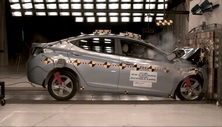
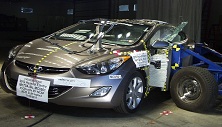
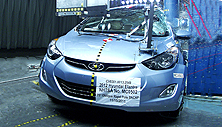
NHTSA crash tests
The agency crash-tested this model year itself. These are its own
photographs and star ratings.
Frontal crash test
Side barrier crash test
Side pole crash test
Photographs taken by NHTSA during its own New Car Assessment Program crash
tests of this model year. Public domain.
Configuration
Overall
Front
Side
Rollover
2015 Hyundai Elantra 4 DR FWD
10.9% risk
2015 Hyundai Elantra 2 DR FWD
—
—
—
—
When owners complained
A spike years after the car went on sale usually means a part wearing
out on schedule across the whole fleet — the kind of pattern no single
owner can see from inside their own car.
Nov 2014peak 12Aug 2026
NHTSA investigations into the 2015 Hyundai Elantra
An investigation is the step before a recall: the agency has seen enough
complaints to look into a pattern itself. An open one means it thinks
something may be wrong and nothing has been fixed yet.
The Office of Defects Investigation (ODI) has received eight Hyundai Motor America (Hyundai) and eight Kia America, Inc. (Kia) Part 573 Recall Reports between 2016 and 2023. The combined 16 safety recalls all involve the antilock braking system (ABS) modules or Hydraulic Electronic Control Units (HECU) manufactured by the equipment supplier Mando. The Part 573 Recall Reports contain varying defect descriptions and differing remedy descriptions for the same or similar equipment supplied by Mando. Safety recalls included in this Audit Query (AQ) review include: Hyundai recalls 20V-520, 20V-543,...
DP21003Opened 12 Nov 2021Closed 20 Jun 2023VEHICLE SPEED CONTROL:THROTTLE
Throttle control system vulnerabilities
The Office of Defects Investigation (ODI) of the National Highway Traffic Safety Administration (NHTSA) received a petition letter dated October 10, 2021, requesting an investigation of possible defects in the electronic throttle control (ETC) system on certain Kia vehicles resulting in the opening of DP21-003. Accordingly, Model Year (MY) 2005-2016 Kia Optima/K5, MY 2006-2015 Kia Sorento, MY 2007-2016 Hyundai Elantra, MY 2007-2016 Hyundai Santa Fe, MY 2006-2015 Hyundai Sonatas are all part of the subject population. The petition was originally filed as a Vehicle Owner Questionnaire that can b...
Recalls on the 2015 Hyundai Elantra
A complaint is one owner's allegation. A recall is the point at which
the manufacturer or a regulator agreed the defect is real and dangerous
enough to fix for free — however old the car is.
United States — NHTSA
26V307000
AIR BAGS:FRONTAL:DRIVER SIDE:INFLATOR MODULE
Hyundai Motor America (Hyundai) is recalling certain 2015-2016 Elantra and 2016 Elantra GT vehicles. The driver's air bag inflator may rupture during deployment.
Risk: An air bag inflator that ruptures may result in sharp metal fragments striking the driver or passengers, increasing the risk of injury or death.
24V146000
LATCHES/LOCKS/LINKAGES:TRUNK LID:LATCH
Hyundai Motor America (Hyundai) is recalling certain 2015-2016 Elantra vehicles. The trunk latch may become damaged, preventing the opening of the trunk from the inside. As such, these vehicles fail to comply with the requirements of Federal Motor Vehicle Safety Standard number 401, "Internal Trunk Release."
Risk: A person inside the trunk compartment may become trapped, increasing their risk of injury.
23V651000
SERVICE BRAKES, HYDRAULIC:ANTILOCK/TRACTION CONTROL/ELECTRONIC LIMITED SLIP:CONTROL UNIT/MODULE
Hyundai Motor America (Hyundai) is recalling certain 2011-2015 Elantra, Genesis Coupe, Sonata Hybrid, 2012-2015 Accent, Azera, Veloster, 2013-2015 Elantra Coupe, Santa Fe, 2014-2015 Equus, 2010-2012 Veracruz, 2010-2013 Tucson, 2015 Tucson Fuel Cell, and 2013 Santa Fe Sport vehicles. The Anti-Lock Brake System (ABS) module may leak brake fluid internally and cause an electrical short, which can result in an engine compartment fire while parked or driving.
Risk: An engine compartment fire while parked or driving can increase the risk of injury.
Canada — Transport Canada
Canada runs its own recall programme, and its campaigns do not
always mirror the American ones.
Recall 2026234515 units in Canada
Airbag
Issue: On certain vehicles, the driver-front airbag inflator could rupture when the airbag deploys in a crash. If this happens, the airbag may not fully inflate and fragments could be propelled toward vehicle occupants. Safety Risk: An airbag inflator that ruptures can create a risk of injury or death. Corrective Actions: Hyundai will notify owners in writing and advise you to take your vehicle to a dealership to inspect and, if necessary, replace the driver-front airbag inflator.
Recall 202412636,408 units in Canada
Structure
Issue: On certain vehicles, a part in the trunk release latch could fail. If this happens, the emergency trunk release located inside the trunk may not work properly. This could prevent a person that is trapped inside the trunk from opening it. Safety Risk: If a person is closed inside the trunk compartment, they may not be able to get out. This could create a risk of injury. Corrective Actions: Hyundai will notify owners by mail and advise you to take your vehicle to a dealership to replace the trunk latch assembly.
Recall 2024080353,849 units in Canada
Brakes
Issue: On certain vehicles, brake fluid could leak into the control module for the antilock brake system (ABS) and cause it to short circuit. Note: This recall replaces recall R0246 (Transport Canada recall number 2023-527). For the Sonata model, only the Sonata Hybrid model is affected by this recall. Safety Risk: A short circuit could create a fire risk, even while the vehicle is parked and turned off. Corrective Actions: Hyundai will notify owners by mail and advise you to take your vehicle to a dealership to replace the fuse for the ABS module. Hyundai recommends that you should park your vehicle outdoors and away from other vehicles or structures until the recall repairs have been completed.
Recall 2023527326,942 units in Canada
Brakes
This recall was replaced by Transport Canada Recall No. 2024-080. Issue: On certain vehicles, brake fluid could leak into the control module for the antilock brake system (ABS) and cause it to short circuit. Safety Risk: A short circuit could create a fire risk, even while the vehicle is parked and turned off. Corrective Actions: Hyundai will notify owners by mail and advise you to take your vehicle to a dealership to replace the fuse for the ABS module. Hyundai recommends that you should park your vehicle outdoors and away from other vehicles or structures until the recall repairs have been completed.
Recall 2023125404,543 units in Canada
Brakes
Issue: Hyundai is conducting a special service campaign that provides anti-corrosion treatment to certain underbody components. Over time, components under the vehicle, including brake lines could corrode. If this happens, a brake line could fail and leak. A brake fluid leak can result in reduced braking. Safety Risk: Reduced braking can cause an extended stopping distance and increase the risk of a crash. Corrective Actions: Hyundai will notify owners by mail and advise you to take your vehicle to a dealership to inspect the underbody, including the brake lines. The dealer will apply an anti-corrosion treatment to certain parts, and replace the brake lines if necessary.
Recall 2022244178,064 units in Canada
Engine
Issue: Hyundai Auto Canada is conducting a Product Improvement Campaign that provides an update to the engine control module to detect potential problems before an engine fails. An engine failure would cause a sudden loss of power with an inability to restart. Note: This only affects certain vehicles equipped with a 2.0 L Nu GDI engine. For the Sonata model, only the Sonata Hybrid and Plug-In Hybrid (PHEV) models are affected by this campaign. This is an expansion of R0180 (Transport Canada #2021-575). Any vehicle that received a software update under campaign R0180 does not require this update. Safety Risk: A sudden loss of engine power could increase the risk of an accident. An engine failure could also create the risk of a fire. Corrective Actions: Hyundai will notify owners by mail and advise you to take your vehicle to a dealer to update the software for the engine control module. Note: Hyundai recommends that you should always follow the correct vehicle maintenance schedule, which is printed in the Owner's Manual. If you experience unusual engine noise, reduced power, or a check engine/oil warning light, Hyundai advises you to immediately visit a Hyundai dealership to have your vehicle diagnosed.
Recall 2021575152,924 units in Canada
Engine
This recall was replaced by Transport Canada Recall No. 2022-244. Issue: Hyundai Auto Canada is conducting a Product Improvement Campaign that provides an update to the engine control module to detect potential problems before an engine fails. An engine failure would cause a sudden loss of power with an inability to restart. Note: This only affects certain vehicles equipped with a 2.0 L Nu GDI engine. For the Sonata model, only the Sonata Hybrid and Plug-In Hybrid (PHEV) models are affected by this campaign. All vehicles previously included in TC # 2021-034 are now part of this new campaign. Safety Risk: A sudden loss of engine power could increase the risk of an accident. An engine failure could also create the risk of a fire. Corrective Actions: Hyundai will notify owners by mail and advise you to take your vehicle to a dealer to update the software for the engine control module. Note: Hyundai recommends that you should always follow the correct vehicle maintenance schedule, which is printed in the Owner's Manual. If you experience unusual engine noise, reduced power, or a check engine/oil warning light, Hyundai advises you to immediately visit a Hyundai dealership to have your vehicle diagnosed.
Recall 2021034100,927 units in Canada
Engine
This campaign was replaced by Transport Canada No. 2021-575. Issue: Hyundai Auto Canada is conducting a Product Improvement Campaign that provides an update to the engine control module to detect potential problems before an engine fails. An engine failure would cause a sudden loss of power with an inability to restart. Note: This only affects vehicles equipped with a 2.0 L Nu engine. For the Sonata model, only the Sonata Hybrid is affected by this campaign. Safety Risk: A sudden loss of engine power could increase the risk of an accident. An engine failure could also create the risk of a fire. Corrective Actions: The company will notify owners by mail. Owners will be instructed to take their vehicle to a dealer to update the software for the engine control module. Note: Hyundai recommends that you should always follow the correct vehicle maintenance schedule, which is printed in the Owner's Manual. If you experience unusual engine noise, reduced power, or a check engine/oil warning light, Hyundai advises you to immediately visit a Hyundai dealership to have your vehicle diagnosed.
Reports where the owner recorded a crash, a fire, an injury or a death.
at 150,000 milesEmerson, GACrash1 injured
AIR BAGS
The contact owns a 2015 Hyundai Elantra. The contact stated that while driving at an undisclosed speed, the brake pedal was depressed, however, the vehicle failed to stop as intended. The vehicle crashed into a guardrail. In addition, the air bags did not deploy. The contact was taken to the hospital and was treated for facial fractures. The contact was then transferred to another hospital for additional treatment to her face. The vehicle was towed to a local tow yard. The vehicle was not inspected by an independent mechanic or the dealer. The manufacturer was made aware of the failure and a case was filed. The failure mileage was approximately 150,000.
NHTSA complaint #11659096 — an unverified report by a vehicle owner.
Isanti, MNCrash
POWER TRAIN
Drove my 2015 Hyundai Elantra on the coldest day of the year to an appointment. Car was fully warmed up. Pulled into a gas station to park and was going less than 3 mph, making a left hand turn into the space. Elantra suddenly accelerated hard and the car hit a cement pole, causing extensive front end damage. If car had full insurance coverage, it would have been a write off. Hood crumpled, radiator damaged, front grill broken, bent the engine bar in half. Significant damage but the air bag did not deploy. Had to have it towed home 35 miles. Damage was in the middle of the front of the car, so I was already in the parking space. No warning lights of any sort before this happened. Very dangerous and I would never buy another Hyundai. I bought this car brand new in 2015 and have had recalls taken care of (anti theft software one). Over the course of owning this car, other odd things have occurred as well, such as white smoke coming out of the engine upon acceleration, accelerated wear on the tires due to the back end, and engine will suddenly stop for no reason while driving (this happened twice) Inferior product!
NHTSA complaint #11643595 — an unverified report by a vehicle owner.
Isanti, MNCrash
VEHICLE SPEED CONTROL
Drove my 2015 Hyundai Elantra on the coldest day of the year to an appointment. Car was fully warmed up. Pulled into a gas station to park and was going less than 3 mph, making a left hand turn into the space. Elantra suddenly accelerated hard and the car hit a cement pole, causing extensive front end damage. If car had full insurance coverage, it would have been a write off. Hood crumpled, radiator damaged, front grill broken, bent the engine bar in half. Significant damage but the air bag did not deploy. Had to have it towed home 35 miles. Damage was in the middle of the front of the car, so I was already in the parking space. No warning lights of any sort before this happened. Very dangerous and I would never buy another Hyundai. I bought this car brand new in 2015 and have had recalls taken care of (anti theft software one). Over the course of owning this car, other odd things have occurred as well, such as white smoke coming out of the engine upon acceleration, accelerated wear on the tires due to the back end, and engine will suddenly stop for no reason while driving (this happened twice) Inferior product!
NHTSA complaint #11643595 — an unverified report by a vehicle owner.
Isanti, MNCrash
FUEL/PROPULSION SYSTEM
Drove my 2015 Hyundai Elantra on the coldest day of the year to an appointment. Car was fully warmed up. Pulled into a gas station to park and was going less than 3 mph, making a left hand turn into the space. Elantra suddenly accelerated hard and the car hit a cement pole, causing extensive front end damage. If car had full insurance coverage, it would have been a write off. Hood crumpled, radiator damaged, front grill broken, bent the engine bar in half. Significant damage but the air bag did not deploy. Had to have it towed home 35 miles. Damage was in the middle of the front of the car, so I was already in the parking space. No warning lights of any sort before this happened. Very dangerous and I would never buy another Hyundai. I bought this car brand new in 2015 and have had recalls taken care of (anti theft software one). Over the course of owning this car, other odd things have occurred as well, such as white smoke coming out of the engine upon acceleration, accelerated wear on the tires due to the back end, and engine will suddenly stop for no reason while driving (this happened twice) Inferior product!
NHTSA complaint #11643595 — an unverified report by a vehicle owner.
Germantown, MDCrash
VEHICLE SPEED CONTROL
On [XXX] I was parking in my parking spot outside my house, went to pull up 3 more inches in my parking spot when the vehicle accelerated at an extremely rapid speed, went over the high curb, up my front lawn into the tree in my front yard. It was a battle between the brake and the gas acceleration event. Then I put it gently in reverse, my car fled rapidly down into the parking lot at such a high rate of speed, I turned the wheel, my car hit 3 cars across the parking lot, shot across the parking lot, popped over that curb, went down an extremely steep hill, hit the cross street, went still in reverse over an island, wiped out two signs and crashed into a car in the middle of the 4 way stop and stopped. My insurance is blaming it on driver error like they are blaming thousands of drivers over the same experience, stating that I mistook the gas pedal instead of the brake and also stating that I did not attempt to brake, that is so far from the truth, you can look at the track marks on the ground and tell I was standing on the brake. What is being done about these awful scenerios. My car is currently in copart being assessed. My car was serviced at the hyundai dealership ever since I purchased it, all the records are there and in my possession, I had low mileage, less than 48,000 miles and planned on holding onto the vehicle for at least 6 more years. Now my car is sabotaged, being blamed like 1,000 of other drivers over the car malfunctioning. There is a sensor for the Throttle, a sensor for the Gas Accelerator that the Computer Control Unit brain waits for the analytical data from both sensors and adds additional throttle to the situation. Once the car is turned off the entire system resets itself, so there is no evidence of high throttle, gas accelerators sticking and the driver is blamed. Since the insurance companies have insured these vehicles there is a lot at stake for these cases to be proven and for the Hyundai manufacturer as well. INFORMATION REDACTED PURSUANT TO THE FREEDOM OF INFORMATION ACT (FOIA),
NHTSA complaint #11639306 — an unverified report by a vehicle owner.
Germantown, MDCrash
UNKNOWN OR OTHER
On [XXX] I was parking in my parking spot outside my house, went to pull up 3 more inches in my parking spot when the vehicle accelerated at an extremely rapid speed, went over the high curb, up my front lawn into the tree in my front yard. It was a battle between the brake and the gas acceleration event. Then I put it gently in reverse, my car fled rapidly down into the parking lot at such a high rate of speed, I turned the wheel, my car hit 3 cars across the parking lot, shot across the parking lot, popped over that curb, went down an extremely steep hill, hit the cross street, went still in reverse over an island, wiped out two signs and crashed into a car in the middle of the 4 way stop and stopped. My insurance is blaming it on driver error like they are blaming thousands of drivers over the same experience, stating that I mistook the gas pedal instead of the brake and also stating that I did not attempt to brake, that is so far from the truth, you can look at the track marks on the ground and tell I was standing on the brake. What is being done about these awful scenerios. My car is currently in copart being assessed. My car was serviced at the hyundai dealership ever since I purchased it, all the records are there and in my possession, I had low mileage, less than 48,000 miles and planned on holding onto the vehicle for at least 6 more years. Now my car is sabotaged, being blamed like 1,000 of other drivers over the car malfunctioning. There is a sensor for the Throttle, a sensor for the Gas Accelerator that the Computer Control Unit brain waits for the analytical data from both sensors and adds additional throttle to the situation. Once the car is turned off the entire system resets itself, so there is no evidence of high throttle, gas accelerators sticking and the driver is blamed. Since the insurance companies have insured these vehicles there is a lot at stake for these cases to be proven and for the Hyundai manufacturer as well. INFORMATION REDACTED PURSUANT TO THE FREEDOM OF INFORMATION ACT (FOIA),
NHTSA complaint #11639306 — an unverified report by a vehicle owner.
The most recent complaints
In the owners' own words, exactly as filed with NHTSA.
Lake Mary, FL
STEERING
I am writing to formally report a serious vehicle safety concern involving a 2015 Hyundai Elantra, VIN [XXX], which is owned by my mother. The vehicle experienced a sudden loss of power steering assistance, creating an immediate and significant safety concern. This could have caused a series issue to myself and others on the road. Following the incident, I took the vehicle to a Hyundai dealership for inspection and diagnosis. The dealership advised that the vehicle’s VIN is not currently covered by a Hyundai recall for this issue. What is particularly concerning is that Hyundai has issued recalls involving power steering/electric power steering failures and related loss-of-steering-assistance concerns on various Hyundai models and model years. Given the nature of the failure and the similarities among reported power steering defects, I am concerned that this vehicle may be experiencing the same or a substantially similar safety-related defect, despite Hyundai currently stating that this particular VIN is not included in a recall. I respectfully ask NHTSA to: Review this incident and the underlying power steering failure associated with this 2015 Hyundai Elantra and determine whether the issue represents a broader safety defect. I understand that not every mechanical failure qualifies as a safety defect or recall. However, a sudden and unexpected loss of power steering assistance is fundamentally different from an ordinary wear-and-tear repair because it can affect the driver’s ability to safely control the vehicle. I am asking NHTSA to please review this matter as a potential safety defect. I would also appreciate confirmation that this complaint has been received and consideration of whether additional information, dealership documentation, diagnostic records, photographs, or repair estimates would assist with your investigation. Thank you for your attention to this matter and for your role in protecting the safety of motorists and the public. INFORMATION REDACTED PURSUANT TO THE FREEDOM OF INFORMATION
NHTSA complaint #11757270 — an unverified report by a vehicle owner.
New London, CT
POWER TRAIN
Failed engine due to class action recall
NHTSA complaint #11756134 — an unverified report by a vehicle owner.
New London, CT
ENGINE
Failed engine due to class action recall
NHTSA complaint #11756134 — an unverified report by a vehicle owner.
Chino, CA
ENGINE
I purchased the vehicle from a private party on 8/18/21 with 38,310 miles. Almost immediately after owning the vehicle I noticed the engine oil level was low.. The owner had said she had just got an oil change so I thought maybe the shop just left it low. Then I noticed it low again a month later, and that was the start of my nearly 5 year journey of having the carrying quarts of oil in the trunk of my car because the engine was burning the oil so quickly. Finally on 5/08/26 the car begins to run very poorly, long story short my personal mechanic and Hyundai of Ontario both confirm the engine is bad and needs to be replaced. I understand there is a history of this year of Hyundai engines burning excessive oil. The car currently has 92,362 miles and even though it’s under the 100,000 warranty Hyundai says the warranty is only offered to the original owner. Any help you can provide to determine if Hyundai has any liability related to this issue would be much appreciated.
NHTSA complaint #11749911 — an unverified report by a vehicle owner.
Rochester Hills, MI
ELECTRICAL SYSTEM
The engine failed on a 2015 Hyundai Elantra with approximately 71,000 miles. The vehicle has an open, unresolved safety recall (Recall 251, NHTSA #23V651000) for an ABS module brake fluid leak that Hyundai has acknowledged but has not provided a remedy for. The vehicle is currently at an independent repair facility and is available for inspection upon request. The vehicle repeatedly shut off without warning while in motion and restarted mid-drive, causing sudden loss of power steering and power brakes while driving. This occurred on multiple occasions and was documented by an independent service center in February 2026. This presents a serious risk of accident, injury, or death to the driver and others on the road. The check engine light was illuminated. The vehicle experienced recurring brake issues requiring multiple repairs over several years, including brake replacement before 2026 and rear rotor, brake pad, and brake line repairs in February 2026. These brake symptoms are consistent with the known ABS module defect covered under open Recall 251. The engine shutoff symptom was first documented in February 2026 and continued until engine failure in May 2026.
NHTSA complaint #11739608 — an unverified report by a vehicle owner.
Rochester Hills, MI
ENGINE
The engine failed on a 2015 Hyundai Elantra with approximately 71,000 miles. The vehicle has an open, unresolved safety recall (Recall 251, NHTSA #23V651000) for an ABS module brake fluid leak that Hyundai has acknowledged but has not provided a remedy for. The vehicle is currently at an independent repair facility and is available for inspection upon request. The vehicle repeatedly shut off without warning while in motion and restarted mid-drive, causing sudden loss of power steering and power brakes while driving. This occurred on multiple occasions and was documented by an independent service center in February 2026. This presents a serious risk of accident, injury, or death to the driver and others on the road. The check engine light was illuminated. The vehicle experienced recurring brake issues requiring multiple repairs over several years, including brake replacement before 2026 and rear rotor, brake pad, and brake line repairs in February 2026. These brake symptoms are consistent with the known ABS module defect covered under open Recall 251. The engine shutoff symptom was first documented in February 2026 and continued until engine failure in May 2026.
NHTSA complaint #11739608 — an unverified report by a vehicle owner.
Rochester Hills, MI
SERVICE BRAKES
The engine failed on a 2015 Hyundai Elantra with approximately 71,000 miles. The vehicle has an open, unresolved safety recall (Recall 251, NHTSA #23V651000) for an ABS module brake fluid leak that Hyundai has acknowledged but has not provided a remedy for. The vehicle is currently at an independent repair facility and is available for inspection upon request. The vehicle repeatedly shut off without warning while in motion and restarted mid-drive, causing sudden loss of power steering and power brakes while driving. This occurred on multiple occasions and was documented by an independent service center in February 2026. This presents a serious risk of accident, injury, or death to the driver and others on the road. The check engine light was illuminated. The vehicle experienced recurring brake issues requiring multiple repairs over several years, including brake replacement before 2026 and rear rotor, brake pad, and brake line repairs in February 2026. These brake symptoms are consistent with the known ABS module defect covered under open Recall 251. The engine shutoff symptom was first documented in February 2026 and continued until engine failure in May 2026.
NHTSA complaint #11739608 — an unverified report by a vehicle owner.
Odometer Fraud. The contact purchased a 2015 Hyundai Elantra. It was discovered that there was a mileage discrepancy. The vehicle was a dealer sale. At the time of purchase, the vehicle mileage was approximately 182,204 - 215,000; and at the time of registration, it was discovered that the mileage was 152,572.
NHTSA complaint #11732469 — an unverified report by a vehicle owner.
Newport News, VA
EXTERIOR LIGHTING
I am submitting a vehicle safety complaint regarding a vehicle purchased on March 5, 2026. Within days of purchase, the vehicle exhibited multiple safety-related issues despite reportedly passing a Virginia safety inspection on February 27, 2026. The safety concerns identified include: - Driver-side headlight partially inoperable, which resulted in a traffic stop on March 15, 2026 - Front hood not properly secured/latching, creating a risk of opening while driving - No engine oil present upon inspection shortly after purchase - Coolant reservoir completely empty - Check engine light illuminated shortly after purchase Diagnostic testing following the check engine light revealed code P0420 (Catalyst System Efficiency Below Threshold). A mechanic advised that this condition is not a new issue and would have developed over time, indicating that it likely existed prior to the sale of the vehicle. At the time of purchase, the vehicle had an outstanding manufacturer safety recall identified as NHTSA Recall No. 23V651000 (Recall #251), dated April 3, 2024. This recall had not been completed prior to sale and was only addressed on March 24, 2026, after I took the vehicle to a Hyundai dealership. Additionally, the vehicle was subject to a manufacturer campaign identified as Campaign #P33, dated December 15, 2025. This further indicates that the vehicle required manufacturer-related service that had not been fully addressed prior to sale. An independent inspection conducted on March 16, 2026 confirmed conditions inconsistent with a vehicle that had recently passed a safety inspection. These issues raise serious concerns about the safety, inspection integrity, and roadworthiness of the vehicle at the time it was sold. I am requesting that this matter be reviewed for potential safety-related concerns and any related violations. I am available to provide supporting documentation, including inspection reports, diagnostic results, service records, and photographic evidence.
NHTSA complaint #11731101 — an unverified report by a vehicle owner.
Newport News, VA
STRUCTURE:BODY
I am submitting a vehicle safety complaint regarding a vehicle purchased on March 5, 2026. Within days of purchase, the vehicle exhibited multiple safety-related issues despite reportedly passing a Virginia safety inspection on February 27, 2026. The safety concerns identified include: - Driver-side headlight partially inoperable, which resulted in a traffic stop on March 15, 2026 - Front hood not properly secured/latching, creating a risk of opening while driving - No engine oil present upon inspection shortly after purchase - Coolant reservoir completely empty - Check engine light illuminated shortly after purchase Diagnostic testing following the check engine light revealed code P0420 (Catalyst System Efficiency Below Threshold). A mechanic advised that this condition is not a new issue and would have developed over time, indicating that it likely existed prior to the sale of the vehicle. At the time of purchase, the vehicle had an outstanding manufacturer safety recall identified as NHTSA Recall No. 23V651000 (Recall #251), dated April 3, 2024. This recall had not been completed prior to sale and was only addressed on March 24, 2026, after I took the vehicle to a Hyundai dealership. Additionally, the vehicle was subject to a manufacturer campaign identified as Campaign #P33, dated December 15, 2025. This further indicates that the vehicle required manufacturer-related service that had not been fully addressed prior to sale. An independent inspection conducted on March 16, 2026 confirmed conditions inconsistent with a vehicle that had recently passed a safety inspection. These issues raise serious concerns about the safety, inspection integrity, and roadworthiness of the vehicle at the time it was sold. I am requesting that this matter be reviewed for potential safety-related concerns and any related violations. I am available to provide supporting documentation, including inspection reports, diagnostic results, service records, and photographic evidence.
NHTSA complaint #11731101 — an unverified report by a vehicle owner.
Newport News, VA
ENGINE
I am submitting a vehicle safety complaint regarding a vehicle purchased on March 5, 2026. Within days of purchase, the vehicle exhibited multiple safety-related issues despite reportedly passing a Virginia safety inspection on February 27, 2026. The safety concerns identified include: - Driver-side headlight partially inoperable, which resulted in a traffic stop on March 15, 2026 - Front hood not properly secured/latching, creating a risk of opening while driving - No engine oil present upon inspection shortly after purchase - Coolant reservoir completely empty - Check engine light illuminated shortly after purchase Diagnostic testing following the check engine light revealed code P0420 (Catalyst System Efficiency Below Threshold). A mechanic advised that this condition is not a new issue and would have developed over time, indicating that it likely existed prior to the sale of the vehicle. At the time of purchase, the vehicle had an outstanding manufacturer safety recall identified as NHTSA Recall No. 23V651000 (Recall #251), dated April 3, 2024. This recall had not been completed prior to sale and was only addressed on March 24, 2026, after I took the vehicle to a Hyundai dealership. Additionally, the vehicle was subject to a manufacturer campaign identified as Campaign #P33, dated December 15, 2025. This further indicates that the vehicle required manufacturer-related service that had not been fully addressed prior to sale. An independent inspection conducted on March 16, 2026 confirmed conditions inconsistent with a vehicle that had recently passed a safety inspection. These issues raise serious concerns about the safety, inspection integrity, and roadworthiness of the vehicle at the time it was sold. I am requesting that this matter be reviewed for potential safety-related concerns and any related violations. I am available to provide supporting documentation, including inspection reports, diagnostic results, service records, and photographic evidence.
NHTSA complaint #11731101 — an unverified report by a vehicle owner.
at 160,000 milesWanaque, NJ
ENGINE
The contact owns a 2015 Hyundai Elantra. The contact stated that while driving at an undisclosed speed, the vehicle lost motive power several times, with the check engine warning light and low oil warning lights blinking. The vehicle was able to restart; however, the failure persisted. There was an abnormal tapping sound coming from the vehicle. The dealer was contacted. The vehicle was not diagnosed or repaired. The manufacturer was made aware of the failure. The approximate failure mileage was 160,000.
NHTSA complaint #11730460 — an unverified report by a vehicle owner.
Voluptas Nemo Aute n, WI
SEAT BELTS
testung
NHTSA complaint #11725040 — an unverified report by a vehicle owner.
Voluptas Nemo Aute n, WI
AIR BAGS
testung
NHTSA complaint #11725040 — an unverified report by a vehicle owner.
Voluptas Nemo Aute n, WI
STRUCTURE:BODY
testung
NHTSA complaint #11725040 — an unverified report by a vehicle owner.
Topsfield, MA
ENGINE
Engine failure consistent with known Hyundai engine defect. Blue smoke, oil consumption, engine knock Mechanic autoscanned codes were P0300, PO301, PO302 Lost half quart of oil in 800 miles Fire risk acknowledged in recall documentation - undriveable car at Hyundai dealer in Salem NH, renting a car now as without any transportation Manufacturer denied repair based solely on VIN despite identical failure
NHTSA complaint #11716178 — an unverified report by a vehicle owner.
Jackson, TN
POWER TRAIN
I was at a red light waiting to go an when it was time to go my car would not go. It was on it would not go into gear. It will reverse. It just won't go forward in auto or manual. Im the 1st owner of this car. I bought it new. I need Hyundai to take care of this problem. Asap please. It happened the car only has 133,718 miles on it and been serviced regularly since I bought it.
NHTSA complaint #11711176 — an unverified report by a vehicle owner.
White Hall, MD
ENGINE
2015 Hyundai Elantra is consuming oil. I have changed the oil on all of my vehicles ever since I have owned vehicles and this vehicle purchased used for my children and maintained by me is consuming oil requiring addition of +/- a quart of oil between trips from Baltimore, MD to New Haven, CT. Oil lamp on dashboard is lighting indicating low level of oil upon return to home just north of Baltimore December 15, 2025 after a trip north to New Haven CT November 29, 2025. Oil was topped off prior to trip back to school on November 28, 2025 and 16 days later after trip home on December 15, 2015, oil lamp on dash is lighting and oil level is low. There are no observations of oil leaking at home or in parking garage at New Haven, CT
NHTSA complaint #11705215 — an unverified report by a vehicle owner.
Fort Worth, TX
UNKNOWN OR OTHER
Hello I own a Hyundai Elantra 2015 SE I am having trunk latch issues the trunk will not open at all I cannot pull seats down without getting into the trunk once something is in there it cannot get out I believe this is a safety hazard I called my dealership to see if there is a recall on this but there is not this is a big issue .
NHTSA complaint #11702335 — an unverified report by a vehicle owner.
Fresno, CA
UNKNOWN OR OTHER
Unkown
NHTSA complaint #11688333 — an unverified report by a vehicle owner.
Las Vegas, NV
ENGINE
My 2015 Hyundai Elantra fits the 'window' of Elantras where the engine transmission slips gears without notice. Hyundai dealers have been replacing transmissions at no cost, if the car is still under 100,000 miles, as part of a class action settlement. As the second owner, I have no warranty rights to get Hyundai to fix my car at no cost. This is despite the Hyundai dealer just today (Aug 20, 2025) here in Las Vegas was ready to replace my transmission at no cost until they found out I am the second owner. The car is still unsafe. The need is still relevant. The dealer was willing at first. Now I am faced with an unsafe vehicle forced to possibly pass in excess of $4,000 to fix an issue that has been know and litigated.
NHTSA complaint #11681902 — an unverified report by a vehicle owner.
Saratoga Springs, UT
ENGINE
Vehicle routinely (3,000-5,000 miles, depending on oil used) maintained by qualified mechanics. Around 129,000 miles the engine began to knock / rattle. Mechanic was unable to determine the cause, but the rattle was only present between 0-40mph and would settle at higher speeds. Mechanic also noted the absence of sludge. Around 133,000 miles the vehicle stalled. The vehicle would start, but would stall again. Mechanic diagnosed timing chain failure and that the vehicle is burning oil. Vehicle has never indicated low oil, but it is now manually checked and burning about a quart of oil per 1,000 miles. Replaced timing chain and vehicle has continued to operate. Around 134,500 miles some power loss during low-speed acceleration and a slight engine rumble at lower speed. Mechanic diagnosed a wrist pin failure on cylinder 2. Vehicle may be inspected upon request. Vehicle stalls create some safety concerns, but have only occurred at low speeds. Vehicle timing chain was diagnosed by two different mechanics. When the vehicle was brought to a Hyundai dealership for a trunk latch recall in May of 2024 at 125,000 miles, no issues were noted. Vehicle has not been inspected by the manufacturer, police, or insurance represenstatives since May of 2024, with no reported issues. No check engine notifications or warnings appeared until the vehicle stalled. Prior to slightly decreased acceleration, the only notable indicator of an issue is the persistent engine rattle (knock, piston slap). The engine rattle began in February of 2025.
NHTSA complaint #11674097 — an unverified report by a vehicle owner.
Sioux Center, IA
UNKNOWN OR OTHER
I had a trunk latch recall done on my car in June 2024. Immediately after that, my trunk stopped opening with the key fob. The latch would click but not release. A few weeks ago, it started doing the same thing with the release lever by the driver's side. There was no way to get the trunk open, so I went to a different Hyundai dealership than where my recall was done at (due to travel costs from school). They had to replace the trunk latch because the recall latch was installed incorrectly. It was an almost $700 expense.
NHTSA complaint #11659751 — an unverified report by a vehicle owner.
at 150,000 milesEmerson, GACrash1 injured
AIR BAGS
The contact owns a 2015 Hyundai Elantra. The contact stated that while driving at an undisclosed speed, the brake pedal was depressed, however, the vehicle failed to stop as intended. The vehicle crashed into a guardrail. In addition, the air bags did not deploy. The contact was taken to the hospital and was treated for facial fractures. The contact was then transferred to another hospital for additional treatment to her face. The vehicle was towed to a local tow yard. The vehicle was not inspected by an independent mechanic or the dealer. The manufacturer was made aware of the failure and a case was filed. The failure mileage was approximately 150,000.
NHTSA complaint #11659096 — an unverified report by a vehicle owner.
Los Ángeles, CA
UNKNOWN OR OTHER
N/A
NHTSA complaint #11658606 — an unverified report by a vehicle owner.