Owners have filed 311 complaints
about the 2019 Toyota Tacoma with NHTSA between 2019 and 2026.
The largest single group is the fuel & propulsion.
Across this model's run it ranks 12 of 32 worst.
The letter says how bad. This says what kind — whether this year drew
an unusual number of complaints, unusually dangerous
ones, or failures that arrived unusually early.
The dashed ring is 50 — the national norm. Further out is worse.
Complaint volume — 46
Against the median year of the Toyota Tacoma. 50 means typical for this
model; 100 means roughly double.
Severity — 52
10% of these complaints
involved a crash, fire, injury or death, against a national rate of
9.7%.
Early failure — 100
92% of failures with a mileage on record happened under
36,000 miles, against a national rate of
29%.
NHTSA files every complaint against a named sub-assembly, not just a
system. This is the difference between knowing it was "the engine" and
knowing which part of it — the list to hand a mechanic.
Body
1045.5%
Automatic Emergency Braking
522.7%
Warnings
29.1%
Bluetooth/Wifi
14.5%
Assist
14.5%
Adaptive Cruise Control
14.5%
Instrument Cluster/Panel
14.5%
Differential Unit
14.5%
When it fails
Odometer readings owners gave when they filed. About half of all
complaints include one.
Under 1,000 miles
3926.0%
1,000 – 9,999 miles
5738.0%
10,000 – 24,999 miles
3624.0%
25,000 – 49,999 miles
128.0%
50,000 – 74,999 miles
10.7%
75,000 – 99,999 miles
32.0%
100,000 – 149,999 miles
10.7%
150,000+ miles
10.7%
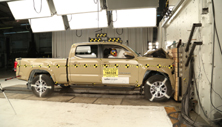
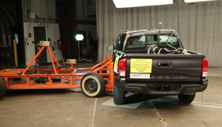
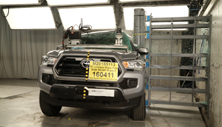
NHTSA crash tests
The agency crash-tested this model year itself. These are its own
photographs and star ratings.
Frontal crash test
Side barrier crash test
Side pole crash test
Photographs taken by NHTSA during its own New Car Assessment Program crash
tests of this model year. Public domain.
Configuration
Overall
Front
Side
Rollover
2019 Toyota Tacoma PU/CC 4WD
19.1% risk
2019 Toyota Tacoma PU/CC 2WD
14.7% risk
2019 Toyota Tacoma PU/EC 4WD
—
—
—
19.1% risk
2019 Toyota Tacoma PU/EC 2WD
—
—
—
14.7% risk
When owners complained
A spike years after the car went on sale usually means a part wearing
out on schedule across the whole fleet — the kind of pattern no single
owner can see from inside their own car.
Jan 2019peak 21Sep 2026
NHTSA investigations into the 2019 Toyota Tacoma
An investigation is the step before a recall: the agency has seen enough
complaints to look into a pattern itself. An open one means it thinks
something may be wrong and nothing has been fixed yet.
EA19001Opened 19 Apr 2019Closed 19 Sep 2024AIR BAGS: AIR BAG/RESTRAINT CONTROL MODULE
Electrical overstress
The Office of Defects Investigation (ODI) opened this investigation to determine if the failure of airbags to deploy during severe crashes, in certain vehicles, was the result of a safety related defect. During the investigation a complex failure was studied that can result in non-deployment of subject vehicle air bags and other restraint system devices in severe crash events. The subject vehicles may be equipped with an airbag control unit (ACU) for the supplemental restraint system (SRS) Electronic Control Unit (ECU) manufactured by ZF-TRW. The ECU receives signals from crash sensors mount...
Recalls on the 2019 Toyota Tacoma
A complaint is one owner's allegation. A recall is the point at which
the manufacturer or a regulator agreed the defect is real and dangerous
enough to fix for free — however old the car is.
Risk: If the fuel pump fails, the engine can stall while driving, increasing the risk of a crash.
20V012000
FUEL SYSTEM, GASOLINE:DELIVERY:FUEL PUMP
Toyota Motor Engineering & Manufacturing (Toyota) recalled certain 2018-2019 4Runner, Highlander, Camry, Land Cruiser, Sequoia, Sienna, Tacoma and Tundra, and Lexus RC 300, RC 350, GS 350, GX 460, IS 300, LC 500, LS 500, LX 570, RX 350L, and 2019 Toyota Avalon and Corolla, and certain Lexus NX 300, and ES 350 vehicles on January 13, 2020. On March 4, 2020, Toyota expanded the recall to include certain 2014-2015 Toyota 4Runner and Land Cruiser, 2018 Avalon, Corolla, 2014 FJ Cruiser, 2017 Sienna and Lexus 2018 ES 350, 2018-2019 GS 300, 2013-2014 GS350, 2014-2015 GX 460, IS 350 and LX 570, 2014 IS F, 2018-2019 IS 350, LC 500H and LS 500H, 2013-2015 LS 460, 2015 NX 200T and RC350, 2017 RC 200T and RX 350. Toyota also removed the 2018-2019 Toyota 4Runner and Land Cruiser and 2018-2019 Lexus GX 460 and LX 570 and 2019 NX300 from inclusion in this recall. On March 19, 2020, Toyota expanded the recall to include 2015 Lexus GS350 vehicles. The low-pressure fuel pump inside the fuel tank may fail.
Risk: If the fuel pump fails, the engine can stall while driving, increasing the risk of a crash.
19V244000
EQUIPMENT:OTHER:LABELS
Gulf States Toyota (GST) is recalling certain 2019 C-HR, 4Runner, Avalon, Avalon Hybrid, Camry, Camry Hybrid, Highlander, Land Cruiser, Prius, RAV4, Sequoia, Tacoma, Sienna, Tundra and Yaris vehicles. The text on the load capacity label may become illegible. As such, these vehicles fail to comply with the requirements of Federal Motor Vehicle Safety Standard (FMVSS) number 110, "Tire Selection and Rims."
Risk: If the driver cannot read the label, they may unknowingly overload the vehicle, increasing the risk of a crash.
18V888000
SERVICE BRAKES, HYDRAULIC:FOUNDATION COMPONENTS:MASTER CYLINDER
Toyota Motor Engineering & Manufacturing (Toyota) is recalling certain 2018-2019 Toyota Tacoma vehicles. Improper machining of the brake master cylinder may result in internal damage of one of the seals, affecting brake performance.
Risk: Reduced brake performance can lengthen the distance needed to stop the vehicle, increasing the risk of a crash.
Canada — Transport Canada
Canada runs its own recall programme, and its campaigns do not
always mirror the American ones.
Recall 202172355,683 units in Canada
Electrical
Issue: This recall is for certain block heater kits installed on certain vehicles or sold as accessories at Toyota or Lexus dealerships. On certain vehicles, the engine block heater cable may not have enough heat protection and could be damaged by high temperatures. If this happens, the cable could short circuit while plugged in, and cause the wiring to overheat or melt. Note: This recall only affects the following block heater/cord part numbers: C014003034 PK5A408J09 PU14000904 C014003151 PK5A408J13 PU14000905 C014000885 PK5A489J11 PU14000907 C014000888 PK5A489J22 PU14000909 C014000907 PK5A410H00 PU14000911 C014100904 PU14000900 PU14000913 C014100907 PU14000901 PU14003571 C014100911 PU14000902 PK5A489J14 PK5A408J05 PU14000903 Safety Risk: Engine block heater wiring that overheats or melts could create the risk of a fire. Corrective Actions: Toyota recommends that you should stop using the engine block heater immediately. Toyota will notify owners by mail and instruct you to take your vehicle to a dealer to disable the engine block heater. For some vehicles, the corrective actions for this recall are under development. For others, a new engine block heater cannot be installed, and the owner will receive a refund of the purchase price of the engine block heater.
Recall 2020514126,597 units in Canada
Fuel System
Issue: On certain vehicles, the low-pressure fuel pump could fail. If this happens, then engine may run rough or may not start and the check engine light may turn on. This could also result in a sudden loss of engine power while driving. Note: This recall is an expansion of recalls SRC R95/SRC R96 and SRC RA2/SRC RA3 (Transport Canada Recall Numbers 2020-005 and 2020-088). Safety Risk: A sudden loss of engine power could increase the risk of a crash. Corrective Actions: The company will notify owners by mail and instruct you to take your vehicle to a dealer to replace the fuel pump.
Recall 2020088111,835 units in Canada
Fuel System
Issue: On certain vehicles, the low-pressure fuel pump could fail. If this happens, then engine may run rough or may not start and the check engine light may turn on. This could also result in a sudden loss of engine power while driving. Note: This recall is an expansion of recall SRC R95/SRC R96 (Transport Canada Recall No. 2020-005) Safety Risk: A sudden loss of engine power could increase the risk of a crash. Corrective Actions: The company will notify owners by mail and instruct you to take your vehicle to a dealer to replace the fuel pump.
Recall 202000546,733 units in Canada
Fuel System
Issue: On certain vehicles, the low-pressure fuel pump could fail. If this happens, then engine may run rough or may not start and the check engine light may turn on. This could also result in a sudden loss of engine power while driving. Safety Risk: A sudden loss of engine power could increase the risk of a crash. Corrective Actions: The company will notify owners by mail and instruct you to take your vehicle to a dealer to replace the fuel pump.
Recall 20187052,603 units in Canada
Brakes
On certain vehicles, the brake master cylinder may contain a defect which could allow an internal brake fluid leak. This could reduce the performance of the front brakes, increasing stopping distances, which could result in a crash causing injury and/or damage to property. Correction: Dealers will replace the defective brake master cylinder.
I wrecked my truck in a snowstorm, and the front airbags did not deploy. The crash had me and 2 others in my vehicle. I have permanent injuries
NHTSA complaint #11762405 — an unverified report by a vehicle owner.
Westchester, ILCrash
WHEELS
On 2 seperate occassions I had a wheel on my 2019 Toyota Tacoma come off while driving. Both after Toyota signed off on work orders and bill of sales showing they accessed the wheels. On 4/11/26 the front left drivers side fell off. Upon picking it up after repairs on April 28, May 6th the left rear wheel fell off while driving again. My safety could have been fatal but luckily no injuries for me and a passanger occurred. Toyota used a Certified Toyota body shop to do the repairs on the first incident not sure who worked on the 2nd as I have not yet been notified the truck is ready. The manufacturer has done all the inspecting no other parties have been involved. No warning. Right before each incident the truck would shake then skid along the floor causing sparks.
NHTSA complaint #11737733 — an unverified report by a vehicle owner.
Westchester, ILCrash
STEERING
On 2 seperate occassions I had a wheel on my 2019 Toyota Tacoma come off while driving. Both after Toyota signed off on work orders and bill of sales showing they accessed the wheels. On 4/11/26 the front left drivers side fell off. Upon picking it up after repairs on April 28, May 6th the left rear wheel fell off while driving again. My safety could have been fatal but luckily no injuries for me and a passanger occurred. Toyota used a Certified Toyota body shop to do the repairs on the first incident not sure who worked on the 2nd as I have not yet been notified the truck is ready. The manufacturer has done all the inspecting no other parties have been involved. No warning. Right before each incident the truck would shake then skid along the floor causing sparks.
NHTSA complaint #11737733 — an unverified report by a vehicle owner.
Westchester, ILCrash
STRUCTURE:BODY
On 2 seperate occassions I had a wheel on my 2019 Toyota Tacoma come off while driving. Both after Toyota signed off on work orders and bill of sales showing they accessed the wheels. On 4/11/26 the front left drivers side fell off. Upon picking it up after repairs on April 28, May 6th the left rear wheel fell off while driving again. My safety could have been fatal but luckily no injuries for me and a passanger occurred. Toyota used a Certified Toyota body shop to do the repairs on the first incident not sure who worked on the 2nd as I have not yet been notified the truck is ready. The manufacturer has done all the inspecting no other parties have been involved. No warning. Right before each incident the truck would shake then skid along the floor causing sparks.
NHTSA complaint #11737733 — an unverified report by a vehicle owner.
The most recent complaints
In the owners' own words, exactly as filed with NHTSA.
Redway, CACrash1 injured
AIR BAGS
I wrecked my truck in a snowstorm, and the front airbags did not deploy. The crash had me and 2 others in my vehicle. I have permanent injuries
NHTSA complaint #11762405 — an unverified report by a vehicle owner.
Redway, CACrash1 injured
STRUCTURE:BODY
I wrecked my truck in a snowstorm, and the front airbags did not deploy. The crash had me and 2 others in my vehicle. I have permanent injuries
NHTSA complaint #11762405 — an unverified report by a vehicle owner.
I wrecked my truck in a snowstorm, and the front airbags did not deploy. The crash had me and 2 others in my vehicle. I have permanent injuries
NHTSA complaint #11762405 — an unverified report by a vehicle owner.
Rogue River, OR
SERVICE BRAKES
The brakes failed, out of nowhere, no codes and no warning. The vehicle was taken to lithia Toyota of [XXX] on XXX for inspection and they say they couldn’t recreate the issue. 5 days later the vehicle was taken to Grants Pass Toyota and they have isolated the issue to be a faulty master cylinder. My safety and everyone on the road was at risk because one dealership failed to correctly inspect and diagnose the issue, all documentation is available. The issue was reproduced by Grants pass Toyota in less than 5 minutes of arrival to their service department. The master cylinder for like vehicles were recalled and mine was manufactured within 4 months of those models that fell into the J16/J06 recall. The exact symptoms that my vehicle experienced. However, my vin was not included in that recall. INFORMATION REDACTED PURSUANT TO THE FREEDOM OF INFORMATION ACT (FOIA), 5 U.S.C. 552(B)(6)
NHTSA complaint #11762033 — an unverified report by a vehicle owner.
at 40,000 milesWinnetka, CA
SERVICE BRAKES, HYDRAULIC
The contact owns a 2019 Toyota Tacoma. The contact stated that while the vehicle was parked, the vehicle shuddered, stalled, and there was an abnormal sound coming from the vehicle. The contact turned off and restarted the vehicle, and the vehicle returned to normal operation. The failure occurred on several occasions. The check engine and the active traction control warning lights were illuminated, with several other unknown warning lights illuminated. The vehicle was taken to a dealer to be diagnosed; however, the dealer stated that the cause of the failure was unknown. The vehicle was not repaired. The vehicle was taken back to the residence, and the contact used a diagnostic tool to retrieve DTC: P0087 (Fuel Rail/System Pressure was too Low). The vehicle was not repaired. The vehicle was taken back to the dealer, where it was determined that the octane fuel or spark plugs might need to be replaced. The vehicle was not repaired. The contact researched and was made aware of an unknown recall; however, the VIN was not under recall. The manufacturer was not notified of the failure. The failure mileage was approximately 40,000.
NHTSA complaint #11761065 — an unverified report by a vehicle owner.
at 40,000 milesWinnetka, CA
ENGINE
The contact owns a 2019 Toyota Tacoma. The contact stated that while the vehicle was parked, the vehicle shuddered, stalled, and there was an abnormal sound coming from the vehicle. The contact turned off and restarted the vehicle, and the vehicle returned to normal operation. The failure occurred on several occasions. The check engine and the active traction control warning lights were illuminated, with several other unknown warning lights illuminated. The vehicle was taken to a dealer to be diagnosed; however, the dealer stated that the cause of the failure was unknown. The vehicle was not repaired. The vehicle was taken back to the residence, and the contact used a diagnostic tool to retrieve DTC: P0087 (Fuel Rail/System Pressure was too Low). The vehicle was not repaired. The vehicle was taken back to the dealer, where it was determined that the octane fuel or spark plugs might need to be replaced. The vehicle was not repaired. The contact researched and was made aware of an unknown recall; however, the VIN was not under recall. The manufacturer was not notified of the failure. The failure mileage was approximately 40,000.
NHTSA complaint #11761065 — an unverified report by a vehicle owner.
Gainesville, FL
UNKNOWN OR OTHER
My car had a lamp seal replaced (00948-CHMSL Center High-Mounted Stop Lamp Seal) in 01/2020. When it rains, water is getting into my car. I can't determine if the same seal or a new seal is failing to keep the water out. This is creating a higher probability of generating a mold issue in my car.
NHTSA complaint #11760297 — an unverified report by a vehicle owner.
Rogue River, OR
SERVICE BRAKES
Brake Master cylinder. The brakes lose all pressure and do not stop the truck all of a sudden. This is an open recall on many of these trucks but apparently my specific truck isn’t included in this. Because it just happened we are looking for the parts to fix this. Although it’s to the tune of over $1,000. There are no warnings, no lights nothing. Just went to pull out of my driveway and have no brakes. Although the pads are brand new and professionally installed.
NHTSA complaint #11758799 — an unverified report by a vehicle owner.
at 76,000 milesMiami, FL
ELECTRICAL SYSTEM
The contact owns a 2019 Toyota Tacoma. The contact stated that while driving at an undisclosed speed, there was an abnormal sound coming from the A/C, and the cool air setting was inoperative. No warning lights were illuminated. A vehicle was taken to a dealer to be diagnosed; however, the vehicle was not diagnosed or repaired. The dealer stated that there was UV dye at the evaporator core and that refrigerant was leaking. The vehicle was taken back to the residence. The manufacturer was notified of the failure. The failure mileage was approximately 76,000.
NHTSA complaint #11757765 — an unverified report by a vehicle owner.
Benbrook, TX
SERVICE BRAKES
Brake master cylinder failed on 2019 Toyota Tacoma. Vehicle had ~40000 miles at time of failure summer of 2025. Out of pocket expense was over $2000.00.
NHTSA complaint #11756579 — an unverified report by a vehicle owner.
Perris, CA
SERVICE BRAKES
Brake pedal started sinking to the floor. Inspected and no fluid leaks present. If brake pedal is pumped, it will build pressure. Then the check brake system light comes on. That is a sign of brake master cylinder failure.
NHTSA complaint #11753935 — an unverified report by a vehicle owner.
Cortland, NY
UNKNOWN OR OTHER
Lower driver door locking bracket corrosion. Beyond surface corrosion. Been monitoring. Passenger side bracket is free of corrosion. Base of corroded bracket has heavy rust. Appears this part was not plated or treated for rustproofing. Appears this locking bracket might fail over time. See attached photos. Passenger side (no corrosion) is last photo.
NHTSA complaint #11750645 — an unverified report by a vehicle owner.
Westchester, ILCrash
WHEELS
On 2 seperate occassions I had a wheel on my 2019 Toyota Tacoma come off while driving. Both after Toyota signed off on work orders and bill of sales showing they accessed the wheels. On 4/11/26 the front left drivers side fell off. Upon picking it up after repairs on April 28, May 6th the left rear wheel fell off while driving again. My safety could have been fatal but luckily no injuries for me and a passanger occurred. Toyota used a Certified Toyota body shop to do the repairs on the first incident not sure who worked on the 2nd as I have not yet been notified the truck is ready. The manufacturer has done all the inspecting no other parties have been involved. No warning. Right before each incident the truck would shake then skid along the floor causing sparks.
NHTSA complaint #11737733 — an unverified report by a vehicle owner.
Westchester, ILCrash
STEERING
On 2 seperate occassions I had a wheel on my 2019 Toyota Tacoma come off while driving. Both after Toyota signed off on work orders and bill of sales showing they accessed the wheels. On 4/11/26 the front left drivers side fell off. Upon picking it up after repairs on April 28, May 6th the left rear wheel fell off while driving again. My safety could have been fatal but luckily no injuries for me and a passanger occurred. Toyota used a Certified Toyota body shop to do the repairs on the first incident not sure who worked on the 2nd as I have not yet been notified the truck is ready. The manufacturer has done all the inspecting no other parties have been involved. No warning. Right before each incident the truck would shake then skid along the floor causing sparks.
NHTSA complaint #11737733 — an unverified report by a vehicle owner.
Westchester, ILCrash
STRUCTURE:BODY
On 2 seperate occassions I had a wheel on my 2019 Toyota Tacoma come off while driving. Both after Toyota signed off on work orders and bill of sales showing they accessed the wheels. On 4/11/26 the front left drivers side fell off. Upon picking it up after repairs on April 28, May 6th the left rear wheel fell off while driving again. My safety could have been fatal but luckily no injuries for me and a passanger occurred. Toyota used a Certified Toyota body shop to do the repairs on the first incident not sure who worked on the 2nd as I have not yet been notified the truck is ready. The manufacturer has done all the inspecting no other parties have been involved. No warning. Right before each incident the truck would shake then skid along the floor causing sparks.
NHTSA complaint #11737733 — an unverified report by a vehicle owner.
Lathrop, CA
SERVICE BRAKES
Brake fluid is leaking down the brake pedal and onto the driver's side floormat. Car has less than 60,000 miles and is 7 years old.
NHTSA complaint #11737419 — an unverified report by a vehicle owner.
Yakima, WA
FUEL/PROPULSION SYSTEM
low pressure fuel pump in fuel tank failed. This part was already repaired from previous recall and failed again. Error code P0087. Vehicle shuttered and stopped in traffic. Broken bits of fuel pump were left in gas tank.
NHTSA complaint #11736679 — an unverified report by a vehicle owner.
West Hartford, CT
SUSPENSION
the left side inner and outer tie rods pulled apart at threads at jam nut. The threads approx 2 to three inches of threads were 100% rotted. The jam nut showed no sign of being loose. It did not UNTHREAD. No noise or any indication ever of an issue. It happened at 5:15 am. It was dark. I was at best going 1 mph in reverse. If this had happened at road speeds the outcome could have been fatal for someone. For sure a lot of damage. I did not take a picture my bad. I did ask for the parts back but am 99%sure the part I got was not mine.it had a weld on it likely to move vehicle. The inner tie rod Was cut and looking like new, not a part exposed to the elements for 65k miles. I visually compared to other side. I will dissect it when I go to my friends shop. I could be wrong but doubtful. Call if questions. I had an extended warranty so they covered under that or a warranty/campaign? I was a NIASE AND NOW called ASE certified mechanic specializing in front end repair so…I would not knowingly drive cars that have a safety issue that could kill me or anyone. Safety first.
NHTSA complaint #11733180 — an unverified report by a vehicle owner.
san Pedro, CA
STRUCTURE:BODY
My 2019 Toyota Tacoma (Super White) is experiencing paint chipping and delamination across multiple body panels. Toyota has acknowledged this defect in limited repair programs, but my vehicle is affected beyond the covered areas. Paint loss exposes underlying primer/metal and may lead to corrosion over time. This appears widespread among similar model-year Tacomas.
NHTSA complaint #11722840 — an unverified report by a vehicle owner.
at 89,000 milesShreveport, LA
ENGINE
The contact owns a 2019 Toyota Tacoma. The contact stated that while driving at an undisclosed speed, there was an abnormal clattering sound coming from the engine, with a misfire coming from the engine. The check engine warning light was illuminated. The vehicle was restarted; however, the failure reoccurred. The vehicle was taken to several mechanics, where it was diagnosed and determined that the fuel injector in cylinder #3 had failed and needed to be replaced. The vehicle was not repaired. The vehicle was then taken to the dealer, where it was diagnosed with engine failure. The contact was informed that the engine needed to be replaced. The vehicle was not repaired. The manufacturer was made aware of the failure. The approximate failure mileage was 89,000.
NHTSA complaint #11716829 — an unverified report by a vehicle owner.
Valparaiso, IN
ENGINE
The engine in my 2019 Toyota Tacoma TRD Off Road suffered internal damage that appears linked to Toyota’s low-pressure fuel pump recall (issued 10/28/2020, repaired 581 days later on 6/10/2022). While out on personal lease, the truck was driven over 16,000 miles with the defective pump, which can cause lean running conditions and elevated combustion temperatures. The result was metallic contamination and a damaged wrist pin in cylinder #6, requiring full engine replacement. All failed components remain available for inspection upon request. The fuel pump defect and resulting internal engine damage continues to place my safety and others’ at risk by creating potential for loss of power, engine stall, or total failure while driving. The problem was confirmed by two separate Toyota dealerships, both of which diagnosed the need for engine replacement. The vehicle has been inspected by multiple Toyota service centers and the Toyota Brand Engagement Center, which opened and later denied my case. No warning lights or messages appeared prior to the ticking noise that first appeared around 62,000 miles. In fact, no warning lights have ever illuminated on the dash. Despite clear evidence that the recall-related defect likely caused the damage, Toyota has refused to provide any assistance or coverage toward repairing or replacing the failed engine, leaving me with a $21,000 repair for a vehicle that was otherwise maintained and operated responsibly.
NHTSA complaint #11698872 — an unverified report by a vehicle owner.
Pensacola, FL
FUEL/PROPULSION SYSTEM
While driving at Highway speeds fuel pump failed resulting in near miss collision on Interstate. Initial fuel pump was replaced with recall. This is second pump that failed. Vehicle towed to Bob Tyler Toyota in Pensacola Fl where fuel pump replaced by owner. Toyota refuses to pay for pump even though class action lawsuit resulted in Toyota being responsible for reimbursement. Vehicle has only 36000 miles.
NHTSA complaint #11695611 — an unverified report by a vehicle owner.
Orlando, FL
UNKNOWN OR OTHER
On 10/9/25 said vehicle was brought to Central Florida Toyota (CFT) for the investigation of water intrusion into the rear passenger compartment. The cause of water intrusion was due to a defective duct (vent) assy (PN: 62930-04040. There are 2 vents located at the rear of the passenger cab.). The cost for the repair was estimated to be $15,153.39. This exorbitant fee includes the replacement of the entire carpeting system and the need to remove the vehicle bed to access the vents. Based on a musty smell CFT assumed that the carpet had been damaged by molds. Subsequently, CFT was requested to have the 2 vents replaced, only, and not the carpeting. In return, CFT stipulated that I must sign a health hazard waiver due the assumed (no evidence) moldy condition. Now, not only can 2 simple mechanical vents cause such an exorbitant fee to repair it has now evolved into a potential health safety issue. Yet, Toyota has failed to provide any caution/warning to the effect of water intrusion into the rear of the passenger area. No caution/warning in owner's manual that vehicle owner must periodically inspect the rear passenger for water, no warning tags/labels inside vehicle. On the other, my Toyota OEM floor mats have all sorts caution/warning plus installation instruction. It is recommended, as a minimum, Toyota must issue a recall to confirm the integrity of all vents in circulation. On my vehicle, the defective vent was due to bad seal which implies poor manufacturing. Secondly, the location of the vents is simply poor engineering. Even, if there's no damage to the carpeting the cost to replace the 2 vents would be $2,500 due to the need to vehicle bed removed.
NHTSA complaint #11693447 — an unverified report by a vehicle owner.
Orlando, FL
STRUCTURE:BODY
On 10/9/25 said vehicle was brought to Central Florida Toyota (CFT) for the investigation of water intrusion into the rear passenger compartment. The cause of water intrusion was due to a defective duct (vent) assy (PN: 62930-04040. There are 2 vents located at the rear of the passenger cab.). The cost for the repair was estimated to be $15,153.39. This exorbitant fee includes the replacement of the entire carpeting system and the need to remove the vehicle bed to access the vents. Based on a musty smell CFT assumed that the carpet had been damaged by molds. Subsequently, CFT was requested to have the 2 vents replaced, only, and not the carpeting. In return, CFT stipulated that I must sign a health hazard waiver due the assumed (no evidence) moldy condition. Now, not only can 2 simple mechanical vents cause such an exorbitant fee to repair it has now evolved into a potential health safety issue. Yet, Toyota has failed to provide any caution/warning to the effect of water intrusion into the rear of the passenger area. No caution/warning in owner's manual that vehicle owner must periodically inspect the rear passenger for water, no warning tags/labels inside vehicle. On the other, my Toyota OEM floor mats have all sorts caution/warning plus installation instruction. It is recommended, as a minimum, Toyota must issue a recall to confirm the integrity of all vents in circulation. On my vehicle, the defective vent was due to bad seal which implies poor manufacturing. Secondly, the location of the vents is simply poor engineering. Even, if there's no damage to the carpeting the cost to replace the 2 vents would be $2,500 due to the need to vehicle bed removed.
NHTSA complaint #11693447 — an unverified report by a vehicle owner.
Orlando, FL
UNKNOWN OR OTHER
Water leaked through the third brake light assembly into the cab roof, soaking the ceiling, seats, and carpet. This caused extensive mold growth and electrical corrosion near the control modules. The affected systems include the third brake light seal, cab roof, interior materials, and ECM (documentation attached). The truck remains at the dealer and is available for inspection upon request. The entire interior is contaminated with mold, creating a serious health hazard, and the vehicle cannot be safely driven or occupied. The leak also damaged electrical components, posing a risk of malfunction or short-circuit while operating the vehicle, and it is currently undrivable due to this damage. The problem was confirmed by Toyota of Clermont, which inspected the truck, documented the damage, and provided a written estimate exceeding $8,000 for repairs (copy attached). The vehicle was at the dealership while the manufacturer’s Limited Service Campaign 21TD03—issued to address this same defect—was still active, but the required inspection and seal repair were not performed. The failure of Toyota of Clermont to perform the mandated remedy under Campaign 21TD03 while the vehicle was in its possession resulted in a serious safety hazard. The entire interior of the cab—including the seats, ceiling, and carpet—is covered in mold, and the vehicle is undrivable due to water intrusion and electrical damage. There were no warning lamps or error messages before the failure, only a strong musty smell inside the cab shortly before the leak became visible. Toyota Motor North America was notified but declined responsibility. This case represents a potential noncompliance with federal defect-remedy obligations under the National Traffic and Motor Vehicle Safety Act (49 U.S.C. § 30120) and should be investigated as such.
NHTSA complaint #11691503 — an unverified report by a vehicle owner.