Owners have filed 1,392 complaints
about the 2017 Ford Fusion with NHTSA between 2016 and 2026.
The largest single group is the engine & cooling.
Across this model's run it ranks 7 of 15 worst.
The letter says how bad. This says what kind — whether this year drew
an unusual number of complaints, unusually dangerous
ones, or failures that arrived unusually early.
The dashed ring is 50 — the national norm. Further out is worse.
Complaint volume — 36
Against the median year of the Ford Fusion. 50 means typical for this
model; 100 means roughly double.
Severity — 36
7% of these complaints
involved a crash, fire, injury or death, against a national rate of
9.7%.
Early failure — 40
24% of failures with a mileage on record happened under
36,000 miles, against a national rate of
29%.
NHTSA files every complaint against a named sub-assembly, not just a
system. This is the difference between knowing it was "the engine" and
knowing which part of it — the list to hand a mechanic.
Lugs/Nuts/Bolts/Studs
1030.3%
Body
515.2%
Shift Linkage/Cable/Rod
412.1%
Adaptive Cruise Control
412.1%
Automatic Transmission
412.1%
AIR Bag/Restraint Control Module
26.1%
ABS Warning Light
26.1%
Defroster/Defogger/Hvac System
26.1%
When it fails
Odometer readings owners gave when they filed. About half of all
complaints include one.
Under 1,000 miles
243.1%
1,000 – 9,999 miles
445.8%
10,000 – 24,999 miles
618.0%
25,000 – 49,999 miles
10513.8%
50,000 – 74,999 miles
17523.0%
75,000 – 99,999 miles
18123.8%
100,000 – 149,999 miles
13718.0%
150,000+ miles
354.6%
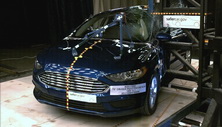
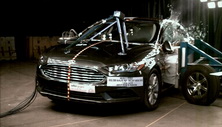
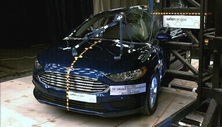
NHTSA crash tests
The agency crash-tested this model year itself. These are its own
photographs and star ratings.
Frontal crash test
Side barrier crash test
Side pole crash test
Photographs taken by NHTSA during its own New Car Assessment Program crash
tests of this model year. Public domain.
Configuration
Overall
Front
Side
Rollover
2017 Ford Fusion 4 DR AWD
10.9% risk
2017 Ford Fusion 4 DR FWD
10.9% risk
When owners complained
A spike years after the car went on sale usually means a part wearing
out on schedule across the whole fleet — the kind of pattern no single
owner can see from inside their own car.
Sep 2016peak 49Sep 2026
NHTSA investigations into the 2017 Ford Fusion
An investigation is the step before a recall: the agency has seen enough
complaints to look into a pattern itself. An open one means it thinks
something may be wrong and nothing has been fixed yet.
RQ22004Opened 8 Aug 2022Closed 24 Mar 2023SERVICE BRAKES, HYDRAULIC:FOUNDATION COMPONENTS:HOSES, LINES/PIPING, AND FITTINGS
Front Brake Jounce Hose Failures
On August 8, 2022, the Office of Defects Investigation (ODI) opened this investigation based on 50 Vehicle Owner Questionnaires (VOQs) alleging front brake jounce hose ruptures on model year (MY) 2013-2018 Ford Fusion and Lincoln MKZ vehicles. A ruptured front brake hose results in a brake fluid leak. As a result, the driver may experience an increase in pedal travel and a reduction in the rate of deceleration, increasing the risk of a crash. It should be noted that the subject vehicles identified fell outside the scope of NHTSA Safety Recall 20V-469, which addressed front brake hoses rupturin...
Recalls on the 2017 Ford Fusion
A complaint is one owner's allegation. A recall is the point at which
the manufacturer or a regulator agreed the defect is real and dangerous
enough to fix for free — however old the car is.
United States — NHTSA
23V162000
SERVICE BRAKES, HYDRAULIC:FOUNDATION COMPONENTS:HOSES, LINES/PIPING, AND FITTINGS
Ford Motor Company (Ford) is recalling certain 2013-2018 Fusion and Lincoln MKZ vehicles. The front brake hoses may rupture and leak brake fluid.
Risk: A brake fluid leak will increase brake pedal travel and extend the distance needed to stop the vehicle, increasing the risk of a crash.
18V167000
STEERING: STEERING WHEEL/HANDLE BAR
Ford Motor Company (Ford) is recalling certain 2014-2018 Lincoln MKZ and Ford Fusion vehicles. The steering wheel retaining bolt may loosen allowing the steering wheel to detach while driving.
Risk: A steering wheel detachment can cause a loss of steering control, increasing the risk of a crash.
17V427000
POWER TRAIN:AUTOMATIC TRANSMISSION:TORQUE CONVERTER
Ford Motor Company (Ford) is recalling certain 2017 Lincoln MKZ and Ford Edge and Fusion vehicles. On vehicles with 2.0L gas engines and six-speed automatic transmissions, the torque converter weld studs may have been inadequately welded.
Risk: If the torque converter weld studs fail, the torque converter will not be connected to the engine flexplate and the vehicle will lose the ability to move, increasing the risk of a crash.
16V874000
SEATS:MID/REAR ASSEMBLY
Ford Motor Company (Ford) is recalling certain 2017 Ford Fusion vehicles manufactured September 27, 2016, to September 28, 2016. The left rear seat backs pivot pins may have been improperly welded.
Risk: During a crash, the improper welds may fail, allowing any stowed luggage to move into the passenger compartment, increasing the risk of injury.
Canada — Transport Canada
Canada runs its own recall programme, and its campaigns do not
always mirror the American ones.
Recall 202313263,269 units in Canada
Brakes
Issue: On certain vehicles, the front brake hoses could fail and cause a progressive brake fluid leak. If this happens, the driver may experience a change in brake pedal feel and travel. This can cause reduced braking. Note: A brake fluid leak would cause the brake warning light to turn on. This recall doesn't affect models with a Hybrid engine. Vehicles repaired under Ford warranty extension program 22N02 already have updated brake hoses, and don't require this repair. Safety Risk: Reduced braking can cause an extended stopping distance and increase the risk of a crash. Corrective Actions: Ford will notify owners by mail and instruct you to take your vehicle to a dealership to replace the front brake hoses.
Recall 201813059,266 units in Canada
Steering
On certain vehicles, the steering wheel bolt torque retention feature may not fully engage into the steering shaft. If the bolt loosens, the steering wheel may appear to be loose, which could affect vehicle control. If a loose bolt is left unrepaired, the steering wheel may detach from the steering column, which could result in a loss of steering control, increasing the risk of a crash causing injury and/or damage to property. Correction: Dealers will replace the steering wheel bolt with a longer bolt.
Recall 2017332696 units in Canada
Powertrain
On certain vehicles equipped with the 2.0l engine coupled to a 6 speed automatic transmission, the torque converter could separate from the engine flex plate due to inadequate welds on the attachment studs. If this occurs, this would result in a sudden loss of motive power, increasing the risk of a crash causing injury and/or damage to property. Correction: Dealers will replace the torque converter.
Recall 20166022 units in Canada
Seats And Restraints
On certain vehicles, the left rear seat back frame may have insufficient weld penetration between the pivot bracket and the pivot pin due to an error during welding setup. Improperly welded seat back pivot pins may not adequately retain items in the luggage compartment in a crash, which could increase the risk of injury to a rear seat occupant. Correction: Dealers will replace the left hand second row seat back frame.
Recall 20162531,050 units in Canada
Lights And Instruments
Certain vehicles may not comply with the requirements of Canada Motor Vehicle Safety Standard 108 - Lighting System and Retroreflective Devices. Some vehicles equipped with LED headlamps were built with defective support brackets which can cause the daytime running lamp light guide to shift out of design position. If this occurs, the support bracket can melt due to the increased exposure to the LED light energy. This can cause melted material to partially block the end of the light guide, subsequently causing a loss of lighting performance which could result in failure to meet the daytime running lamp light output requirements of the standard. This could result in the vehicle being less visible to other drivers, which could increase the risk of a crash causing injury and/or damage to property. Correction: Dealers will replace both headlamp assemblies.
Reports where the owner recorded a crash, a fire, an injury or a death.
Chandler, AZCrash1 injured
UNKNOWN OR OTHER
NHTSA COMPLAINT - 2017 Ford Fusion Energi Titanium (VIN: REDACTED) - [XXX] (Collision) Q1: FAILED COMPONENT Battery Energy Control Module (BECM) and hybrid battery cell balancing circuits failed post-collision. Per Ford Recall 23V-440, Current Interrupt Device causes excess voltage, fire risk, toxic gas exposure. DTCs: U1027 (ABS/ECM loss), P2450/P2451 (EVAP stuck open/closed), P0DD2/P0DD6/P0DDE (battery cell balancing circuits H/J/K/M stuck off). Vehicle available for inspection. Q2: SAFETY RISKS Sudden power loss, fire risk, CO/HF toxic gas exposure from damaged cells. HF IDLH 0.025 g/m³. Symptoms: headaches, cognitive issues, respiratory problems requiring Brain MRI. Ford documented 7 fires, 2 while driving. Gas events recur when changing charging amperage; CO detector alarmed repeatedly; hospitalized for symptoms. Q3: DEALER CONFIRMATION NOT investigated. No Ford dealer conducted required post-collision battery diagnostics despite DTCs proving multiple system failures. United Insurance Claims ignored [legal demand] for hybrid-specific inspections. No CO/HF assessment. Battery cell balancing failures indicate physical collision damage to high-voltage system. Q4: INSPECTIONS Insurance: Standard only, ignored DTCs requiring hybrid testing. Ford Service (Tempe, AZ) and Ford Collision Center (Mesa, AZ): No inspection; reasons given a) lack capability b) we just scan the vehicle; we don't thoroughly inspect for gas leaks". Recall 23V-440 documents identical failures. Police: No report (real-time audio capture of admission of at-fault driver), no hazmat assessment. Multiple permanent DTCs prove need for Ford-certified diagnostics. Q5: WARNING SYMPTOMS Pre-collision: Intermittent issues, check engine light, reduced range. Post-collision: Reduced range, Gas exposure symptoms plus DTCs U1027, P2450/P2451, P0DD2/P0DD6/P0DDE showing communication/battery cell failures. Medical documentation available. Pattern confirms BECM/battery damage per documented defect. INFORMATION REDACTED PURSUANT TO THE FREEDOM OF INFORM
NHTSA complaint #11685483 — an unverified report by a vehicle owner.
Chandler, AZCrash1 injured
ELECTRICAL SYSTEM
NHTSA COMPLAINT - 2017 Ford Fusion Energi Titanium (VIN: REDACTED) - [XXX] (Collision) Q1: FAILED COMPONENT Battery Energy Control Module (BECM) and hybrid battery cell balancing circuits failed post-collision. Per Ford Recall 23V-440, Current Interrupt Device causes excess voltage, fire risk, toxic gas exposure. DTCs: U1027 (ABS/ECM loss), P2450/P2451 (EVAP stuck open/closed), P0DD2/P0DD6/P0DDE (battery cell balancing circuits H/J/K/M stuck off). Vehicle available for inspection. Q2: SAFETY RISKS Sudden power loss, fire risk, CO/HF toxic gas exposure from damaged cells. HF IDLH 0.025 g/m³. Symptoms: headaches, cognitive issues, respiratory problems requiring Brain MRI. Ford documented 7 fires, 2 while driving. Gas events recur when changing charging amperage; CO detector alarmed repeatedly; hospitalized for symptoms. Q3: DEALER CONFIRMATION NOT investigated. No Ford dealer conducted required post-collision battery diagnostics despite DTCs proving multiple system failures. United Insurance Claims ignored [legal demand] for hybrid-specific inspections. No CO/HF assessment. Battery cell balancing failures indicate physical collision damage to high-voltage system. Q4: INSPECTIONS Insurance: Standard only, ignored DTCs requiring hybrid testing. Ford Service (Tempe, AZ) and Ford Collision Center (Mesa, AZ): No inspection; reasons given a) lack capability b) we just scan the vehicle; we don't thoroughly inspect for gas leaks". Recall 23V-440 documents identical failures. Police: No report (real-time audio capture of admission of at-fault driver), no hazmat assessment. Multiple permanent DTCs prove need for Ford-certified diagnostics. Q5: WARNING SYMPTOMS Pre-collision: Intermittent issues, check engine light, reduced range. Post-collision: Reduced range, Gas exposure symptoms plus DTCs U1027, P2450/P2451, P0DD2/P0DD6/P0DDE showing communication/battery cell failures. Medical documentation available. Pattern confirms BECM/battery damage per documented defect. INFORMATION REDACTED PURSUANT TO THE FREEDOM OF INFORM
NHTSA complaint #11685483 — an unverified report by a vehicle owner.
Chandler, AZCrash1 injured
FUEL/PROPULSION SYSTEM
NHTSA COMPLAINT - 2017 Ford Fusion Energi Titanium (VIN: REDACTED) - [XXX] (Collision) Q1: FAILED COMPONENT Battery Energy Control Module (BECM) and hybrid battery cell balancing circuits failed post-collision. Per Ford Recall 23V-440, Current Interrupt Device causes excess voltage, fire risk, toxic gas exposure. DTCs: U1027 (ABS/ECM loss), P2450/P2451 (EVAP stuck open/closed), P0DD2/P0DD6/P0DDE (battery cell balancing circuits H/J/K/M stuck off). Vehicle available for inspection. Q2: SAFETY RISKS Sudden power loss, fire risk, CO/HF toxic gas exposure from damaged cells. HF IDLH 0.025 g/m³. Symptoms: headaches, cognitive issues, respiratory problems requiring Brain MRI. Ford documented 7 fires, 2 while driving. Gas events recur when changing charging amperage; CO detector alarmed repeatedly; hospitalized for symptoms. Q3: DEALER CONFIRMATION NOT investigated. No Ford dealer conducted required post-collision battery diagnostics despite DTCs proving multiple system failures. United Insurance Claims ignored [legal demand] for hybrid-specific inspections. No CO/HF assessment. Battery cell balancing failures indicate physical collision damage to high-voltage system. Q4: INSPECTIONS Insurance: Standard only, ignored DTCs requiring hybrid testing. Ford Service (Tempe, AZ) and Ford Collision Center (Mesa, AZ): No inspection; reasons given a) lack capability b) we just scan the vehicle; we don't thoroughly inspect for gas leaks". Recall 23V-440 documents identical failures. Police: No report (real-time audio capture of admission of at-fault driver), no hazmat assessment. Multiple permanent DTCs prove need for Ford-certified diagnostics. Q5: WARNING SYMPTOMS Pre-collision: Intermittent issues, check engine light, reduced range. Post-collision: Reduced range, Gas exposure symptoms plus DTCs U1027, P2450/P2451, P0DD2/P0DD6/P0DDE showing communication/battery cell failures. Medical documentation available. Pattern confirms BECM/battery damage per documented defect. INFORMATION REDACTED PURSUANT TO THE FREEDOM OF INFORM
NHTSA complaint #11685483 — an unverified report by a vehicle owner.
Jackson, MSCrash1 injured
SERVICE BRAKES
I had a bad car accident October 2019 going 45 mph, I push the breaks the car didn’t stop and I crashed not after a month from getting the car from drivetime on a special discount
NHTSA complaint #11685411 — an unverified report by a vehicle owner.
I had a bad car accident October 2019 going 45 mph, I push the breaks the car didn’t stop and I crashed not after a month from getting the car from drivetime on a special discount
NHTSA complaint #11685411 — an unverified report by a vehicle owner.
Englewood, FLCrash1 injured
SERVICE BRAKES
I was driving under the posted speed limit on a road near my house going to pick my kids up from school. I was approaching a stop sign at an intersection and began to press on the brake pedal. The pedal traveled all the way to the floor as I was coming yo the stop sign. A driver was approaching me from the left headed east and my car went into the street past the stop sign and the other driver hit me which in turn caused his vehicle to roll over and mine was damaged as well which turned out to be totaled. The brakes began to work again right as the gentleman hit me. I never knew about the recall and when that happened I got onto the web and out in my VIN and saw it was recalled. I need to know what’s going to be dealt with here!
NHTSA complaint #11650960 — an unverified report by a vehicle owner.
The most recent complaints
In the owners' own words, exactly as filed with NHTSA.
Portage, MI
ENGINE
I am submitting this complaint regarding a serious engine failure and safety issue involving my 2017 Ford Fusion equipped with the 1.5L EcoBoost engine. At approximately 79,000 miles, my vehicle experienced a coolant intrusion failure. While driving, the engine suddenly stalled in the middle of an intersection, leaving me stranded in traffic and at risk of being rear-ended by approaching vehicles. I was able to restart the vehicle and move out of the intersection, but the exhaust then produced a very large, thick cloud of white smoke. The amount of smoke could have significantly reduced visibility for other drivers and created an additional safety hazard. I took the vehicle to a Ford dealership, where I was told the engine had coolant intrusion and needed to be replaced. I was also told this is a common problem with Ford EcoBoost engines, including the 1.5L, 2.0L, and 2.3L engines. My concern is not only the cost of the repair, but the serious safety risk. Coolant intrusion can cause misfires, excessive white smoke, engine damage, and eventual engine failure. A sudden loss of power while driving can create a serious crash hazard, as happened to me. I am concerned Ford has known about this recurring problem for years yet has continued using these engines in vehicles such as the Fusion, Escape, and Lincoln MKZ without adequately addressing the issue. I request that NHTSA investigate coolant intrusion affecting Ford EcoBoost engines and determine whether a safety defect exists that warrants a recall. I also believe affected owners should receive reimbursement for engine replacement costs when the failure is caused by this defect. My experience demonstrates that this is more than a normal maintenance issue. An engine that can suddenly stall in traffic and produce a large cloud of white smoke without warning poses a significant safety risk to vehicle occupants and other motorists.
NHTSA complaint #11763978 — an unverified report by a vehicle owner.
at 150,000 milesDetroit, MI
ENGINE
The contact owns a 2017 Ford Fusion. The contact stated that while driving 60 MPH, the accelerator pedal was depressed; however, the vehicle failed to accelerate as intended. The vehicle lost motive power, and the RPM became elevated. In addition, the contact became aware of an abnormal odor. The contact referenced an unknown recall; however, the VIN was not associated with a recall associated with the failure. The failure mileage was approximately 150,000.
NHTSA complaint #11762700 — an unverified report by a vehicle owner.
Victorville, CA
POWER TRAIN
2017 Ford Fusion. Transmission replaced February 2026 at 98,175 miles by independent repair facility. Check engine light illuminated immediately following replacement and has remained on continuously since. Autozone scan showed emissions-related code only. On August 28, 2026 at approximately 120,064 miles, orange wrench light and "See Manual" message appeared moments after hot restart. Acceleration became heavy and hesitant. Drove approximately 70 miles home via I-15; heavy traffic required engine shutdown at multiple stops. Following morning, wrench light was no longer illuminated but hesitation persisted. Using manual paddle shift to select 5th gear improved drivability. Replacement transmission accumulated approximately 22,000 miles over 6 months. Ford Motor Company has issued multiple recalls for 2013-2016 model year Fusions involving identical transmission, shifter cable bushing, and torque converter defects, but 2017 model year vehicles with identical 6F35 transmissions and failure symptoms have been excluded from all campaigns. No crash, fire, or injury occurred.
NHTSA complaint #11760693 — an unverified report by a vehicle owner.
Victorville, CA
ELECTRICAL SYSTEM
2017 Ford Fusion. Transmission replaced February 2026 at 98,175 miles by independent repair facility. Check engine light illuminated immediately following replacement and has remained on continuously since. Autozone scan showed emissions-related code only. On August 28, 2026 at approximately 120,064 miles, orange wrench light and "See Manual" message appeared moments after hot restart. Acceleration became heavy and hesitant. Drove approximately 70 miles home via I-15; heavy traffic required engine shutdown at multiple stops. Following morning, wrench light was no longer illuminated but hesitation persisted. Using manual paddle shift to select 5th gear improved drivability. Replacement transmission accumulated approximately 22,000 miles over 6 months. Ford Motor Company has issued multiple recalls for 2013-2016 model year Fusions involving identical transmission, shifter cable bushing, and torque converter defects, but 2017 model year vehicles with identical 6F35 transmissions and failure symptoms have been excluded from all campaigns. No crash, fire, or injury occurred.
NHTSA complaint #11760693 — an unverified report by a vehicle owner.
Victorville, CA
ENGINE
2017 Ford Fusion. Transmission replaced February 2026 at 98,175 miles by independent repair facility. Check engine light illuminated immediately following replacement and has remained on continuously since. Autozone scan showed emissions-related code only. On August 28, 2026 at approximately 120,064 miles, orange wrench light and "See Manual" message appeared moments after hot restart. Acceleration became heavy and hesitant. Drove approximately 70 miles home via I-15; heavy traffic required engine shutdown at multiple stops. Following morning, wrench light was no longer illuminated but hesitation persisted. Using manual paddle shift to select 5th gear improved drivability. Replacement transmission accumulated approximately 22,000 miles over 6 months. Ford Motor Company has issued multiple recalls for 2013-2016 model year Fusions involving identical transmission, shifter cable bushing, and torque converter defects, but 2017 model year vehicles with identical 6F35 transmissions and failure symptoms have been excluded from all campaigns. No crash, fire, or injury occurred.
NHTSA complaint #11760693 — an unverified report by a vehicle owner.
Chatsworth, CA
POWER TRAIN
Flexplate cracked 5 months ago, and now it has cracked again. This is due to troqeu converting failure and faulty transmission mounts.
NHTSA complaint #11759124 — an unverified report by a vehicle owner.
Jacksonville, FL
ENGINE
If i do not run my car for atleast 10 minutes before driving, my gas tank will start making a loud horn sound, and when this happens and i go to slow down, the car will shut off. Mechanics say there’s an issue with the purge valve and the charcoal filter. I’ve already had this issue fixed three times and it comes back less than a week prior to service
NHTSA complaint #11757803 — an unverified report by a vehicle owner.
Jacksonville, FL
FUEL/PROPULSION SYSTEM
If i do not run my car for atleast 10 minutes before driving, my gas tank will start making a loud horn sound, and when this happens and i go to slow down, the car will shut off. Mechanics say there’s an issue with the purge valve and the charcoal filter. I’ve already had this issue fixed three times and it comes back less than a week prior to service
NHTSA complaint #11757803 — an unverified report by a vehicle owner.
Manteca, CA
POWER TRAIN
I am reporting a serious recurring safety concern involving a 2017 Ford Fusion SE with a 1.5L EcoBoost engine. The vehicle was purchased used in August 2022 with approximately 50,000 miles. Within months, significant coolant and engine problems began. In February 2023, at approximately 55,940 miles, the vehicle developed a coolant leak. A pressure test confirmed the water pump was leaking and it was replaced. At approximately 84,189 miles, the vehicle experienced white/gray exhaust smoke, coolant loss, very low oil, and rough-running symptoms. The servicing Ford dealership referenced Ford Technical Service Bulletin (TSB) 22-2322 in connection with the diagnosis and ultimately replaced the engine short block. Despite this major engine repair, the problems continued. The vehicle subsequently experienced additional smoking, hesitation and loss of power and required replacement of the turbocharger. The vehicle was returned again because it continued to smoke and required additional repairs. I am concerned this is a recurring engine defect rather than normal wear and tear. The repeated engine/coolant failures, smoking, hesitation and loss of power create a serious safety concern because the vehicle may unexpectedly lose power or experience engine failure while being driven. Ford has been notified of the repeated failures but declined further relief based primarily on the vehicle's current age, mileage and expired warranty. This ignores that the problems began years earlier at substantially lower mileage and that major repairs failed to permanently correct the condition. I request that NHTSA investigate whether the 1.5L EcoBoost engine in this and similarly equipped Ford vehicles has a safety-related defect involving coolant intrusion, engine failure and loss of power. The vehicle is currently at approximately 101,000 miles, but the documented problems began at 55,940 miles and continued despite major repairs.
NHTSA complaint #11756818 — an unverified report by a vehicle owner.
Manteca, CA
UNKNOWN OR OTHER
I am reporting a serious recurring safety concern involving a 2017 Ford Fusion SE with a 1.5L EcoBoost engine. The vehicle was purchased used in August 2022 with approximately 50,000 miles. Within months, significant coolant and engine problems began. In February 2023, at approximately 55,940 miles, the vehicle developed a coolant leak. A pressure test confirmed the water pump was leaking and it was replaced. At approximately 84,189 miles, the vehicle experienced white/gray exhaust smoke, coolant loss, very low oil, and rough-running symptoms. The servicing Ford dealership referenced Ford Technical Service Bulletin (TSB) 22-2322 in connection with the diagnosis and ultimately replaced the engine short block. Despite this major engine repair, the problems continued. The vehicle subsequently experienced additional smoking, hesitation and loss of power and required replacement of the turbocharger. The vehicle was returned again because it continued to smoke and required additional repairs. I am concerned this is a recurring engine defect rather than normal wear and tear. The repeated engine/coolant failures, smoking, hesitation and loss of power create a serious safety concern because the vehicle may unexpectedly lose power or experience engine failure while being driven. Ford has been notified of the repeated failures but declined further relief based primarily on the vehicle's current age, mileage and expired warranty. This ignores that the problems began years earlier at substantially lower mileage and that major repairs failed to permanently correct the condition. I request that NHTSA investigate whether the 1.5L EcoBoost engine in this and similarly equipped Ford vehicles has a safety-related defect involving coolant intrusion, engine failure and loss of power. The vehicle is currently at approximately 101,000 miles, but the documented problems began at 55,940 miles and continued despite major repairs.
NHTSA complaint #11756818 — an unverified report by a vehicle owner.
Manteca, CA
ENGINE
I am reporting a serious recurring safety concern involving a 2017 Ford Fusion SE with a 1.5L EcoBoost engine. The vehicle was purchased used in August 2022 with approximately 50,000 miles. Within months, significant coolant and engine problems began. In February 2023, at approximately 55,940 miles, the vehicle developed a coolant leak. A pressure test confirmed the water pump was leaking and it was replaced. At approximately 84,189 miles, the vehicle experienced white/gray exhaust smoke, coolant loss, very low oil, and rough-running symptoms. The servicing Ford dealership referenced Ford Technical Service Bulletin (TSB) 22-2322 in connection with the diagnosis and ultimately replaced the engine short block. Despite this major engine repair, the problems continued. The vehicle subsequently experienced additional smoking, hesitation and loss of power and required replacement of the turbocharger. The vehicle was returned again because it continued to smoke and required additional repairs. I am concerned this is a recurring engine defect rather than normal wear and tear. The repeated engine/coolant failures, smoking, hesitation and loss of power create a serious safety concern because the vehicle may unexpectedly lose power or experience engine failure while being driven. Ford has been notified of the repeated failures but declined further relief based primarily on the vehicle's current age, mileage and expired warranty. This ignores that the problems began years earlier at substantially lower mileage and that major repairs failed to permanently correct the condition. I request that NHTSA investigate whether the 1.5L EcoBoost engine in this and similarly equipped Ford vehicles has a safety-related defect involving coolant intrusion, engine failure and loss of power. The vehicle is currently at approximately 101,000 miles, but the documented problems began at 55,940 miles and continued despite major repairs.
NHTSA complaint #11756818 — an unverified report by a vehicle owner.
Anderson, SC
POWER TRAIN
I was coming home from work and when I tried to shift the gear from drive to park it was stuck on drive and Neutral I contacted the car dealer and they said ford has had this issue that it was a recall on it so I researched and found out that Ford issued major safety recalls (Recall 22S43 and 18S20) for 2017 Ford Fusions regarding a degraded transmission shifter cable bushing. This defect can cause the shifter cable to detach. Consequently, the car may roll away unexpectedly because the transmission isn't actually in Park, even though the shifter says it is.Recall DetailsThe Problem: The underhood shift cable bushing can degrade and fail over time.The Remedy: Ford dealers will replace the transmission shifter cable bushing and add a protective cap over it free of charge (parts and labor). It my VIN# was not coming up as a recall and this is an ongoing issue for this car and I would like to get this resolved as soon as possible with ford recall please thank you
NHTSA complaint #11752546 — an unverified report by a vehicle owner.
Fairfield, OH
ENGINE AND ENGINE COOLING
See attached document for complaint.
NHTSA complaint #11752388 — an unverified report by a vehicle owner.
Webster, TX
EXTERIOR LIGHTING
I experienced an issue identical to safety recall 22S02. Rear brake light remains on due to a broken Brakelight stop bumper. Dealership did not offer to fix at no charge.
NHTSA complaint #11751907 — an unverified report by a vehicle owner.
Montague, CA
ENGINE
The vehicle in question has the coolant intrusion into cylinders 2 and 3 with rough idle on startup, P0300, P0302, P0303, and white smoke on startup. The vehicle now has 111339 miles on it and the out of pocket cost is more than what the vehicle blue books for in excellent condition. TSB 22-2134 speaks to all the issue and what the repair is. If this is a known issue then I feel this should be a vehicle recall by Ford due to the costly repair.
NHTSA complaint #11751941 — an unverified report by a vehicle owner.
Mokena, IL
SEAT BELTS
What component or system failed or malfunctioned, and is it available for inspection upon request? Driver's side selt belt does not latch all the time. Yes can be inspected. How was your safety or the safety of others put at risk? If the seat fails, injury can occur in a crash Has the problem been reproduced or confirmed by a dealer or independent service center? Appointment is July 18 Has the vehicle or component been inspected by the manufacturer, police, insurance representatives or others? no Were there any warning lamps, messages or other symptoms of the problem prior to the failure, and when did they first appear? no
NHTSA complaint #11750259 — an unverified report by a vehicle owner.
Brooklyn, NY
UNKNOWN OR OTHER
Good Aftrrnoon and I hope all is well. My cars check engine light is on and the dealer states it’s the cannister purge valve. I showed them that there is a recall (PART 573 safety recall - NHTSA Recall #26V369) but they will not accept it because it’s not showing my car needing it to be changed on the NHTSA website. They are saying it will cost $1995.00 to fix the issue. This is stopping me from obtaining an inspection sticker and I’ve received tickets. Can you confirm that my vehicle is part of this recall.
NHTSA complaint #11750045 — an unverified report by a vehicle owner.
Bristow, VA
ENGINE
ENGINE HAS COOLANT INTRUSIONAND IS MISFIRING. Engine light came on. The coolant system found pressure to be dropping significantly. Removed spark plugs and inspected cylinder bores using borescope. Verified coolant is leaking into cylinder 2 and needed to replace the engine at Ourisman Ford in Manassas VA. on July 11, 2026.
NHTSA complaint #11749828 — an unverified report by a vehicle owner.
Brattleboro, VT
POWER TRAIN
On 7/8/2026, the vehicle became undriveable. Placing the vehicle in reverse on the shidfter dial using registered a conflicting direction on the dashboard indicator. The vehicle was towed to a dealership and the repair consisted of replacing the shift cable bushing. This was the same fix required in recalls 18S20 & 22V413. On 7/9/2026 the issue was verified by a Ford dealership tech. I was advised that the protective cap is now contained in the repair kit with the shift cable bushing. A brief fleeting warning on the screen indicated a "Shift Fault - See Manual" or words to that effect. The manual only seemed to reference a "Steering Fault" Ford HQ was notified - Reference No: CXH-08533100
NHTSA complaint #11749428 — an unverified report by a vehicle owner.
Brattleboro, VT
UNKNOWN OR OTHER
On 7/8/2026, the vehicle became undriveable. Placing the vehicle in reverse on the shidfter dial using registered a conflicting direction on the dashboard indicator. The vehicle was towed to a dealership and the repair consisted of replacing the shift cable bushing. This was the same fix required in recalls 18S20 & 22V413. On 7/9/2026 the issue was verified by a Ford dealership tech. I was advised that the protective cap is now contained in the repair kit with the shift cable bushing. A brief fleeting warning on the screen indicated a "Shift Fault - See Manual" or words to that effect. The manual only seemed to reference a "Steering Fault" Ford HQ was notified - Reference No: CXH-08533100
NHTSA complaint #11749428 — an unverified report by a vehicle owner.
Brattleboro, VT
ELECTRICAL SYSTEM
On 7/8/2026, the vehicle became undriveable. Placing the vehicle in reverse on the shidfter dial using registered a conflicting direction on the dashboard indicator. The vehicle was towed to a dealership and the repair consisted of replacing the shift cable bushing. This was the same fix required in recalls 18S20 & 22V413. On 7/9/2026 the issue was verified by a Ford dealership tech. I was advised that the protective cap is now contained in the repair kit with the shift cable bushing. A brief fleeting warning on the screen indicated a "Shift Fault - See Manual" or words to that effect. The manual only seemed to reference a "Steering Fault" Ford HQ was notified - Reference No: CXH-08533100
NHTSA complaint #11749428 — an unverified report by a vehicle owner.
Pensacola, FL
UNKNOWN OR OTHER
The door entry control numbers are on all the time now which will cause the battery to drain if the car is not driven daily. It says that water from a car wash or rain has gotten in behind the door control panel.
NHTSA complaint #11747581 — an unverified report by a vehicle owner.
Pensacola, FL
ELECTRICAL SYSTEM
The door entry control numbers are on all the time now which will cause the battery to drain if the car is not driven daily. It says that water from a car wash or rain has gotten in behind the door control panel.
NHTSA complaint #11747581 — an unverified report by a vehicle owner.
Grosse Pointe Woods, MI
STEERING
I am the owner of a 2017 Ford Fusion with 61,000 miles on the odometer. Please note that I have always taken good care of my car, having it serviced promptly when required. In recent weeks, I have had to replace my complete steering rack (cost $4,500) and two weeks later, my 1.7-liter Ecoboost engine due to a coolant leak into the number two cylinder at a cost of $6,700. Ford has known about both problems for years and they have resulted in both class action and small claims suits against the company. Regarding the engine, Ford issued Customer Satisfaction Program 21N12, Technical Service Bulletin TSB 22-2134 and Customer Satisfaction Program 19B37 - Supplement #4 to replace the car's engine short block. This covered cars for 7 years of service or 84,000 miles - with, as quoted in the Ford memo sent to dealers on June 9, 2022, "coverage automatically extended to subsequent owners," for presumably the life of the car. Since this is clearly a manufacturing error (as Ford admits in its June 9, 2022 memo to dealers) and not due to negligence on my part, I should be reimbursed for my expenses. The NHTSA should also open a recall case on this matter for owners like myself.
NHTSA complaint #11746906 — an unverified report by a vehicle owner.
Grosse Pointe Woods, MI
ENGINE
I am the owner of a 2017 Ford Fusion with 61,000 miles on the odometer. Please note that I have always taken good care of my car, having it serviced promptly when required. In recent weeks, I have had to replace my complete steering rack (cost $4,500) and two weeks later, my 1.7-liter Ecoboost engine due to a coolant leak into the number two cylinder at a cost of $6,700. Ford has known about both problems for years and they have resulted in both class action and small claims suits against the company. Regarding the engine, Ford issued Customer Satisfaction Program 21N12, Technical Service Bulletin TSB 22-2134 and Customer Satisfaction Program 19B37 - Supplement #4 to replace the car's engine short block. This covered cars for 7 years of service or 84,000 miles - with, as quoted in the Ford memo sent to dealers on June 9, 2022, "coverage automatically extended to subsequent owners," for presumably the life of the car. Since this is clearly a manufacturing error (as Ford admits in its June 9, 2022 memo to dealers) and not due to negligence on my part, I should be reimbursed for my expenses. The NHTSA should also open a recall case on this matter for owners like myself.
NHTSA complaint #11746906 — an unverified report by a vehicle owner.