Owners have filed 1,001 complaints
about the 2017 Hyundai Sonata with NHTSA between 2016 and 2026.
The largest single group is the engine & cooling.
Across this model's run it ranks 8 of 32 worst.
The letter says how bad. This says what kind — whether this year drew
an unusual number of complaints, unusually dangerous
ones, or failures that arrived unusually early.
The dashed ring is 50 — the national norm. Further out is worse.
Complaint volume — 72
Against the median year of the Hyundai Sonata. 50 means typical for this
model; 100 means roughly double.
Severity — 40
7.7% of these complaints
involved a crash, fire, injury or death, against a national rate of
9.7%.
Early failure — 64
38% of failures with a mileage on record happened under
36,000 miles, against a national rate of
29%.
NHTSA files every complaint against a named sub-assembly, not just a
system. This is the difference between knowing it was "the engine" and
knowing which part of it — the list to hand a mechanic.
Body
3670.6%
Latch
815.7%
Oil/Lubrication
23.9%
Filter/Screen
12.0%
Software
12.0%
Spark Plugs
12.0%
Software
12.0%
Warning
12.0%
When it fails
Odometer readings owners gave when they filed. About half of all
complaints include one.
Under 1,000 miles
155.2%
1,000 – 9,999 miles
279.4%
10,000 – 24,999 miles
4415.3%
25,000 – 49,999 miles
4917.0%
50,000 – 74,999 miles
6522.6%
75,000 – 99,999 miles
4314.9%
100,000 – 149,999 miles
3311.5%
150,000+ miles
124.2%
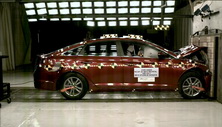
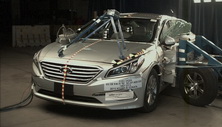
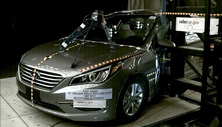
NHTSA crash tests
The agency crash-tested this model year itself. These are its own
photographs and star ratings.
Frontal crash test
Side barrier crash test
Side pole crash test
Photographs taken by NHTSA during its own New Car Assessment Program crash
tests of this model year. Public domain.
Configuration
Overall
Front
Side
Rollover
2017 Hyundai Sonata 4 DR FWD
10.5% risk
When owners complained
A spike years after the car went on sale usually means a part wearing
out on schedule across the whole fleet — the kind of pattern no single
owner can see from inside their own car.
Oct 2016peak 29Sep 2026
NHTSA investigations into the 2017 Hyundai Sonata
An investigation is the step before a recall: the agency has seen enough
complaints to look into a pattern itself. An open one means it thinks
something may be wrong and nothing has been fixed yet.
1
investigation is
still open.
EA25005Opened 21 Oct 2025Still openAIR BAGS:FRONTAL:DRIVER SIDE:INFLATOR MODULE
DTN Air Bag Inflator Rupture
The Office of Defects Investigation (ODI) has become aware of eight vehicle crashes in which a rupture of a Jilin Province Detiannuo Automobile Safety System Co., Ltd. (DTN) air bag inflator occurred during the deployment of the driver side air bag. All eight drivers in these crashes sustained serious or fatal injuries that appear linked to the ruptures. Six of those drivers sustained fatal injuries and two sustained severe injuries. In all eight incidents, the subject inflators had been installed as replacement equipment after the vehicle was involved in a previous crash. Information gathered...
DP22003Opened 12 Sep 2022Closed 12 Dec 2023ENGINE
Loss of Motive Power
The National Highway Traffic Safety Administration (NHTSA) received a letter dated July 13, 2022, petitioning the Agency to initiate a safety defect investigation into loss of motive power allegations attributed to oil drain pan assembly failures on certain Hyundai Motor America, Inc. and Kia America, Inc. vehicles spanning Model Years (MY) 2005-2021. The Petitioners cited examples of complaints indicating that the subject vehicles were experiencing rapid loss of engine oil due to oil drain plug back outs, resulting in loss of motive power and/or catastrophic engine damage. Additional complain...
EA19001Opened 19 Apr 2019Closed 19 Sep 2024AIR BAGS: AIR BAG/RESTRAINT CONTROL MODULE
Electrical overstress
The Office of Defects Investigation (ODI) opened this investigation to determine if the failure of airbags to deploy during severe crashes, in certain vehicles, was the result of a safety related defect. During the investigation a complex failure was studied that can result in non-deployment of subject vehicle air bags and other restraint system devices in severe crash events. The subject vehicles may be equipped with an airbag control unit (ACU) for the supplemental restraint system (SRS) Electronic Control Unit (ECU) manufactured by ZF-TRW. The ECU receives signals from crash sensors mount...
Recalls on the 2017 Hyundai Sonata
A complaint is one owner's allegation. A recall is the point at which
the manufacturer or a regulator agreed the defect is real and dangerous
enough to fix for free — however old the car is.
United States — NHTSA
21V749000
EXTERIOR LIGHTING:TURN SIGNAL
Hyundai Motor America (Hyundai) is recalling certain 2015-2017 Sonata, 2016-2017 Sonata Hybrid, and Sonata Plug-In Hybrid vehicles. The Smart Junction Box (SJB) software logic may not properly interpret the signals received from the multifunction switch, which could cause the turn signal to activate in the opposite direction of what the driver intended.
Risk: A turn signal that activates in the opposite direction of what was intended by the driver increases the risk of a crash.
21V619000
LATCHES/LOCKS/LINKAGES:TRUNK LID:LATCH
Hyundai Motor America (Hyundai) is recalling certain 2017-2018 Sonata, 2016-2018 Sonata Hybrid, 2018-2020 Accent, and 2016-2017 Azera vehicles. The trunk latch may become damaged, preventing the opening of the trunk from the inside. As such, these vehicles fail to comply with the requirements of Federal Motor Vehicle Safety Standard number 401, "Internal Trunk Release."
Risk: A person inside the trunk compartment may become trapped, increasing their risk of injury.
16V956000
AIR BAGS:FRONTAL:DRIVER SIDE:INFLATOR MODULE
Hyundai Motor Company (Hyundai) is recalling certain model year 2017 Hyundai Elantra vehicles manufactured April 15, 2016, to September 13, 2016, and Sonata vehicles manufactured May 27, 2016 to September 16, 2016. In these vehicles, the end seal for the driver's frontal air bag inflator may not have been properly installed, possibly resulting in reduced inflation of the frontal air bag in the event of a crash.
Risk: In the event of a crash, an air bag that does not inflate fully increases the risk of injury.
Canada — Transport Canada
Canada runs its own recall programme, and its campaigns do not
always mirror the American ones.
Recall 2022244178,064 units in Canada
Engine
Issue: Hyundai Auto Canada is conducting a Product Improvement Campaign that provides an update to the engine control module to detect potential problems before an engine fails. An engine failure would cause a sudden loss of power with an inability to restart. Note: This only affects certain vehicles equipped with a 2.0 L Nu GDI engine. For the Sonata model, only the Sonata Hybrid and Plug-In Hybrid (PHEV) models are affected by this campaign. This is an expansion of R0180 (Transport Canada #2021-575). Any vehicle that received a software update under campaign R0180 does not require this update. Safety Risk: A sudden loss of engine power could increase the risk of an accident. An engine failure could also create the risk of a fire. Corrective Actions: Hyundai will notify owners by mail and advise you to take your vehicle to a dealer to update the software for the engine control module. Note: Hyundai recommends that you should always follow the correct vehicle maintenance schedule, which is printed in the Owner's Manual. If you experience unusual engine noise, reduced power, or a check engine/oil warning light, Hyundai advises you to immediately visit a Hyundai dealership to have your vehicle diagnosed.
Recall 2022107309 units in Canada
Engine
Issue: On certain vehicles, the software update that was installed during campaign R0180 (Transport Canada recall numbers 2021-034 or 2021-575) may not be effective. As a result, a second repair is required. Hyundai Auto Canada is conducting a Product Improvement Campaign that provides an update to the engine control module to detect potential problems before an engine fails. An engine failure would cause a sudden loss of power with an inability to restart. Note: This campaign only affects certain Sonata Hybrid (HEV) and Sonata Plug-in Hybrid (PHEV) models equipped with a 2.0 L Nu GDI engine. Safety Risk: A sudden loss of engine power could increase the risk of an accident. An engine failure could also create the risk of a fire. Corrective Actions: Hyundai will notify owners by mail and advise you to take your vehicle to a dealer to update the software for the engine control module. Note: Hyundai recommends that you should always follow the correct vehicle maintenance schedule, which is printed in the Owner's Manual. If you experience unusual engine noise, reduced power, or a check engine/oil warning light, Hyundai advises you to immediately visit a Hyundai dealership to have your vehicle diagnosed.
Recall 202158930,525 units in Canada
Lights And Instruments
Issue: On certain vehicles, an intermittent problem could cause the turn signals to activate in the opposite direction from what a driver intends. For example, when the driver uses the right turn signal, the left signal could turn on. Note: For 2016 and 2017 models, the Sonata Hybrid and Sonata Plug-In Hybrid (PHEV) models are also affected by this recall. Safety Risk: Turn signals that do not work properly may cause confusion and could increase the risk of a crash. Corrective Action: Hyundai will notify owners by mail and instruct you to bring your vehicle to a dealer to update the Smart Junction Box software.
Recall 2021575152,924 units in Canada
Engine
This recall was replaced by Transport Canada Recall No. 2022-244. Issue: Hyundai Auto Canada is conducting a Product Improvement Campaign that provides an update to the engine control module to detect potential problems before an engine fails. An engine failure would cause a sudden loss of power with an inability to restart. Note: This only affects certain vehicles equipped with a 2.0 L Nu GDI engine. For the Sonata model, only the Sonata Hybrid and Plug-In Hybrid (PHEV) models are affected by this campaign. All vehicles previously included in TC # 2021-034 are now part of this new campaign. Safety Risk: A sudden loss of engine power could increase the risk of an accident. An engine failure could also create the risk of a fire. Corrective Actions: Hyundai will notify owners by mail and advise you to take your vehicle to a dealer to update the software for the engine control module. Note: Hyundai recommends that you should always follow the correct vehicle maintenance schedule, which is printed in the Owner's Manual. If you experience unusual engine noise, reduced power, or a check engine/oil warning light, Hyundai advises you to immediately visit a Hyundai dealership to have your vehicle diagnosed.
Recall 202157334,607 units in Canada
Engine
Issue: On certain vehicles equipped with a 2.0 L Nu GDI engine, the connecting rod bearings could wear prematurely. As a result, there could be an abnormal knocking noise from the engine and/or the oil pressure warning light may turn on. If you continue to drive the vehicle with worn connecting rod bearings, the engine could fail. An engine failure would cause a sudden loss of power with an inability to restart. In some cases, a damaged connecting rod could puncture the engine block and cause an oil leak. Note: For the Sonata model, only the Sonata Hybrid is affected by this recall. Additional Note: Engine compartment fires can happen for many different reasons. In some cases, there is too much damage to find the cause of a fire. Safety Risk: A sudden loss of engine power could increase the risk of a crash. Oil that leaks onto a hot component could cause a fire. Corrective Actions: Hyundai will notify owners by mail and instruct you to take your vehicle to a dealer for an engine inspection test, to determine if there is bearing damage. If damage is found, the engine will be replaced. Dealers will also update the software for the engine control module. Note: Hyundai recommends that you should always follow the correct vehicle maintenance schedule, which is printed in the Owner's Manual.
Recall 202149515,963 units in Canada
Structure
Issue: On certain vehicles, a part in the trunk release latch could fail. If this happens, the emergency trunk release located inside the trunk compartment may not work properly. This could prevent a person that is trapped inside the trunk from opening it. Note: For the 2016 model year Sonata, only the Sonata Hybrid is affected by this recall. Safety Risk: If a person is closed inside the trunk compartment, they may not be able to get out. This could create a risk of injury. Corrective Actions: Hyundai will notify owners by mail and instruct you to take your vehicle to a dealer to replace the trunk latch assembly.
Recall 2021034100,927 units in Canada
Engine
This campaign was replaced by Transport Canada No. 2021-575. Issue: Hyundai Auto Canada is conducting a Product Improvement Campaign that provides an update to the engine control module to detect potential problems before an engine fails. An engine failure would cause a sudden loss of power with an inability to restart. Note: This only affects vehicles equipped with a 2.0 L Nu engine. For the Sonata model, only the Sonata Hybrid is affected by this campaign. Safety Risk: A sudden loss of engine power could increase the risk of an accident. An engine failure could also create the risk of a fire. Corrective Actions: The company will notify owners by mail. Owners will be instructed to take their vehicle to a dealer to update the software for the engine control module. Note: Hyundai recommends that you should always follow the correct vehicle maintenance schedule, which is printed in the Owner's Manual. If you experience unusual engine noise, reduced power, or a check engine/oil warning light, Hyundai advises you to immediately visit a Hyundai dealership to have your vehicle diagnosed.
Recall 2019640275,533 units in Canada
Engine
Issue: Hyundai Auto Canada is conducting a Product Improvement Campaign that provides an update to the engine control module to detect potential problems before an engine fails. An engine failure would cause a sudden loss of power with an inability to restart. Note: This affects Sonata and Santa Fe Sport equipped with a 2.4 L GDI or 2.0 L Turbo GDI engine, as well as Tucson equipped with a 2.4 L GDI engine. Safety Risk: A sudden loss of engine power could increase the risk of an accident. Corrective Actions: The company will notify owners by mail. Owners will be instructed to take their vehicle to a dealer to update the software for the engine control module. Note: Vehicles previously repaired under Product Improvement Campaign R0153 (TC # 2019-130) do not require this software update. Owners can find additional information at <a href="http://www.hyundaiengineinfo.ca">www.hyundaiengineinfo.ca</a>.
Reports where the owner recorded a crash, a fire, an injury or a death.
Demopolis, ALCrash1 injured
AIR BAGS
I was involved in a severe motor vehicle collision in a 2017 Hyundai Sonata. The airbags failed to deploy during the crash. I sustained serious injuries and was transported from the scene by EMS. This vehicle has known safety recalls, and I believe the airbag non-deployment may indicate a safety defect.
NHTSA complaint #11711495 — an unverified report by a vehicle owner.
Demopolis, ALCrash1 injured
STRUCTURE:BODY
I was involved in a severe motor vehicle collision in a 2017 Hyundai Sonata. The airbags failed to deploy during the crash. I sustained serious injuries and was transported from the scene by EMS. This vehicle has known safety recalls, and I believe the airbag non-deployment may indicate a safety defect.
NHTSA complaint #11711495 — an unverified report by a vehicle owner.
Demopolis, ALCrash1 injured
ELECTRICAL SYSTEM
I was involved in a severe motor vehicle collision in a 2017 Hyundai Sonata. The airbags failed to deploy during the crash. I sustained serious injuries and was transported from the scene by EMS. This vehicle has known safety recalls, and I believe the airbag non-deployment may indicate a safety defect.
NHTSA complaint #11711495 — an unverified report by a vehicle owner.
Lebanon, PACrash
POWER TRAIN
Airbags did not deploy no indicator light came on before nor after I was struck from my driver side front area and yes it is available for inspection upon request. My safety along with my sisters safety was put at risk due to the negligence and cheapness of the dealership I purchased the car from also from there misleading information and improper inspection before selling me the car Car has not been reproduced or confirmed The car was inspected by a third party appraisal company for damages amounts There were no lights on at all before the accident and I am pretty certain that the dealership cleaared the codes before selling me the car
NHTSA complaint #11708579 — an unverified report by a vehicle owner.
Lebanon, PACrash
AIR BAGS
Airbags did not deploy no indicator light came on before nor after I was struck from my driver side front area and yes it is available for inspection upon request. My safety along with my sisters safety was put at risk due to the negligence and cheapness of the dealership I purchased the car from also from there misleading information and improper inspection before selling me the car Car has not been reproduced or confirmed The car was inspected by a third party appraisal company for damages amounts There were no lights on at all before the accident and I am pretty certain that the dealership cleaared the codes before selling me the car
NHTSA complaint #11708579 — an unverified report by a vehicle owner.
Lebanon, PACrash
FORWARD COLLISION AVOIDANCE: WARNINGS
Airbags did not deploy no indicator light came on before nor after I was struck from my driver side front area and yes it is available for inspection upon request. My safety along with my sisters safety was put at risk due to the negligence and cheapness of the dealership I purchased the car from also from there misleading information and improper inspection before selling me the car Car has not been reproduced or confirmed The car was inspected by a third party appraisal company for damages amounts There were no lights on at all before the accident and I am pretty certain that the dealership cleaared the codes before selling me the car
NHTSA complaint #11708579 — an unverified report by a vehicle owner.
The most recent complaints
In the owners' own words, exactly as filed with NHTSA.
Green River, UT
ENGINE
The vehicle suffered a sudden, catastrophic internal mechanical engine failure out of nowhere without any warning lights or previous symptoms. An inspection of the engine cylinder revealed a physical hole blown through the top of the Cylinder 2 piston, causing immediate and complete loss of engine compression. This sudden structural failure caused the vehicle to completely lose all propulsion and stall unexpectedly while in operation, creating an immediate, severe safety hazard on the road.This vehicle features Hyundai's 2.4L Theta II Gasoline Direct Injection (GDI) engine, a family with a well-documented history of manufacturing defects, severe oil consumption, and catastrophic internal structural failures. Because this failure occurred instantly and without a progressive warning, it put occupants at risk of a severe rear-end collision or stranding in an unsafe traffic pattern. I am filing this safety report because the catastrophic destruction of the internal engine components presents a persistent and dangerous hazard to public safety.
NHTSA complaint #11762255 — an unverified report by a vehicle owner.
Ft Pierce, FL
ENGINE
We had a recall done, Campaign 92C, and every since then the car drives horrible. It's worse when cool, it sputters, and hesitates especially when excellerating. Even after warmed up it seems to slam in and out of gear at low speeds, even when foot is not on the gas. The drive is choppy. The dealership told us to drive it and let the transmission "learn" our driving patterns, but it has not resolved itself. Before campaign car ran smooth, now shuttering and sputtering.
NHTSA complaint #11752878 — an unverified report by a vehicle owner.
Bellmead, TX
SEATS
I was driving and all of a sudden the traction lights turned on and the sterring wheel is hard to turn. Almost go in a car accident. The windows just stopped working and the brakes light constantly keep getting burned out.
NHTSA complaint #11752817 — an unverified report by a vehicle owner.
Bellmead, TX
STEERING
I was driving and all of a sudden the traction lights turned on and the sterring wheel is hard to turn. Almost go in a car accident. The windows just stopped working and the brakes light constantly keep getting burned out.
NHTSA complaint #11752817 — an unverified report by a vehicle owner.
Bellmead, TX
ELECTRICAL SYSTEM
I was driving and all of a sudden the traction lights turned on and the sterring wheel is hard to turn. Almost go in a car accident. The windows just stopped working and the brakes light constantly keep getting burned out.
NHTSA complaint #11752817 — an unverified report by a vehicle owner.
Rowlett, TX
ELECTRICAL SYSTEM
I am writing to report a direct violation of the Theta II Class Action Settlement terms by Hyundai Motor America. This morning , I emailed an Executive Case Manager explicitly explaining that my 2017 Sonata has an active P1326 code, has the 2019 KSDS update, and requires a mandatory diagnostic under NHTSA Recall 17V226 that cannot be denied due to a salvage title. Instead of replying to my facts, the Case Manager Kathy gave me a hard denial falsely framing my federal recall safety request as a "voluntary goodwill warranty" issue to justify her rejection. Please help me in getting authorization my car with Hyundai dealership in Plano Tx to run the bearing rod test and get it fixed.
NHTSA complaint #11751813 — an unverified report by a vehicle owner.
Rowlett, TX
ENGINE
I am writing to report a direct violation of the Theta II Class Action Settlement terms by Hyundai Motor America. This morning , I emailed an Executive Case Manager explicitly explaining that my 2017 Sonata has an active P1326 code, has the 2019 KSDS update, and requires a mandatory diagnostic under NHTSA Recall 17V226 that cannot be denied due to a salvage title. Instead of replying to my facts, the Case Manager Kathy gave me a hard denial falsely framing my federal recall safety request as a "voluntary goodwill warranty" issue to justify her rejection. Please help me in getting authorization my car with Hyundai dealership in Plano Tx to run the bearing rod test and get it fixed.
NHTSA complaint #11751813 — an unverified report by a vehicle owner.
Rowlett, TX
FUEL/PROPULSION SYSTEM
I am writing to report a direct violation of the Theta II Class Action Settlement terms by Hyundai Motor America. This morning , I emailed an Executive Case Manager explicitly explaining that my 2017 Sonata has an active P1326 code, has the 2019 KSDS update, and requires a mandatory diagnostic under NHTSA Recall 17V226 that cannot be denied due to a salvage title. Instead of replying to my facts, the Case Manager Kathy gave me a hard denial falsely framing my federal recall safety request as a "voluntary goodwill warranty" issue to justify her rejection. Please help me in getting authorization my car with Hyundai dealership in Plano Tx to run the bearing rod test and get it fixed.
NHTSA complaint #11751813 — an unverified report by a vehicle owner.
Clermont, FL
UNKNOWN OR OTHER
My engine seemed to be consuming oil way to much I had to do a oil change at 61,000 recommend by tire plus but at 58,000 is when I had to change my oil I also noticed there is a buring smell and its also been leaking oil at times I went to get it checked out by a mechanic at tireplus but they also they are seeing that the oil consumption was not normal and they recommend a possible recall for it because it hazardous for how fast its consuming and the leaks
NHTSA complaint #11748628 — an unverified report by a vehicle owner.
Clermont, FL
ENGINE
My engine seemed to be consuming oil way to much I had to do a oil change at 61,000 recommend by tire plus but at 58,000 is when I had to change my oil I also noticed there is a buring smell and its also been leaking oil at times I went to get it checked out by a mechanic at tireplus but they also they are seeing that the oil consumption was not normal and they recommend a possible recall for it because it hazardous for how fast its consuming and the leaks
NHTSA complaint #11748628 — an unverified report by a vehicle owner.
Hagerstown, MD
ENGINE
Driving home from work on [XXX] (not a safe location)when my car lost power and engine light began to flash. I pulled off to the side of road and called my dad. He came with a code reader and said there was a code P1326. He cleared the code and car drove normally again. 2 days later it began to run rough. I was told about the engine recall so I called Hyundai corporate and told them this same story. I was advised to take to dealership and have the “rod bearings inspected” and shouldn’t matter that my dad cleared the code. The dealership(Massey Hyundai MD) said it had a burnt valve and not part of warranty. But never checked rod bearings. When I called corporate. They said nothing they could do. INFORMATION REDACTED PURSUANT TO THE FREEDOM OF INFORMATION ACT (FOIA), 5 U.S.C. 552(B)(6)
NHTSA complaint #11747509 — an unverified report by a vehicle owner.
Preston, MO
ENGINE
High oil consumption, burning a quart of oil or more every 500 miles since bought used at Hyundai dealership.
NHTSA complaint #11745870 — an unverified report by a vehicle owner.
San Diego, CA
POWER TRAIN
My 2017 Hyundai Sonata SE, equipped with the Theta II 2.4L GDI engine, is experiencing severe powertrain failures including rhythmic metallic engine knocking, catastrophic oil consumption, and un-commanded surges/jumping in speed while driving. These symptoms manifested following an unauthorized engine replacement performed by Hyundai of El Cajon under Repair Order [XXX], where the dealer covertly outsourced my vehicle to a third-party shop (Legacy Motor Works) to install an unverified used salvage engine block rather than a certified factory assembly. This vehicle is a Class Vehicle under In re: Hyundai and Kia Engine Litigation (Case No. [XXX]), and the KSDS software update (Campaign 953) was successfully completed on my vehicle in 2019. The engine knock, surging, and oil consumption are consistent with the known connecting rod bearing failure defect described in NHTSA investigation PE17-007. The dealership is currently denying warranty coverage, citing a mileage limit that does not exist under my Lifetime Powertrain Warranty, and they are withholding physical documentation of the repair terms. The vehicle is also experiencing secondary safety failures, including a continuous airbag SRS warning light (two years) and electrical shorts caused by the salvage-yard alternator installation, which have destroyed 4 to 5 car batteries. This engine failure represents a significant safety hazard, as the vehicle periodically loses power and surges without driver input. I am requesting that NHTSA investigate this pattern of warranty denial, parts-sourcing fraud, and the safety risks posed by this substandard engine installation. INFORMATION REDACTED PURSUANT TO THE FREEDOM OF INFORMATION ACT (FOIA), 5 U.S.C. 552(B)(6)
NHTSA complaint #11745609 — an unverified report by a vehicle owner.
San Diego, CA
ELECTRICAL SYSTEM
My 2017 Hyundai Sonata SE, equipped with the Theta II 2.4L GDI engine, is experiencing severe powertrain failures including rhythmic metallic engine knocking, catastrophic oil consumption, and un-commanded surges/jumping in speed while driving. These symptoms manifested following an unauthorized engine replacement performed by Hyundai of El Cajon under Repair Order [XXX], where the dealer covertly outsourced my vehicle to a third-party shop (Legacy Motor Works) to install an unverified used salvage engine block rather than a certified factory assembly. This vehicle is a Class Vehicle under In re: Hyundai and Kia Engine Litigation (Case No. [XXX]), and the KSDS software update (Campaign 953) was successfully completed on my vehicle in 2019. The engine knock, surging, and oil consumption are consistent with the known connecting rod bearing failure defect described in NHTSA investigation PE17-007. The dealership is currently denying warranty coverage, citing a mileage limit that does not exist under my Lifetime Powertrain Warranty, and they are withholding physical documentation of the repair terms. The vehicle is also experiencing secondary safety failures, including a continuous airbag SRS warning light (two years) and electrical shorts caused by the salvage-yard alternator installation, which have destroyed 4 to 5 car batteries. This engine failure represents a significant safety hazard, as the vehicle periodically loses power and surges without driver input. I am requesting that NHTSA investigate this pattern of warranty denial, parts-sourcing fraud, and the safety risks posed by this substandard engine installation. INFORMATION REDACTED PURSUANT TO THE FREEDOM OF INFORMATION ACT (FOIA), 5 U.S.C. 552(B)(6)
NHTSA complaint #11745609 — an unverified report by a vehicle owner.
San Diego, CA
ENGINE
My 2017 Hyundai Sonata SE, equipped with the Theta II 2.4L GDI engine, is experiencing severe powertrain failures including rhythmic metallic engine knocking, catastrophic oil consumption, and un-commanded surges/jumping in speed while driving. These symptoms manifested following an unauthorized engine replacement performed by Hyundai of El Cajon under Repair Order [XXX], where the dealer covertly outsourced my vehicle to a third-party shop (Legacy Motor Works) to install an unverified used salvage engine block rather than a certified factory assembly. This vehicle is a Class Vehicle under In re: Hyundai and Kia Engine Litigation (Case No. [XXX]), and the KSDS software update (Campaign 953) was successfully completed on my vehicle in 2019. The engine knock, surging, and oil consumption are consistent with the known connecting rod bearing failure defect described in NHTSA investigation PE17-007. The dealership is currently denying warranty coverage, citing a mileage limit that does not exist under my Lifetime Powertrain Warranty, and they are withholding physical documentation of the repair terms. The vehicle is also experiencing secondary safety failures, including a continuous airbag SRS warning light (two years) and electrical shorts caused by the salvage-yard alternator installation, which have destroyed 4 to 5 car batteries. This engine failure represents a significant safety hazard, as the vehicle periodically loses power and surges without driver input. I am requesting that NHTSA investigate this pattern of warranty denial, parts-sourcing fraud, and the safety risks posed by this substandard engine installation. INFORMATION REDACTED PURSUANT TO THE FREEDOM OF INFORMATION ACT (FOIA), 5 U.S.C. 552(B)(6)
NHTSA complaint #11745609 — an unverified report by a vehicle owner.
North Easr, MD
AIR BAGS
The RED light is lit on the dashboard for the airbag. Unable to use steering wheel electronic features which helps with and was designed for hands free controls. I am unable to cycle through the electronic features or engage the cruise control due to the steering wheel electronics are in-op. Please help and get a recall started. This is not on the consumer.
NHTSA complaint #11743557 — an unverified report by a vehicle owner.
North Easr, MD
STEERING
The RED light is lit on the dashboard for the airbag. Unable to use steering wheel electronic features which helps with and was designed for hands free controls. I am unable to cycle through the electronic features or engage the cruise control due to the steering wheel electronics are in-op. Please help and get a recall started. This is not on the consumer.
NHTSA complaint #11743557 — an unverified report by a vehicle owner.
Philadelphia, PA
POWER TRAIN
[XXX] [XXX] [XXX]; [XXX] [XXX] [XXX] Date: XXX To: National Highway Traffic Safety Administration Office of Defects Investigation (ODI) Subject: Formal Safety Defect Complaint – 2017 Hyundai Sonata Theta II Engine Failure, Excessive Oil Consumption, Intake/Engine Component Failure and Safety Hazard Dear Sir or Madam: I am submitting this formal complaint and request for immediate investigation into the dangerous and ongoing mechanical failures involving my 2017 Hyundai Sonata equipped with the Theta II engine. I believe this vehicle contains a serious manufacturing and/or engineering defect that presents a substantial safety hazard to consumers. My vehicle has experienced a pattern of progressive mechanical failure beginning with abnormal and excessive oil consumption, which appears to be directly associated with malfunctioning engine airflow and intake-related components. Specifically, the lower engine airflow system and intake functionality appear defective, placing excessive strain on the intake manifold system and contributing to cascading engine failures. As a result of these failures, the vehicle has experienced: Severe and excessive oil burning/consumption Intake manifold malfunction and abnormal operating stress Suspected overheating and/or premature head gasket failure Ignition coil failure and electrical shorting/misfires Progressive engine deterioration rendering the vehicle unsafe and unreliable Increased risk of sudden engine shutdown, stalling, fire hazard, or catastrophic engine failure while operating The vehicle has become increasingly unreliable and inoperable due to these conditions. These failures raise significant concerns regarding public safety, especially given the known history of complaints and recalls associated with Hyundai Theta II engine defects. I am deeply concerned that this vehicle may reflect a broader pattern of defective manufacturing, insufficient quality control. INFORMATION REDACTED PURSUANT TO THE FREEDOM OF INFORMATION ACT (FOIA), 5 U.S.C. 552(B)(6)
NHTSA complaint #11742419 — an unverified report by a vehicle owner.
Philadelphia, PA
SUSPENSION
[XXX] [XXX] [XXX]; [XXX] [XXX] [XXX] Date: XXX To: National Highway Traffic Safety Administration Office of Defects Investigation (ODI) Subject: Formal Safety Defect Complaint – 2017 Hyundai Sonata Theta II Engine Failure, Excessive Oil Consumption, Intake/Engine Component Failure and Safety Hazard Dear Sir or Madam: I am submitting this formal complaint and request for immediate investigation into the dangerous and ongoing mechanical failures involving my 2017 Hyundai Sonata equipped with the Theta II engine. I believe this vehicle contains a serious manufacturing and/or engineering defect that presents a substantial safety hazard to consumers. My vehicle has experienced a pattern of progressive mechanical failure beginning with abnormal and excessive oil consumption, which appears to be directly associated with malfunctioning engine airflow and intake-related components. Specifically, the lower engine airflow system and intake functionality appear defective, placing excessive strain on the intake manifold system and contributing to cascading engine failures. As a result of these failures, the vehicle has experienced: Severe and excessive oil burning/consumption Intake manifold malfunction and abnormal operating stress Suspected overheating and/or premature head gasket failure Ignition coil failure and electrical shorting/misfires Progressive engine deterioration rendering the vehicle unsafe and unreliable Increased risk of sudden engine shutdown, stalling, fire hazard, or catastrophic engine failure while operating The vehicle has become increasingly unreliable and inoperable due to these conditions. These failures raise significant concerns regarding public safety, especially given the known history of complaints and recalls associated with Hyundai Theta II engine defects. I am deeply concerned that this vehicle may reflect a broader pattern of defective manufacturing, insufficient quality control. INFORMATION REDACTED PURSUANT TO THE FREEDOM OF INFORMATION ACT (FOIA), 5 U.S.C. 552(B)(6)
NHTSA complaint #11742419 — an unverified report by a vehicle owner.
Philadelphia, PA
ENGINE
[XXX] [XXX] [XXX]; [XXX] [XXX] [XXX] Date: XXX To: National Highway Traffic Safety Administration Office of Defects Investigation (ODI) Subject: Formal Safety Defect Complaint – 2017 Hyundai Sonata Theta II Engine Failure, Excessive Oil Consumption, Intake/Engine Component Failure and Safety Hazard Dear Sir or Madam: I am submitting this formal complaint and request for immediate investigation into the dangerous and ongoing mechanical failures involving my 2017 Hyundai Sonata equipped with the Theta II engine. I believe this vehicle contains a serious manufacturing and/or engineering defect that presents a substantial safety hazard to consumers. My vehicle has experienced a pattern of progressive mechanical failure beginning with abnormal and excessive oil consumption, which appears to be directly associated with malfunctioning engine airflow and intake-related components. Specifically, the lower engine airflow system and intake functionality appear defective, placing excessive strain on the intake manifold system and contributing to cascading engine failures. As a result of these failures, the vehicle has experienced: Severe and excessive oil burning/consumption Intake manifold malfunction and abnormal operating stress Suspected overheating and/or premature head gasket failure Ignition coil failure and electrical shorting/misfires Progressive engine deterioration rendering the vehicle unsafe and unreliable Increased risk of sudden engine shutdown, stalling, fire hazard, or catastrophic engine failure while operating The vehicle has become increasingly unreliable and inoperable due to these conditions. These failures raise significant concerns regarding public safety, especially given the known history of complaints and recalls associated with Hyundai Theta II engine defects. I am deeply concerned that this vehicle may reflect a broader pattern of defective manufacturing, insufficient quality control. INFORMATION REDACTED PURSUANT TO THE FREEDOM OF INFORMATION ACT (FOIA), 5 U.S.C. 552(B)(6)
NHTSA complaint #11742419 — an unverified report by a vehicle owner.
Grantsville, UT
ELECTRICAL SYSTEM
Supplemental Information to Existing NHTSA Complaint involving a 2017 Hyundai Sonata Plug-in Hybrid (VIN: [XXX] ) While traveling at approximately 70 MPH on a heavily traveled highway, the vehicle suddenly and completely lost propulsion without warning. The vehicle rapidly decelerated in traffic, creating a significant safety hazard for my family and surrounding motorists and requiring emergency maneuvering to reach the shoulder. The vehicle was towed to an authorized Hyundai dealership, where diagnostic testing identified multiple high-voltage battery system fault codes: • P0B68 • P0B6D • P0B72 The dealership diagnosed a high-voltage battery system failure requiring battery replacement. The vehicle is currently non-drivable. During my research, I found multiple owner reports involving Hyundai Sonata Hybrid and Plug-in Hybrid vehicles experiencing loss of power, hybrid system failures, limp mode conditions, and propulsion-related incidents. I also learned that Hyundai previously issued Recall 18V166000 involving 2016–2018 Sonata Plug-in Hybrid vehicles due to battery management system and voltage protection device concerns that could result in loss of power while driving. Dealer says does appply for my car. Although my vehicle’s fault codes may differ from those addressed in the recall, both involve battery-related failures capable of affecting propulsion and creating a highway safety risk. My concern extends beyond my individual vehicle. A high-voltage battery or battery management system failure that can cause a complete loss of propulsion at highway speed without warning presents a potentially serious safety risk. I respectfully request that NHTSA evaluate whether similar incidents involving Hyundai Sonata Hybrid and Plug-in Hybrid vehicles indicate a broader safety concern warranting further review. I can provide dealership diagnostic reports, repair estimates, towing records, photos, and videos upon request. Thank you for your consideration, [XXX] INFORMATION REDACTED PURSUANT TO THE FREEDOM OF INFORMATI
NHTSA complaint #11741174 — an unverified report by a vehicle owner.
Grantsville, UT
ENGINE
Supplemental Information to Existing NHTSA Complaint involving a 2017 Hyundai Sonata Plug-in Hybrid (VIN: [XXX] ) While traveling at approximately 70 MPH on a heavily traveled highway, the vehicle suddenly and completely lost propulsion without warning. The vehicle rapidly decelerated in traffic, creating a significant safety hazard for my family and surrounding motorists and requiring emergency maneuvering to reach the shoulder. The vehicle was towed to an authorized Hyundai dealership, where diagnostic testing identified multiple high-voltage battery system fault codes: • P0B68 • P0B6D • P0B72 The dealership diagnosed a high-voltage battery system failure requiring battery replacement. The vehicle is currently non-drivable. During my research, I found multiple owner reports involving Hyundai Sonata Hybrid and Plug-in Hybrid vehicles experiencing loss of power, hybrid system failures, limp mode conditions, and propulsion-related incidents. I also learned that Hyundai previously issued Recall 18V166000 involving 2016–2018 Sonata Plug-in Hybrid vehicles due to battery management system and voltage protection device concerns that could result in loss of power while driving. Dealer says does appply for my car. Although my vehicle’s fault codes may differ from those addressed in the recall, both involve battery-related failures capable of affecting propulsion and creating a highway safety risk. My concern extends beyond my individual vehicle. A high-voltage battery or battery management system failure that can cause a complete loss of propulsion at highway speed without warning presents a potentially serious safety risk. I respectfully request that NHTSA evaluate whether similar incidents involving Hyundai Sonata Hybrid and Plug-in Hybrid vehicles indicate a broader safety concern warranting further review. I can provide dealership diagnostic reports, repair estimates, towing records, photos, and videos upon request. Thank you for your consideration, [XXX] INFORMATION REDACTED PURSUANT TO THE FREEDOM OF INFORMATI
NHTSA complaint #11741174 — an unverified report by a vehicle owner.
Grantsville, UT
FUEL/PROPULSION SYSTEM
Supplemental Information to Existing NHTSA Complaint involving a 2017 Hyundai Sonata Plug-in Hybrid (VIN: [XXX] ) While traveling at approximately 70 MPH on a heavily traveled highway, the vehicle suddenly and completely lost propulsion without warning. The vehicle rapidly decelerated in traffic, creating a significant safety hazard for my family and surrounding motorists and requiring emergency maneuvering to reach the shoulder. The vehicle was towed to an authorized Hyundai dealership, where diagnostic testing identified multiple high-voltage battery system fault codes: • P0B68 • P0B6D • P0B72 The dealership diagnosed a high-voltage battery system failure requiring battery replacement. The vehicle is currently non-drivable. During my research, I found multiple owner reports involving Hyundai Sonata Hybrid and Plug-in Hybrid vehicles experiencing loss of power, hybrid system failures, limp mode conditions, and propulsion-related incidents. I also learned that Hyundai previously issued Recall 18V166000 involving 2016–2018 Sonata Plug-in Hybrid vehicles due to battery management system and voltage protection device concerns that could result in loss of power while driving. Dealer says does appply for my car. Although my vehicle’s fault codes may differ from those addressed in the recall, both involve battery-related failures capable of affecting propulsion and creating a highway safety risk. My concern extends beyond my individual vehicle. A high-voltage battery or battery management system failure that can cause a complete loss of propulsion at highway speed without warning presents a potentially serious safety risk. I respectfully request that NHTSA evaluate whether similar incidents involving Hyundai Sonata Hybrid and Plug-in Hybrid vehicles indicate a broader safety concern warranting further review. I can provide dealership diagnostic reports, repair estimates, towing records, photos, and videos upon request. Thank you for your consideration, [XXX] INFORMATION REDACTED PURSUANT TO THE FREEDOM OF INFORMATI
NHTSA complaint #11741174 — an unverified report by a vehicle owner.
Baltimore, MD
UNKNOWN OR OTHER
I am writing to report a serious, premature failure of a primary emissions and safety-related component (the catalytic converter) that has occurred as a direct consequence of a known, unaddressed manufacturing defect in Hyundai's Theta II engine. My vehicle has a documented history of excessive engine oil consumption. This inherent manufacturing flaw causes the engine to burn motor oil at an extreme rate, forcing unburned oil directly into the exhaust system. Over time, this oil has fouled and destroyed the catalytic converter substrate, triggering trouble code P0420 and causing a complete component failure. A dealership inspection at Heritage Hyundai Towson (RO #XXX) confirmed "excessive wear" and failure of the catalytic converter. Because the catalytic converter is failing prematurely due to a liquid defect (excessive oil burning) rather than standard wear and tear, it poses an environmental hazard, compromises vehicle emissions control, and can lead to sudden engine stalling or reduced power while driving, presenting an active safety risk. Hyundai Motor America (Case #XXX) has formally denied assistance to rectify this consequential damage, despite full awareness of the underlying engine defect. I request that NHTSA investigate how Hyundai’s ongoing oil consumption manufacturing issues are causing cascading safety and emissions component failures in these vehicles. INFORMATION REDACTED PURSUANT TO THE FREEDOM OF INFORMATION ACT (FOIA), 5 U.S.C. 552(B)(6)
NHTSA complaint #11740602 — an unverified report by a vehicle owner.
Baltimore, MD
ENGINE
I am writing to report a serious, premature failure of a primary emissions and safety-related component (the catalytic converter) that has occurred as a direct consequence of a known, unaddressed manufacturing defect in Hyundai's Theta II engine. My vehicle has a documented history of excessive engine oil consumption. This inherent manufacturing flaw causes the engine to burn motor oil at an extreme rate, forcing unburned oil directly into the exhaust system. Over time, this oil has fouled and destroyed the catalytic converter substrate, triggering trouble code P0420 and causing a complete component failure. A dealership inspection at Heritage Hyundai Towson (RO #XXX) confirmed "excessive wear" and failure of the catalytic converter. Because the catalytic converter is failing prematurely due to a liquid defect (excessive oil burning) rather than standard wear and tear, it poses an environmental hazard, compromises vehicle emissions control, and can lead to sudden engine stalling or reduced power while driving, presenting an active safety risk. Hyundai Motor America (Case #XXX) has formally denied assistance to rectify this consequential damage, despite full awareness of the underlying engine defect. I request that NHTSA investigate how Hyundai’s ongoing oil consumption manufacturing issues are causing cascading safety and emissions component failures in these vehicles. INFORMATION REDACTED PURSUANT TO THE FREEDOM OF INFORMATION ACT (FOIA), 5 U.S.C. 552(B)(6)
NHTSA complaint #11740602 — an unverified report by a vehicle owner.