Owners have filed 2,657 complaints
about the 2013 Hyundai Sonata with NHTSA between 2012 and 2026.
The largest single group is the engine & cooling.
Across this model's run it ranks 1 of 32 worst.
The letter says how bad. This says what kind — whether this year drew
an unusual number of complaints, unusually dangerous
ones, or failures that arrived unusually early.
The dashed ring is 50 — the national norm. Further out is worse.
Complaint volume — 100
Against the median year of the Hyundai Sonata. 50 means typical for this
model; 100 means roughly double.
Severity — 76
14.8% of these complaints
involved a crash, fire, injury or death, against a national rate of
9.7%.
Early failure — 40
24% of failures with a mileage on record happened under
36,000 miles, against a national rate of
29%.
NHTSA files every complaint against a named sub-assembly, not just a
system. This is the difference between knowing it was "the engine" and
knowing which part of it — the list to hand a mechanic.
Body
4354.4%
Sun/Moon Roof Assembly
1012.7%
Brake Lights
911.4%
Tail Lights
67.6%
Dashboard
33.8%
Pretensioner
33.8%
Wiring
33.8%
Bulbs
22.5%
When it fails
Odometer readings owners gave when they filed. About half of all
complaints include one.
Under 1,000 miles
1167.8%
1,000 – 9,999 miles
704.7%
10,000 – 24,999 miles
1026.8%
25,000 – 49,999 miles
16811.2%
50,000 – 74,999 miles
25216.9%
75,000 – 99,999 miles
30320.3%
100,000 – 149,999 miles
36224.2%
150,000+ miles
1228.2%
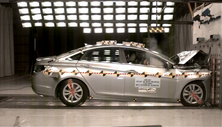
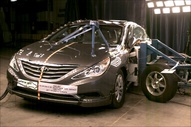
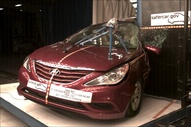
NHTSA crash tests
The agency crash-tested this model year itself. These are its own
photographs and star ratings.
Frontal crash test
Side barrier crash test
Side pole crash test
Photographs taken by NHTSA during its own New Car Assessment Program crash
tests of this model year. Public domain.
Configuration
Overall
Front
Side
Rollover
2013 Hyundai Sonata 4 DR FWD
9.7% risk
When owners complained
A spike years after the car went on sale usually means a part wearing
out on schedule across the whole fleet — the kind of pattern no single
owner can see from inside their own car.
Jun 2012peak 58Sep 2026
NHTSA investigations into the 2013 Hyundai Sonata
An investigation is the step before a recall: the agency has seen enough
complaints to look into a pattern itself. An open one means it thinks
something may be wrong and nothing has been fixed yet.
DP22003Opened 12 Sep 2022Closed 12 Dec 2023ENGINE
Loss of Motive Power
The National Highway Traffic Safety Administration (NHTSA) received a letter dated July 13, 2022, petitioning the Agency to initiate a safety defect investigation into loss of motive power allegations attributed to oil drain pan assembly failures on certain Hyundai Motor America, Inc. and Kia America, Inc. vehicles spanning Model Years (MY) 2005-2021. The Petitioners cited examples of complaints indicating that the subject vehicles were experiencing rapid loss of engine oil due to oil drain plug back outs, resulting in loss of motive power and/or catastrophic engine damage. Additional complain...
EA21003Opened 22 Dec 2021Closed 5 Feb 2024ENGINE
Engine Fires
On March 29, 2019, the Office of Defects Investigation (ODI) opened two Preliminary Evaluations (PE19-003 on Hyundai and PE19-004 on Kia) to broadly investigate incidents of non-crash fires (regardless of origin or operational status of the vehicle) on various model year Hyundai and Kia vehicles. During the PE investigations, Hyundai and Kia issued several recalls to address vehicle fires, including those due to engine failures involving various engine types. The remedies for the engine failure recalls typically involve engine inspection (to detect existing damage), and if necessary, engine...
DP21003Opened 12 Nov 2021Closed 20 Jun 2023VEHICLE SPEED CONTROL:THROTTLE
Throttle control system vulnerabilities
The Office of Defects Investigation (ODI) of the National Highway Traffic Safety Administration (NHTSA) received a petition letter dated October 10, 2021, requesting an investigation of possible defects in the electronic throttle control (ETC) system on certain Kia vehicles resulting in the opening of DP21-003. Accordingly, Model Year (MY) 2005-2016 Kia Optima/K5, MY 2006-2015 Kia Sorento, MY 2007-2016 Hyundai Elantra, MY 2007-2016 Hyundai Santa Fe, MY 2006-2015 Hyundai Sonatas are all part of the subject population. The petition was originally filed as a Vehicle Owner Questionnaire that can b...
EA19001Opened 19 Apr 2019Closed 19 Sep 2024AIR BAGS: AIR BAG/RESTRAINT CONTROL MODULE
Electrical overstress
The Office of Defects Investigation (ODI) opened this investigation to determine if the failure of airbags to deploy during severe crashes, in certain vehicles, was the result of a safety related defect. During the investigation a complex failure was studied that can result in non-deployment of subject vehicle air bags and other restraint system devices in severe crash events. The subject vehicles may be equipped with an airbag control unit (ACU) for the supplemental restraint system (SRS) Electronic Control Unit (ECU) manufactured by ZF-TRW. The ECU receives signals from crash sensors mount...
PE19003Opened 29 Mar 2019Closed 22 Dec 2021ELECTRICAL SYSTEM:12V/24V/48V BATTERY:CABLES
Non-crash Vehicle Fires
During this Preliminary Evaluation (PE), the Office of Defects Investigation (ODI) assessed the scope, frequency and potential safety-related consequences of non-crash vehicle fires caused by both engine failures and failures of other vehicle systems/components in model year (MY) 2011-2014 Hyundai Sonata and Santa Fe vehicles equipped with Theta II and Lambda II engines (approximately 1.3 million vehicles). ODI also reviewed field data of other Hyundai vehicles equipped with Theta II, Gamma, Nu and Lambda engines (approximately 4.8 million). As a result of this PE, Hyundai has issued NHTSA Rec...
DP18003Opened 21 Aug 2018Closed 10 May 2019ELECTRICAL SYSTEM:12V/24V/48V BATTERY:CABLES
Non-crash Vehicle Fires
In a letter dated June 11, 2018, the Center for Auto Safety (CAS) petitioned the National Highway Traffic Safety Administration (NHTSA) to initiate a safety defect investigation into non-collision related fires on model year (MY) 2011-2014 Kia Optima and Sorento, and Hyundai Sonata and Santa Fe vehicles. In a letter dated July 24, 2018, CAS requested that MY 2010-2015 Kia Soul vehicles be added to the petition. CAS stated that there is a higher number of complaints to NHTSA regarding non-crash fires on these vehicles compared to other similar vehicles. The Office of Defects Investigation (ODI)...
PE18003Opened 16 Mar 2018Closed 30 Aug 2019AIR BAGS: AIR BAG/RESTRAINT CONTROL MODULE
Air bags may be disabled during crash
The Office of Defects Investigation (ODI) opened PE18-003 on 3/16/18 to investigate incidents involving crashes, resulting in significant collision related damage, where the frontal airbags failed to deploy. ODI reviewed complaint data, available design, test, and field data on the model year (MY) 2011 Hyundai Sonata, MY 2012-2013 Kia Forte and Forte Koup vehicles. ODI also evaluated data from the automotive air bag system supplier, ZF-TRW (ZF), to review vehicles that may contain the same air bag control unit (ACU) used in the subject vehicles. Hyundai Motor America (HMA) issued recall No. 18...
RQ17004Opened 18 May 2017Closed 22 Dec 2021ENGINE
Scope and Timeliness
NHTSA opened Recall Query (RQ) 17-004 to investigate the timeliness and scope of Hyundai?s Theta II GDI engine recalls (Recall Nos. 15V-568 and 17V-226), and Hyundai?s compliance with reporting requirements. On November 23, 2020, the Agency entered into a Consent Order with Hyundai to administratively resolve NHTSA?s assertions of violations of law in connection with RQ17-004. NHTSA?s assertions included that Hyundai may be liable for civil penalties on multiple grounds, including the untimeliness of Recall Nos. 15V-568 and 17V-226, inaccuracies in Hyundai?s recall reports, and that a required...
Recalls on the 2013 Hyundai Sonata
A complaint is one owner's allegation. A recall is the point at which
the manufacturer or a regulator agreed the defect is real and dangerous
enough to fix for free — however old the car is.
United States — NHTSA
22V312000
FUEL SYSTEM, GASOLINE:DELIVERY:HOSES, LINES/PIPING, AND FITTINGS
Hyundai Motor America (Hyundai) is recalling certain 2013-2014 Sonata vehicles. The low pressure fuel hose that connects the low pressure fuel pump to the direct injection fuel pump may crack over time, due to heat generated within the engine compartment.
Risk: A cracked fuel hose may leak fuel, which can increase the risk of a fire.
20V121000
FUEL SYSTEM, GASOLINE:DELIVERY:HOSES, LINES/PIPING, AND FITTINGS
Hyundai Motor America (Hyundai) is recalling certain 2013-2014 Sonata vehicles. The low pressure fuel hose that connects the low pressure fuel pump to the direct injection fuel pump may crack over time due to heat generated within the engine compartment.
Risk: If the fuel line cracks, a fuel leak can occur, increasing the risk of a fire.
18V934000
ENGINE
Hyundai Motor America (Hyundai) is recalling certain 2011-2014 Sonata and 2013-2014 Santa Fe Sport vehicles previously repaired under recall numbers 15V-568 and 17V-226. The high pressure fuel pipe that connects to the fuel pump outlet may have been damaged, misaligned, or improperly torqued during the engine replacement procedure, allowing fuel to leak from the pipe.
Risk: A fuel leak in the presence of an ignition source can increase the risk of a fire.
18V137000
SEAT BELTS:PRETENSIONER
Hyundai Motor America (Hyundai) is recalling certain 2011-2013 Sonata and 2011-2012 Sonata Hybrid vehicles. On February 27, 2018, Hyundai Motor Company (Hyundai) notified NHTSA that they were recalling 154,753 model year 2011 Sonata vehicles. On April 18, 2018, Hyundai expanded the recall to include an additional 425,305 model year 2012-2013 Sonata and 2011-2012 Sonata Hybrid vehicles. In the event of a crash, the air bag control unit (ACU) may short circuit, preventing the frontal air bags, seat belt pretensioners, and side air bags from deploying.
Risk: If the frontal air bags, seat belt pretensioners, and side air bags are disabled, there is an increased risk of injury to the vehicle occupants in the event of a vehicle crash that necessitates deployment of these safety systems.
17V617000
SEAT BELTS:PRETENSIONER
Hyundai Motor America (Hyundai) is recalling certain 2011-2014 Sonata and 2011-2015 Sonata Hybrid vehicles previously repaired under recall campaign 17V-152. The seat belt linkages for both front seat belts may detach from the seat belt anchor pretensioners.
Risk: If the seat belt linkage detaches from the seat belt anchorage, it can not properly restrain the occupant in the event of a crash, increasing the risk of injury.
17V226000
ENGINE AND ENGINE COOLING:ENGINE
Hyundai Motor America (Hyundai) is recalling certain 2013-2014 Sonata and Santa Fe Sport vehicles. Machining errors during the engine manufacturing process may cause premature bearing wear within the engine.
Risk: Bearing wear may result in the engine seizing, increasing the risk of a crash.
17V152000
SEAT BELTS:FRONT:ANCHORAGE
Hyundai Motor America (Hyundai) is recalling certain 2011-2014 Sonata and 2011-2015 Sonata Hybrid vehicles. In the affected vehicles, the seat belt linkages for both front seat belts may detach from the seat belt anchor pretensioners.
Risk: In the event of a crash, if the seat belts detach from the anchor pretensioners, it can increase the risk of injury.
14V434000
POWER TRAIN:AUTOMATIC TRANSMISSION
Hyundai Motor Company (Hyundai) is recalling certain model year 2011-2014 Sonata vehicles manufactured December 11, 2009, through May 29, 2014. In the affected vehicles, the transmission shift cable may detach from from the shift lever pin.
Risk: If the transmission shift cable detaches, the transmission gear selection may not match the indicated gear and the vehicle may move in an unintended or unexpected direction, increasing the risk of a crash. Furthermore, when the driver parks the vehicle, despite selecting the 'PARK' position, the transmission may not be in 'PARK.' If the vehicle is not in the 'PARK' position and the parking brake is not applied, there is a risk the vehicle will roll away as the driver and other occupants exit the vehicle or anytime thereafter. A vehicle rollaway increases the risk of injury to exiting occupants and bystanders.
Canada — Transport Canada
Canada runs its own recall programme, and its campaigns do not
always mirror the American ones.
Recall 2024080353,849 units in Canada
Brakes
Issue: On certain vehicles, brake fluid could leak into the control module for the antilock brake system (ABS) and cause it to short circuit. Note: This recall replaces recall R0246 (Transport Canada recall number 2023-527). For the Sonata model, only the Sonata Hybrid model is affected by this recall. Safety Risk: A short circuit could create a fire risk, even while the vehicle is parked and turned off. Corrective Actions: Hyundai will notify owners by mail and advise you to take your vehicle to a dealership to replace the fuse for the ABS module. Hyundai recommends that you should park your vehicle outdoors and away from other vehicles or structures until the recall repairs have been completed.
Recall 20231043,494 units in Canada
Electrical
Issue: Hyundai is conducting a special service campaign to upgrade the safety plug fuse. On certain Sonata Hybrid (HEV) models, the safety plug fuse in the power relay assembly could blow and cause a sudden loss of hybrid system power. Safety Risk: A loss of hybrid system power may increase the risk of a crash. Corrective Actions: Hyundai will notify owners by mail and instruct you to take your vehicle to a dealership to replace the 125-A safety plug with one that has a 150-A rating.
Recall 202224213,474 units in Canada
Fuel System
Issue: Over time, the fuel feed line to the high-pressure fuel pump could leak. If this happens, there could be a fuel odour or fuel leak in the engine compartment. Note: This recall includes all vehicles that didn't have the fuel feed line replaced under recall R0166 (Transport Canada #2020-084). Safety Risk: A fuel leak can create the risk of a fire. Corrective Actions: Hyundai will notify owners by mail and instruct you to take your vehicle to a dealership to replace the fuel feed line.
Recall 202161251,508 units in Canada
Engine
Issue: Hyundai Auto Canada is conducting a Product Improvement Campaign that provides an update to the engine control module to detect potential problems before an engine fails. An engine failure would cause a sudden loss of power with an inability to restart. Note: This only affects vehicles equipped with a 2.4 L MPI engine. For the Sonata model, only the Sonata Hybrid is affected by this campaign. All vehicles previously included in TC # 2021-033 are now part of this new campaign. Vehicles that were previously repaired under campaign R0181 (Transport Canada #2021-033) do not require this software update. Safety Risk: A sudden loss of engine power could increase the risk of an accident. An engine failure could also create the risk of a fire. Corrective Actions: The company will notify owners by mail. Owners will be instructed to take their vehicle to a dealer to update the software for the engine control module. Note: Hyundai recommends that you should always follow the correct vehicle maintenance schedule, which is printed in the Owner's Manual. If you experience unusual engine noise, reduced power, or a check engine/oil warning light, Hyundai advises you to immediately visit a Hyundai dealership to have your vehicle diagnosed.
Recall 202059214,549 units in Canada
Engine
Issue: On certain vehicles equipped with a 1.6 L GDI, 2.0 L GDI, or 2.4 L MPI engine, the connecting rod bearings could wear prematurely. As a result, there could be an abnormal knocking noise from the engine and/or the oil pressure warning light may turn on. If you continue to drive the vehicle with worn connecting rod bearings, the engine could fail. An engine failure would cause a sudden loss of power with an inability to restart. In some cases, a damaged connecting rod could puncture the engine block and cause an oil leak. Note: For the Sonata model, only the Sonata Hybrid and Plug-In Hybrid (PHEV) models are affected by this recall. Additional Note: Engine compartment fires can happen for many different reasons. In some cases, there is too much damage to find the cause of a fire. Safety Risk: A sudden loss of engine power could increase the risk of a crash. Oil that leaks onto a hot component could cause a fire. Corrective Actions: Hyundai will notify owners by mail and instruct you to take your vehicle to a dealer for an engine inspection test, to determine if there is bearing damage. If damage is found, the engine will be replaced. Dealers will also update the software for the engine control module. Note: Hyundai recommends that you should always follow the correct vehicle maintenance schedule, which is printed in the Owner's Manual.
Recall 202008413,552 units in Canada
Fuel System
This recall was replaced by Transport Canada Recall No. 2022-242. Issue: Over time, the fuel feed line to the high-pressure fuel pump could crack. If this happens, there could be a fuel odour or fuel leak in the engine compartment. Safety Risk: A fuel leak can create the risk of a fire. Corrective Actions: Hyundai will notify owners by mail and instruct you to take your vehicle to a dealer to complete the required repairs.
Recall 2019640275,533 units in Canada
Engine
Issue: Hyundai Auto Canada is conducting a Product Improvement Campaign that provides an update to the engine control module to detect potential problems before an engine fails. An engine failure would cause a sudden loss of power with an inability to restart. Note: This affects Sonata and Santa Fe Sport equipped with a 2.4 L GDI or 2.0 L Turbo GDI engine, as well as Tucson equipped with a 2.4 L GDI engine. Safety Risk: A sudden loss of engine power could increase the risk of an accident. Corrective Actions: The company will notify owners by mail. Owners will be instructed to take their vehicle to a dealer to update the software for the engine control module. Note: Vehicles previously repaired under Product Improvement Campaign R0153 (TC # 2019-130) do not require this software update. Owners can find additional information at <a href="http://www.hyundaiengineinfo.ca">www.hyundaiengineinfo.ca</a>.
Recall 2019130255,370 units in Canada
Engine
Issue: Hyundai Auto Canada is conducting a Product Improvement Campaign that provides an update to the engine control module to detect potential problems before an engine fails. An engine failure would cause a sudden loss of power with an inability to restart. Note: This affects Sonata and Santa Fe Sport equipped with a 2.4 L GDI or 2.0 L Turbo GDI engine, as well as Tucson equipped with a 2.4 L GDI engine. Safety Risk: A sudden loss of engine power could increase the risk of an accident. Corrective Actions: The company will notify owners by mail. Owners will be instructed to take their vehicle to a dealer to update the software for the engine control module. Note: Vehicles repaired under Service Campaigns, C0336, C0344, or C0347, already have this software update. Owners can find additional information at <a href="http://www.hyundaiengineinfo.ca">www.hyundaiengineinfo.ca</a>.
Reports where the owner recorded a crash, a fire, an injury or a death.
Lyndora, PAFire
ENGINE
When my father was driving, the vehicle stalled out with no prior odd activity. He pulled over to the side of the road and attempted to start the vehicle. He saw smoke, opened the hood, saw flames and cleared the area of the vehicle. Due to the large Hyundai/Kia engine recall for his year of vehicle, the engine had been replaced 2-3 times and ONLY EVER been serviced by the dealership. We do not know if all recall repair work had been done, because there was also a fuel line recall which was "fixed" in 2020 and 2022.
NHTSA complaint #11751024 — an unverified report by a vehicle owner.
Lyndora, PAFire
FUEL/PROPULSION SYSTEM
When my father was driving, the vehicle stalled out with no prior odd activity. He pulled over to the side of the road and attempted to start the vehicle. He saw smoke, opened the hood, saw flames and cleared the area of the vehicle. Due to the large Hyundai/Kia engine recall for his year of vehicle, the engine had been replaced 2-3 times and ONLY EVER been serviced by the dealership. We do not know if all recall repair work had been done, because there was also a fuel line recall which was "fixed" in 2020 and 2022.
NHTSA complaint #11751024 — an unverified report by a vehicle owner.
at 168,000 milesLexington, SC1 injured
AIR BAGS
The contact owns a 2013 Hyundai Sonata. The contact stated while occupying the front driver's seat of the parked vehicle, the air bag suddenly deployed without impact. The contact stated that the air bag warning light might have been illuminated. The air bag hit the contact's face. The contact sustained a stinging sensation from the right side of the face and forehead, headaches and moderate neck pain. The contact did not seek medical assistance. The vehicle was taken to the dealer, where it was determined that the driver's air bag, the air bag module and clockspring needed to be replaced. The vehicle was not repaired. The manufacturer was notified of the failure, but no assistance was provided. The failure mileage was approximately 168,000.
NHTSA complaint #11741223 — an unverified report by a vehicle owner.
Norfolk, VACrash
ENGINE
Engine was replaced in 2023. In March 2026 there was a fuel line leak to include fuel misting near heat components. The vehicle was in a fender bender but Hyundai determined this did not cause the leak which eludes to this being a faulty installation of the engine replacement associated with the recall. I’ve reviewed my 2023 engine replacement invoice. I see the Service Kits were used to transfer parts from my old engine, but the High-Pressure Fuel Pipe (35340-2G710) is not listed. Per Hyundai's GDI service protocols and Recall 180, that pipe is a one-time-use safety component that should not be reused during an engine swap due to fire risk. Since it is leaking now, it’s clear the old pipe was reused and has failed. I'm asked for a goodwill replacement because this was a procedural error during the 2023 warranty work and was denied. This is a safety issue.
NHTSA complaint #11737231 — an unverified report by a vehicle owner.
Norfolk, VACrash
FUEL/PROPULSION SYSTEM
Engine was replaced in 2023. In March 2026 there was a fuel line leak to include fuel misting near heat components. The vehicle was in a fender bender but Hyundai determined this did not cause the leak which eludes to this being a faulty installation of the engine replacement associated with the recall. I’ve reviewed my 2023 engine replacement invoice. I see the Service Kits were used to transfer parts from my old engine, but the High-Pressure Fuel Pipe (35340-2G710) is not listed. Per Hyundai's GDI service protocols and Recall 180, that pipe is a one-time-use safety component that should not be reused during an engine swap due to fire risk. Since it is leaking now, it’s clear the old pipe was reused and has failed. I'm asked for a goodwill replacement because this was a procedural error during the 2023 warranty work and was denied. This is a safety issue.
NHTSA complaint #11737231 — an unverified report by a vehicle owner.
Hialeah, FLFire
ENGINE
Car engine caught fire. Allstate notified pictures provided below.
NHTSA complaint #11734019 — an unverified report by a vehicle owner.
The most recent complaints
In the owners' own words, exactly as filed with NHTSA.
Palmyra, PA
FUEL/PROPULSION SYSTEM
The safety recall (Hyundai Recall 227, NHTSA Recall 22V-312) repair on my 2013 Hyundai Sonata (previously completed by a Hyundai dealership prior to my purchase in April 2026) has suffered a critical mechanical failure. In May 2026, within 30 days of driving the vehicle, the recalled safety component completely failed while the vehicle was in operation on a public roadway. This sudden failure created an immediate safety hazard, resulting in complete fuel loss, forcing me to immediately pull over and have the vehicle towed to a repair facility (Meineke).An independent mechanical inspection confirmed that the exact component covered under the manufacturer's original safety recall had failed again. Because a critical, manufacturer-designated safety recall remedy failed to permanently correct the underlying defect within 30 days of use, this vehicle remains an active safety hazard.
NHTSA complaint #11763450 — an unverified report by a vehicle owner.
Lake Mary, FL
ENGINE
Knock sensor has detected a failure. Check engine light is flashing and the car is in limp mode.
NHTSA complaint #11763154 — an unverified report by a vehicle owner.
Fayetteville, NC
ENGINE
On September 8, 2026, while driving a 2013 Hyundai Sonata Limited at highway speed, the check-engine light began flashing and the vehicle suddenly lost power. The vehicle slowed to approximately 40 mph, then approximately 20 mph, before the engine completely shut off. I had to maneuver the vehicle to the side of the highway while surrounding traffic continued traveling at highway speeds. This created a serious risk of a rear-end collision or other accident. The engine would not operate afterward and appears to have seized. The vehicle had approximately 100,000 miles at the time of the incident. There had been no clear warning of an imminent engine failure before the check-engine light began flashing and the vehicle lost power. The vehicle has not yet received a complete diagnostic inspection, so the precise cause of the failure is currently unknown. The vehicle is available for inspection upon request. No crash, fire, or injuries occurred, but the sudden and severe loss of power created an immediate safety hazard.
NHTSA complaint #11762781 — an unverified report by a vehicle owner.
Macomb, IL
ENGINE
I am reporting a serious engine failure involving my 2013 Hyundai Sonata. The vehicle's engine was previously inspected by a Hyundai dealership as part of a Hyundai engine recall. I followed Hyundai's instructions and brought the vehicle to the dealership for the required inspection. I was informed that the engine passed the inspection, and an orange marking was placed on the oil dipstick. The Hyundai dealership should have the service record documenting this recall inspection. Many years later, at approximately 120,000 miles, the same engine suddenly failed without warning and became locked/seized. A mechanic attempted to turn the engine and determined that it would not turn. I understand that many years had passed and the vehicle had accumulated additional mileage since the recall inspection. I am not claiming that the previous recall issue necessarily caused the current failure. However, I believe the circumstances warrant investigation because this is the same engine that had previously been inspected under a Hyundai engine recall and determined to have passed the inspection. The vehicle had been routinely maintained. Much of the routine maintenance was performed outside Hyundai dealerships by a mechanic in my family and by me, so the Hyundai dealership service history may not contain all maintenance records. I am concerned that the sudden engine seizure may represent a safety-related engine defect or may potentially be related to the previously recalled engine condition. An unexpected engine seizure can result in a sudden loss of propulsion and create a significant safety risk if it occurs while the vehicle is being driven. I am requesting that NHTSA review this complaint, including the vehicle's recall history and any related complaints or investigations involving the 2013 Hyundai Sonata, and determine whether this failure warrants further investigation. The Hyundai dealership that performed the recall inspection have documentation of that inspection.
NHTSA complaint #11762394 — an unverified report by a vehicle owner.
at 52,973 milesDania Beach, FL
ENGINE
The contact owns a 2013 Hyundai Sonata. The contact stated that while driving 40 MPH, the vehicle suddenly lost power. The contact was able to coast to the side of the road and turned off the vehicle. The vehicle was unable to restart on the side of the road. The vehicle was towed to a certified mechanic who diagnosed that the engine had seized and needed to be replaced. The vehicle was then towed to the dealer, who confirmed the diagnosis. The dealer asked the contact to provide receipts of past oil changes. After submitting the information to the manufacturer, the request to cover the repair was denied. The vehicle remained with the dealer for a month. The manufacturer was informed of the failure by the dealer. The failure mileage was 52,973.
NHTSA complaint #11761893 — an unverified report by a vehicle owner.
Camden, TN
ENGINE
I was on [XXX] . I was going 70 mph and then my car just instantly stopped accelerating. The check engine started flashing and I pulled to the side. There was a knocking noise and I just stopped. I called my son to come and get us and then my uncle told it to my house. I have several friends that work on cars and have a a tester. Of course they tested it in that same code came up as if it was the knocking center, so I had another friend come and tested with a different tester with the knocking sensor out his own cylinder three it’s not the knocking center the bearing in the motor is on cylinder two, which that’s what it is. I put my pen. I I put my pin number on the website and it’s showing that my car is affected. No it’s not showing on y’all‘s recall because it’s not something that you’re gonna recall. I have a history of my car motor being fixed every six years if I need to provide that, I will email that I’ve been given the runaround to get my car fixed because it’s not showing up on y’all recall, but it is a recall for the bearing in the motor we could’ve gotten hurt no warning no nothing. I just want to be done right because I’ve had my car service for the last six years and nothing went wrong. I just want y’all to be fair and do right and put that on y’all’s recall, I would hate to take this further but if I have to, I will sincerely [XXX]. INFORMATION REDACTED PURSUANT TO THE FREEDOM OF INFORMATION ACT (FOIA), 5 U.S.C. 552(B)(6)
NHTSA complaint #11759571 — an unverified report by a vehicle owner.
Tolleson, AZ
ENGINE
MY ENGINE WAS DECREASING IN SPEED AND SHUTTING OFF IF I BRAKE TO SLOW DOWN ON MAJOR EXRESSWAYS AND LOCAL ROADS. I WAS ADVISE BY MY DEALERSHIP MECHANIC SHOP THAT MY ENGINE HAD A RECALL AND NEED TO HAVE IT TOWED TO A HYUNDAI SERVICE DEALER FOR A REPLACEMENT ENGINE . MY ENGINE LIGHT ON THE DASHBOARD HAD A CONSTANT BLINKING LIGHT. MY VEHICLE WAS INSPECTED CAMELBACK HYUNDAI AND A NEW ENGINE WAS REPLACED. THE DEALERSHIP IS HOLDING MY VEHICLE HOSTAGE DEMANDING I PAY 2500.00 FOR REPLACEMENT ENGINE THAT WAS A RECALL. THEY ARE THREATENING TO PLACE AN ABANDONMENT CHARGE AGAINST ME
NHTSA complaint #11756752 — an unverified report by a vehicle owner.
Birmingham, AL
ENGINE
Excessive oil consumption. I lose 3 qt of oil every 1200 miles. I have had the required maintenance on the car and still having excessive oil consumption.
NHTSA complaint #11756370 — an unverified report by a vehicle owner.
Saint Paul, MN
AIR BAGS
My 2013 Hyundai Sonata (VIN [XXX]) suffered a driver's airbag clock spring failure, completely disabling the primary restraint safety system. ABS light was on, the horn and all other electronics on the steering wheel were not functioning. All symptoms indicated in the recall This vehicle is explicitly covered under Hyundai Extended Warranty Campaign TXXA/TXXJ for 15 years/unlimited miles. However, Hyundai's validation systems are actively rejecting my VIN and blocking my federal right to a cost-free safety remedy or repair reimbursement. I replaced clock-spring and mechanic suggested i check into the recall. I attached receipt for repairs INFORMATION REDACTED PURSUANT TO THE FREEDOM OF INFORMATION ACT (FOIA), 5 U.S.C. 552(B)(6)
NHTSA complaint #11755968 — an unverified report by a vehicle owner.
Saint Paul, MN
STEERING
My 2013 Hyundai Sonata (VIN [XXX]) suffered a driver's airbag clock spring failure, completely disabling the primary restraint safety system. ABS light was on, the horn and all other electronics on the steering wheel were not functioning. All symptoms indicated in the recall This vehicle is explicitly covered under Hyundai Extended Warranty Campaign TXXA/TXXJ for 15 years/unlimited miles. However, Hyundai's validation systems are actively rejecting my VIN and blocking my federal right to a cost-free safety remedy or repair reimbursement. I replaced clock-spring and mechanic suggested i check into the recall. I attached receipt for repairs INFORMATION REDACTED PURSUANT TO THE FREEDOM OF INFORMATION ACT (FOIA), 5 U.S.C. 552(B)(6)
NHTSA complaint #11755968 — an unverified report by a vehicle owner.
Saint Paul, MN
SERVICE BRAKES
My 2013 Hyundai Sonata (VIN [XXX]) suffered a driver's airbag clock spring failure, completely disabling the primary restraint safety system. ABS light was on, the horn and all other electronics on the steering wheel were not functioning. All symptoms indicated in the recall This vehicle is explicitly covered under Hyundai Extended Warranty Campaign TXXA/TXXJ for 15 years/unlimited miles. However, Hyundai's validation systems are actively rejecting my VIN and blocking my federal right to a cost-free safety remedy or repair reimbursement. I replaced clock-spring and mechanic suggested i check into the recall. I attached receipt for repairs INFORMATION REDACTED PURSUANT TO THE FREEDOM OF INFORMATION ACT (FOIA), 5 U.S.C. 552(B)(6)
NHTSA complaint #11755968 — an unverified report by a vehicle owner.
Surprise, AZ
ENGINE
This vehicle is subject to a known Theta II connecting rod bearing defect (Recall 162 / KSDS) and a related class action settlement. On October 2, 2025, the vehicle stalled while entering the highway. It was taken to Ken Garff Hyundai Surprise, and the following day, October 3, 2025, it entered engine protection mode (limp mode) during the dealership's own test drive, the exact behavior the Knock Sensor Detection System is designed to trigger for connecting rod bearing wear. The dealership's own service advisor documented in writing, as early as December 27, 2025, that he did not like how the vehicle ran and drove and wanted to resubmit a warranty claim. Despite this documented concern, on May 5, 2026, the dealership's service manager told Hyundai corporate that nothing was wrong with the vehicle and that it could be picked up. Hyundai corporate maintained that the engine had passed bearing clearance testing on two occasions, October 3, 2025 and May 23, 2026. I was told the vehicle was safe and retrieved it on June 29, 2026, out of necessity after my family's other vehicle was totaled in an accident. Approximately ten days later, the engine failed completely while I was driving with my family in the vehicle. Hyundai's own repair order documented the crankshaft as seized at over 95 lb-ft of torque. Hyundai subsequently approved and completed a full engine replacement. I am filing this report because a vehicle with a documented, known defect and a documented internal safety concern was represented to me as safe to drive, and it failed catastrophically with my family inside it within days of that representation
NHTSA complaint #11754108 — an unverified report by a vehicle owner.
Uniontown, PA
POWER TRAIN
Car stalls when I’m at a red light, very dangerous
NHTSA complaint #11752933 — an unverified report by a vehicle owner.
Lyndora, PAFire
ENGINE
When my father was driving, the vehicle stalled out with no prior odd activity. He pulled over to the side of the road and attempted to start the vehicle. He saw smoke, opened the hood, saw flames and cleared the area of the vehicle. Due to the large Hyundai/Kia engine recall for his year of vehicle, the engine had been replaced 2-3 times and ONLY EVER been serviced by the dealership. We do not know if all recall repair work had been done, because there was also a fuel line recall which was "fixed" in 2020 and 2022.
NHTSA complaint #11751024 — an unverified report by a vehicle owner.
Lyndora, PAFire
FUEL/PROPULSION SYSTEM
When my father was driving, the vehicle stalled out with no prior odd activity. He pulled over to the side of the road and attempted to start the vehicle. He saw smoke, opened the hood, saw flames and cleared the area of the vehicle. Due to the large Hyundai/Kia engine recall for his year of vehicle, the engine had been replaced 2-3 times and ONLY EVER been serviced by the dealership. We do not know if all recall repair work had been done, because there was also a fuel line recall which was "fixed" in 2020 and 2022.
NHTSA complaint #11751024 — an unverified report by a vehicle owner.
Tucson, AZ
ENGINE
Bought car from a used car dealership, car fax report filed 3 other owners, with a well maintenance report on file with oil change done atleast every 5K miles. Bought car in January 2026, maintenance had been done before car was taken off the lot. At 3k miles since hsving the ca on 05/15/26 I got my oil changed and cabin filters replaced. It’s only been less than 1500 miles and car engine had reportedly seized.
NHTSA complaint #11750382 — an unverified report by a vehicle owner.
at 124,000 milesMyrtle Beach, SC
ELECTRICAL SYSTEM:HORN
The contact owns a 2013 Hyundai Sonata. The contact stated that while driving at 60 MPH, the airbag warning light illuminated, and the horn failed to engage as intended. Additionally, the vehicle failed to respond when the accelerator pedal was depressed. The vehicle was taken to the dealer where it was diagnosed that the brake vacuum pump was not operating correctly and needed to be replaced. The vehicle was repaired by replacing the clock spring. The contact related the failure to a clock spring warranty extension TSB; however, the VIN was excluded. The manufacturer was notified of the failure and offered no assistance. The failure mileage was 124,000.
NHTSA complaint #11749065 — an unverified report by a vehicle owner.
Wentzville, MO
ENGINE
Driving my car, oil light comes on. I take to a local mechanic who said he sees this often, my engine is going to seize up and confirmed via VIN my car is affected by the Sonata Engine Recall campaign XXX. Vanessa At Hyundai said to take it to a dealership immediately for further inspection as it may not be safe to drive. Took to dealership on XXX. While at the dealership, service manager said on XXX “my car was perfect, didn’t know why it was even there and trying to find something wrong with it was like chasing unicorns.” I said please look again and on XXX the engine seized up as it was taken on a drive by said advisor. Via dealership, they took pictures of manifold, but Hyundai denied my replacing my engine per the recall. I called Hyundai to request an appeal and received a case number/case manager ( Madge case # XXX) on XXX. I then submitted maintenance records which showed at least one oil change at each requested interval and still denied on XXX. I continued to call both parties: dealership & case manager but got no reply. I received my case manager’s direct line at Hyundai on XXX via [XXX] who said no notes were on file and case manager would return call in 1-3 days and he has never returned my calls, nor has the service manager who said my car was in perfect driving condition. Today is July 8 and I am still waiting for a written letter or phone call explaining the reason for my denial. Napelton Hyundai is also charging me $215.00 for the engine inspection when my paperwork shows a NO CHARGE to you. INFORMATION REDACTED PURSUANT TO THE FREEDOM OF INFORMATION ACT (FOIA), 5 U.S.C. 552(B)(6)
NHTSA complaint #11749190 — an unverified report by a vehicle owner.
at 124,000 milesMyrtle Beach, SC
AIR BAGS:FRONTAL:DRIVER CLOCKSPRING/SPIRAL CASSETTE
The contact owns a 2013 Hyundai Sonata. The contact stated that while driving at 60 MPH, the airbag warning light illuminated, and the horn failed to engage as intended. Additionally, the vehicle failed to respond when the accelerator pedal was depressed. The vehicle was taken to the dealer where it was diagnosed that the brake vacuum pump was not operating correctly and needed to be replaced. The vehicle was repaired by replacing the clock spring. The contact related the failure to a clock spring warranty extension TSB; however, the VIN was excluded. The manufacturer was notified of the failure and offered no assistance. The failure mileage was 124,000.
NHTSA complaint #11749065 — an unverified report by a vehicle owner.
Hammond, IN
ENGINE
Engine developed a loud rod-bearing knock at approx. 107,771 miles, consistent with the Theta II GDI connecting-rod bearing defect addressed by NHTSA Recall 17V-226 (Hyundai Recall 162). The vehicle was taken out of service and delivered to Webb Hyundai, Highland, IN, on 06/13/2026, where it remains. Hyundai's own campaign records confirm Recall 162 (GDI engine inspection/replacement) was completed on this VIN on 10/02/2017 and the KSDS engine-monitoring software (Service Campaign 953) was installed 08/09/2019 - yet the engine has now failed in exactly the manner the recall was meant to remedy, indicating the recall remedy was ineffective for this vehicle. Hyundai Motor America (case #42847594) has refused repair, citing a "branded title"; the only brand on the title is a "Not Actual Mileage" odometer disclosure, not a salvage or rebuilt brand. NHTSA guidance is that title branding is not a valid basis for denying a recall remedy. The defect poses a risk of sudden engine failure and stalling while driving. No crash, fire, or injury. Requesting NHTSA review of recall remedy effectiveness and of Hyundai's denial.
NHTSA complaint #11748947 — an unverified report by a vehicle owner.
Acworth, GA
POWER TRAIN
My vehicle began experiencing excessive oil consumption several years before the engine failed. In approximately 2019, I reported the oil consumption to an authorized Hyundai dealership and expressed concern that my vehicle might have one of the known Theta II engine defects. I was told the Knock Sensor Detection System (KSDS) campaign had been completed and that my vehicle was not one requiring engine replacement. The excessive oil consumption continued. On June 6, 2026, the engine developed severe metal knocking, misfires, and became unsafe to operate. I was concerned the engine could fail completely or lose power while driving, creating a safety hazard for myself and others. The vehicle had to be towed to a Hyundai dealership on June 7, 2026. Hyundai of Kennesaw inspected the vehicle and verbally advised that the engine failure was caused by connecting rod bearing failure. Although the dealership identified connecting rod bearing failure, Hyundai Motor America declined to replace the engine and instead advised that it would not proceed with repairs because of the settlement provisions related to the vehicle's age and mileage. As a result, the vehicle remains inoperable. I am submitting this report because I believe this engine failure presents a significant safety concern due to the potential for sudden engine failure or loss of power while driving. I am also concerned that I reported symptoms years before the failure, yet the engine ultimately failed from the same type of defect associated with many Hyundai Theta II engines.
NHTSA complaint #11747939 — an unverified report by a vehicle owner.
Acworth, GA
ENGINE
My vehicle began experiencing excessive oil consumption several years before the engine failed. In approximately 2019, I reported the oil consumption to an authorized Hyundai dealership and expressed concern that my vehicle might have one of the known Theta II engine defects. I was told the Knock Sensor Detection System (KSDS) campaign had been completed and that my vehicle was not one requiring engine replacement. The excessive oil consumption continued. On June 6, 2026, the engine developed severe metal knocking, misfires, and became unsafe to operate. I was concerned the engine could fail completely or lose power while driving, creating a safety hazard for myself and others. The vehicle had to be towed to a Hyundai dealership on June 7, 2026. Hyundai of Kennesaw inspected the vehicle and verbally advised that the engine failure was caused by connecting rod bearing failure. Although the dealership identified connecting rod bearing failure, Hyundai Motor America declined to replace the engine and instead advised that it would not proceed with repairs because of the settlement provisions related to the vehicle's age and mileage. As a result, the vehicle remains inoperable. I am submitting this report because I believe this engine failure presents a significant safety concern due to the potential for sudden engine failure or loss of power while driving. I am also concerned that I reported symptoms years before the failure, yet the engine ultimately failed from the same type of defect associated with many Hyundai Theta II engines.
NHTSA complaint #11747939 — an unverified report by a vehicle owner.
N Chesterfield, VA
STEERING
. The horn on steering wheel only works when steering wheel is turned completely right, and it is available for inspection upon request. . My safety and others put at risk, when needing to use horn to warn pedestrian or another driver of near miss incidents. . Problem been reproduced and confirmed by independent service center. . Component been inspected by authorized mechanic shop. . There are no warning lames, messages or other symptoms of the problem prior to the failure in this vehicle, and problem started on 6/02/2026 on my way home from work when I tried to use horn to warn another vehicle and it didn't work.
NHTSA complaint #11745672 — an unverified report by a vehicle owner.
N Chesterfield, VA
UNKNOWN OR OTHER
. The horn on steering wheel only works when steering wheel is turned completely right, and it is available for inspection upon request. . My safety and others put at risk, when needing to use horn to warn pedestrian or another driver of near miss incidents. . Problem been reproduced and confirmed by independent service center. . Component been inspected by authorized mechanic shop. . There are no warning lames, messages or other symptoms of the problem prior to the failure in this vehicle, and problem started on 6/02/2026 on my way home from work when I tried to use horn to warn another vehicle and it didn't work.
NHTSA complaint #11745672 — an unverified report by a vehicle owner.
Brookhaven, MS
ENGINE
I was a victim of odometer fraud I bought a car in February of this year and on my odometer it has like 144,000 miles but in my carfax it states the car has about 300,000 miles.
NHTSA complaint #11745721 — an unverified report by a vehicle owner.