Owners have filed 998 complaints
about the 2016 Hyundai Sonata with NHTSA between 2016 and 2026.
The largest single group is the engine & cooling.
Across this model's run it ranks 7 of 32 worst.
The letter says how bad. This says what kind — whether this year drew
an unusual number of complaints, unusually dangerous
ones, or failures that arrived unusually early.
The dashed ring is 50 — the national norm. Further out is worse.
Complaint volume — 72
Against the median year of the Hyundai Sonata. 50 means typical for this
model; 100 means roughly double.
Severity — 54
10.4% of these complaints
involved a crash, fire, injury or death, against a national rate of
9.7%.
Early failure — 49
29% of failures with a mileage on record happened under
36,000 miles, against a national rate of
29%.
NHTSA files every complaint against a named sub-assembly, not just a
system. This is the difference between knowing it was "the engine" and
knowing which part of it — the list to hand a mechanic.
Body
3056.6%
Oil/Lubrication
59.4%
Sun/Moon Roof Assembly
59.4%
Automatic Emergency Braking
47.5%
Key/Sender
35.7%
Adaptive Cruise Control
23.8%
Warnings
23.8%
Blind Spot Detection
23.8%
When it fails
Odometer readings owners gave when they filed. About half of all
complaints include one.
Under 1,000 miles
246.8%
1,000 – 9,999 miles
226.2%
10,000 – 24,999 miles
329.0%
25,000 – 49,999 miles
5615.8%
50,000 – 74,999 miles
7320.6%
75,000 – 99,999 miles
5515.5%
100,000 – 149,999 miles
8022.6%
150,000+ miles
123.4%
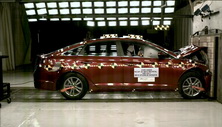
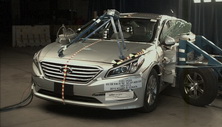
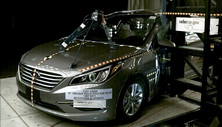
NHTSA crash tests
The agency crash-tested this model year itself. These are its own
photographs and star ratings.
Frontal crash test
Side barrier crash test
Side pole crash test
Photographs taken by NHTSA during its own New Car Assessment Program crash
tests of this model year. Public domain.
Configuration
Overall
Front
Side
Rollover
2016 Hyundai Sonata 4 DR FWD
10.5% risk
When owners complained
A spike years after the car went on sale usually means a part wearing
out on schedule across the whole fleet — the kind of pattern no single
owner can see from inside their own car.
Jan 2016peak 26Sep 2026
NHTSA investigations into the 2016 Hyundai Sonata
An investigation is the step before a recall: the agency has seen enough
complaints to look into a pattern itself. An open one means it thinks
something may be wrong and nothing has been fixed yet.
DP22003Opened 12 Sep 2022Closed 12 Dec 2023ENGINE
Loss of Motive Power
The National Highway Traffic Safety Administration (NHTSA) received a letter dated July 13, 2022, petitioning the Agency to initiate a safety defect investigation into loss of motive power allegations attributed to oil drain pan assembly failures on certain Hyundai Motor America, Inc. and Kia America, Inc. vehicles spanning Model Years (MY) 2005-2021. The Petitioners cited examples of complaints indicating that the subject vehicles were experiencing rapid loss of engine oil due to oil drain plug back outs, resulting in loss of motive power and/or catastrophic engine damage. Additional complain...
EA21003Opened 22 Dec 2021Closed 5 Feb 2024ENGINE
Engine Fires
On March 29, 2019, the Office of Defects Investigation (ODI) opened two Preliminary Evaluations (PE19-003 on Hyundai and PE19-004 on Kia) to broadly investigate incidents of non-crash fires (regardless of origin or operational status of the vehicle) on various model year Hyundai and Kia vehicles. During the PE investigations, Hyundai and Kia issued several recalls to address vehicle fires, including those due to engine failures involving various engine types. The remedies for the engine failure recalls typically involve engine inspection (to detect existing damage), and if necessary, engine...
EA19001Opened 19 Apr 2019Closed 19 Sep 2024AIR BAGS: AIR BAG/RESTRAINT CONTROL MODULE
Electrical overstress
The Office of Defects Investigation (ODI) opened this investigation to determine if the failure of airbags to deploy during severe crashes, in certain vehicles, was the result of a safety related defect. During the investigation a complex failure was studied that can result in non-deployment of subject vehicle air bags and other restraint system devices in severe crash events. The subject vehicles may be equipped with an airbag control unit (ACU) for the supplemental restraint system (SRS) Electronic Control Unit (ECU) manufactured by ZF-TRW. The ECU receives signals from crash sensors mount...
PE16010Opened 3 Sep 2016Closed 22 Feb 2017SERVICE BRAKES, HYDRAULIC:FOUNDATION COMPONENTS:DISC:PADS
Electronic Parking Brake
The Office of Defects Investigation opened this investigation on September 3, 2016 based on four reports alleging the rear brakes locked or applied while driving without brake pedal application. One of the reports alleged a fire in the right rear wheel area.The vehicles subject to the investigation are equipped with an optional Electronic Parking Brake (EPB). In this system, an electric motor applies the parking brake by moving the rear brake pads (pads) against the brake rotors (rotors) when activated by the EPB control switch. The EPB is released by the control switch or by selecting a drive...
Recalls on the 2016 Hyundai Sonata
A complaint is one owner's allegation. A recall is the point at which
the manufacturer or a regulator agreed the defect is real and dangerous
enough to fix for free — however old the car is.
United States — NHTSA
21V749000
EXTERIOR LIGHTING:TURN SIGNAL
Hyundai Motor America (Hyundai) is recalling certain 2015-2017 Sonata, 2016-2017 Sonata Hybrid, and Sonata Plug-In Hybrid vehicles. The Smart Junction Box (SJB) software logic may not properly interpret the signals received from the multifunction switch, which could cause the turn signal to activate in the opposite direction of what the driver intended.
Risk: A turn signal that activates in the opposite direction of what was intended by the driver increases the risk of a crash.
17V359000
PARKING BRAKE:INDICATOR LIGHT
Hyundai Motor America (Hyundai) is recalling certain 2015-2016 Sonata and Genesis vehicles. In the affected vehicles, the warning light to indicate that the parking brake is applied may intermittently not illuminate in the dash due to corrosion in the switch.
Risk: If the parking brake indicator is not illuminated when the parking brake is applied, the driver may operate the vehicle with the parking brake partially engaged, increasing the risk of a crash.
16V726000
VISIBILITY:SUN/MOON ROOF ASSEMBLY
Hyundai Motor America (Hyundai) is recalling certain model year 2015-2016 Sonata Hybrid vehicles manufactured December 8, 2014, to August 18, 2015, and Hyundai Sonata vehicles manufactured May 28, 2014, to March 18, 2016, equipped with the panoramic sunroof option. Due to a bonding issue with the sunroof wind deflector, the sunroof panel on the affected vehicles may detach while driving.
Risk: If the sunroof detaches from the vehicle it could become a road hazard, increasing the risk of a crash.
16V615000
AIR BAGS
Hyundai Motor Company (Hyundai) is recalling certain model year 2016 Sonata vehicles manufactured March 28, 2016 through April 12, 2016. The affected vehicles have a driver-side frontal air bag that may not adequately protect the driver's neck from injury in the event of a crash. As such, these vehicles fail to comply with the requirements of Federal Motor Vehicle Safety Standard (FMVSS) number 208, "Occupant Crash Protection."
Risk: A frontal air bag that does not adequately protect the driver's neck may increase their risk of injury in the event of a crash.
16V232000
AIR BAGS:FRONTAL
Hyundai Motor Company (Hyundai) is recalling certain model year 2015-2016 Sonata vehicles manufactured May 29, 2014 to February 11, 2016, 2017 Elantra vehicles manufactured January 12, 2016 to February 22, 2016, and one 2016 Sonata Hybrid vehicle manufactured October 15, 2015. In these vehicles, the driver's frontal air bag may be missing a chemical enhancer required for the second stage air bag deployment, resulting in the second stage not deploying in certain crashes. The primary stage will deploy as intended.
Risk: An air bag that does not inflate increases the risk of injury.
15V678000
ELECTRICAL SYSTEM: INSTRUMENT CLUSTER/PANEL
Hyundai Motor America (Hyundai) is recalling certain model year 2015-2016 Sonata vehicles manufactured May 28, 2014, to August 21, 2015. The affected vehicles are equipped with an Antilock Braking System (ABS) warning light intended to warn the driver if there is an ABS malfunction. In the event of an ABS malfunction, the Brake System warning light will illuminate, but the ABS warning light will not illuminate. Since the vehicles have ABS malfunction lights that do not illuminate, these vehicles fail to comply with the requirements of Federal Motor Vehicle Safety Standard (FMVSS) number 135, "Light Vehicle Brake Systems."
Risk: If the driver is alerted there is a brake system malfunction, but not specifically with the ABS system, the driver may operate the vehicle unaware that the vehicle's brakes may lock up during hard braking, increasing the risk of a crash.
Canada — Transport Canada
Canada runs its own recall programme, and its campaigns do not
always mirror the American ones.
Recall 2022244178,064 units in Canada
Engine
Issue: Hyundai Auto Canada is conducting a Product Improvement Campaign that provides an update to the engine control module to detect potential problems before an engine fails. An engine failure would cause a sudden loss of power with an inability to restart. Note: This only affects certain vehicles equipped with a 2.0 L Nu GDI engine. For the Sonata model, only the Sonata Hybrid and Plug-In Hybrid (PHEV) models are affected by this campaign. This is an expansion of R0180 (Transport Canada #2021-575). Any vehicle that received a software update under campaign R0180 does not require this update. Safety Risk: A sudden loss of engine power could increase the risk of an accident. An engine failure could also create the risk of a fire. Corrective Actions: Hyundai will notify owners by mail and advise you to take your vehicle to a dealer to update the software for the engine control module. Note: Hyundai recommends that you should always follow the correct vehicle maintenance schedule, which is printed in the Owner's Manual. If you experience unusual engine noise, reduced power, or a check engine/oil warning light, Hyundai advises you to immediately visit a Hyundai dealership to have your vehicle diagnosed.
Recall 202158930,525 units in Canada
Lights And Instruments
Issue: On certain vehicles, an intermittent problem could cause the turn signals to activate in the opposite direction from what a driver intends. For example, when the driver uses the right turn signal, the left signal could turn on. Note: For 2016 and 2017 models, the Sonata Hybrid and Sonata Plug-In Hybrid (PHEV) models are also affected by this recall. Safety Risk: Turn signals that do not work properly may cause confusion and could increase the risk of a crash. Corrective Action: Hyundai will notify owners by mail and instruct you to bring your vehicle to a dealer to update the Smart Junction Box software.
Recall 2021575152,924 units in Canada
Engine
This recall was replaced by Transport Canada Recall No. 2022-244. Issue: Hyundai Auto Canada is conducting a Product Improvement Campaign that provides an update to the engine control module to detect potential problems before an engine fails. An engine failure would cause a sudden loss of power with an inability to restart. Note: This only affects certain vehicles equipped with a 2.0 L Nu GDI engine. For the Sonata model, only the Sonata Hybrid and Plug-In Hybrid (PHEV) models are affected by this campaign. All vehicles previously included in TC # 2021-034 are now part of this new campaign. Safety Risk: A sudden loss of engine power could increase the risk of an accident. An engine failure could also create the risk of a fire. Corrective Actions: Hyundai will notify owners by mail and advise you to take your vehicle to a dealer to update the software for the engine control module. Note: Hyundai recommends that you should always follow the correct vehicle maintenance schedule, which is printed in the Owner's Manual. If you experience unusual engine noise, reduced power, or a check engine/oil warning light, Hyundai advises you to immediately visit a Hyundai dealership to have your vehicle diagnosed.
Recall 202149515,963 units in Canada
Structure
Issue: On certain vehicles, a part in the trunk release latch could fail. If this happens, the emergency trunk release located inside the trunk compartment may not work properly. This could prevent a person that is trapped inside the trunk from opening it. Note: For the 2016 model year Sonata, only the Sonata Hybrid is affected by this recall. Safety Risk: If a person is closed inside the trunk compartment, they may not be able to get out. This could create a risk of injury. Corrective Actions: Hyundai will notify owners by mail and instruct you to take your vehicle to a dealer to replace the trunk latch assembly.
Recall 202059214,549 units in Canada
Engine
Issue: On certain vehicles equipped with a 1.6 L GDI, 2.0 L GDI, or 2.4 L MPI engine, the connecting rod bearings could wear prematurely. As a result, there could be an abnormal knocking noise from the engine and/or the oil pressure warning light may turn on. If you continue to drive the vehicle with worn connecting rod bearings, the engine could fail. An engine failure would cause a sudden loss of power with an inability to restart. In some cases, a damaged connecting rod could puncture the engine block and cause an oil leak. Note: For the Sonata model, only the Sonata Hybrid and Plug-In Hybrid (PHEV) models are affected by this recall. Additional Note: Engine compartment fires can happen for many different reasons. In some cases, there is too much damage to find the cause of a fire. Safety Risk: A sudden loss of engine power could increase the risk of a crash. Oil that leaks onto a hot component could cause a fire. Corrective Actions: Hyundai will notify owners by mail and instruct you to take your vehicle to a dealer for an engine inspection test, to determine if there is bearing damage. If damage is found, the engine will be replaced. Dealers will also update the software for the engine control module. Note: Hyundai recommends that you should always follow the correct vehicle maintenance schedule, which is printed in the Owner's Manual.
Recall 2019640275,533 units in Canada
Engine
Issue: Hyundai Auto Canada is conducting a Product Improvement Campaign that provides an update to the engine control module to detect potential problems before an engine fails. An engine failure would cause a sudden loss of power with an inability to restart. Note: This affects Sonata and Santa Fe Sport equipped with a 2.4 L GDI or 2.0 L Turbo GDI engine, as well as Tucson equipped with a 2.4 L GDI engine. Safety Risk: A sudden loss of engine power could increase the risk of an accident. Corrective Actions: The company will notify owners by mail. Owners will be instructed to take their vehicle to a dealer to update the software for the engine control module. Note: Vehicles previously repaired under Product Improvement Campaign R0153 (TC # 2019-130) do not require this software update. Owners can find additional information at <a href="http://www.hyundaiengineinfo.ca">www.hyundaiengineinfo.ca</a>.
Recall 2019130255,370 units in Canada
Engine
Issue: Hyundai Auto Canada is conducting a Product Improvement Campaign that provides an update to the engine control module to detect potential problems before an engine fails. An engine failure would cause a sudden loss of power with an inability to restart. Note: This affects Sonata and Santa Fe Sport equipped with a 2.4 L GDI or 2.0 L Turbo GDI engine, as well as Tucson equipped with a 2.4 L GDI engine. Safety Risk: A sudden loss of engine power could increase the risk of an accident. Corrective Actions: The company will notify owners by mail. Owners will be instructed to take their vehicle to a dealer to update the software for the engine control module. Note: Vehicles repaired under Service Campaigns, C0336, C0344, or C0347, already have this software update. Owners can find additional information at <a href="http://www.hyundaiengineinfo.ca">www.hyundaiengineinfo.ca</a>.
Recall 20190127,027 units in Canada
Engine
Issue: When repairs were completed under recall campaign 2015-428 (Hyundai #R0101) or 2017197 (Hyundai #R0130), the high pressure fuel pipe may not have been properly installed on the fuel pump outlet. A fuel leak could occur if the pipe was damaged, misaligned or improperly torqued during the recall repair. Safety Risk: Leaking fuel in the presence of an ignition source could increase the risk of a fire causing injury and/or property damage. Corrective Actions: The company will notify owners by mail. Owners will be instructed to take their vehicle to a dealer for an inspection. If fuel leakage is detected, the fuel pipe will be replaced with a new one.
Reports where the owner recorded a crash, a fire, an injury or a death.
Newport News, VACrash1 injured
SERVICE BRAKES
I began braking and the brakes locked up. Braking to the floor and the car would not stop resulting in a car crash
NHTSA complaint #11717092 — an unverified report by a vehicle owner.
Buda, TXCrash
AIR BAGS
I was involved in a low-speed collision at a residential intersection after stopping at a stop sign and beginning to proceed. Going under 5 mph, I braked immediately, but contact occurred. Despite relatively minor front-end damage, the driver steering wheel airbag and driver knee airbag deployed. The passenger front airbag did not deploy, and no side or curtain airbags deployed. There was no significant intrusion into the engine compartment or passenger cabin. I am submitting this report due to concern that the driver airbags deployed in a low-speed impact that did not appear severe enough to warrant deployment. Pictures attached
NHTSA complaint #11713027 — an unverified report by a vehicle owner.
Buda, TXCrash
UNKNOWN OR OTHER
I was involved in a low-speed collision at a residential intersection after stopping at a stop sign and beginning to proceed. Going under 5 mph, I braked immediately, but contact occurred. Despite relatively minor front-end damage, the driver steering wheel airbag and driver knee airbag deployed. The passenger front airbag did not deploy, and no side or curtain airbags deployed. There was no significant intrusion into the engine compartment or passenger cabin. I am submitting this report due to concern that the driver airbags deployed in a low-speed impact that did not appear severe enough to warrant deployment. Pictures attached
NHTSA complaint #11713027 — an unverified report by a vehicle owner.
Detroit, MICrash2 injured
SEATS
The driver’s seat / passenger seat assembly, including seat rails, mounting brackets, and Smart Junction Box (SJB) connections if electrical adjustment was involved, completely failed during a crash. The seat lifted off the floor anchors and almost entirely came apart, including both the seat cushion (where you sit) and the backrest, leaving the occupant crushed within the collapsed seat structure, resulting in catastrophic injuries. During the crash, the seat collapsed and disassembled, exposing the occupant to extreme trauma. This caused: •Pelvic fracture •Broken femur, hip, and back •Collapsed lung and punctured liver •Foreign object from the seat mechanism punctured pelvic bone The failure directly contributed to life-threatening injuries that would not have occurred if the seat had remained securely anchored. The malfunction posed an immediate risk of death and permanent disability. Not yet reproduced under controlled conditions. The incident has been documented by police and medical personnel. The vehicle is currently in a tow yard, and we have not had access to it, but it remains available for inspection by Hyundai, NHTSA, or a qualified service center Police: Yes, crash scene documented. •Insurance: We are unsure whether the insurance company has inspected the seat. The vehicle remains in the tow yard and has not been repaired or altered. •Manufacturer (Hyundai): Not yet inspected; formal inspection requested. The vehicle and seat are preserved and ready for inspection by Hyundai, NHTSA, or other qualified representatives. There were no warning lamps, messages, or prior symptoms of seat failure. The seat functioned normally prior to the crash, and the malfunction occurred only during the impact, demonstrating a sudden and catastrophic failure under crash conditions.
NHTSA complaint #11712545 — an unverified report by a vehicle owner.
Detroit, MICrash2 injured
UNKNOWN OR OTHER
The driver’s seat / passenger seat assembly, including seat rails, mounting brackets, and Smart Junction Box (SJB) connections if electrical adjustment was involved, completely failed during a crash. The seat lifted off the floor anchors and almost entirely came apart, including both the seat cushion (where you sit) and the backrest, leaving the occupant crushed within the collapsed seat structure, resulting in catastrophic injuries. During the crash, the seat collapsed and disassembled, exposing the occupant to extreme trauma. This caused: •Pelvic fracture •Broken femur, hip, and back •Collapsed lung and punctured liver •Foreign object from the seat mechanism punctured pelvic bone The failure directly contributed to life-threatening injuries that would not have occurred if the seat had remained securely anchored. The malfunction posed an immediate risk of death and permanent disability. Not yet reproduced under controlled conditions. The incident has been documented by police and medical personnel. The vehicle is currently in a tow yard, and we have not had access to it, but it remains available for inspection by Hyundai, NHTSA, or a qualified service center Police: Yes, crash scene documented. •Insurance: We are unsure whether the insurance company has inspected the seat. The vehicle remains in the tow yard and has not been repaired or altered. •Manufacturer (Hyundai): Not yet inspected; formal inspection requested. The vehicle and seat are preserved and ready for inspection by Hyundai, NHTSA, or other qualified representatives. There were no warning lamps, messages, or prior symptoms of seat failure. The seat functioned normally prior to the crash, and the malfunction occurred only during the impact, demonstrating a sudden and catastrophic failure under crash conditions.
NHTSA complaint #11712545 — an unverified report by a vehicle owner.
Detroit, MICrash2 injured
ELECTRICAL SYSTEM
The driver’s seat / passenger seat assembly, including seat rails, mounting brackets, and Smart Junction Box (SJB) connections if electrical adjustment was involved, completely failed during a crash. The seat lifted off the floor anchors and almost entirely came apart, including both the seat cushion (where you sit) and the backrest, leaving the occupant crushed within the collapsed seat structure, resulting in catastrophic injuries. During the crash, the seat collapsed and disassembled, exposing the occupant to extreme trauma. This caused: •Pelvic fracture •Broken femur, hip, and back •Collapsed lung and punctured liver •Foreign object from the seat mechanism punctured pelvic bone The failure directly contributed to life-threatening injuries that would not have occurred if the seat had remained securely anchored. The malfunction posed an immediate risk of death and permanent disability. Not yet reproduced under controlled conditions. The incident has been documented by police and medical personnel. The vehicle is currently in a tow yard, and we have not had access to it, but it remains available for inspection by Hyundai, NHTSA, or a qualified service center Police: Yes, crash scene documented. •Insurance: We are unsure whether the insurance company has inspected the seat. The vehicle remains in the tow yard and has not been repaired or altered. •Manufacturer (Hyundai): Not yet inspected; formal inspection requested. The vehicle and seat are preserved and ready for inspection by Hyundai, NHTSA, or other qualified representatives. There were no warning lamps, messages, or prior symptoms of seat failure. The seat functioned normally prior to the crash, and the malfunction occurred only during the impact, demonstrating a sudden and catastrophic failure under crash conditions.
NHTSA complaint #11712545 — an unverified report by a vehicle owner.
The most recent complaints
In the owners' own words, exactly as filed with NHTSA.
Tyler, TX
ENGINE
The car died while going 70 on a highway with no warning signs. The car completely shut off and will not turn over or move at all.
NHTSA complaint #11761997 — an unverified report by a vehicle owner.
Kelso, WA
ENGINE
Component & Inspection: Vehicle engine suffered connecting rod bearing failure and entered restricted P1326 "Limp Home Mode" (max 2,000 RPM). The vehicle is grounded and available for inspection at Bud Clary Hyundai in [XXX].Safety Risk: Sudden, unexpected loss of power occurred while driving, placing me and other drivers at immediate risk on public roads due to the vehicle's inability to maintain normal traffic speed or safely accelerate.Dealer & Corporate Confirmation: Active P1326 engine code is confirmed. Car has been held for 14 days. The franchise is violating federal settlement rules by explicitly refusing to execute the mandatory, free mechanical Bearing Clearance Test (BCT) unless I pay out-of-pocket fees.Inspection & Corporate Compliance Failure: Car was brought to the dealer on XXX. The service manager admitted in writing that they are withholding safety diagnostics to protect shop labor hours due to an automated computer flag regarding a clerical title brand discrepancy. Hyundai Corporate is actively enabling this violation; my case manager refuses to issue a manual compliance override for the safety test and is violating federal settlement terms by withholding my contractually mandated alternative transportation.Warning Lamps & Symptoms: Flashing Check Engine Light and limp home mode triggered instantly and unexpectedly on XXX. There were zero warning symptoms, messages, or abnormal noises prior to that date INFORMATION REDACTED PURSUANT TO THE FREEDOM OF INFORMATION ACT (FOIA), 5 U.S.C. 552(B)(6)
NHTSA complaint #11759428 — an unverified report by a vehicle owner.
Mars, PA
ENGINE
My Sonata 2016 suddenly lit up the Check Engine icon, which was blinking. It is available for inspection request, as it's in the shop right now. Added 2 qts of oil just to be safe. Was hoping the light would go away in the morning. It didn't. The car was sputtering and jerking while I was attempting to get where I was going, so I drove a little slower so it wouldn't stall out, which would have caused someone behind me to crash into me if it stopped suddenly. My mechanic said it was engine failure, possibly due to oil burning. Hyundai Dealer told me there is no recall for this issue, but my mechanic said there had been. I was never notified of such, and when I called them, they said that there was no recall, and she acted like she had never heard of the problem. I find that amazing, since on your website, there are some 717 claims of the same problem.
NHTSA complaint #11756308 — an unverified report by a vehicle owner.
Charlotte, NC
ENGINE
My 2016 Hyundai Sonata (VIN: [XXX]) has a serious safety issue involving excessive engine oil consumption. The vehicle loses oil rapidly between changes and requires frequent top‑offs to avoid engine damage. This creates a risk of sudden engine failure while driving. The dealership, South Charlotte Hyundai (10518 Cadillac Street, Pineville, NC 28134), refused to perform Hyundai’s official oil‑consumption test. Instead, they told me to pay $750 for a combustion cleaning and stated it would not fix the underlying problem. They would not document the refusal or provide any testing. I contacted Hyundai Corporate multiple times: • May 21, 2026 – Executive Office complaint submitted • June 3, 2026 – Follow‑up sent • June 29, 2026 – Regional escalation sent My Hyundai case number is XXX. As of XXX Hyundai has not responded to any of my Executive Office or Regional escalations. Only Customer Care replied with a template denial and no investigation. I have been waiting over two months with no action from Hyundai Corporate. I am reporting this because the manufacturer has not addressed a safety‑related defect, the dealership refused required testing, and the vehicle continues to consume oil abnormally. I am requesting NHTSA’s assistance in documenting this defect and Hyundai’s lack of response. INFORMATION REDACTED PURSUANT TO THE FREEDOM OF INFORMATION ACT (FOIA), 5 U.S.C. 552(B)(6)
NHTSA complaint #11755304 — an unverified report by a vehicle owner.
Charlotte, NC
FUEL/PROPULSION SYSTEM
My 2016 Hyundai Sonata (VIN: [XXX]) has a serious safety issue involving excessive engine oil consumption. The vehicle loses oil rapidly between changes and requires frequent top‑offs to avoid engine damage. This creates a risk of sudden engine failure while driving. The dealership, South Charlotte Hyundai (10518 Cadillac Street, Pineville, NC 28134), refused to perform Hyundai’s official oil‑consumption test. Instead, they told me to pay $750 for a combustion cleaning and stated it would not fix the underlying problem. They would not document the refusal or provide any testing. I contacted Hyundai Corporate multiple times: • May 21, 2026 – Executive Office complaint submitted • June 3, 2026 – Follow‑up sent • June 29, 2026 – Regional escalation sent My Hyundai case number is XXX. As of XXX Hyundai has not responded to any of my Executive Office or Regional escalations. Only Customer Care replied with a template denial and no investigation. I have been waiting over two months with no action from Hyundai Corporate. I am reporting this because the manufacturer has not addressed a safety‑related defect, the dealership refused required testing, and the vehicle continues to consume oil abnormally. I am requesting NHTSA’s assistance in documenting this defect and Hyundai’s lack of response. INFORMATION REDACTED PURSUANT TO THE FREEDOM OF INFORMATION ACT (FOIA), 5 U.S.C. 552(B)(6)
NHTSA complaint #11755304 — an unverified report by a vehicle owner.
Hickman, TN
ENGINE
Cylinder 3 misfire code and rough idle/driving car tries to stall out, engine is consuming a quart of oil every 500 miles and has 30psi compression in cylinder 3. Car only has 129k miles
NHTSA complaint #11750150 — an unverified report by a vehicle owner.
Milaca, MN
ENGINE
My 2016 Hyundai Sonata 2.4L suffered an in-transit engine failure and entered emergency limp mode with an active P1326 rod bearing defect code, which is a recognized fire and safety hazard under NHTSA mandates. Service Campaign 953 was successfully completed on August 12, 2019, qualifying the vehicle for a lifetime settlement engine replacement. Walser Hyundai Brooklyn Park (RO #257457) has issued an administrative denial based solely on a prior-salvage title flag from a cosmetic theft recovery. The manufacturer is actively stalling a court-ordered federal safety recall remedy based on an administrative title brand, despite the engine compartment being structurally original and undamaged. Hyundai Corporate Case #42869828 is open but unresolved.
NHTSA complaint #11749029 — an unverified report by a vehicle owner.
at 149,000 milesManawa, WI
ENGINE
The contact owns a 2016 Hyundai Sonata. The contact stated that while driving approximately 60 MPH, the vehicle suddenly shut off with the message "HEV System Failure" displayed. The driver safely pulled over to the side of the road and restarted the vehicle. A towing truck arrived on the scene and reset the diagnostic codes before towing the vehicle. The vehicle was towed to the local dealer. The dealer retrieved several diagnostic trouble codes; however, the dealer was unable to determine the cause of the failure. The vehicle was test-driven but the failure was not duplicated. The vehicle was not diagnosed or repaired. The manufacturer was notified of the failure. The failure mileage was approximately 149,000.
NHTSA complaint #11744248 — an unverified report by a vehicle owner.
at 149,000 milesManawa, WI
HYBRID PROPULSION SYSTEM
The contact owns a 2016 Hyundai Sonata. The contact stated that while driving approximately 60 MPH, the vehicle suddenly shut off with the message "HEV System Failure" displayed. The driver safely pulled over to the side of the road and restarted the vehicle. A towing truck arrived on the scene and reset the diagnostic codes before towing the vehicle. The vehicle was towed to the local dealer. The dealer retrieved several diagnostic trouble codes; however, the dealer was unable to determine the cause of the failure. The vehicle was test-driven but the failure was not duplicated. The vehicle was not diagnosed or repaired. The manufacturer was notified of the failure. The failure mileage was approximately 149,000.
NHTSA complaint #11744248 — an unverified report by a vehicle owner.
Lexington, NC
POWER TRAIN
After the emissions 9c2 recall car hesitant when changing an Hyundai has knowledgement of the problem but don’t have a fix
NHTSA complaint #11743836 — an unverified report by a vehicle owner.
Lexington, NC
ENGINE
After the emissions 9c2 recall car hesitant when changing an Hyundai has knowledgement of the problem but don’t have a fix
NHTSA complaint #11743836 — an unverified report by a vehicle owner.
Palmdale, CA
POWER TRAIN
Went from 65 and dropped down to 40 going up grades on the freeway. Started shaking, check engine light went on and electric battery disappeared from dash. Got to top of grade, went back to normal. Problem repeated on next grades. Car had just left dealership lot an hour prior where it was safety inspected and they said all was fine. Took back to dealership for inspection and they said that there were no codes showing for what happened and all was well with the vehicle, when obviously it was not.
NHTSA complaint #11741506 — an unverified report by a vehicle owner.
Myrtle Beach, SC
EXTERIOR LIGHTING:HEADLIGHTS
I was driving at night and my passenger headlights went out. About 2 years prior the same thing happened but it was the driver side headlight that went out. It was $1100 to get the driver side replaced and now here i am having to pay the same amount to replace the passenger side headlights. It was not a simple replacing the bulb. Something inside went broke causing the dealership to have to install a whole new headlight set.
NHTSA complaint #11741649 — an unverified report by a vehicle owner.
Palmdale, CA
ELECTRICAL SYSTEM
Went from 65 and dropped down to 40 going up grades on the freeway. Started shaking, check engine light went on and electric battery disappeared from dash. Got to top of grade, went back to normal. Problem repeated on next grades. Car had just left dealership lot an hour prior where it was safety inspected and they said all was fine. Took back to dealership for inspection and they said that there were no codes showing for what happened and all was well with the vehicle, when obviously it was not.
NHTSA complaint #11741506 — an unverified report by a vehicle owner.
Palmdale, CA
ENGINE
Went from 65 and dropped down to 40 going up grades on the freeway. Started shaking, check engine light went on and electric battery disappeared from dash. Got to top of grade, went back to normal. Problem repeated on next grades. Car had just left dealership lot an hour prior where it was safety inspected and they said all was fine. Took back to dealership for inspection and they said that there were no codes showing for what happened and all was well with the vehicle, when obviously it was not.
NHTSA complaint #11741506 — an unverified report by a vehicle owner.
Fernandina Beach, FL
POWER TRAIN
The following mandatory software update was performed on my vehicle: ECU SOFTWARE UPDATE FOR THETA II EMISSIONS IMPROVEMENT (SERVICE CAMPAIGN 9C2). After this update my vehicle drivetrain is quite erratic. In particular when the engine is cold it appears to jerk even when in Parking gear position. When cold the drivetrain experiences erratic gear shifts. This provides little confidence when driving and could result in safety issues when merging into traffic. Once the engine has reached its normal operating temperature it still makes occasional gear shift that are jerky and probably not good for the transmission. This vehicle had a very smooth transmission prior to the ECU software update, now I am hesitant when I need to merge into traffic, since I am not sure it will select the correct gear when accelerating. I have reported this to the dealership and Hyundai corporate service center and both indicate that when the engine is cold that the drivetrain can act strange, but once it is up to temperature it should be smooth. I have looked on the web and noticed multiple Hyundai owners with similar engines reporting the same issue after this software update. Hyundai may have satisfied the EPA requirements with this software, but they may have a created a safety issue for the vehicle operator and their passengers.
NHTSA complaint #11738811 — an unverified report by a vehicle owner.
Prattville, AL
UNKNOWN OR OTHER
Car just stated making g noise went into lp.mode now saying k ock sensor
NHTSA complaint #11738691 — an unverified report by a vehicle owner.
Prattville, AL
ELECTRICAL SYSTEM
Car just stated making g noise went into lp.mode now saying k ock sensor
NHTSA complaint #11738691 — an unverified report by a vehicle owner.
Fernandina Beach, FL
ENGINE
The following mandatory software update was performed on my vehicle: ECU SOFTWARE UPDATE FOR THETA II EMISSIONS IMPROVEMENT (SERVICE CAMPAIGN 9C2). After this update my vehicle drivetrain is quite erratic. In particular when the engine is cold it appears to jerk even when in Parking gear position. When cold the drivetrain experiences erratic gear shifts. This provides little confidence when driving and could result in safety issues when merging into traffic. Once the engine has reached its normal operating temperature it still makes occasional gear shift that are jerky and probably not good for the transmission. This vehicle had a very smooth transmission prior to the ECU software update, now I am hesitant when I need to merge into traffic, since I am not sure it will select the correct gear when accelerating. I have reported this to the dealership and Hyundai corporate service center and both indicate that when the engine is cold that the drivetrain can act strange, but once it is up to temperature it should be smooth. I have looked on the web and noticed multiple Hyundai owners with similar engines reporting the same issue after this software update. Hyundai may have satisfied the EPA requirements with this software, but they may have a created a safety issue for the vehicle operator and their passengers.
NHTSA complaint #11738811 — an unverified report by a vehicle owner.
Angleton, TX
ENGINE
After completion of Hyundai Service Campaign 9C2, my 2016 Hyundai Sonata SE is very difficult to drive at low RPMs. Cold start its sluggish and jerks and driving uphill feels like transmission slipping but is not. An additional update to the ECM needs to be conducted ASAP.
NHTSA complaint #11737818 — an unverified report by a vehicle owner.
Charlotte, NC
POWER TRAIN
My 2016 Hyundai Sonata is experiencing severe oil consumption due to a known Hyundai engine defect. The engine burns oil rapidly and loses more than a quart between oil changes. This creates a safety hazard because the engine can stall, seize, or fail while driving. The Hyundai dealership did NOT perform the official Hyundai oil-consumption test. They only checked the dipstick, noted the oil was low, and submitted a request for a paid combustion cleaning. Hyundai declined to pay for the cleaning, and the dealership is refusing to perform the required oil-consumption test unless I pay $750.00. Hyundai Corporate also refused to authorize the test, stating the vehicle is out of warranty, even though this is a known engine defect affecting many Hyundai vehicles. Without the official test, Hyundai will not review the engine defect or consider a goodwill engine replacement. This is a safety issue because the engine can fail without warning. The dealership and Hyundai are refusing to perform the required diagnostic test unless I pay $750, and refusing to review the defect without that test.
NHTSA complaint #11737409 — an unverified report by a vehicle owner.
Charlotte, NC
UNKNOWN OR OTHER
My 2016 Hyundai Sonata is experiencing severe oil consumption due to a known Hyundai engine defect. The engine burns oil rapidly and loses more than a quart between oil changes. This creates a safety hazard because the engine can stall, seize, or fail while driving. The Hyundai dealership did NOT perform the official Hyundai oil-consumption test. They only checked the dipstick, noted the oil was low, and submitted a request for a paid combustion cleaning. Hyundai declined to pay for the cleaning, and the dealership is refusing to perform the required oil-consumption test unless I pay $750.00. Hyundai Corporate also refused to authorize the test, stating the vehicle is out of warranty, even though this is a known engine defect affecting many Hyundai vehicles. Without the official test, Hyundai will not review the engine defect or consider a goodwill engine replacement. This is a safety issue because the engine can fail without warning. The dealership and Hyundai are refusing to perform the required diagnostic test unless I pay $750, and refusing to review the defect without that test.
NHTSA complaint #11737409 — an unverified report by a vehicle owner.
Charlotte, NC
ENGINE
My 2016 Hyundai Sonata is experiencing severe oil consumption due to a known Hyundai engine defect. The engine burns oil rapidly and loses more than a quart between oil changes. This creates a safety hazard because the engine can stall, seize, or fail while driving. The Hyundai dealership did NOT perform the official Hyundai oil-consumption test. They only checked the dipstick, noted the oil was low, and submitted a request for a paid combustion cleaning. Hyundai declined to pay for the cleaning, and the dealership is refusing to perform the required oil-consumption test unless I pay $750.00. Hyundai Corporate also refused to authorize the test, stating the vehicle is out of warranty, even though this is a known engine defect affecting many Hyundai vehicles. Without the official test, Hyundai will not review the engine defect or consider a goodwill engine replacement. This is a safety issue because the engine can fail without warning. The dealership and Hyundai are refusing to perform the required diagnostic test unless I pay $750, and refusing to review the defect without that test.
NHTSA complaint #11737409 — an unverified report by a vehicle owner.
Orange Park, FL
AIR BAGS
Dear Hyundai Customer Care, I am writing to report a safety concern with my 2016 Hyundai Sonata. The dashboard has developed significant cracking near the passenger-side airbag, which raises concerns about proper airbag deployment in the event of an accident. This level of deterioration seems premature and not consistent with normal wear and tear. I would like to know if there are any recalls, service bulletins, or assistance programs related to this issue, and what steps I should take for this issue as it is a safety concern for myself and passengers. I appreciate your prompt attention to this matter. This has had an ongoing issue for awhile.
NHTSA complaint #11735405 — an unverified report by a vehicle owner.
Mount Pleasant, SC
VEHICLE SPEED CONTROL
This vehicle has a major engine flaw; Hyundai USA KNOWS about it, and STILL will not issue a recall for EXCESSIVE OIL CONSUMPTION. First episode: October 2023 at 86,371 miles. Dealership replaced leaking valve cover gasket and changed woefully-soiled spark plugs. Still under manufacturer warranty, but I paid the balance. Second episode: FOUR MONTHS LATER (Feb. 2024; 89,078 miles), another limp mode and Check Engine lamp. The spark plugs are soiled again with oil, so the dealership changes the spark plugs again, instead of addressing the underlying issue - Excessive oil consumption. Still under warranty, yet I pay the bill...AGAIN. Episode Three: October 04, 2024. Hyundai Sonata goes into limp mode again with CHECK ENGINE LIGHT illuminating – cylinder 1 was misfiring. All spark plugs fouled again; all spark plugs replaced. Valve cover gasket was leaking, so that was replaced as well. Yup, I paid for the repairs out-of-pocket. Episode Four: May 02, 2025. Vehicle goes into limp mode again, with CHECK ENGINE LIGHT turning on. Another spark plug fouled up, so it was replaced. Ignition coil replaced as well. Episode Five: June 19, 2025. Limp mode and Check Engine Lamp illuminates yet again, so Hyundai of North Charleston (SC) initiates an oil consumption test. "...[3.5 quarts of] oil consumption is excessive...", yet Hyundai denies everything. Hyundai is actually admitting to an underlying issue but offers ZERO assistance.
NHTSA complaint #11734985 — an unverified report by a vehicle owner.