Owners have filed 545 complaints
about the 2019 Honda Civic with NHTSA between 2019 and 2026.
The largest single group is the fuel & propulsion.
Across this model's run it ranks 17 of 34 worst.
The letter says how bad. This says what kind — whether this year drew
an unusual number of complaints, unusually dangerous
ones, or failures that arrived unusually early.
The dashed ring is 50 — the national norm. Further out is worse.
Complaint volume — 47
Against the median year of the Honda Civic. 50 means typical for this
model; 100 means roughly double.
Severity — 57
11% of these complaints
involved a crash, fire, injury or death, against a national rate of
9.7%.
Early failure — 100
71% of failures with a mileage on record happened under
36,000 miles, against a national rate of
29%.
NHTSA files every complaint against a named sub-assembly, not just a
system. This is the difference between knowing it was "the engine" and
knowing which part of it — the list to hand a mechanic.
Automatic Emergency Braking
2640.0%
Body
1218.5%
Assist
812.3%
Adaptive Cruise Control
710.8%
Warning
57.7%
Warnings
57.7%
Latch
11.5%
Auto Crash Notification
11.5%
When it fails
Odometer readings owners gave when they filed. About half of all
complaints include one.
Under 1,000 miles
96.3%
1,000 – 9,999 miles
4833.6%
10,000 – 24,999 miles
3021.0%
25,000 – 49,999 miles
3021.0%
50,000 – 74,999 miles
1711.9%
75,000 – 99,999 miles
42.8%
100,000 – 149,999 miles
21.4%
150,000+ miles
32.1%
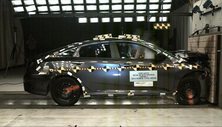
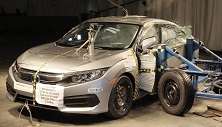
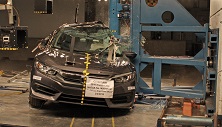
NHTSA crash tests
The agency crash-tested this model year itself. These are its own
photographs and star ratings.
Frontal crash test
Side barrier crash test
Side pole crash test
Photographs taken by NHTSA during its own New Car Assessment Program crash
tests of this model year. Public domain.
Configuration
Overall
Front
Side
Rollover
2019 Honda CIVIC 4 DR FWD
9.5% risk
2019 Honda CIVIC 2 DR FWD
9.3% risk
When owners complained
A spike years after the car went on sale usually means a part wearing
out on schedule across the whole fleet — the kind of pattern no single
owner can see from inside their own car.
Jan 2019peak 25Sep 2026
Recalls on the 2019 Honda Civic
A complaint is one owner's allegation. A recall is the point at which
the manufacturer or a regulator agreed the defect is real and dangerous
enough to fix for free — however old the car is.
United States — NHTSA
26V332000
AIR BAGS:SENSOR:OCCUPANT CLASSIFICATION:FRONT PASSENGER
Honda (American Honda Motor Co.) is recalling certain 2018-2021, 2023 Acura TLX, 2019-2024 RDX, 2017-2020, 2022-2026 MDX, 2017-2021, 2023, 2025 Honda Ridgeline, 2017-2022 Pilot, 2019-2021 Passport, 2018-2026 Odyssey, 2019-2022 Insight, 2019-2021 HR-V, 2018-2020 Fit, 2020-2022 CR-V Hybrid, 2017-2022 CR-V, 2017-2018, 2021 Civic Type R, 2017-2021 Civic hatchback, 2016-2020 Civic coupe, 2016-2022 Civic, 2017-2022 Accord Hybrid, and 2016-2022 Accord vehicles. The front passenger seat weight sensor may crack and short circuit, which can cause the air bags to deploy unintentionally during a crash.
Risk: Air bags that deploy unintentionally during a crash increase the risk of injury.
23V858000
FUEL SYSTEM, GASOLINE:DELIVERY:FUEL PUMP
Honda (American Honda Motor Co.) is recalling certain 2013-2023 Honda Accord, Civic Coupe, Civic Sedan, Civic Hatchback, Civic Type R, CR-V, HR-V, Ridgeline, Odyssey, Acura ILX, MDX, MDX Hybrid, RDX, RLX, TLX, 2019-2022 Honda Insight, Passport, 2020 Honda CR-V Hybrid, 2018-2019 Honda Clarity PHEV, Fit, and 2015-2020 Honda Accord Hybrid, Pilot, Acura NSX vehicles. The fuel pump inside the fuel tank may fail.
Risk: Fuel pump failure can cause an engine stall while driving, increasing the risk of a crash.
21V215000
FUEL SYSTEM, GASOLINE:DELIVERY:FUEL PUMP
Honda (American Honda Motor Co.) is recalling certain 2019-2020 Acura MDX, MDX Sport Hybrid, RDX, TLX, Honda Accord, Civic Hatchback, Insight, 2019 Acura ILX, Honda Accord Hybrid, Civic Coupe, Civic Coupe Si, Civic Sedan, Civic Sedan Si, Civic Type R, Fit, HR-V, Odyssey, Passport, Pilot and Ridgeline, and 2018-2019 CR-V vehicles. The low-pressure fuel pump inside the fuel tank may fail.
Risk: Fuel pump failure can cause an engine stall while driving, increasing the risk of a crash.
20V314000
FUEL SYSTEM, GASOLINE:DELIVERY:FUEL PUMP
Honda (American Honda Motor Co.) is recalling certain 2018-2019 Acura NSX, 2019 Acura RDX, RLX and RLX Sport Hybrid, 2018-2019 Honda Accord, Civic Hatchback, Civic Type R and HR-V, 2019-2020 Insight and 2019 Fit vehicles. The low-pressure fuel pump inside the fuel tank may fail.
Risk: If the fuel pump fails, the engine can stall while driving, increasing the risk of a crash.
Canada — Transport Canada
Canada runs its own recall programme, and its campaigns do not
always mirror the American ones.
Recall 202625112,371 units in Canada
Seats And Restraints
Issue: On certain vehicles, the weight sensor for the front passenger seat may not have been manufactured properly. As a result, the passenger-front airbag and knee airbag could deploy in a crash that doesn't require them to. Note: This recall is an expansion of Transport Canada recall no. 2024-059. If the weight sensor fails, the SRS warning light would turn on in the instrument panel. Safety Risk: An airbag system that doesn't work properly could increase the risk of injury in a crash. Corrective Actions: The company will notify owners by mail and advise you to take your vehicle to a dealership to replace the passenger-front seat weight sensor.
Recall 202559939 units in Canada
Wheels
Issue: This recall is for certain aluminum wheels that were installed before delivery or sold as a dealer accessory. On certain vehicles, the wheels may not have been manufactured properly. As a result, the wheel nut(s) could loosen and cause the wheel(s) to detach. Safety Risk: A wheel separation could cause a loss of control and increase the risk of a crash. Additionally, a wheel that separates could create a road hazard for others. Corrective Actions: Honda will notify owners by mail and advise you to take your vehicle to a dealership to inspect and, if necessary, replace the hub(s), wheel(s) and wheel nut(s).
Recall 2024262291,588 units in Canada
Fuel System
Issue: This recall is for low-pressure fuel pumps installed on certain vehicles or sold at dealerships as a replacement part. On certain vehicles, the low-pressure fuel pump could fail. If this happens, the engine may run rough or may not start and the check engine light may turn on. This could also result in a sudden loss of engine power while driving. Note: This recall replaces Transport Canada recall no. 2023-679. Vehicles that were repaired under that recall don't require this repair. Safety Risk: A sudden loss of engine power could increase the risk of a crash. Corrective Actions: The company will notify owners by mail and advise you to take your vehicle to a dealership to replace the fuel pump motor.
Recall 2023679285,461 units in Canada
Fuel System
This recall was replaced by Transport Canada recall no. 2024-262. Issue: This recall is for low-pressure fuel pumps installed on certain vehicles or sold at dealerships as a replacement part. On certain vehicles, the low-pressure fuel pump could fail. If this happens, the engine may run rough or may not start and the check engine light may turn on. This could also result in a sudden loss of engine power while driving. Note: This is an expansion of Transport Canada recall nos. 2020-236 and 2021-182. Safety Risk: A sudden loss of engine power could increase the risk of a crash. Corrective Actions: The company will notify owners by mail and advise you to take your vehicle to a dealership to replace the fuel pump motor.
Recall 202118280,176 units in Canada
Fuel System
Issue: On certain vehicles, the low-pressure fuel pump could fail. If this happens, then engine may run rough or may not start and the check engine light may turn on. This could also result in a sudden loss of engine power while driving. Note: This is an expansion of Transport Canada Recall No. 2020-236. Safety Risk: A sudden loss of engine power could increase the risk of a crash. Corrective Actions: The company will notify owners by mail and instruct you to take your vehicle to a dealer to replace the fuel pump motor.
Recall 202023610,456 units in Canada
Fuel System
Issue: On certain vehicles, the low-pressure fuel pump could fail. If this happens, then engine may run rough or may not start and the check engine light may turn on. This could also result in a sudden loss of engine power while driving. Note: For the RLX model, only the RLX Hybrid model is affected by this recall. Safety Risk: A sudden loss of engine power could increase the risk of a crash. Corrective Actions: The company will notify owners by mail and instruct you to take your vehicle to a dealer to replace the fuel pump motor.
Reports where the owner recorded a crash, a fire, an injury or a death.
Lawndale, CACrash2 injured
VEHICLE SPEED CONTROL
While I was driving my 2019 Honda Civic Sport in active traffic, I suddenly lost control of the vehicle. The car starting jerking violently left to reach right and in a circle , causing me to be pulled and swayed across the freeway. The steering wheel became extremely loose and was spinning freely, and I was unable to control the direction the vehicle was traveling. The vehicle eventually swayed and carried me into the right lane gutter lane I was blessed to put the vehicle in park and come to a stop. This was extremely dangerous because I was surrounded by moving traffic and could not steer the vehicle to avoid other cars. I genuinely believed I could be seriously injured or killed. I am extremely fortunate that another vehicle did not strike me and my coworker who was in the passenger seat while my vehicle was moving uncontrollablly. This also happened to me in 2023 and I immediately swayed to right lane. The interaction was quicker because I was able to park into safety fast. Honda said nothing was wrong and never believed me. I can't drive this car. It will cause death.
NHTSA complaint #11760667 — an unverified report by a vehicle owner.
Lawndale, CACrash2 injured
STEERING
While I was driving my 2019 Honda Civic Sport in active traffic, I suddenly lost control of the vehicle. The car starting jerking violently left to reach right and in a circle , causing me to be pulled and swayed across the freeway. The steering wheel became extremely loose and was spinning freely, and I was unable to control the direction the vehicle was traveling. The vehicle eventually swayed and carried me into the right lane gutter lane I was blessed to put the vehicle in park and come to a stop. This was extremely dangerous because I was surrounded by moving traffic and could not steer the vehicle to avoid other cars. I genuinely believed I could be seriously injured or killed. I am extremely fortunate that another vehicle did not strike me and my coworker who was in the passenger seat while my vehicle was moving uncontrollablly. This also happened to me in 2023 and I immediately swayed to right lane. The interaction was quicker because I was able to park into safety fast. Honda said nothing was wrong and never believed me. I can't drive this car. It will cause death.
NHTSA complaint #11760667 — an unverified report by a vehicle owner.
Philadelphia,, PA1 injured
AIR BAGS
She was at Wendy's ([XXX]) drive-through when, all of a sudden, her airbag deployed. Hematoma on her chest and head, pain in her left hand, back, neck, and ribs, and stomach pain; her ears are buzzing, and difficulty breathing; heart disease and breast nodes. INFORMATION REDACTED PURSUANT TO THE FREEDOM OF INFORMATION ACT (FOIA), 5 U.S.C. 552(B)(6)
NHTSA complaint #11756801 — an unverified report by a vehicle owner.
Elizabethtown, KYCrash
SEAT BELTS
I was in a multi-directional wreck and the driver seat belt didn’t engage/lock holding me in place. I was able to move around enough that I broke the console and hit other areas that should have been out of reach if I had been held in my seat.
NHTSA complaint #11755845 — an unverified report by a vehicle owner.
The Honda Sensing automated system suffered a phantom activation. It threw a visual brake warning, violently applied the brakes, and jerked the steering wheel causing a collision impact to other vehicles. This collision led to a major accident with an 18 wheeler and 6 additional cars. The car automated system has done this prior when there were no objects in front of the vehicle.
NHTSA complaint #11750975 — an unverified report by a vehicle owner.
Rock Hill, SCCrash
LANE DEPARTURE: WARNING
The Honda Sensing automated system suffered a phantom activation. It threw a visual brake warning, violently applied the brakes, and jerked the steering wheel causing a collision impact to other vehicles. This collision led to a major accident with an 18 wheeler and 6 additional cars. The car automated system has done this prior when there were no objects in front of the vehicle.
NHTSA complaint #11750975 — an unverified report by a vehicle owner.
The most recent complaints
In the owners' own words, exactly as filed with NHTSA.
Portland, OR
WHEELS
This recall does not apply to this vehicle.
NHTSA complaint #11761728 — an unverified report by a vehicle owner.
Portland, OR
UNKNOWN OR OTHER
This recall does not apply to this vehicle.
NHTSA complaint #11761728 — an unverified report by a vehicle owner.
North Hollywood, CA
AIR BAGS
I was turning into a parking lot when the front passenger side airbag unexpectedly deployed. my entire windshield ended up cracking and my dash cam also broke bc it was on that side of the windshield. The car is still available to be inspected. My concern is that this happened when there was no impact and it could have happened when I was on the freeway and I also had a passenger in the passenger seat when it occurred so it could have severely hurt my passenger. The problem has not been confirmed by a dealer. It has not been inspected by anybody. There was no warning messages or symptoms prior to this occurring.
NHTSA complaint #11760694 — an unverified report by a vehicle owner.
Lawndale, CACrash2 injured
VEHICLE SPEED CONTROL
While I was driving my 2019 Honda Civic Sport in active traffic, I suddenly lost control of the vehicle. The car starting jerking violently left to reach right and in a circle , causing me to be pulled and swayed across the freeway. The steering wheel became extremely loose and was spinning freely, and I was unable to control the direction the vehicle was traveling. The vehicle eventually swayed and carried me into the right lane gutter lane I was blessed to put the vehicle in park and come to a stop. This was extremely dangerous because I was surrounded by moving traffic and could not steer the vehicle to avoid other cars. I genuinely believed I could be seriously injured or killed. I am extremely fortunate that another vehicle did not strike me and my coworker who was in the passenger seat while my vehicle was moving uncontrollablly. This also happened to me in 2023 and I immediately swayed to right lane. The interaction was quicker because I was able to park into safety fast. Honda said nothing was wrong and never believed me. I can't drive this car. It will cause death.
NHTSA complaint #11760667 — an unverified report by a vehicle owner.
Stockbridge, GA
STEERING
The vehicle is experiencing an ongoing issue with the steering box. There appears to be a problem with the steering mechanism where a magnet gets stuck while driving, causing the steering to bind and requiring constant left-and-right steering input to keep the vehicle properly aligned. The issue is especially noticeable and concerning at highway speeds, where the steering becomes difficult to control and requires frequent corrections. This appears to be the same recurring steering problem and should be thoroughly inspected and repaired for safety. My safety and the safety of others were put at risk because the steering issue causes the vehicle to require constant left-and-right corrections while driving. The problem is especially severe at highway speeds, when the steering can bind or feel as though it is getting stuck, making it difficult to maintain consistent control and stay safely within the lane. This creates a serious risk of losing control, drifting into another lane, or being unable to react quickly to traffic or road conditions, potentially putting myself, passengers, and other drivers at risk.
NHTSA complaint #11760542 — an unverified report by a vehicle owner.
Lawndale, CACrash2 injured
STEERING
While I was driving my 2019 Honda Civic Sport in active traffic, I suddenly lost control of the vehicle. The car starting jerking violently left to reach right and in a circle , causing me to be pulled and swayed across the freeway. The steering wheel became extremely loose and was spinning freely, and I was unable to control the direction the vehicle was traveling. The vehicle eventually swayed and carried me into the right lane gutter lane I was blessed to put the vehicle in park and come to a stop. This was extremely dangerous because I was surrounded by moving traffic and could not steer the vehicle to avoid other cars. I genuinely believed I could be seriously injured or killed. I am extremely fortunate that another vehicle did not strike me and my coworker who was in the passenger seat while my vehicle was moving uncontrollablly. This also happened to me in 2023 and I immediately swayed to right lane. The interaction was quicker because I was able to park into safety fast. Honda said nothing was wrong and never believed me. I can't drive this car. It will cause death.
NHTSA complaint #11760667 — an unverified report by a vehicle owner.
Marlborough, MA
UNKNOWN OR OTHER
Honda Civics have a known Air Conditioning issues with an extended 10 year warranty on some parts including the A/C compressor seal and A/C Condenser. Other parts that may fail as a result of these two parts failing are no covered by the extended warranty. The A/C system on my Honda Civic failed in 2025 and additionally again in 2026. In 2025 the compressor was the issue and the system was repaired. Due to strain on the system while parts were failing, the A/C system failed a second time in 2026. The additional parts that may fail as a result to strain on the system while known parts are failing are not covered under Honda’s extended warranty or a recall. In 2026, I was told my compressor had failed. The compressor had failed from being overworked from leaked Freon in the system due to parts that failed that were covered under the warranty. This sort of repair should be covered by Honda and they should be held responsible for parts failing due to the known manufacturing issues. Failed A/C systems and downstream parts can pose safety risks during driving scenarios where windows need to be defogged or during heat waves that occur in warmer climates in the summer. If a part is failing due to strain from a part that has a known failure, it should be included in the warranty or a new recall by Honda.
NHTSA complaint #11760629 — an unverified report by a vehicle owner.
Mansura, LA
STEERING
Binding and sticking in the steering rack Rack and pinion rack needs to be replaced
NHTSA complaint #11760073 — an unverified report by a vehicle owner.
Calexico, CA
STEERING
When driving the vehicle at high speed, the steering wheel feels sticky or stiff.
NHTSA complaint #11759607 — an unverified report by a vehicle owner.
at 66,000 milesPlant City, FL
STEERING
The contact owns a 2019 Honda Civic. The contact stated that while driving at an undisclosed speed, the contact turned the steering wheel; however, the steering wheel was abnormally difficult to turn. No warning lights were illuminated. The vehicle was taken to the dealer, where it was diagnosed with rack and pinion failure. The contact was informed that the rack and pinion needed to be replaced. The vehicle was not repaired. The contact referenced an unknown recall; however, the VIN was not associated with a recall related to the failure. The manufacturer was made aware of the failure, and a case was filed. The failure mileage was approximately 66,000.
NHTSA complaint #11758352 — an unverified report by a vehicle owner.
Philadelphia,, PA1 injured
AIR BAGS
She was at Wendy's ([XXX]) drive-through when, all of a sudden, her airbag deployed. Hematoma on her chest and head, pain in her left hand, back, neck, and ribs, and stomach pain; her ears are buzzing, and difficulty breathing; heart disease and breast nodes. INFORMATION REDACTED PURSUANT TO THE FREEDOM OF INFORMATION ACT (FOIA), 5 U.S.C. 552(B)(6)
NHTSA complaint #11756801 — an unverified report by a vehicle owner.
Elizabethtown, KYCrash
SEAT BELTS
I was in a multi-directional wreck and the driver seat belt didn’t engage/lock holding me in place. I was able to move around enough that I broke the console and hit other areas that should have been out of reach if I had been held in my seat.
NHTSA complaint #11755845 — an unverified report by a vehicle owner.
Sunnyvale, CA
STEERING
COMPONENT: Electric power steering (EPS) rack and pinion assembly. WHAT HAPPENED: The steering on my 2019 Civic EX binds and catches. Returning the wheel toward center after a left turn, the steering does not return smoothly — it hangs up, then releases suddenly, with an audible clicking noise. The condition is worse after the vehicle has been driven and has warmed up. It occurs at parking lot speeds and at highway speeds during small lane-keeping corrections. It is also reproducible with the vehicle stationary and the engine running. SAFETY RISK: When the steering binds, more force is required to move the wheel. When it releases, the wheel moves further than intended, causing overcorrection that must then be corrected back. On the highway this makes it difficult to hold a consistent lane position. There has been no warning lamp and no diagnostic trouble code at any point. CONFIRMED BY DEALER: An authorized Honda dealer reproduced the condition. Their technician documented that with the engine running and the wheel turned to full left lock, the wheel binds and will not return until physically touched. A master technician at the same dealer confirmed the binding and the clicking noise and identified the power steering rack as the failing component. The dealer noted that this condition is discussed on Honda's internal technical line under the description of Civic steering feeling sticky and pulling in either direction. Their inspection found no other damage or worn suspension or steering components. QUOTED REPAIR: The dealer quoted approximately $5,068 to replace the steering rack assembly. The vehicle is out of warranty. ADDITIONAL NOTE: Honda has issued a recall for the same sticky steering condition on 2022-2025 model year vehicles, attributed to excessive friction from the worm wheel inside the steering gearbox. No equivalent action covers 2016-2021 vehicles, which use a comparable EPS design and generate similar owner complaints. The component is available
NHTSA complaint #11756053 — an unverified report by a vehicle owner.
While pulling into a parking lot at approximately 10–15 mph around sunset, the vehicle suddenly and unexpectedly engaged the brakes without any input from me. The abrupt braking caused all of my personal belongings inside the vehicle to be thrown forward. After pausing briefly to assess the situation, I cautiously applied light pressure to the accelerator. The vehicle responded, allowing me to slowly proceed and safely pull into a nearby parking space.
NHTSA complaint #11754242 — an unverified report by a vehicle owner.
Addison, IL
UNKNOWN OR OTHER
AC unit blows hot air only on the left side. Temp in IL is over 90 degrees F. Yes, it has been confirmed by the dealer, but they are saying they are not liable if I pay for them to conduct the service and they cannot fix it. No, but the manufacturer had issues with the a/c compressor and condenser and for this specific 2019 Honda Civic. Those were recently replaced, but now I am still having A/C issues. No warnings. It appeared June 9th. My husband and I bought the same exact vehicle at the same exact location on the same exact date and BOTH vehicles are having this same exact issue only one week apart. Mine occurred on 6/9/2026 and his first occurrence started 7/12/2026.
NHTSA complaint #11753128 — an unverified report by a vehicle owner.
Dekalb, IL
UNKNOWN OR OTHER
In June 2026, the HVAC system in my 2019 Honda Civic 2.0L failed because the evaporator core developed a premature leak or crack. AutoNation Honda O’Hare inspected the vehicle and diagnosed the evaporator core as the failed component. The vehicle is available for inspection upon request. This failure creates a serious visibility hazard. During rain and humid conditions, the windshield and side windows fog rapidly. Because the air-conditioning system can no longer adequately remove moisture from the cabin air, the defrost and defog functions do not clear the glass effectively. This can severely obstruct my view of the road, nearby vehicles, pedestrians, and other hazards while driving. I have also noticed a persistent chemical odor coming from the vents. Because the evaporator core is located inside the HVAC housing, I am concerned that refrigerant, compressor oil, or other HVAC residue may be entering the passenger compartment. This creates a potential exposure concern, especially when the vehicle is operated with the windows closed. I received no specific dashboard warning that the evaporator core was failing. The first noticeable symptoms were reduced cooling, ineffective windshield defogging, and the chemical odor from the vents. Honda has extended warranty coverage for certain air-conditioning condenser and compressor failures affecting this generation of Civic, but it does not cover the evaporator core. I contacted Honda and requested goodwill assistance with the costly repair. Honda refused to provide any goodwill discount despite the known pattern of air-conditioning failures and the safety consequences of losing effective windshield dehumidification. I request that NHTSA investigate evaporator-core failures in 10th-generation Honda Civics and determine whether a safety recall or expanded manufacturer remedy is warranted.
NHTSA complaint #11752656 — an unverified report by a vehicle owner.
Dekalb, IL
VISIBILITY/WIPER
In June 2026, the HVAC system in my 2019 Honda Civic 2.0L failed because the evaporator core developed a premature leak or crack. AutoNation Honda O’Hare inspected the vehicle and diagnosed the evaporator core as the failed component. The vehicle is available for inspection upon request. This failure creates a serious visibility hazard. During rain and humid conditions, the windshield and side windows fog rapidly. Because the air-conditioning system can no longer adequately remove moisture from the cabin air, the defrost and defog functions do not clear the glass effectively. This can severely obstruct my view of the road, nearby vehicles, pedestrians, and other hazards while driving. I have also noticed a persistent chemical odor coming from the vents. Because the evaporator core is located inside the HVAC housing, I am concerned that refrigerant, compressor oil, or other HVAC residue may be entering the passenger compartment. This creates a potential exposure concern, especially when the vehicle is operated with the windows closed. I received no specific dashboard warning that the evaporator core was failing. The first noticeable symptoms were reduced cooling, ineffective windshield defogging, and the chemical odor from the vents. Honda has extended warranty coverage for certain air-conditioning condenser and compressor failures affecting this generation of Civic, but it does not cover the evaporator core. I contacted Honda and requested goodwill assistance with the costly repair. Honda refused to provide any goodwill discount despite the known pattern of air-conditioning failures and the safety consequences of losing effective windshield dehumidification. I request that NHTSA investigate evaporator-core failures in 10th-generation Honda Civics and determine whether a safety recall or expanded manufacturer remedy is warranted.
NHTSA complaint #11752656 — an unverified report by a vehicle owner.
Austin, TX
STEERING
The biggest concern that I have is what I have learned is referred to as “Sticky steering” when I'm driving especially 55mph. It's almost like it catches or hangs up on something before making a small correction. The with the steering wheel doesn't settle back in the center of the lane as it should. It tends to drift toward the left side. I try and correct it but it's a constant back and forth fighting the steering wheel just to stay in my lane. I'm afraid not only is it seriously dangerous but it may appear as if I am driving erratically. It seems to be getting progressively worse. I must always have both hands on the wheel constantly making corrections just to keep the car within the lane I am in. On the same subject I have noticed is that there is a popping or clicking noise whenever I try and correct it or turn the wheel especially towards the right. I've searched for any recalls and discovered that it is a consistent issue with newer models. What I don't understand is why Honda hasn't addressed this if the problem is serious enough to issue a recall in the 2022 and 2023 civics why would they not investigate the same issues in earlier models such as my 2019. This is not just a inconvenience it is a major safety concern. I hope Honda will take this seriously before someone gets hurt.
NHTSA complaint #11751899 — an unverified report by a vehicle owner.
Marrero, LA
STEERING
My 2019 Honda Civic has been driven for only 35, 775 miles. The steering has become "sticky" or "notchy" and poses a safety risk since it seems to get stuck particularly when making left turns. The dealership's service center has diagnosed the problem as internal failure of the rack steering gearbox causing binding and stickiness in the steering feel. No warning messages were indicated. The problem was first noticed in late 2025. There have been numerous steering complaints reported by other 2019 Honda Civic owners, yet Honda has not issued a recall for this year and model. I have contacted the Honda Customer Service Center about this issue. I have been assigned a case manager and am waiting for a response to my request for compensation.
NHTSA complaint #11751969 — an unverified report by a vehicle owner.
The Honda Sensing automated system suffered a phantom activation. It threw a visual brake warning, violently applied the brakes, and jerked the steering wheel causing a collision impact to other vehicles. This collision led to a major accident with an 18 wheeler and 6 additional cars. The car automated system has done this prior when there were no objects in front of the vehicle.
NHTSA complaint #11750975 — an unverified report by a vehicle owner.
Rock Hill, SCCrash
LANE DEPARTURE: WARNING
The Honda Sensing automated system suffered a phantom activation. It threw a visual brake warning, violently applied the brakes, and jerked the steering wheel causing a collision impact to other vehicles. This collision led to a major accident with an 18 wheeler and 6 additional cars. The car automated system has done this prior when there were no objects in front of the vehicle.
NHTSA complaint #11750975 — an unverified report by a vehicle owner.
North Las Vegas, NV
UNKNOWN OR OTHER
Honda dealership diagnosed my vehicle with an evaporator core leak. FOUND A/C SYSTEM PRESSURES LOW. FURTHER INSPECTION FOUND DARK SPOTS ON THE EVAPORATOR. A/C EVAPORATOR LEAKING. The evaporator core is suffering from the exact same chemical reactions to the R1234yf refrigerant that forced Honda to issue 10-year warranty extensions for the A/C condenser and compressor shaft seals (under TSB 19-091 and TSB A23-039).
NHTSA complaint #11749600 — an unverified report by a vehicle owner.
North Las Vegas, NV
UNKNOWN OR OTHER
Honda dealership diagnosed my vehicle with an evaporator core leak. FOUND A/C SYSTEM PRESSURES LOW. FURTHER INSPECTION FOUND DARK SPOTS ON THE EVAPORATOR. A/C EVAPORATOR LEAKING. The evaporator core is suffering from the exact same chemical reactions to the R1234yf refrigerant that forced Honda to issue 10-year warranty extensions for the A/C condenser and compressor shaft seals (under TSB 19-091 and TSB A23-039).
NHTSA complaint #11749601 — an unverified report by a vehicle owner.
Enon, OH
UNKNOWN OR OTHER
The component ive seen fail on multiple 2018, 2019, 2020, honda civics is the rear camera allows water into the camera lens area. And it becomes permanently foggy but the lens its self does fail. Becomes hazy and the haziness is on the inside of the lens protector this starts happening when the car is 4 to 5 years old.
NHTSA complaint #11749130 — an unverified report by a vehicle owner.
New Freedom, PA
STEERING
In cool weather, below 70 degrees F, steering is responsive. Above 70 degrees F, there is a sticking in the steering wheel. If I turn the wheel to the left and attempt to straighten the wheel again, it sticks and releases with a pop/jerking. This is the same exact issue in NHTSA Campaign 24V-744 for 11th generation Honda Civics. While the root cause of the 11th-gen Civic issue was attributed to a bad manufacturing run from their supplier (Hitachi Astemo), the resulting physical behavior—a steering rack that binds up in temperatures above 70°F and requires manual force to "pop" free—presents the exact same highway safety hazard in my 10th-generation vehicle. This is concerning and makes the vehicle unsafe to drive as steering is unpredictable.
NHTSA complaint #11748177 — an unverified report by a vehicle owner.