Owners have filed 1,455 complaints
about the 2019 Honda Pilot with NHTSA between 2018 and 2026.
The largest single group is the driver assist & collision avoidance.
Across this model's run it ranks 1 of 24 worst.
The letter says how bad. This says what kind — whether this year drew
an unusual number of complaints, unusually dangerous
ones, or failures that arrived unusually early.
The dashed ring is 50 — the national norm. Further out is worse.
Complaint volume — 100
Against the median year of the Honda Pilot. 50 means typical for this
model; 100 means roughly double.
Severity — 16
3% of these complaints
involved a crash, fire, injury or death, against a national rate of
9.7%.
Early failure — 100
64% of failures with a mileage on record happened under
36,000 miles, against a national rate of
29%.
NHTSA files every complaint against a named sub-assembly, not just a
system. This is the difference between knowing it was "the engine" and
knowing which part of it — the list to hand a mechanic.
Automatic Emergency Braking
6822.2%
Adaptive Cruise Control
6621.6%
Warnings
5618.3%
Assist
4113.4%
Warning
4013.1%
Rearview System Braking
175.6%
Body
113.6%
Warnings
72.3%
When it fails
Odometer readings owners gave when they filed. About half of all
complaints include one.
Under 1,000 miles
248.6%
1,000 – 9,999 miles
9032.3%
10,000 – 24,999 miles
4716.8%
25,000 – 49,999 miles
3512.5%
50,000 – 74,999 miles
3412.2%
75,000 – 99,999 miles
217.5%
100,000 – 149,999 miles
279.7%
150,000+ miles
10.4%
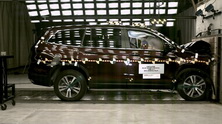
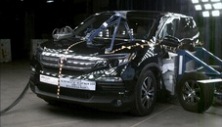
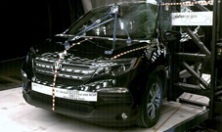
NHTSA crash tests
The agency crash-tested this model year itself. These are its own
photographs and star ratings.
Frontal crash test
Side barrier crash test
Side pole crash test
Photographs taken by NHTSA during its own New Car Assessment Program crash
tests of this model year. Public domain.
Configuration
Overall
Front
Side
Rollover
2019 Honda Pilot SUV AWD
16.4% risk
2019 Honda Pilot SUV FWD
17.5% risk
When owners complained
A spike years after the car went on sale usually means a part wearing
out on schedule across the whole fleet — the kind of pattern no single
owner can see from inside their own car.
Oct 2018peak 54Sep 2026
NHTSA investigations into the 2019 Honda Pilot
An investigation is the step before a recall: the agency has seen enough
complaints to look into a pattern itself. An open one means it thinks
something may be wrong and nothing has been fixed yet.
2
investigations are
still open.
PE25008Opened 20 Aug 2025Still openENGINE
Engine failure
The Office of Defects Investigation (ODI) has received 414 reports of connecting rod bearing failures in the 3.5L V6 engine used in the following vehicles: Model Years (MY) 2018-2020 Acura TLX, MY2016-2020 Acura MDX, MY2016-2020 Honda Pilot, MY2018-2020 Honda Odyssey, and MY2017-2019 Honda Ridgeline. The subject engine failures were analyzed as part of a Recall Query (RQ24013). It was determined that these engine failures are outside the scope of Honda Recall 23V-751. Further, evidence gathered in conjunction with RQ24013 does not suggest this failure is caused by the same crankshaft manufac...
EA25004Opened 26 Mar 2025Still openENGINE AND ENGINE COOLING:ENGINE:CRANK/CAMSHAFT POSITION SENSOR
No Restart After Auto Start/Stop Engages
On June 3, 2022, the Office of Defects Investigation (ODI) opened Preliminary Evaluation PE22005 after the agency received VOQs and several field reports concerning the Auto Idle Stop (AIS) feature on 2016-2019MY Honda Pilot vehicles. The complaints allege that the engine fails to restart on its own from a complete stop at a traffic light or road intersection with the AIS function engaged. The subject vehicles are equipped with a 3.5L engine with a 9-speed automatic transmission. On January 6, 2023, Honda released service bulletins 23-008 and 23-009. These service bulletins address the failure to r...
RQ24013Opened 8 Nov 2024Closed 20 Aug 2025ENGINE
Engine failure
On November 8, 2024, the Office of Defects Investigation (ODI) opened Recall Query RQ24013 to assess the scope of Honda recall 23V-751 after receiving complaints that alleged connecting rod bearing failures in vehicles that were not within the scope of recall 23V-751. In November 2023, Honda recalled 248,999 various Model Year (MY)2016–2020 Honda and Acura vehicles equipped with the 3.5L V6 engine. Honda recalled these vehicles due to a crankshaft manufacturing defect that caused premature connecting rod bearing wear and engine seizure. While the out-of-scope failures involved in these complai...
PE22005Opened 3 Jun 2022Closed 26 Mar 2025ENGINE AND ENGINE COOLING:ENGINE:CRANK/CAMSHAFT POSITION SENSOR
No Restart After Auto Start/Stop Engages
On June 3, 2022, the Office of Defects Investigation (ODI) opened Preliminary Evaluation PE22005 after the agency received VOQs and several field reports concerning the Auto Idle Stop (AIS) feature on 2016-2019MY Honda Pilot vehicles. The complaints allege that the engine fails to restart on its own from a complete stop at a traffic light or road intersection with the AIS function engaged. The subject vehicles are equipped with a 3.5L engine with a 9-speed automatic transmission. On January 6, 2023, Honda released service bulletins 23-008 and 23-009. These service bulletins address the failure to r...
Recalls on the 2019 Honda Pilot
A complaint is one owner's allegation. A recall is the point at which
the manufacturer or a regulator agreed the defect is real and dangerous
enough to fix for free — however old the car is.
United States — NHTSA
26V365000
STRUCTURE:FRAME AND MEMBERS
American Honda Motor Company (Honda) is recalling certain 2016-2022 Honda Pilot, 2017-2023 Ridgeline, 2019-2023 Passport, and 2014-2020 Acura MDX vehicles that were sold in Connecticut, Delaware, District of Columbia, Illinois, Indiana, Iowa, Kentucky, Maine, Maryland, Massachusetts, Michigan, Minnesota, Missouri, New Hampshire, New Jersey, New York, Ohio, Pennsylvania, Rhode Island, Vermont, Virginia, West Virginia, or Wisconsin. The rear subframe may corrode at the suspension mounting points, which can result in rear suspension component failure.
Risk: Failure of rear suspension components, such as the rear control arm, can cause a loss of vehicle handling and control, increasing the risk of a crash or injury.
26V332000
AIR BAGS:SENSOR:OCCUPANT CLASSIFICATION:FRONT PASSENGER
Honda (American Honda Motor Co.) is recalling certain 2018-2021, 2023 Acura TLX, 2019-2024 RDX, 2017-2020, 2022-2026 MDX, 2017-2021, 2023, 2025 Honda Ridgeline, 2017-2022 Pilot, 2019-2021 Passport, 2018-2026 Odyssey, 2019-2022 Insight, 2019-2021 HR-V, 2018-2020 Fit, 2020-2022 CR-V Hybrid, 2017-2022 CR-V, 2017-2018, 2021 Civic Type R, 2017-2021 Civic hatchback, 2016-2020 Civic coupe, 2016-2022 Civic, 2017-2022 Accord Hybrid, and 2016-2022 Accord vehicles. The front passenger seat weight sensor may crack and short circuit, which can cause the air bags to deploy unintentionally during a crash.
Risk: Air bags that deploy unintentionally during a crash increase the risk of injury.
23V858000
FUEL SYSTEM, GASOLINE:DELIVERY:FUEL PUMP
Honda (American Honda Motor Co.) is recalling certain 2013-2023 Honda Accord, Civic Coupe, Civic Sedan, Civic Hatchback, Civic Type R, CR-V, HR-V, Ridgeline, Odyssey, Acura ILX, MDX, MDX Hybrid, RDX, RLX, TLX, 2019-2022 Honda Insight, Passport, 2020 Honda CR-V Hybrid, 2018-2019 Honda Clarity PHEV, Fit, and 2015-2020 Honda Accord Hybrid, Pilot, Acura NSX vehicles. The fuel pump inside the fuel tank may fail.
Risk: Fuel pump failure can cause an engine stall while driving, increasing the risk of a crash.
23V751000
ENGINE AND ENGINE COOLING:ENGINE:HARD PARTS INTERNAL/MECHANICAL
Honda (American Honda Motor Co.) is recalling certain 2015-2020 Acura TLX, 2016-2020 Acura MDX, 2016 and 2018-2019 Pilot, 2017 and 2019 Ridgeline, and 2018-2019 Odyssey vehicles. Due to a manufacturing error, the connecting rod bearing in the engine may wear and seize, damaging the engine.
Risk: A damaged engine may run improperly or stall while driving, increasing the risk of a fire, crash, or injury.
23V431000
BACK OVER PREVENTION:DISPLAY FUNCTION
Honda (American Honda Motor Co.) is recalling certain 2018-2023 Odyssey, 2019-2022 Pilot, and 2019-2023 Passport vehicles. Due to a faulty Media Oriented Systems Transport (MOST) communication coaxial cable connector, the rearview camera image may not appear on the display. As such, these vehicles fail to comply with the requirements of Federal Motor Vehicle Safety Standard number 111, "Rear Visibility."
Risk: A rearview camera that does not display an image can reduce the driver's rear view, increasing the risk of a crash or injury.
21V932000
STRUCTURE:BODY:HOOD
Honda (American Honda Motor Co.) is recalling certain 2019 Passport, 2016-2019 Pilot, and 2017-2020 Ridgeline vehicles. The hood latch striker may become damaged and separate from the hood, which can result in the hood opening while driving.
Risk: A hood that opens while driving can obstruct the driver's view and increase the risk of a crash.
21V215000
FUEL SYSTEM, GASOLINE:DELIVERY:FUEL PUMP
Honda (American Honda Motor Co.) is recalling certain 2019-2020 Acura MDX, MDX Sport Hybrid, RDX, TLX, Honda Accord, Civic Hatchback, Insight, 2019 Acura ILX, Honda Accord Hybrid, Civic Coupe, Civic Coupe Si, Civic Sedan, Civic Sedan Si, Civic Type R, Fit, HR-V, Odyssey, Passport, Pilot and Ridgeline, and 2018-2019 CR-V vehicles. The low-pressure fuel pump inside the fuel tank may fail.
Risk: Fuel pump failure can cause an engine stall while driving, increasing the risk of a crash.
21V165000
TIRES
Honda (American Honda Motor Co.) is recalling certain 2019-2020 Passport and Pilot vehicles equipped with Continental tires. On the affected vehicles, it is possible that one or more tires were cured for too long during tire production.
Risk: Overcured tires may develop a break in the sidewall, resulting in sudden air loss or belt edge separation, which could lead to tread/belt loss. Either condition can cause a loss of vehicle control, increasing the risk of a crash or injury.
Canada — Transport Canada
Canada runs its own recall programme, and its campaigns do not
always mirror the American ones.
Recall 2026275136,260 units in Canada
Structure
Issue: On certain vehicles, the suspension mounting points on the rear subframe could rust. As a result, rear suspension components could fail. This could lead to poor handling and a loss of vehicle control. Safety Risk: A loss of control could create the risk of a crash. Corrective Actions: Honda will notify owners by mail and advise you to take your vehicle to a dealership to inspect and install a rear subframe reinforcement kit or replace the subframe, as necessary.
Recall 202625112,371 units in Canada
Seats And Restraints
Issue: On certain vehicles, the weight sensor for the front passenger seat may not have been manufactured properly. As a result, the passenger-front airbag and knee airbag could deploy in a crash that doesn't require them to. Note: This recall is an expansion of Transport Canada recall no. 2024-059. If the weight sensor fails, the SRS warning light would turn on in the instrument panel. Safety Risk: An airbag system that doesn't work properly could increase the risk of injury in a crash. Corrective Actions: The company will notify owners by mail and advise you to take your vehicle to a dealership to replace the passenger-front seat weight sensor.
Recall 202476132,219 units in Canada
Visual System
Issue: Under certain conditions, a software problem could cause the wrong view mode to display when the transmission is shifted into reverse. As a result, the rearview camera image may not appear correctly on the display screen. Canadian regulations allow only certain view modes to be displayed when the vehicle is reversing. Note: Vehicles that received a software update previously under a Honda product update, campaign no. P01 - 'Incorrect Rear View Camera View Mode', don't require this repair. Safety Risk: A rearview camera image that doesn't display the correct view mode could reduce a driver's field of view behind the vehicle. This could increase the risk of a crash. Corrective Actions: Honda will notify owners by mail and have sent a wireless over-the-air software update to eligible vehicles to update the vehicle software. Alternatively, you may schedule an appointment to have the update performed at a Honda dealership.
Recall 2024262291,588 units in Canada
Fuel System
Issue: This recall is for low-pressure fuel pumps installed on certain vehicles or sold at dealerships as a replacement part. On certain vehicles, the low-pressure fuel pump could fail. If this happens, the engine may run rough or may not start and the check engine light may turn on. This could also result in a sudden loss of engine power while driving. Note: This recall replaces Transport Canada recall no. 2023-679. Vehicles that were repaired under that recall don't require this repair. Safety Risk: A sudden loss of engine power could increase the risk of a crash. Corrective Actions: The company will notify owners by mail and advise you to take your vehicle to a dealership to replace the fuel pump motor.
Recall 2023679285,461 units in Canada
Fuel System
This recall was replaced by Transport Canada recall no. 2024-262. Issue: This recall is for low-pressure fuel pumps installed on certain vehicles or sold at dealerships as a replacement part. On certain vehicles, the low-pressure fuel pump could fail. If this happens, the engine may run rough or may not start and the check engine light may turn on. This could also result in a sudden loss of engine power while driving. Note: This is an expansion of Transport Canada recall nos. 2020-236 and 2021-182. Safety Risk: A sudden loss of engine power could increase the risk of a crash. Corrective Actions: The company will notify owners by mail and advise you to take your vehicle to a dealership to replace the fuel pump motor.
Recall 202335088,228 units in Canada
Visual System
Issue: On certain vehicles, the terminals on the coaxial cable for the audio display unit may not have been manufactured correctly. As a result, the audio display unit could lose its connection, and the rearview camera image may not display when the transmission is shifted into reverse gear. Safety Risk: A rearview camera image that doesn't display could reduce a driver's ability to see behind the vehicle while backing up. This could increase the risk of a crash. Corrective Actions: Honda will notify owners by mail and advise you to take your vehicle to a dealership to replace the media oriented systems transport (MOST) cable harness, and install a cover over the audio display unit connector.
Recall 202172551,325 units in Canada
Structure
Issue: On certain vehicles, the hood latch striker could separate from the hood. If this happens, the hood could open while driving. Note: A loose or vibrating hood may be a warning that the hood latch is failing. Safety Risk: A hood that opens suddenly while driving could block the driver's view and increase the risk of a crash. Corrective Actions: Honda will notify owners by mail and instruct you to take your vehicle to a dealer to inspect the hood latch striker. Depending on its condition, a striker support plate will be installed, or if necessary, the hood will be replaced.
Recall 202118280,176 units in Canada
Fuel System
Issue: On certain vehicles, the low-pressure fuel pump could fail. If this happens, then engine may run rough or may not start and the check engine light may turn on. This could also result in a sudden loss of engine power while driving. Note: This is an expansion of Transport Canada Recall No. 2020-236. Safety Risk: A sudden loss of engine power could increase the risk of a crash. Corrective Actions: The company will notify owners by mail and instruct you to take your vehicle to a dealer to replace the fuel pump motor.
While operating the vehicle in reverse at a low speed (under 5 mph), the Advanced Driver Assistance System (ADAS) failed to provide any audible or visual alerts regarding a stationary vehicle positioned directly behind my path. The vehicle is equipped with a Rearview Video System and Rear Proximity/Parking Sensors, both of which were active. Despite a clear line of sight and the secondary vehicle being a standard passenger car, the sensors did not "ping" or trigger an emergency brake/alert, resulting in a rear-end collision. The sensors and camera lens were clean and free of debris at the time of the incident. This represents a failure of the safety system to perform its primary function of obstacle detection in a standard backing scenario, posing a significant risk for back-over incidents involving pedestrians or other vehicles.
NHTSA complaint #11722971 — an unverified report by a vehicle owner.
Gaithersburg, MDCrash
BACK OVER PREVENTION: WARNINGS
While operating the vehicle in reverse at a low speed (under 5 mph), the Advanced Driver Assistance System (ADAS) failed to provide any audible or visual alerts regarding a stationary vehicle positioned directly behind my path. The vehicle is equipped with a Rearview Video System and Rear Proximity/Parking Sensors, both of which were active. Despite a clear line of sight and the secondary vehicle being a standard passenger car, the sensors did not "ping" or trigger an emergency brake/alert, resulting in a rear-end collision. The sensors and camera lens were clean and free of debris at the time of the incident. This represents a failure of the safety system to perform its primary function of obstacle detection in a standard backing scenario, posing a significant risk for back-over incidents involving pedestrians or other vehicles.
NHTSA complaint #11722971 — an unverified report by a vehicle owner.
at 71,000 milesButte, MT1 injured
POWER TRAIN
The contact owns a 2019 Honda Pilot. The contact stated that he had stopped the vehicle and had depressed the brake pedal. The contact stated that he opened the driver's side door and as he stepped out with his left leg, the vehicle started to move forward, and the engine was still running. The contact stated that the vehicle had a safety feature that automatically placed the vehicle into park (P) when the driver depressed the brake pedal and opened the driver's side door. The contact stated that as he exited the vehicle, it started to roll; he had parked on a slope with the hood of the vehicle aimed downhill. The contact stated that the driver's side rear tire ran over both his legs below his knees. The vehicle rolled downhill into a ravine and was not damaged. The contact stated that he called the police, who arrived and asked if he needed medical attention. The contact stated that no report was issued. The contact declined and later drove himself to a hospital emergency room. The contact stated that he was x-rayed and examined and only had abrasions and bruises. The contact drove the vehicle to a local dealer. The dealer diagnosed the vehicle and determined it had low battery power and had contacted the manufacturer for further guidance. The contact stated that the vehicle had a 9-speed automatic transmission that used a push button. The vehicle was not repaired. The manufacturer was informed of the failure. The failure mileage was approximately 71,000.
NHTSA complaint #11676897 — an unverified report by a vehicle owner.
Lillington, NCCrash
POWER TRAIN
I have recently had a traumatizing event with respect to the 2019 Honda Pilot. As you know this vehicle has the 3.5L v6 engine and transmission. Recently I was in a situation where I needed to accelerate to miss an oncoming tractor trailer that crossed the median. The only course of action was to accelerate. At the time of acceleration the car skipped and slipped gear. We narrowly missed colliding and in my estimates dying. I had the vehicle inspected and diagnosed by a Honda dealership in Sanford NC. They determined the Torque Converter failed and is bad. They also informed me this same power train is in the 2018 and previous Honda Pilots. Which Honda extended the warranty on to address the issue. Why haven’t they included the 2019? This is unacceptable I have reached out to Honda and they will not discuss the issue.
NHTSA complaint #11672237 — an unverified report by a vehicle owner.
Jacksonville, FL2 injured
SERVICE BRAKES
After receiving a CMBS error message I tried to drive home and the vehicle automatically engaged brakes while merging with no other vehicle near by and I was almost rear ended.
NHTSA complaint #11665206 — an unverified report by a vehicle owner.
Jacksonville, FL2 injured
FORWARD COLLISION AVOIDANCE: ADAPTIVE CRUISE CONTROL
After receiving a CMBS error message I tried to drive home and the vehicle automatically engaged brakes while merging with no other vehicle near by and I was almost rear ended.
NHTSA complaint #11665206 — an unverified report by a vehicle owner.
The most recent complaints
In the owners' own words, exactly as filed with NHTSA.
Worthington, OH
UNKNOWN OR OTHER
Rearview camera is showing up as green and purple on the screen. It makes seeing what is behind the car hard when in reverse. Dealer does not know what caused it but it started as intermittent but now is constant
NHTSA complaint #11764086 — an unverified report by a vehicle owner.
Worthington, OH
ELECTRICAL SYSTEM
Rearview camera is showing up as green and purple on the screen. It makes seeing what is behind the car hard when in reverse. Dealer does not know what caused it but it started as intermittent but now is constant
NHTSA complaint #11764086 — an unverified report by a vehicle owner.
Grand Rapids, MI
UNKNOWN OR OTHER
This vehicle is equipped with Honda's Auto Idle Stop (AIS) system, which shuts the engine off automatically when the vehicle comes to a stop and is designed to restart it when the brake pedal is released. On XXX, while stopped at a light at approximatly [XXX], the engine shut off as normal, but failed to restart when I released the brake. The vehicle was inoperable for approximately one to two minutes while stopped in a busy traffic muilti-lane road at a light over an expressway, creating a serious risk of being struck from behind by other traffic. This is not an isolated occurrence, I experience this AIS no-restart failure on a regular/recurring basis, not just this one time. I am aware that Honda has issued service bulletins related to this issue (TSB 23-008, TSB 23-009) and that this defect is the subject of a certified class action settlement (In re Honda Idle Stop Litigation, No XXX). I believe this represents an ongoing safety defect that creates a real risk of a collision, particularly in higher-speed or higher-traffic conditions where a temporarily immobile vehicle is a hazard to itself and surrounding traffic. This vehicle has a rebuilt/salvage title (repaired and retitled prior to my purchase; it passed state inspection and is legally registered and roadworthy). When I contacted Honda about repair under the applicable service bulletins (TSB 23-008 / TSB 23-009) for this defect, I was told the rebuilt title status disqualifies this vehicle from that repair coverage. I am not seeking a warranty or cost remedy through this complaint, I am reporting this because it means an unknown number of vehicles with this safety defect are currently excluded from any manufacturer-provided fix, leaving the underlying no-restart hazard unaddressed on the road. INFORMATION REDACTED PURSUANT TO THE FREEDOM OF INFORMATION ACT (FOIA), 5 U.S.C. 552(B)(6)
NHTSA complaint #11763550 — an unverified report by a vehicle owner.
Grand Rapids, MI
ELECTRICAL SYSTEM
This vehicle is equipped with Honda's Auto Idle Stop (AIS) system, which shuts the engine off automatically when the vehicle comes to a stop and is designed to restart it when the brake pedal is released. On XXX, while stopped at a light at approximatly [XXX], the engine shut off as normal, but failed to restart when I released the brake. The vehicle was inoperable for approximately one to two minutes while stopped in a busy traffic muilti-lane road at a light over an expressway, creating a serious risk of being struck from behind by other traffic. This is not an isolated occurrence, I experience this AIS no-restart failure on a regular/recurring basis, not just this one time. I am aware that Honda has issued service bulletins related to this issue (TSB 23-008, TSB 23-009) and that this defect is the subject of a certified class action settlement (In re Honda Idle Stop Litigation, No XXX). I believe this represents an ongoing safety defect that creates a real risk of a collision, particularly in higher-speed or higher-traffic conditions where a temporarily immobile vehicle is a hazard to itself and surrounding traffic. This vehicle has a rebuilt/salvage title (repaired and retitled prior to my purchase; it passed state inspection and is legally registered and roadworthy). When I contacted Honda about repair under the applicable service bulletins (TSB 23-008 / TSB 23-009) for this defect, I was told the rebuilt title status disqualifies this vehicle from that repair coverage. I am not seeking a warranty or cost remedy through this complaint, I am reporting this because it means an unknown number of vehicles with this safety defect are currently excluded from any manufacturer-provided fix, leaving the underlying no-restart hazard unaddressed on the road. INFORMATION REDACTED PURSUANT TO THE FREEDOM OF INFORMATION ACT (FOIA), 5 U.S.C. 552(B)(6)
NHTSA complaint #11763550 — an unverified report by a vehicle owner.
Hillsborough, NC
ENGINE
The car stalled in an intersection. The auto idle function had engaged when the car came to a full stop, but when i took my foot off the break it did not restart. It took a couple of tries to get it to restart, leaving my car in the intersection. This problem has been happening on and off since I bought it used in 2022. In May 2025, a Honda dealership near me made a valve adjustment and replaced the starter, which was supposed to have fixed the issue. However, it recently started occurring again.
NHTSA complaint #11763378 — an unverified report by a vehicle owner.
Findlay, OH
FUEL/PROPULSION SYSTEM
My 2019 Honda Pilot EX AWD (VIN [XXX]) with approximately 80,000 miles developed a check engine light along with dashboard messages indicating an Emissions System Problem and AWD System Problem. The vehicle continued to drive normally, but the warnings repeatedly returned. Diagnostic code P0172 (System Too Rich, Bank 1) was present. The vehicle was inspected by an authorized Honda dealer on XXX which diagnosed failed fuel injectors and recommended replacement of the injector assembly at a cost of approximately $1,689. The failed components and dealer records are available for inspection upon request. While the vehicle has not experienced a loss of propulsion, I am concerned that a fuel injector defect could lead to engine performance issues, increased emissions, reduced reliability, or unsafe operating conditions if the condition worsens while driving. Honda has previously acknowledged fuel injector issues on certain 2017-2019 Honda Pilot vehicles and issued a warranty extension covering fuel injector repairs for eligible VINs. However, despite a dealer diagnosis of failed fuel injectors, I was informed that my VIN is not covered by the existing warranty extension. The vehicle has been inspected and the injector failure has been confirmed by a Honda dealership. Prior to diagnosis, the only symptoms were the check engine light and the Emissions System Problem and AWD System Problem warning messages. These warnings first appeared at approximately 80,000 miles. I am submitting this complaint because the failure appears similar to fuel injector issues already recognized by Honda, yet my vehicle is excluded from the existing warranty extension coverage. I believe NHTSA should review whether additional 2019 Honda Pilot vehicles outside the currently covered VIN population are experiencing similar fuel injector failures. INFORMATION REDACTED PURSUANT TO THE FREEDOM OF INFORMATION ACT (FOIA), 5 U.S.C. 552(B)(6)
NHTSA complaint #11762973 — an unverified report by a vehicle owner.
Salt Lake City, UT
ELECTRICAL SYSTEM
abnormal operation and intermittent failure of multipurpose camera, my dashboard is showing warning lights for LKAS, Cruise, auto-high beams, collision mitigation, road Departure mitigation.
NHTSA complaint #11762773 — an unverified report by a vehicle owner.
Maryville, TN
ENGINE
Have a 2019 Honda Pilot - Fuel injector failure/Catalytic Converter at 115,000 miles. estimated cost over $2,200. KNOWN MANUFACTURING DEFECT: Honda Service Bulletins 20-100, 21-002, 22-002 acknowledge widespread fuel injector failures in 2019 Honda Pilots caused by debris from manufacturing process. Honda extended warranty to 10 years/150,000 miles for certain VINs. My VIN is excluded despite identical failures and many others complaint of the same issue. Something needs to be done to hold Honda accountable!!!!
NHTSA complaint #11762706 — an unverified report by a vehicle owner.
Columbus, OH
ENGINE
I am having transmission issues with my 2019 Honda pilot. There is an extended warranty service bulletin out, Honda USA claims my vehicle does not fall under that extended warranty based on the VIN. I am experiencing all of the symptoms of the fuel injector issues that they report in the bulletin. I am unable to get anybody at Honda to help me.
NHTSA complaint #11762757 — an unverified report by a vehicle owner.
Maryville, TN
FUEL/PROPULSION SYSTEM
Have a 2019 Honda Pilot - Fuel injector failure/Catalytic Converter at 115,000 miles. estimated cost over $2,200. KNOWN MANUFACTURING DEFECT: Honda Service Bulletins 20-100, 21-002, 22-002 acknowledge widespread fuel injector failures in 2019 Honda Pilots caused by debris from manufacturing process. Honda extended warranty to 10 years/150,000 miles for certain VINs. My VIN is excluded despite identical failures and many others complaint of the same issue. Something needs to be done to hold Honda accountable!!!!
NHTSA complaint #11762706 — an unverified report by a vehicle owner.
Columbus, OH
FUEL/PROPULSION SYSTEM
I am having transmission issues with my 2019 Honda pilot. There is an extended warranty service bulletin out, Honda USA claims my vehicle does not fall under that extended warranty based on the VIN. I am experiencing all of the symptoms of the fuel injector issues that they report in the bulletin. I am unable to get anybody at Honda to help me.
NHTSA complaint #11762757 — an unverified report by a vehicle owner.
Salt Lake City, UT
FORWARD COLLISION AVOIDANCE: ADAPTIVE CRUISE CONTROL
abnormal operation and intermittent failure of multipurpose camera, my dashboard is showing warning lights for LKAS, Cruise, auto-high beams, collision mitigation, road Departure mitigation.
NHTSA complaint #11762773 — an unverified report by a vehicle owner.
Salt Lake City, UT
LANE DEPARTURE: WARNING
abnormal operation and intermittent failure of multipurpose camera, my dashboard is showing warning lights for LKAS, Cruise, auto-high beams, collision mitigation, road Departure mitigation.
NHTSA complaint #11762773 — an unverified report by a vehicle owner.
Pardeeville, WI
ENGINE
Rod bearing failure, diagnosed by Honda Service. At a stop light, vehicle starting making very loud noises (video proof). I pulled over right away and had it towed to not risk an accident or more damage. Honda(same place that the vehicle was purchased at did most preventive maintenance) diagnosis: "Engine Major Miscellaneous | rod bearing failure. removed timing covers and confirmed t belt is intact and holding tension. was able to start motor momentarily and confirmed rod bearing noise. replace motor with used engine" I asked Honda Coporation for a goodwill claim and help and the claim was denied. I appealed this decision. I am asking Honda to consider whether the actual cause of my engine failure could be consistent with the type of internal engine concerns that have been documented on comparable vehicles, and to give my case the attention that such a serious failure warrants. In particular, I asked that Honda: - Reviews the complete authorized-dealer diagnosis, technician notes, repair estimate, and any teardown findings. - Determines and document the specific failed bearing and the suspected root cause of the failure. Review the oil condition, lubrication findings, crankshaft condition, and any other evidence that may explain why the rod bearing failed. -Preserves the failed components and diagnostic records while this request is being reconsidered. -Considers full or substantial goodwill assistance toward repair or engine replacement, including parts coverage, labor assistance, towing or a fair cost-sharing arrangement. This was not an expected maintenance expense, a neglected oil change, or a routine wear item. It was a sudden, serious internal engine failure. I did what Honda asks owners to do: I maintained the vehicle, completed scheduled preventive maintenance, and took well care of it. I HAVE (and provided Honda) proof of ALL PREVENTIVE maintenance completed as recommended, including a costly timing belt change. *NO warnings, lights or signs prior to t
NHTSA complaint #11762175 — an unverified report by a vehicle owner.
Rollesville, NC
ENGINE
My engine light came on, and the codes reported were P0441 P04F1 U0401 and P0172. I took the car to the dealer for a diagnostic and they stated it was the fuel injectors. Their is a TSB 21-010 related to this situation, however my car's vin wasn't covered by the TSB. I have two coworkers with the same engine, and they had the same issues and were covered on the TSB. I spoke with my local shop to get a quote and they mentioned doing a lot of fuel injector replacement on Honda lately. It seems like the scope of the TSB wasn't wide enough to include all affected VINs.
NHTSA complaint #11761856 — an unverified report by a vehicle owner.
at 91,670 milesMorris Plains, NJ
POWER TRAIN
The contact owns a 2019 Honda Pilot. The contact stated that the check engine warning light was illuminated. The vehicle was taken to the dealer and was diagnosed with fuel injector failure. The contact was informed that the fuel injectors needed to be replaced. The fuel injectors were replaced. The contact became aware of Technical Service Bulletin: 21-010, NHTSA ID Number: 10187008 (Engine and Engine Cooling, Electrical System, Equipment, Power Train). The contact called the dealer, and it was confirmed that the VIN was not covered under an extended warranty. The manufacturer was informed of the issue and confirmed that the vehicle was not included. The manufacturer referred the contact to the NHTSA Hotline to report the failure. The failure mileage was 91,670.
NHTSA complaint #11761593 — an unverified report by a vehicle owner.
Aubrey, TX
UNKNOWN OR OTHER
The vehicle experienced a check engine light with code P0430 and a failed Air/Fuel ratio test due to defective fuel injectors leaking raw fuel into the exhaust bank. This failure completely mirrors the factory defect in Honda Service Bulletin A21-010 (NHTSA ID: 10187008), which extends the fuel injector warranty to 10 years/150,000 miles. A certified Honda dealer verified the exact codes and components but explicitly denied the mandatory corporate warranty extension, attempting to charge $1,804.51 out-of-pocket and ignoring subsequent communication. Unburned raw fuel dumping into the catalytic converter presents a progressive engine failure and exhaust safety hazard.
NHTSA complaint #11761695 — an unverified report by a vehicle owner.
at 91,670 milesMorris Plains, NJ
ELECTRICAL SYSTEM
The contact owns a 2019 Honda Pilot. The contact stated that the check engine warning light was illuminated. The vehicle was taken to the dealer and was diagnosed with fuel injector failure. The contact was informed that the fuel injectors needed to be replaced. The fuel injectors were replaced. The contact became aware of Technical Service Bulletin: 21-010, NHTSA ID Number: 10187008 (Engine and Engine Cooling, Electrical System, Equipment, Power Train). The contact called the dealer, and it was confirmed that the VIN was not covered under an extended warranty. The manufacturer was informed of the issue and confirmed that the vehicle was not included. The manufacturer referred the contact to the NHTSA Hotline to report the failure. The failure mileage was 91,670.
NHTSA complaint #11761593 — an unverified report by a vehicle owner.
at 91,670 milesMorris Plains, NJ
ENGINE AND ENGINE COOLING
The contact owns a 2019 Honda Pilot. The contact stated that the check engine warning light was illuminated. The vehicle was taken to the dealer and was diagnosed with fuel injector failure. The contact was informed that the fuel injectors needed to be replaced. The fuel injectors were replaced. The contact became aware of Technical Service Bulletin: 21-010, NHTSA ID Number: 10187008 (Engine and Engine Cooling, Electrical System, Equipment, Power Train). The contact called the dealer, and it was confirmed that the VIN was not covered under an extended warranty. The manufacturer was informed of the issue and confirmed that the vehicle was not included. The manufacturer referred the contact to the NHTSA Hotline to report the failure. The failure mileage was 91,670.
NHTSA complaint #11761593 — an unverified report by a vehicle owner.
Aubrey, TX
ENGINE
The vehicle experienced a check engine light with code P0430 and a failed Air/Fuel ratio test due to defective fuel injectors leaking raw fuel into the exhaust bank. This failure completely mirrors the factory defect in Honda Service Bulletin A21-010 (NHTSA ID: 10187008), which extends the fuel injector warranty to 10 years/150,000 miles. A certified Honda dealer verified the exact codes and components but explicitly denied the mandatory corporate warranty extension, attempting to charge $1,804.51 out-of-pocket and ignoring subsequent communication. Unburned raw fuel dumping into the catalytic converter presents a progressive engine failure and exhaust safety hazard.
NHTSA complaint #11761695 — an unverified report by a vehicle owner.
Aubrey, TX
FUEL/PROPULSION SYSTEM
The vehicle experienced a check engine light with code P0430 and a failed Air/Fuel ratio test due to defective fuel injectors leaking raw fuel into the exhaust bank. This failure completely mirrors the factory defect in Honda Service Bulletin A21-010 (NHTSA ID: 10187008), which extends the fuel injector warranty to 10 years/150,000 miles. A certified Honda dealer verified the exact codes and components but explicitly denied the mandatory corporate warranty extension, attempting to charge $1,804.51 out-of-pocket and ignoring subsequent communication. Unburned raw fuel dumping into the catalytic converter presents a progressive engine failure and exhaust safety hazard.
NHTSA complaint #11761695 — an unverified report by a vehicle owner.
Athens, TN
FORWARD COLLISION AVOIDANCE: ADAPTIVE CRUISE CONTROL
My dash will light up and say that cruise control is not working and lane keep assist is also not working
NHTSA complaint #11761633 — an unverified report by a vehicle owner.
Athens, TN
LANE DEPARTURE: ASSIST
My dash will light up and say that cruise control is not working and lane keep assist is also not working
NHTSA complaint #11761633 — an unverified report by a vehicle owner.
My dash will light up and say that cruise control is not working and lane keep assist is also not working
NHTSA complaint #11761633 — an unverified report by a vehicle owner.
Valdosta, GA
ELECTRICAL SYSTEM
When at a red light or stop sign the vehicle will idle and turn off. The vehicle doesn’t want to restart. It takes a bit to get started again then it progresses.While parked I turned the car off for 5 minutes and it would not start up again. Tried the jump cables to make sure it wasn’t the battery had to have a tow truck come they were able to get the car jumped and started. Took the battery to get tested and the battery was perfectly fine. Something is wrong with the starter. It doesn’t happen all the time but it has happened to me a few times and it’s not safe with me and kids in the car.
NHTSA complaint #11761194 — an unverified report by a vehicle owner.