Owners have filed 2,383 complaints
about the 2016 Honda Pilot with NHTSA between 2015 and 2026.
The largest single group is the engine & cooling.
Across this model's run it ranks 4 of 24 worst.
The letter says how bad. This says what kind — whether this year drew
an unusual number of complaints, unusually dangerous
ones, or failures that arrived unusually early.
The dashed ring is 50 — the national norm. Further out is worse.
Complaint volume — 100
Against the median year of the Honda Pilot. 50 means typical for this
model; 100 means roughly double.
Severity — 16
3% of these complaints
involved a crash, fire, injury or death, against a national rate of
9.7%.
Early failure — 53
31% of failures with a mileage on record happened under
36,000 miles, against a national rate of
29%.
NHTSA files every complaint against a named sub-assembly, not just a
system. This is the difference between knowing it was "the engine" and
knowing which part of it — the list to hand a mechanic.
Body
4851.6%
Warnings
1111.8%
Warning
99.7%
Automatic Emergency Braking
88.6%
Adaptive Cruise Control
88.6%
Warnings
33.2%
Blind Spot Detection
33.2%
Starter Assembly
33.2%
When it fails
Odometer readings owners gave when they filed. About half of all
complaints include one.
Under 1,000 miles
454.3%
1,000 – 9,999 miles
767.3%
10,000 – 24,999 miles
898.6%
25,000 – 49,999 miles
31330.2%
50,000 – 74,999 miles
25524.6%
75,000 – 99,999 miles
13613.1%
100,000 – 149,999 miles
959.2%
150,000+ miles
272.6%
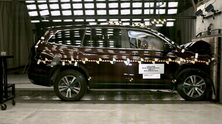
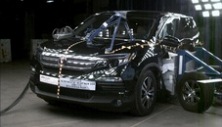
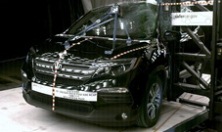
NHTSA crash tests
The agency crash-tested this model year itself. These are its own
photographs and star ratings.
Frontal crash test
Side barrier crash test
Side pole crash test
Photographs taken by NHTSA during its own New Car Assessment Program crash
tests of this model year. Public domain.
Configuration
Overall
Front
Side
Rollover
2016 Honda Pilot SUV AWD
16.4% risk
2016 Honda Pilot SUV FWD
17.5% risk
When owners complained
A spike years after the car went on sale usually means a part wearing
out on schedule across the whole fleet — the kind of pattern no single
owner can see from inside their own car.
Jul 2015peak 87Sep 2026
NHTSA investigations into the 2016 Honda Pilot
An investigation is the step before a recall: the agency has seen enough
complaints to look into a pattern itself. An open one means it thinks
something may be wrong and nothing has been fixed yet.
2
investigations are
still open.
PE25008Opened 20 Aug 2025Still openENGINE
Engine failure
The Office of Defects Investigation (ODI) has received 414 reports of connecting rod bearing failures in the 3.5L V6 engine used in the following vehicles: Model Years (MY) 2018-2020 Acura TLX, MY2016-2020 Acura MDX, MY2016-2020 Honda Pilot, MY2018-2020 Honda Odyssey, and MY2017-2019 Honda Ridgeline. The subject engine failures were analyzed as part of a Recall Query (RQ24013). It was determined that these engine failures are outside the scope of Honda Recall 23V-751. Further, evidence gathered in conjunction with RQ24013 does not suggest this failure is caused by the same crankshaft manufac...
EA25004Opened 26 Mar 2025Still openENGINE AND ENGINE COOLING:ENGINE:CRANK/CAMSHAFT POSITION SENSOR
No Restart After Auto Start/Stop Engages
On June 3, 2022, the Office of Defects Investigation (ODI) opened Preliminary Evaluation PE22005 after the agency received VOQs and several field reports concerning the Auto Idle Stop (AIS) feature on 2016-2019MY Honda Pilot vehicles. The complaints allege that the engine fails to restart on its own from a complete stop at a traffic light or road intersection with the AIS function engaged. The subject vehicles are equipped with a 3.5L engine with a 9-speed automatic transmission. On January 6, 2023, Honda released service bulletins 23-008 and 23-009. These service bulletins address the failure to r...
RQ24013Opened 8 Nov 2024Closed 20 Aug 2025ENGINE
Engine failure
On November 8, 2024, the Office of Defects Investigation (ODI) opened Recall Query RQ24013 to assess the scope of Honda recall 23V-751 after receiving complaints that alleged connecting rod bearing failures in vehicles that were not within the scope of recall 23V-751. In November 2023, Honda recalled 248,999 various Model Year (MY)2016–2020 Honda and Acura vehicles equipped with the 3.5L V6 engine. Honda recalled these vehicles due to a crankshaft manufacturing defect that caused premature connecting rod bearing wear and engine seizure. While the out-of-scope failures involved in these complai...
PE22005Opened 3 Jun 2022Closed 26 Mar 2025ENGINE AND ENGINE COOLING:ENGINE:CRANK/CAMSHAFT POSITION SENSOR
No Restart After Auto Start/Stop Engages
On June 3, 2022, the Office of Defects Investigation (ODI) opened Preliminary Evaluation PE22005 after the agency received VOQs and several field reports concerning the Auto Idle Stop (AIS) feature on 2016-2019MY Honda Pilot vehicles. The complaints allege that the engine fails to restart on its own from a complete stop at a traffic light or road intersection with the AIS function engaged. The subject vehicles are equipped with a 3.5L engine with a 9-speed automatic transmission. On January 6, 2023, Honda released service bulletins 23-008 and 23-009. These service bulletins address the failure to r...
Recalls on the 2016 Honda Pilot
A complaint is one owner's allegation. A recall is the point at which
the manufacturer or a regulator agreed the defect is real and dangerous
enough to fix for free — however old the car is.
United States — NHTSA
26V365000
STRUCTURE:FRAME AND MEMBERS
American Honda Motor Company (Honda) is recalling certain 2016-2022 Honda Pilot, 2017-2023 Ridgeline, 2019-2023 Passport, and 2014-2020 Acura MDX vehicles that were sold in Connecticut, Delaware, District of Columbia, Illinois, Indiana, Iowa, Kentucky, Maine, Maryland, Massachusetts, Michigan, Minnesota, Missouri, New Hampshire, New Jersey, New York, Ohio, Pennsylvania, Rhode Island, Vermont, Virginia, West Virginia, or Wisconsin. The rear subframe may corrode at the suspension mounting points, which can result in rear suspension component failure.
Risk: Failure of rear suspension components, such as the rear control arm, can cause a loss of vehicle handling and control, increasing the risk of a crash or injury.
23V858000
FUEL SYSTEM, GASOLINE:DELIVERY:FUEL PUMP
Honda (American Honda Motor Co.) is recalling certain 2013-2023 Honda Accord, Civic Coupe, Civic Sedan, Civic Hatchback, Civic Type R, CR-V, HR-V, Ridgeline, Odyssey, Acura ILX, MDX, MDX Hybrid, RDX, RLX, TLX, 2019-2022 Honda Insight, Passport, 2020 Honda CR-V Hybrid, 2018-2019 Honda Clarity PHEV, Fit, and 2015-2020 Honda Accord Hybrid, Pilot, Acura NSX vehicles. The fuel pump inside the fuel tank may fail.
Risk: Fuel pump failure can cause an engine stall while driving, increasing the risk of a crash.
23V751000
ENGINE AND ENGINE COOLING:ENGINE:HARD PARTS INTERNAL/MECHANICAL
Honda (American Honda Motor Co.) is recalling certain 2015-2020 Acura TLX, 2016-2020 Acura MDX, 2016 and 2018-2019 Pilot, 2017 and 2019 Ridgeline, and 2018-2019 Odyssey vehicles. Due to a manufacturing error, the connecting rod bearing in the engine may wear and seize, damaging the engine.
Risk: A damaged engine may run improperly or stall while driving, increasing the risk of a fire, crash, or injury.
21V932000
STRUCTURE:BODY:HOOD
Honda (American Honda Motor Co.) is recalling certain 2019 Passport, 2016-2019 Pilot, and 2017-2020 Ridgeline vehicles. The hood latch striker may become damaged and separate from the hood, which can result in the hood opening while driving.
Risk: A hood that opens while driving can obstruct the driver's view and increase the risk of a crash.
17V219000
FUEL SYSTEM, GASOLINE:STORAGE
Honda (American Honda Motor Co.) is recalling certain 2016 Honda Pilot 2WD and AWD vehicles. The affected vehicles have fuel tanks that may leak.
Risk: A fuel leak in the presence of an ignition source can increase the risk of a fire.
16V417000
FUEL SYSTEM, GASOLINE:STORAGE:TANK ASSEMBLY
Honda (American Honda Motor Co.) is recalling certain model year 2015 Acura MDX 2WD and MDX 4WD vehicles, 2016 Acura MDX 4WD vehicles, 2015-2016 Honda Odyssey vehicles, and 2016 Honda Pilot 2WD and 4WD vehicles. The affected vehicles have fuel tanks that were manufactured with insufficient welds which may separate and allow fuel to leak out.
Risk: A fuel leak in the presence of an ignition source may result in a fire.
15V668000
ELECTRICAL SYSTEM: INSTRUMENT CLUSTER/PANEL
Honda (American Honda Motor Co.) is recalling certain model year 2016 Honda Pilot 2WD vehicles manufactured May 4, 2015, to September 8, 2015 and 2016 Pilot 4WD vehicles manufactured May 7, 2015 to September 4, 2015. In the affected vehicles, when one of the safety systems such as tire pressure monitoring, anti-lock braking or electronic stability control malfunctions, there is potential that the instrument panel will not illuminate the corresponding warning light, however the warning lamps will illuminate when the ignition is turned off and then turned back on. As such, these vehicles fail to comply with the requirements of Federal Motor Vehicle Safety Standard (FMVSS) number 126, "Electronic stability control systems", number 135, "Light vehicle brake systems" and number 138, "Tire pressure monitoring systems".
Risk: If a safety system cannot immediately warn the driver when needed, the driver may be at increased risk of a crash.
15V424000
SEAT BELTS:REAR/OTHER
Honda (American Honda Motor Co.) is recalling certain model year 2016 Honda Pilot vehicles manufactured May 4, 2015, to June 5, 2015. Due to an assembly issue, the third row seatbelt may be trapped between the rear seat and the rear sideliner.
Risk: If the third row seatbelt is trapped, the occupants may not be restrained properly, increasing the risk of injury.
Canada — Transport Canada
Canada runs its own recall programme, and its campaigns do not
always mirror the American ones.
Recall 2026275136,260 units in Canada
Structure
Issue: On certain vehicles, the suspension mounting points on the rear subframe could rust. As a result, rear suspension components could fail. This could lead to poor handling and a loss of vehicle control. Safety Risk: A loss of control could create the risk of a crash. Corrective Actions: Honda will notify owners by mail and advise you to take your vehicle to a dealership to inspect and install a rear subframe reinforcement kit or replace the subframe, as necessary.
Recall 202360329,601 units in Canada
Engine
Issue: On certain vehicles equipped with a V6 engine, the connecting rod bearings could wear prematurely and become damaged. If this happens, the engine could make abnormal noises and a warning light may turn on. If you continue to drive the vehicle with these symptoms, the engine could fail. Safety Risk: An engine failure could cause a sudden loss of power and/or increase the risk of a vehicle fire. Both issues could increase the risk of a crash or injury. Corrective actions: Honda will notify owners by mail and advise you to take your vehicle to a dealership to inspect the engine. If damage is found, the dealer will replace the necessary parts.
Recall 202172551,325 units in Canada
Structure
Issue: On certain vehicles, the hood latch striker could separate from the hood. If this happens, the hood could open while driving. Note: A loose or vibrating hood may be a warning that the hood latch is failing. Safety Risk: A hood that opens suddenly while driving could block the driver's view and increase the risk of a crash. Corrective Actions: Honda will notify owners by mail and instruct you to take your vehicle to a dealer to inspect the hood latch striker. Depending on its condition, a striker support plate will be installed, or if necessary, the hood will be replaced.
Recall 20162783 units in Canada
Fuel System
On certain vehicles, the fuel tank may have received insufficient welds during manufacturing. Over time, the insufficient welds may separate and allow for fuel leakage. A fuel leak in the presence of an ignition source could result in a fire causing injury and/or property damage. Correction: Dealers will replace the fuel tank.
Recall 20154742,920 units in Canada
Brakes
Certain vehicles fail to comply with the requirements of Canada Motor Vehicle Safety Standard 135 - Brake Systems and Canada Motor Vehicle Safety Standard 126 - Electronic Stability Control Systems. Due to a software error in the instrument cluster, Vehicle Stability Assist (VSA), ABS and BRAKE warning lamps may not illuminate under certain conditions, which fails to meet the requirements of the standard. Failure of these lights to illuminate could increase the risk of a crash causing injury and/or damage to property. Note: The warning light will illuminate with next key cycle. Correction: Dealers will update the instrument cluster software.
Reports where the owner recorded a crash, a fire, an injury or a death.
North Attleboro, MACrash
ENGINE
While driving at night, the 2016 Pilot, it started making a loud rattling noise then just died in the middle of the road and failed to start. There were no service or check engine lights on at the time of failure or at any point prior to the failure. We were stranded in the middle of the road at risk of getting hit by other cars. The electronic transmission would not go into neutral and we had no way of even pushing the car to the safety of shoulder. We had to tow the vehicle. The tow driver also had a very difficult time of getting the car into neutral, necessary to tow it. Having the vehicle towed to a local mechanic, they reported it being very difficult to start and when it did, it had a sever engine skip with a loud rattling noise which is indicative of a connecting rod/bearing failure. The car has 140000 miles at time of failure. We had ALL required maintenance performed as they were scheduled. Approximately 95% was performed by Honda dealers. In fact we had a Honda dealer perform an oil change and inspection a week before the engine failure. We have had some local shops perform several required oil changes and the timing belt / plug service. We have all receipts. We contacted Honda dealership who quoted $18,225 for an engine replacement. We contacted Honda Customer Support who refused to offer any assistance, goodwill or other forms of reimbursement.
NHTSA complaint #11747297 — an unverified report by a vehicle owner.
Reunion, FLFire
ELECTRICAL SYSTEM
Vehicle caught fire and completely burned up. It had no problems, had been serviced and recently inspected for emissions and safety in Virginia.
NHTSA complaint #11727284 — an unverified report by a vehicle owner.
Reunion, FLFire
ENGINE
Vehicle caught fire and completely burned up. It had no problems, had been serviced and recently inspected for emissions and safety in Virginia.
NHTSA complaint #11727284 — an unverified report by a vehicle owner.
Shenandoah, VACrash
WHEELS
Lug studs keep breaking i have had honda and other dealers change the studs over 8 times new studs new lugs and 60-90 days one-two are broken again
NHTSA complaint #11720080 — an unverified report by a vehicle owner.
Victoria, MNFire
ENGINE
When driving on highway, heard loud engine cranking sound, followed by sudden jolts of the car. Stopped the car in the road median and then noticed smoke coming out from under the hood. Passengers got out of the car and noticed fire under the engine; called 911 immediately, then police and fire engine arrived to extinguish fire. Towed the car to Local Honda Service center. Diagnosis from the service center mentions: "A CONNECTING ROD BROKE AND EXITED THROUGH THE ENGINE BLOCK/OIL PAN AREA ON BACK OF ENGINE. .... and ENGINE ASSEMBLY NEED TO BE REPLACED along with other fire damaged and water damaged parts/sections...." This looks to be related 2016 Honda Pilot Connecting Rod recall ( NHTSA recall# 23V-751 ). Car maintenance has always been done on-time at the Honda Service center (records available for inspection). There were no warning lights before the incidence. Insurance company has inspected the car for claim purpose.
NHTSA complaint #11705242 — an unverified report by a vehicle owner.
Lexington, KYCrash1 injured
SERVICE BRAKES
I was pulling into a parking space. Hit the brake. Instead of stopping, the car accelerated, jumping a curb and barreling across into another business drive. It hit a sign and a stone garbage can, which caused the car to recognize a collision and automatically go into park which caused it to stop. If it hadn’t been for the stone garbage can, it would have gone through the store window where people were sitting. Luckily at that moment there wasnt a car parked in the space or something coming down the road. Because I didn’t understand what was happening , so I looked at my foot to see if I had pushed down on the gas instead of the brake. My foot was firmly on the brake. I talked to the local Honda dealership. They had never seen that issue before. They said they could do the diagnostic which I would have to pay for, but couldn’t promise it would show what happened. I also called Honda customer service. They started a claim, but also would do nothing unless diagnostics showed the problem and also said it may not. I was very fortunate that i didn’t kill or seriously harm someone. I am now scared to drive the vehicle. If I had not looked at my foot to see where it was placed, I would say possibly driver error; but I know it wasn’t. My foot was on the brake
NHTSA complaint #11682060 — an unverified report by a vehicle owner.
The most recent complaints
In the owners' own words, exactly as filed with NHTSA.
Brentwood, CA
ENGINE
Engine warning light came on, then all warning lights came on, then the engine just stopped. Honda dealer confirmed it was due to a failed crankshaft and might be covered under a current recall, 23V-751. We spent over $10,000 in diagnostics, purchasing a rebuilt engine and installing the rebuilt engine. The issue was confirmed by a Honda Dealer. No issues with the Pilot prior to this happening. There are many complaints for the same issues from other 2016 Honda Pilot owners with the same failures. Honda knows this was an issue with parts used but has only covered part of 2016 Honda Pilots instead of all of them.
NHTSA complaint #11763131 — an unverified report by a vehicle owner.
at 98,512 milesHoquiam, WA
POWER TRAIN
The contact owns a 2016 Honda Pilot. The contact stated that while accelerating from a stop, the vehicle lost automotive power, and the battery, oil, and information warning lights remained illuminated. Several minutes later, the vehicle was restarted, and the contact continued driving. Another failure occurred while attempting to accelerate from a stop, and the transmission shifted into neutral, the brake pedal became stiff, and the contact was forced to restart the vehicle. The vehicle was not diagnosed. The failure mileage was 98,512.
NHTSA complaint #11762859 — an unverified report by a vehicle owner.
at 98,512 milesHoquiam, WA
SERVICE BRAKES, HYDRAULIC
The contact owns a 2016 Honda Pilot. The contact stated that while accelerating from a stop, the vehicle lost automotive power, and the battery, oil, and information warning lights remained illuminated. Several minutes later, the vehicle was restarted, and the contact continued driving. Another failure occurred while attempting to accelerate from a stop, and the transmission shifted into neutral, the brake pedal became stiff, and the contact was forced to restart the vehicle. The vehicle was not diagnosed. The failure mileage was 98,512.
NHTSA complaint #11762859 — an unverified report by a vehicle owner.
at 98,512 milesHoquiam, WA
ENGINE
The contact owns a 2016 Honda Pilot. The contact stated that while accelerating from a stop, the vehicle lost automotive power, and the battery, oil, and information warning lights remained illuminated. Several minutes later, the vehicle was restarted, and the contact continued driving. Another failure occurred while attempting to accelerate from a stop, and the transmission shifted into neutral, the brake pedal became stiff, and the contact was forced to restart the vehicle. The vehicle was not diagnosed. The failure mileage was 98,512.
NHTSA complaint #11762859 — an unverified report by a vehicle owner.
Layton, UT
FUEL/PROPULSION SYSTEM
My vehicle's fuel injectors failed, triggering a check engine light with code P0430. This matches a known manufacturing defect described in Honda's Technical Service Bulletin 20-100, which states injectors on affected vehicles may not have been manufactured to proper specifications, causing internal wear or clogging. The problem was confirmed and repaired by an authorized Honda dealership. The manufacturer extended the warranty for this defect to 10 years from original purchase or 150,000 miles, whichever comes first, due to the scope of the issue. My vehicle fell outside that window by approximately 15,000 miles despite showing the identical, factory-acknowledged defect. I paid out of pocket for a repair the manufacturer's own documentation attributes to a manufacturing defect, not normal wear. I am filing this complaint because owners with vehicles exhibiting this same documented defect are being denied coverage based on an arbitrary mileage/date cutoff, even though the defect originates in manufacturing and symptoms (a triggered check engine light) may not appear until after that cutoff has passed. This means the extension does not protect all owners of vehicles containing the defective part, only those whose symptoms surface within an arbitrary window. There was no impact to vehicle control or immediate safety when symptoms appeared, but the underlying condition stems from a part Honda has already documented as defective.
NHTSA complaint #11762648 — an unverified report by a vehicle owner.
Kitty Hawk, NC
POWER TRAIN
The 6-speed automatic transmission on my 2016 Honda Pilot EX-L (103,200 miles) has experienced a severe mechanical failure casing dangerously hard, violent gear shifts during both acceleration and deceleration. Critically, no dashboard warning lights or malfunction indicator lamps illuminated while this dangerous driving condition persisted, leaving me with no advance warning of a safety hazard. A subsequent diagnostic scan at an Authorized Honda dealership revealed hidden diagnostic trouble code P0776 (pressure control solenoid "B" performance or stuck off) and a failing torque converted. The severe, unpredictable jerking and hesitation during shifting creates an immediate traffic hazard during acceleration in traffic. Approximately 45 days prior, an out-of-town Honda dealership performed a prescribed triple fluid flush when the issue first arose. Then, 5 days later, my local Honda dealership performed the prescribed software update for shifting issues, which failed to remedy the underlying defect again. The dealership has now quoted $11,000 + for a full replacement of the transmission and torque converted. American Honda corporate has opened Case Number: 16606142 to track this defect.
NHTSA complaint #11762631 — an unverified report by a vehicle owner.
Weston, FL
UNKNOWN OR OTHER
Honda recognized a factory paint adhesion defect and issued a warranty extension 19-057 for a defined VIN population. When I inquired a Honda dealer in 2022, the response was that my vehicle was outside that population. The fact that my car met the year, model, trim, and color criteria, and exhibited exactly the same defect in the same locations. Further, I have learned that other 2016 Pilots outside the VIN population had reported the same failure. My vehicle exhibits the exact defect that Honda recognized in 19-057, but Honda's VIN eligibility population excluded my vehicle. I am asking NHTSA to help convince Honda to reconsider the exclusion and warranty extenstion period or provide goodwill assistance because the defect is demonstrably occurring in vehicles outside that population and these vehicles have been denied proper remedy.
NHTSA complaint #11762322 — an unverified report by a vehicle owner.
Tucson, AZ
ENGINE
The engine started making a faint rattling sound at low rpm , but after 15 miles of driving the noise grew rapidly and something broke in the engine and seized the engine. Currently at a workshop and mechanic said this can't be fixed as engine is damaged and it need a full motor replacement. He also, mentioned it could have been very a serious issue and I could have gotten into a serious accident.
NHTSA complaint #11762299 — an unverified report by a vehicle owner.
Weston, FL
ENGINE
Engine bearing rod failure. Even though all engine required service was completed on time and at the official Honda service, engine bearing rod failed requiring costly whole engine replacement.
NHTSA complaint #11762317 — an unverified report by a vehicle owner.
at 100,901 milesThe Colony, TX
FUEL SYSTEM, GASOLINE
The contact owns a 2016 Honda Pilot. The contact stated that while driving 20 MPH, the vehicle stalled with the check engine and ABS warning lights illuminated on the instrument panel. The vehicle was taken to an independent mechanic and an OBDII scan retrieved DTC: P0087 (Fuel Rail/System Pressure - Too Low) and U0401-68 (Engine Control Module). The vehicle was then taken to a dealer, and it was confirmed that the low and high-pressure fuel pumps needed to be replaced. The contact stated that the VIN was not included NHTSA Campaign Number: 23V858000 (Fuel System, Gasoline). The manufacturer was notified of the failure, and the contact was informed of Technical Service Bulletin: 24-010, which might cover the repair of the vehicle. The contact was later informed that the vehicle was not covered under the TSB. The vehicle was repaired out-of-pocket. The failure mileage was 100,901.
NHTSA complaint #11761977 — an unverified report by a vehicle owner.
Eastchester, NY
STEERING
A critical failure in the direct fuel injection system caused severe engine misfiring, sudden loss of drive power, and a cascade failure that disabled safety systems during vehicle operation. Diagnostic scan confirmed DTCs P0172 (fuel system rich) and P0301 (cylinder 1 misfire). In response to the misfire, the vehicle's computer automatically disabled the Electronic Power Steering (EPS), Vehicle Stability Assist (VSA), and SH-AWD systems (diagnostic codes U0401-68, U0416-68). This is a known manufacturing defect involving internal injector wear and high-pressure fuel pump debris (detailed in Honda TSB 20-100). The sudden loss of engine responsiveness paired with the simultaneous disengagement of traction and steering assists while driving creates an immediate crash hazard. Because Honda currently limits this repair to a 10-year warranty extension rather than a mandatory safety recall, vehicles with low mileage are experiencing sudden safety-assist shutdowns on the road without manufacturer remedy.
NHTSA complaint #11761766 — an unverified report by a vehicle owner.
Eastchester, NY
ENGINE
A critical failure in the direct fuel injection system caused severe engine misfiring, sudden loss of drive power, and a cascade failure that disabled safety systems during vehicle operation. Diagnostic scan confirmed DTCs P0172 (fuel system rich) and P0301 (cylinder 1 misfire). In response to the misfire, the vehicle's computer automatically disabled the Electronic Power Steering (EPS), Vehicle Stability Assist (VSA), and SH-AWD systems (diagnostic codes U0401-68, U0416-68). This is a known manufacturing defect involving internal injector wear and high-pressure fuel pump debris (detailed in Honda TSB 20-100). The sudden loss of engine responsiveness paired with the simultaneous disengagement of traction and steering assists while driving creates an immediate crash hazard. Because Honda currently limits this repair to a 10-year warranty extension rather than a mandatory safety recall, vehicles with low mileage are experiencing sudden safety-assist shutdowns on the road without manufacturer remedy.
NHTSA complaint #11761766 — an unverified report by a vehicle owner.
Eastchester, NY
FUEL/PROPULSION SYSTEM
A critical failure in the direct fuel injection system caused severe engine misfiring, sudden loss of drive power, and a cascade failure that disabled safety systems during vehicle operation. Diagnostic scan confirmed DTCs P0172 (fuel system rich) and P0301 (cylinder 1 misfire). In response to the misfire, the vehicle's computer automatically disabled the Electronic Power Steering (EPS), Vehicle Stability Assist (VSA), and SH-AWD systems (diagnostic codes U0401-68, U0416-68). This is a known manufacturing defect involving internal injector wear and high-pressure fuel pump debris (detailed in Honda TSB 20-100). The sudden loss of engine responsiveness paired with the simultaneous disengagement of traction and steering assists while driving creates an immediate crash hazard. Because Honda currently limits this repair to a 10-year warranty extension rather than a mandatory safety recall, vehicles with low mileage are experiencing sudden safety-assist shutdowns on the road without manufacturer remedy.
NHTSA complaint #11761766 — an unverified report by a vehicle owner.
Olmos Park, TX
ENGINE
I was driving home from a road trip with my family of four, and I noticed that when I accelerated, the engine made a knocking noise. Prior to this, I had driven the car about 300 miles that day with no issues. While I was driving, my wife asked if we could record the noise so we could take it to a mechanic to diagnose the issue. While filming, I revved the engine a few times, and the noise would get really loud. After filming, I drove about 10 more miles, and the engine completely shut off. The check engine and oil lights both came on, and when I pressed the gas pedal, the car made a polite dinging noise. When the incident occurred, we were in the middle lane driving about 70 miles per hour. Knowing that I needed to get off the highway before I ran out of momentum, I carefully changed lanes and coasted off to the nearest exit. Thankfully, we were able to safely get off the highway and into a parking lot. Had we not, we would have been stuck in the middle of 70mph traffic potentially causing a high-speed collision. I was able to get the engine restarted, but it made a horrible squealing noise while running and a knocking noise when I revved the engine. The car also displayed an emissions check error, along with the oil and check engine lights still on. I had the car towed to an independent mechanic, who diagnosed it as catastrophic engine failure due to spun bearings. I did some research and found a recall for the defect, 23V-751, but my car isn't covered in the initial campaign. I understand the NHTSA is continuing an investigation into this defect as more cars, like mine, are reporting the same problem. As a result, I took it to the Honda dealer to get a Goodwill Repair, and they diagnosed the car with the same issue. Honda is not going to cover the repair, so I am left with a broken car because of their manufacturing defect.
NHTSA complaint #11761024 — an unverified report by a vehicle owner.
Duluth, MN
ENGINE
I am a [XXX] female driver in northern [XXX], and I am driving a 2016 Honda Pilot that is suffering from severe, documented engine failure symptoms that Honda refuses to address. The vehicle is producing a distinct squeaking and chirping sound from the engine bay, and a recent inspection of my engine oil revealed magnetic metal flakes. This indicates that critical internal engine components — likely the connecting rod bearings or camshaft—are rapidly tearing themselves apart and grinding down into the oil stream. The Check Engine Light continuously comes and goes. When taken to the dealership, instead of diagnosing this severe mechanical hazard, the dealership completely neglected the issue, stated they did not know why it was happening, and simply cleared the light, sending me back out on the road in a ticking time bomb. Although my specific VIN is currently excluded from Honda's active rod bearing recall, my vehicle is exhibiting the exact textbook symptoms of the manufacturing defect currently under NHTSA investigation. INFORMATION REDACTED PURSUANT TO THE FREEDOM OF INFORMATION ACT (FOIA), 5 U.S.C. 552(B)(6)
NHTSA complaint #11760457 — an unverified report by a vehicle owner.
Magnolia, TX
ENGINE
Unknown
NHTSA complaint #11759754 — an unverified report by a vehicle owner.
Magnolia, TX
FUEL/PROPULSION SYSTEM
Unknown
NHTSA complaint #11759754 — an unverified report by a vehicle owner.
at 135,000 milesAldie, VA
ENGINE
The contact owns a 2016 Honda Pilot. While the contact's son was driving at an undisclosed speed, there was smoke inside the vehicle. There were several unknown warning lights illuminated, and the contact's son noticed an abnormal sound. The vehicle was towed to the dealer where it was diagnosed and determined that there was a hole in the rear of the engine. The contact was informed that the engine needed to be replaced. The vehicle was not repaired. The contact stated that the vehicle received an oil change forty days prior to the failure. The contact referenced an unknown recall; however, the VIN was not associated with a recall related to the failure. The manufacturer was made aware of the failure, and a case was filed. The failure mileage was approximately 135,000.
NHTSA complaint #11759365 — an unverified report by a vehicle owner.
Greenville, SC
ENGINE
My 2016 Honda Pilot Elite has developed a loud, heavy metallic knocking sound coming from the engine block that increases in speed with engine RPMs. Despite strict regular maintenance and oil changes, the engine noise is getting progressively worse, creating an immediate risk of catastrophic engine failure, stalling, or seizing while driving on the highway. While this vehicle matches the exact failure symptoms of NHTSA Recall 23V751 for connecting rod bearing failure, my specific VIN is currently excluded from the recall scope. I am reporting this as part of the ongoing investigation into underreported V6 engine batches.
NHTSA complaint #11758954 — an unverified report by a vehicle owner.
at 198,000 milesOak Island, NC
FUEL SYSTEM, GASOLINE
The contact owns a 2016 Honda Pilot. The contact stated that while driving on a cross-country trip, the vehicle stalled on four separate occasions. The contact stated that on one occasion the vehicle was towed to a local mechanic who was unable to determine the cause of the failure. On several occasions, the vehicle restarted after approximately 45 minutes. The local dealer and manufacturer were notified of the failures, but no assistance was provided. The contact was informed that the VIN was not included in the NHTSA Campaign Number: 23V858000 (FUEL SYSTEM, GASOLINE). The contact stated that the vehicle had experienced the failure listed in the recall. The failure mileage was 198,000.
NHTSA complaint #11758452 — an unverified report by a vehicle owner.
Wethersfield, CT
SUSPENSION
Clunking that happens at low speeds, sounds like control arm, but this is not the rear. It’s the front.
NHTSA complaint #11758196 — an unverified report by a vehicle owner.
Fort Worth, TX
FUEL/PROPULSION SYSTEM
The vehicle sputtered and stalled on the highway. I was able to restart after a few minutes and then it stalled again. I was able to get it to a repair shop after stalling about 3 times on the way. The diagnostic code was for the high pressure fuel pump. This was replaced. Four weeks later the same problem occurred. This time I stalled on a major freeway. I was able to restart and get it off the freeway. It stalled so frequently that I had to call a tow. The vehicle is throwing the same diagnostic code but the shop suspects the low pressure fuel pump may be the source of the issue.
NHTSA complaint #11758040 — an unverified report by a vehicle owner.
at 222,000 milesNeeses, SC
ELECTRICAL SYSTEM
The contact owns a 2016 Honda Pilot. The contact stated that upon starting the vehicle, there was an abnormal dinging sound coming from the vehicle, and the ignition control, stability control, power steering, and hill-start assist warning lights were illuminated. The warning lights initially turned on and off simultaneously but eventually remained illuminated. The local dealer was not contacted. The vehicle was not diagnosed or repaired. The manufacturer was contacted and confirmed that there was no coverage under Technical Service Bulletin: A18-010 / NHTSA 10128893. The approximate failure mileage was 222,000.
NHTSA complaint #11757426 — an unverified report by a vehicle owner.
Irvington, NJ
FUEL/PROPULSION SYSTEM
Smells gas while driving.
NHTSA complaint #11757561 — an unverified report by a vehicle owner.
Harrisburg, OR
ENGINE
Alternator had been replaced a few days prior. Heard a rattling the same day we picked the car up. Called the dealership to arrange a drop off for inspection. An hour after that call, the car was at a stopped and the engine shut off. The car is currently at the local dealership. We were at risk because the engine cut off with no warning. No lights to indicate an issue. The vehicle has been inspected by a Honda certified service department. According to the service department, this issue has been recalled but this specific vin was not involved in the recall.
NHTSA complaint #11756838 — an unverified report by a vehicle owner.